2002 Ford Ranger Lightning Bolt Concept
I’ve seen a lot of Ford Rangers over the decades both in person and online. Some of those Rangers have gone on to influence a generation of Ford Ranger owners, and some are so rare or unique that they became part of Ranger history. The 2002 Ford Ranger Lightning Bolt Concept falls into that last category.
I first reported on the Lightning Bolt here at The Ranger Station back in 2003. At the time, it was one of the most outrageous Ranger concepts Ford had ever built: a compact Ranger regular cab fitted with the supercharged 5.4-liter V8, transmission, brakes, wheels, and other hardware from the SVT F-150 Lightning.
[Read the original 2003 The Ranger Station article about the Ford Ranger Lightning Bolt]
Over the years, the Lightning Bolt has occasionally resurfaced and when it does, I wondered what has become of it. Concept vehicles don’t always have happy endings. Most concepts are eventually dismantled or even sent to the crusher after their usefulness to the manufacturer has ended.
Fortunately, that’s not what happened to the Lightning Bolt.
The Lightning Bolt Is Still Alive
In July 2026, Ford Heritage Fleet Manager Matthew Korczyk published a story about the Lightning Bolt on Ford’s From the Road website. Korczyk has a particularly interesting connection to the truck. Out of more than 150 historically significant vehicles in the Ford Heritage Fleet, he considers the SVT Ranger Lightning Bolt his favorite.
That’s pretty impressive considering what else is housed in Ford’s Heritage Fleet.
Even more interesting is the fact that Korczyk remembers seeing a picture of the Lightning Bolt when he was a kid. Now, decades later, he’s the Ford Heritage Fleet Manager responsible for caring for the very truck that caught his attention when he was growing up.
So, after disappearing from the spotlight for long stretches of time, the Lightning Bolt has found a pretty good home.
It’s still alive and well inside Ford’s Heritage Fleet.
And now that we know where it ended up, it’s worth looking back at what made this particular Ranger so special in the first place.
The Idea Behind the Lightning Bolt
The Lightning Bolt wasn’t simply a Ranger with a body kit and some Lightning-inspired graphics.
The idea came from Ford Special Vehicle Team powertrain engineer Dave Dempster, who wanted to see what would happen if the performance technology developed for the SVT F-150 Lightning could be applied to Ford’s much smaller Ranger.
Dempster approached SVT Engineering Director O.J. “John” Coletti with the idea. Coletti apparently thought Dempster might have gone a little too far, but he ultimately gave the project the green light as part of SVT’s performance research efforts.
The starting point was about as ordinary as a Ranger could get: a black regular-cab, Styleside Ranger equipped with a 2.5-liter four-cylinder engine and automatic transmission.
That didn’t last long.
The four-cylinder engine and its transmission were removed and replaced with the supercharged 5.4-liter V8 and automatic transmission from the SVT F-150 Lightning.
The Ranger was approximately 1,200 pounds lighter than the full-size Lightning, which made the combination particularly interesting.
Ford wasn’t simply interested in seeing whether the engine would physically fit. The goal was to create a legitimate high-performance vehicle.
A Supercharged 5.4-Liter V8
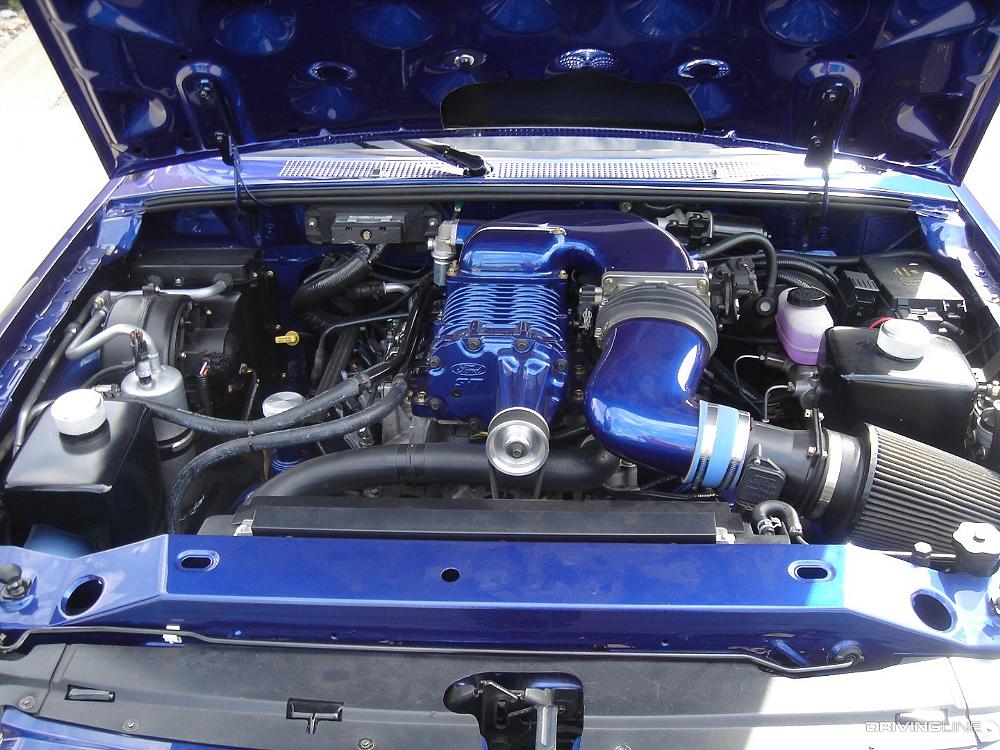
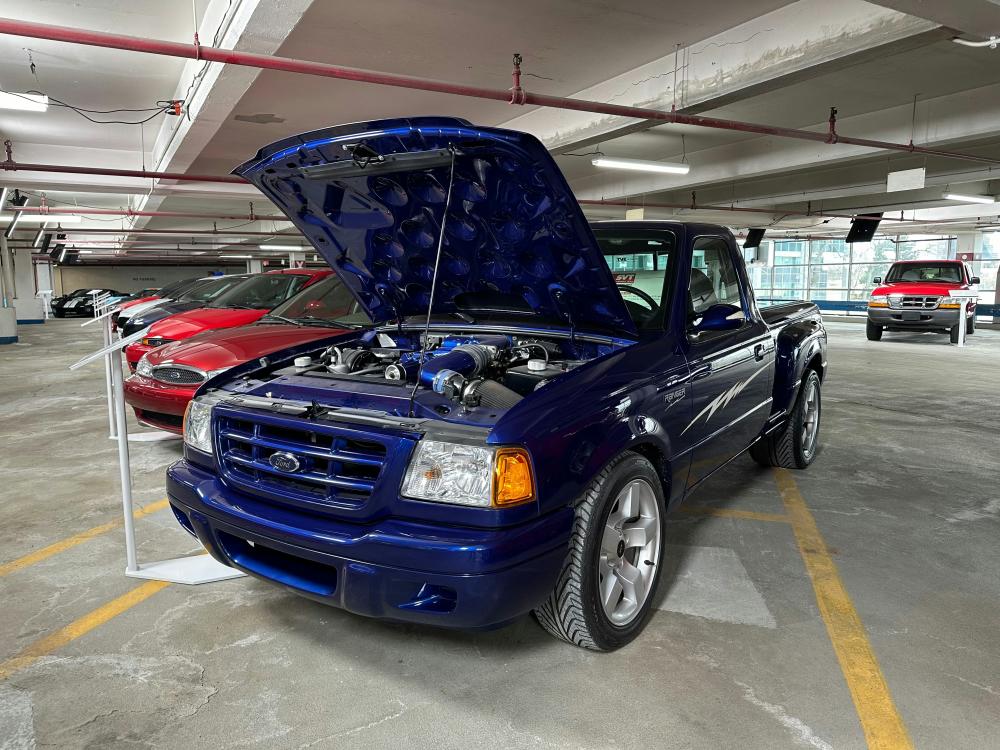
The Lightning Bolt used the same basic supercharged 5.4-liter V8 found in the SVT F-150 Lightning, but the engine received several modifications for its new home.
Custom two-foot headers were fabricated, the air intake was modified to accommodate the Ranger’s engine bay, and the exhaust system was upgraded with stainless-steel components and Borla Super Pro mufflers.
The engine was originally rated at 380 horsepower and 450 lb-ft of torque in the production Lightning. With the modifications made to the Bolt, output was estimated at approximately 400 horsepower and 460 lb-ft during the earlier stages of the project.
Ford’s current Heritage Fleet information lists the completed Lightning Bolt at approximately 420 horsepower and 480 lb-ft of torque — more than 30 horsepower and 30 lb-ft above the production Lightning.
That is a lot of power for a compact pickup.
And Ford knew it would need considerably more than an engine swap to make the combination work.
Building a Chassis for the Power
The Ranger’s original suspension was never designed to handle a supercharged 5.4-liter V8.
The front suspension was lowered approximately two inches, and SVT adapted production F-150 Lightning suspension components to the Ranger. Lightning components were used in areas including the lower control arms and steering knuckles.
The Ranger retained its rack-and-pinion steering, but the stock power-steering pump was replaced with a unit from the Lightning. A custom steering shaft was also required to clear the new exhaust headers.
The Ranger’s frame received extensive reinforcement as well. The frame rails were boxed and cross-braced in several locations to handle the dramatic increase in torque.
According to Ford, the chassis modifications were extensive enough that the factory longitudinal fuel tank had to be removed. A custom fuel cell was installed behind the axle, requiring the fuel access door to be relocated to the rear of the truck.
The driveshaft was also replaced with a shortened aluminum unit from the Lightning.
Lightning Wheels, Massive Tires
The Lightning Bolt also borrowed heavily from its full-size namesake when it came to wheels, tires, and brakes.
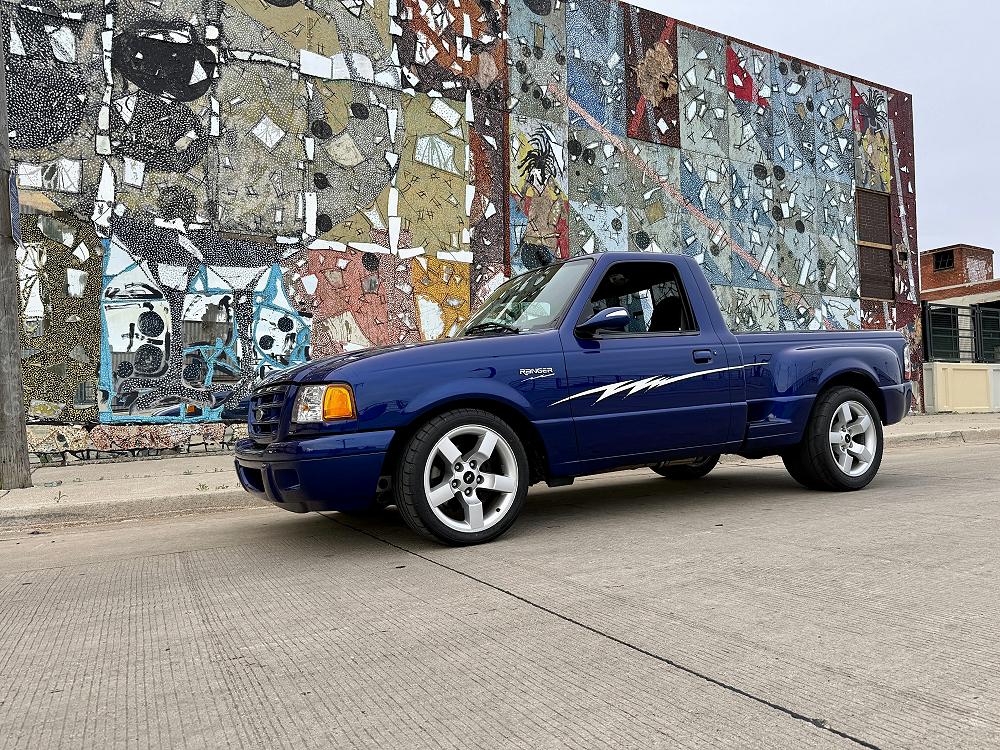
The production F-150 Lightning wheels were modified for use on the Ranger. The front wheels were narrowed to approximately eight inches, while the rear wheels were widened to accommodate the enormous rear tires.
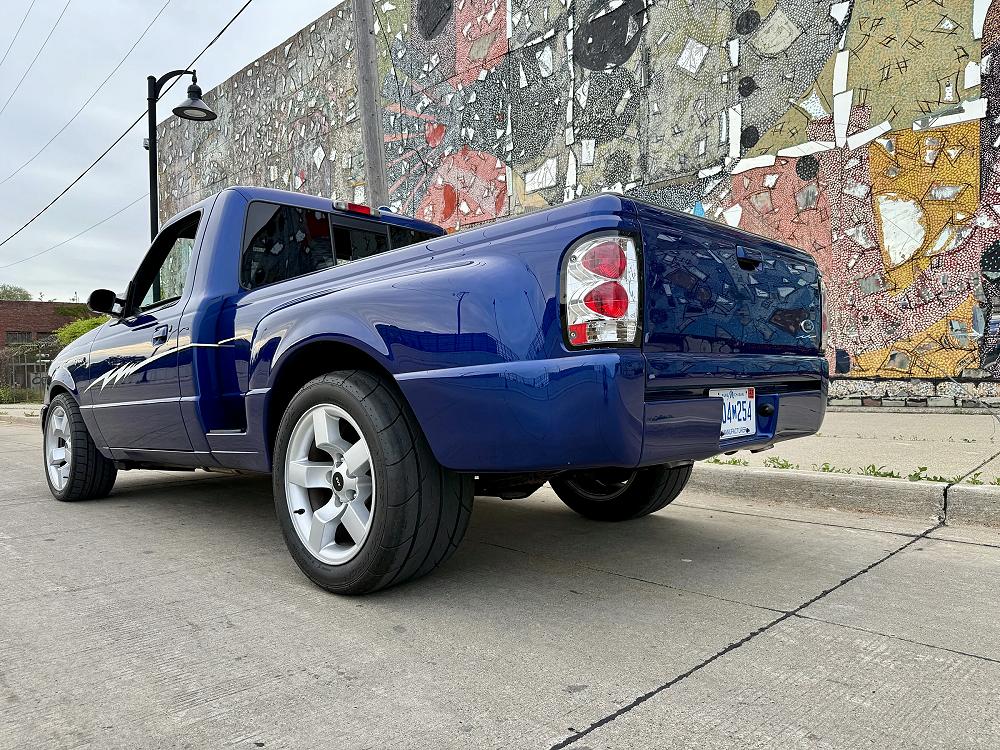
The result was a staggered setup consisting of 235/40ZR18 tires up front and massive 345/35ZR18 Michelin tires in the rear.
Those rear tires were necessary because the Lightning Bolt had the kind of power that could overwhelm the tires very quickly.
Production F-150 Lightning brakes were also fitted to the Ranger, giving the much lighter truck a braking system capable of dealing with its substantially increased performance.
It Looked the Part, Too
The Lightning Bolt wasn’t intended to be a sleeper.
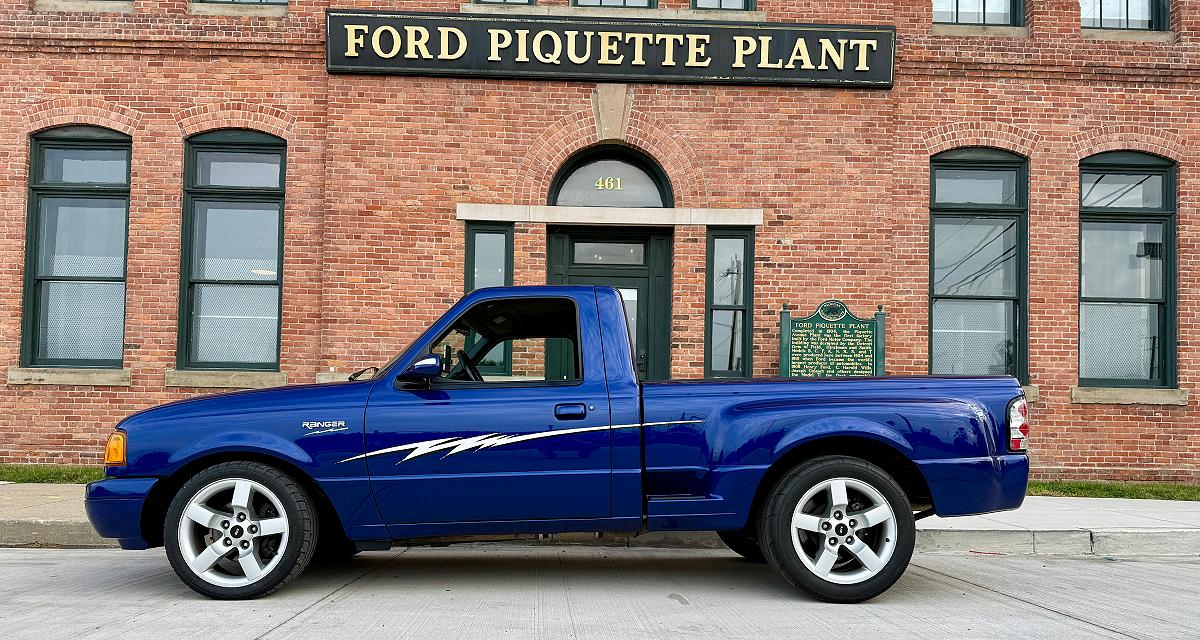
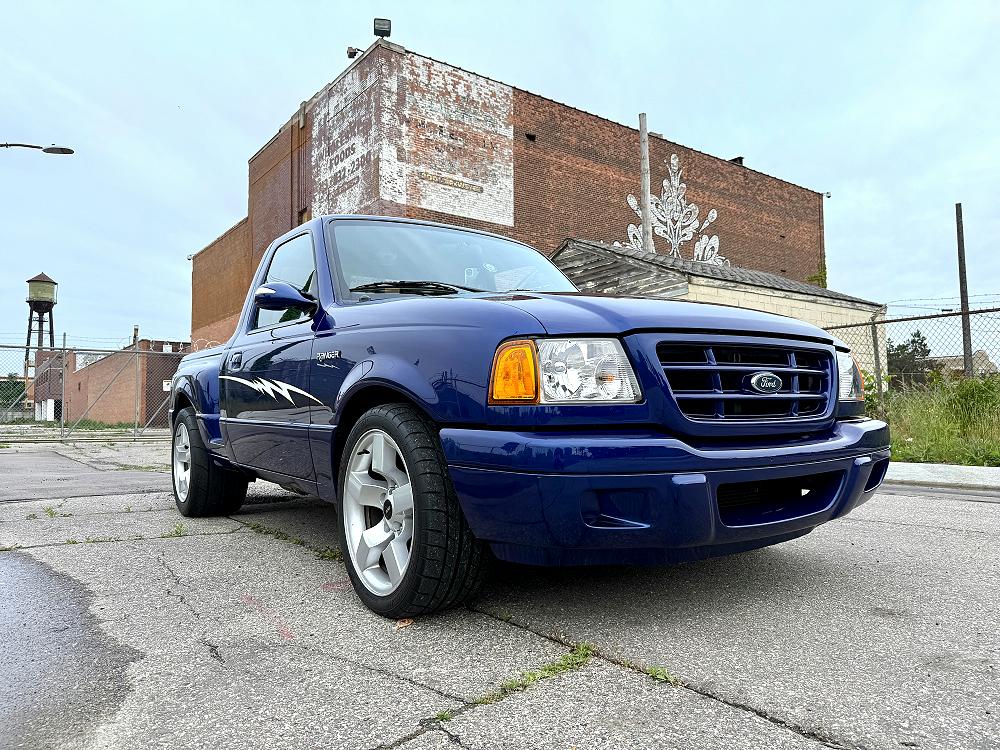
The truck was eventually painted Ford’s Sonic Blue, a color that gives the Ranger an almost purple appearance under certain lighting conditions. Custom Lightning Bolt graphics were applied to the doors and bedside.
The exterior also received clear taillights, body-colored aftermarket mirrors, and a smoothed rear roll pan in place of the factory rear bumper.
Even the engine compartment received attention. The supercharger, air intake and other engine components were painted Sonic Blue to complement the exterior.
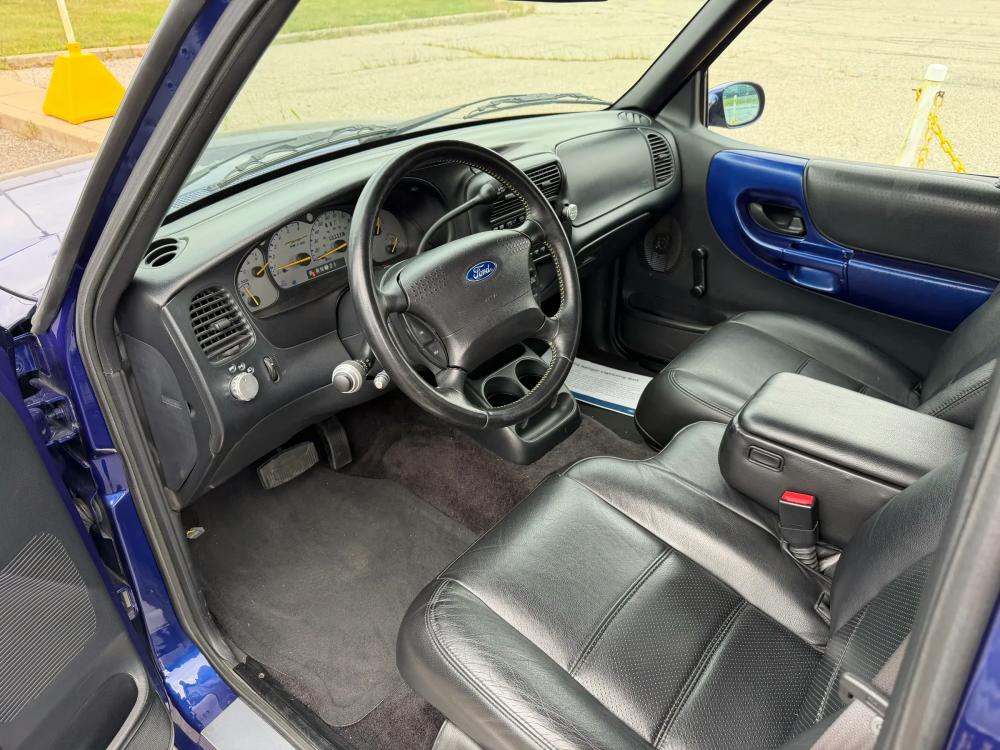
Inside, the ordinary Ranger interior was transformed into something much more appropriate for an SVT performance concept.
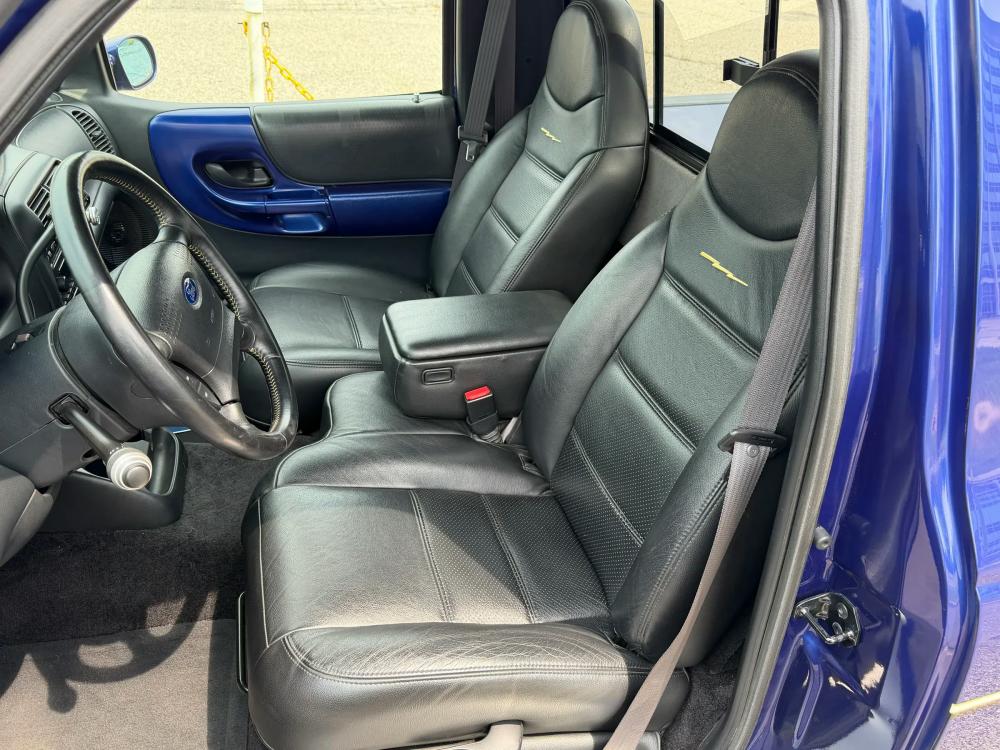
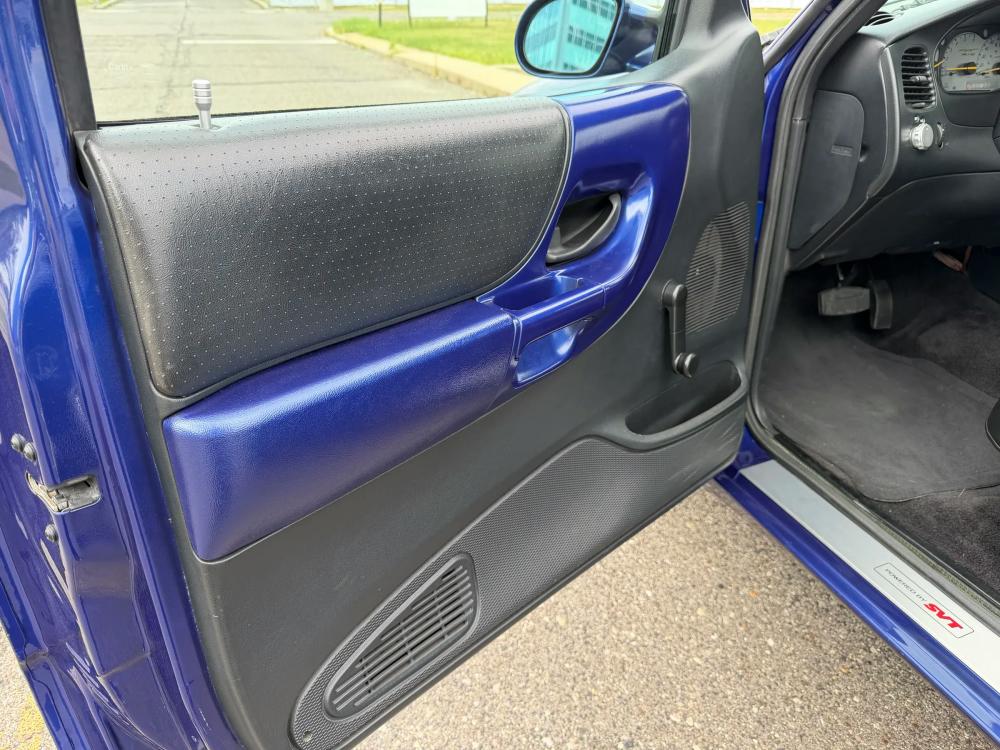
The seats were reupholstered in black leather with Lightning Bolt embroidery. Black carpeting replaced the original flooring, while additional trim pieces were dyed or painted black.
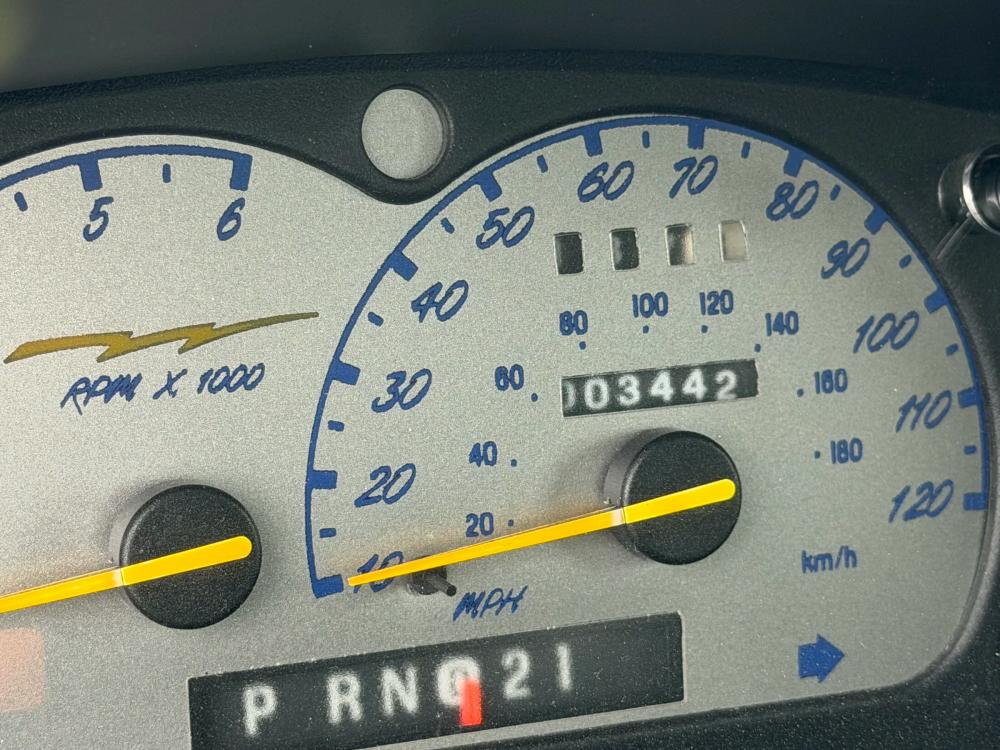
The interior also received billet aluminum controls from MGW Industries, custom gauge faces, brushed stainless-steel door sill plates featuring the SVT logo, and other custom touches.
The result was a Ranger that looked considerably more serious than the basic four-cylinder truck that had originally rolled into the project.
A Ranger That Was Never Meant for Production
The Lightning Bolt was ultimately a concept and engineering exercise rather than a production model.
That makes its survival particularly significant.
Ford has produced plenty of interesting concept and prototype vehicles over the decades, but simply because a vehicle was important enough to be built doesn’t guarantee that it will survive. Once a concept has served its purpose, its future can be uncertain.
The Lightning Bolt somehow avoided that fate.
More than two decades after The Ranger Station first reported on it, the truck remains part of Ford’s Heritage Fleet.
And it apparently has one of the best advocates it could have.
Korczyk’s enthusiasm for the Lightning Bolt is easy to understand. It’s an unusual combination of Ford performance history and Ranger history — taking the supercharged powertrain developed for the SVT F-150 Lightning and putting it into a much smaller, substantially lighter pickup.
The result was essentially a factory-built experiment in what happens when you put too much performance into a Ranger.
The Lightning Bolt Lives On
When I first reported on the Lightning Bolt in 2003, I had no idea what would eventually happen to the truck. Like many Ford concept vehicles, it disappeared from the public eye for periods of time.
Every once in a while, though, it would surface again.
Now we finally know where it ended up.
The 2002 Ford Ranger Lightning Bolt is still part of Ford’s Heritage Fleet, where it is being preserved as an important piece of Ford’s performance and engineering history.
And knowing that it’s the favorite vehicle of the person responsible for caring for more than 150 historic Ford vehicles makes its future look even better.
Somewhere along the way, the Lightning Bolt went from being an experimental SVT Ranger that could have easily disappeared into automotive history to becoming a vehicle that someone at Ford genuinely cares about preserving.
That’s a pretty good ending for one of the wildest Rangers Ford ever built.
More Photos
About The Author
Jim Oaks is the founder of TheRangerStation.com, the longest-running Ford Ranger resource online since 1999. With over 25 years of hands-on experience building and modifying Ford Rangers — including magazine-featured builds like Project Transformer — Jim has become one of the most trusted authorities in the Ford Ranger off-road and enthusiast space.
Since launching TheRangerStation.com, Jim has documented thousands of real-world Ranger builds, technical repairs, drivetrain swaps, suspension modifications, and off-road adventures contributed by owners worldwide. TheRangerStation.com has been referenced in print, video and online by enthusiasts, mechanics, and off-road builders looking for practical, and experience-based information.