
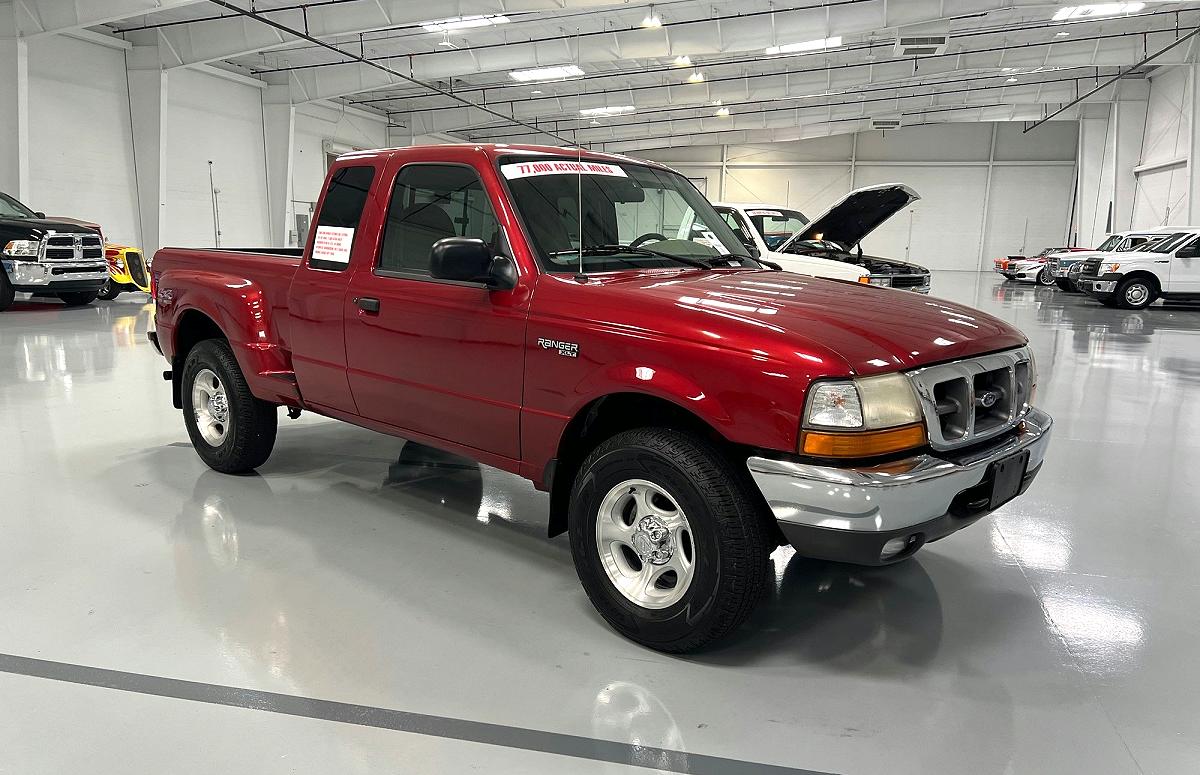
1983–2011 Ford Ranger Buyers Guide
Thinking about buying a used Ford Ranger? Ford produced millions of these compact pickups, and there are plenty of them still on the road. Whether you’re looking for an inexpensive daily driver, a work truck, a project vehicle, or a 4×4 to build for off-roading and overlanding, there’s a Ranger that may fit what you’re looking for.
The key is knowing which model years, engines, transmissions, and drivetrain configurations make the most sense for your needs. You also need to know what to look for when inspecting an older truck, because rust, neglected maintenance, and previous modifications can turn an otherwise good deal into an expensive project.
This guide covers the 1983–2011 Ford Ranger. Use it to research individual model years, compare engines and specifications, identify common problems, and decide which Ranger is right for you.
Before you start shopping, you may also want to review our Ford Ranger Specifications and Ford Ranger Fuel Mileage Ratings pages.
Ford Ranger Problems and Recalls by Year
Some Ranger problems are associated with particular model years, engines, transmissions, or equipment. Our year-by-year pages provide information about reported problems and recalls to help you research a truck before buying it.
Choose the model year you’re considering below. If you’re shopping for a particular generation, it’s worth checking more than one year so you can compare the changes Ford made and identify any differences that matter to you.
Choose A Year |
|||
| 2011 | 2010 | 2009 | 2008 |
| 2007 | 2006 | 2005 | 2004 |
| 2003 | 2002 | 2001 | 2000 |
| 1999 | 1998 | 1997 | 1996 |
| 1995 | 1994 | 1993 | 1992 |
| 1991 | 1990 | 1989 | 1988 |
| 1987 | 1986 | 1985 | 1984 |
| 1983 | |||
Common Ford Ranger Problems

A problem reported by Ranger owners doesn’t necessarily mean every truck of that year will experience it. Age, maintenance, driving conditions, and previous repairs all play a role. Use the individual year pages to research known problems, and pay particular attention to issues that could affect safety or result in expensive repairs.
When researching a truck, distinguish between a manufacturer recall, a known design weakness, and a problem reported by individual owners. Check whether applicable recalls have been completed on the actual truck you’re considering.
| Worst Problems | 2011 | 2010 | 2009 | 2008 | 2007 | 2006 | 2005 | 2004 | 2003 | 2002 | 2001 | 2000 | 1999 | 1998 | 1997 | 1996 | 1995 | 1994 | 1993 |
| Air bags did not deploy during collision | |||||||||||||||||||
| Accelerates while trying to brake | |||||||||||||||||||
| Accelerates without warning | |||||||||||||||||||
| Cruise control related fire | |||||||||||||||||||
| Seatbelts don’t fully buckle / come unbuckled | |||||||||||||||||||
| Excessive rust of frame (many resulting in holes / cracks) | |||||||||||||||||||
| Door ajar / dome light doesn’t go out | |||||||||||||||||||
| Firestone tire separations / blow outs | |||||||||||||||||||
| Fuel tank straps rust / break / tank becomes loose | |||||||||||||||||||
| Rusted leaf spring shackles & hangers | |||||||||||||||||||
| Faulty turn signal / muti-switch (See note #1 below) | |||||||||||||||||||
| Spare tire fell off due to rusted mount | |||||||||||||||||||
| Faulty fuel inertia switch | |||||||||||||||||||
| ABS brakes lock up | |||||||||||||||||||
| ABS brake pedal goes to the floor | |||||||||||||||||||
| Gas pedal bracket failed / fell | |||||||||||||||||||
| Fuel fill tube leaks | |||||||||||||||||||
| Clutch / brake pedal bracket failed / fell |
Ford Ranger Specifications
Before buying, compare the dimensions and capacities of the Rangers on your shortlist. Cab style, bed length, wheelbase, engine, axle ratio, and drivetrain can all influence how useful a truck will be for your needs. Our Ford Ranger Specifications page provides a broader reference for dimensions, engines, horsepower, torque, towing, payload, and other specifications across Ranger generations.
Ford Ranger Generations
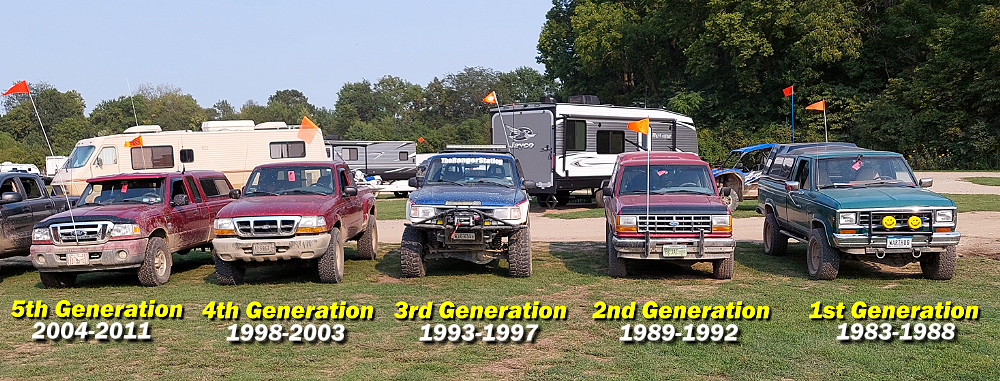
From time to time, you may hear people referring to Ford Rangers by their ‘Generation’. This was a common practice in the online community when I started this site way back in 1999. It makes it easier for us to readily identify a Ranger apart from the other years and styles. For more information on Ford Ranger generations check out Ford Ranger Generations 1983-Present.
Four-Door Cab
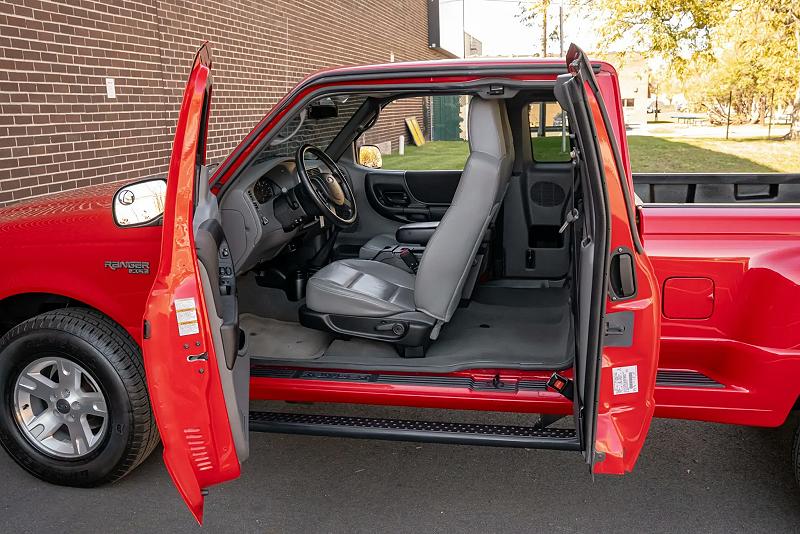
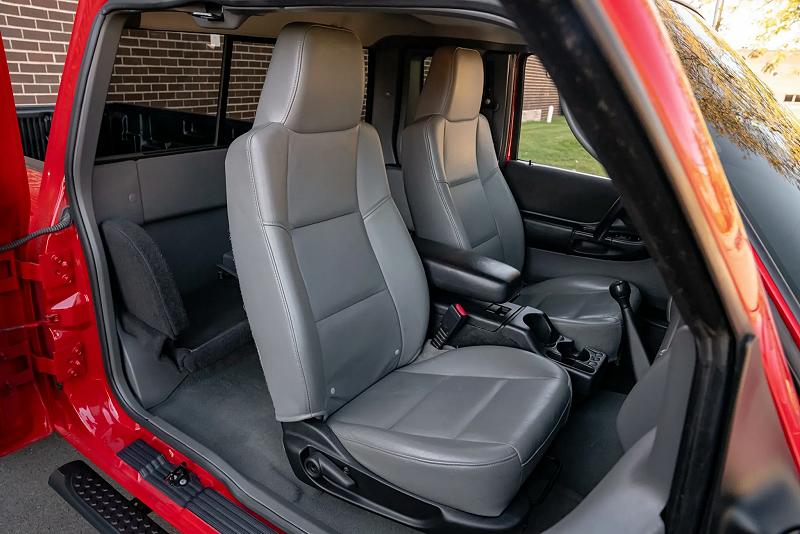
The Ranger was offered as a standard cab from 1983-2011 and a SuperCab from 1986-2011. The 1999-2011 Ford Ranger SuperCab was offered with optional dual hinged rear doors (or what I call ‘opening 1/2 doors’) to allow easier access to the rear of the cab.
Bed Configurations
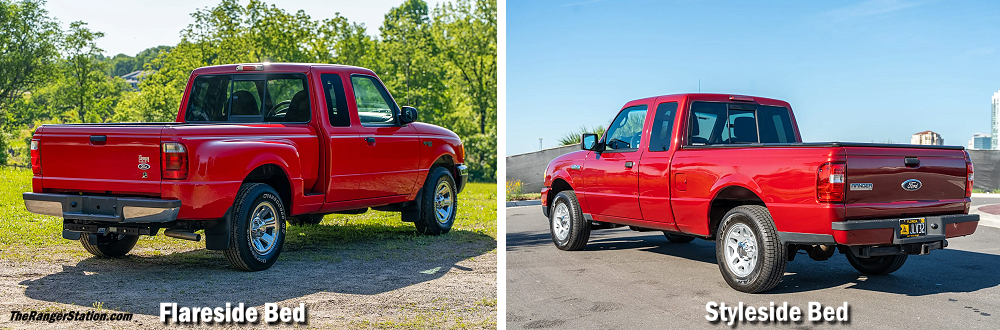
Styleside Bed – Standard flat-sided steel bed where the sheet metal runs straight from the cab to the tailgate. The rear wheel wells protrude inside the cargo box. 1983–2011 Available on all generations of short and long beds.
Flareside Bed – Narrower inner cargo box with molded, bulging fenders on the outside of the bed. It features step pads in front of and behind the rear wheels. Available from 1993–2005 on the 6-foot short bed only.
Drivetrain Options
4-Wheel Drive:
For more information on the Ford Ranger 4-Wheel Drive System, click HERE.
Transfer Case – The Ford Ranger has only had two transfer cases, the BorgWarner 1350 (pre-’90) and the BorgWarner 1354 (post-’90). Though both are aluminum housing, chain driven cases, each had a slew of variations that ranged from electronic and mechanical shifters to a small variety of yoke and flange mount options.
Ford stopped offering a manual transfer case after 1997. Ford brought back the manual transfer case briefly for the 2002 Ford Ranger FX4 and 2003 Ford Ranger FX4 level II equipped with the manual transmission.
Front Axles (1983-1997) – Ford Rangers appeared with a reverse cut Dana 28 TTB (Twin Traction Beam) 4WD front axle in 1983. Ford replaced the Dana 28 with a stronger Dana 35 TTB in 1990, the same year that it introduced the more powerful 4.0L V6. The Dana 35 is the preferred axle for off-road use and has good aftermarket support. It can generally handle a 35-inch tire and is pretty reliable, but you need to ensure your spindle lock nuts are properly tightened when using larger tires, so the wheel bearings don’t loosen. The Dana 28 can handle a 31-inch tire and mild off-roading, but you’ll have trouble finding gears or lockers for it.
The Dana 35 TTB is the preferred axle for those wanting plenty of suspension travel and there are companies that make long travel Dana 35 suspension kits. For more information on the Dana 28 and Dana 35 TTB check out Ford Ranger 4×4 Front Axles 1983-1997.
A hybrid version of the Dana 28 found its way back into the 1993-1997 Ford Rangers that were equipped with the 3.0L V6 automatic or 2.3L 4-cylinder. These hybrid axles used a Dana 35 axle beam but used the Small Dana 28 gears. You’ll often hear them referred to as a ‘Dana 35 Hybrid. or a ‘Dana 35/28 Hybrid’. For more information check out Ford Dana 35 TTB Hybrid.
Front Axles (1998-2011) – In 1998, the Ford Ranger went to a Dana 35 Short Arm Long Arm (SLA) front axle. The Dana 35 SLA switched from a reverse rotation gear to standard rotation gear. The gears in a 1997 and older Ranger/Explorer will not work in the 1998 and newer Rangers.
The 1998-2000 Ford Ranger 4×4 came with Pulse Vacuum locking Hubs. They are known to be problematic due to leaking vacuum lines. The good thing is that you can replace the vacuum hubs with manual hubs. Click HERE for more information. The 2001-2011 Ford Ranger 4×4 has a live front axle setup and does not come with locking hubs. Automatic lockers like a Detroit Locker or Lock-Right are not recommended since you can’t unlock the front. You should only use a selectable locker like an air locker or an electric locker on a live axle that you intend to drive on the road.
While the 1983-1997 Twin Traction Beam (TTB) front suspension offers more wheel travel, the 1998-2011 Short Arm Long Arm (SLA) offers better ground clearance
Automatic Locking Hubs (1983-1997) – The spring-loaded hub automatically engages on the fly when the transfer case is shifted from 2WD into 4WD. The application of torque to the axle causes the splined collar inside the hub to slide on to the splined axle and lock. Just like the manual hub, it then transfers power to the wheels, since it’s bolted on to the wheel stubs behind the wheel.
FX4 & FX4 Level II:
Ford released a true off-road version of the Ford Ranger 4×4 in 2002 as the FX4. Beginning in 2003 they offered an FX4 and an FX4 Level II. The 2002 FX4 and 2003-2007 FX4 Level II comes with a special 31-spline 8.8-inch rear axle equipped with a Zexel-Torsen limited-slip differential. For 2008-2009 the Zexel-Torsen limited-slip was an option and only 8.8’s with that differential came with 31-spline shafts. The 2002-2009 Ford Ranger FX4’s also came with three skid plates, upgraded tow hooks, 31″ BFGoodrich All Terrains, 15-inch forged Alcoa wheels, and Bilstein shocks. For more information on the Ford Ranger FX4, check out Ford Ranger FX4 Off-Road and Level II – By The Years.
2-Wheel Drive:
Twin I-Beam Front Suspension – The 1983-1997 Ford Ranger used a Twin I-Beam (TIB) front suspension with coil springs.
Short Arm Long Arm (SLA) & Coil Springs – The 1998-2011 Ford Ranger used a Short Arm Long Arm (SLA) independent coil spring suspension, with upper and lower control arms and coil springs between them. These are not the same as the TIB coil springs.
Short Arm Long Arm (SLA) & Torsion Bars – The 2000–2011 Ford Ranger 2WD Edge and 2006–2011 Ford Ranger 2WD Sport are equipped with a torsion bar front ssuspension.
For more information on 1983-2011 Ford Ranger 2WD front suspensions check out The Ford Ranger Front Suspension.
Rear Axles:
Ford 7.5-Inch Axle – From 1983-1989, the Ford Ranger came with a 28-spline 7.5-Inch rear axle. Although Ford introduced the 8.8-inch axle in 1990 on the 4.0L powered Rangers, the 7.5-inch axle continued being used on non 4.0L powered Rangers with standard cabs.
Ford 8.8-Inch Axle – Starting in 1990, the 4.0L powered Ford Rangers came with a stronger 28-spline 8.8-inch rear axle as well as SuperCabs regardless of the engine.
Ford 8.8-Inch Axles With 31-Splines – In 2002 Ford introduced the FX4 Ranger and the 8.8-inch axle received a stronger 31-spline axle count and was fitted with a Torsen limited-slip differential. Not all FX4’s received the 31-spline 8.8-inch rear with the Torsen limited slip differential. Only the 2002 FX4, and 2003-2007 FX4 Level II’s came with the 31-spline 8.8-inch rear. In 2008-2009, the 31-spline shafts only came in Ford 8.8-inch axles with the Torsen limited slip differential which was now optional.
Ford also used the 31-spline 8.8-inch rear axle in the 1991-2001 Ford Explorer, 2001–2003 Explorer Sport and 2001–2005 Explorer Sport Trac. The 1991-1994 axles came with drum brakes.
The 31-spline 8.8-inch axle is the preferred rear axle for off-road builds or Ranger builds that will be sending a lot of horsepower to the rear wheels.
For more information on rear axles check out:
Brakes:
The Ford Ranger had a few brake upgrades:
Rear Disc Brakes – The 2010 & 2011 Ford Ranger came with rear disc brakes.
Dual Piston Calipers – In 1995 the Ford Ranger switched from a single piston caliper and 10.87″ rotor to a dual piston caliper and an 11.28″ rotor.
10-Inch Brake Drums – Ford Rangers came with a 9-inch brake drum, but SuperCabs and Rangers with a GVWR over 4580 pounds use a 10-inch drum.
Automatic Transmissions:
C3 Automatic – The 1983-1984 Ford Ranger 2WD came with a light duty C3 3-speed automatic transmission.
C5 Automatic – The 1983-1984 Ford Ranger 4WD came with a C5 3-speed automatic that is similar in strength to the legendary Ford C4 automatic transmission.
A4LD Automatic – Ford switch to the A4LD 4-speed automatic in the Ranger from 1985-1994. Reliability began to improve in mid-1988 when Ford introduced the dual solenoid setup. Models from 1989 and later benefited from Ford’s broader engineering push to improve “Noise, Vibration, and Harshness” (NVH) and general durability, making them noticeably automatic transmission with a stronger 4R55E behind the 4.0L V6 and the 4R44E behind the 4-cylinder and 3.0L V6.
4R44E / 4R55E Automatic – In 1995, Ford replaced the weak A4LD with the 4R55E behind the 4.0L V6 powered Rangers and the 4R44E behind the 1995-2000 4-Cylinder & 3.0L powered Rangers.
5R44E / 5R55E Automatic – The 2001-2009 2.3L & 3.0L Rangers received a 5R44E 5-speed automatic and the 1998-2011 4.0L Rangers received a 5R55E 5-speed automatic. The 5R transmissions are mechanically identical to the 4R transmissions but uses adaptive shift control and sophisticated friction to friction shift ability to create a 5th gear.
All of these transmissions benefit would benefit from an auxiliary transmission cooler to keep it from overheating and slipping. The A4LD would benefit from a transmission shift kit which adds pressure inside the valve assembly which helps keep the clutch packs from separating, as well as keeping the clutches and associated bands from overheating.
For more information on automatic transmissions check out Ford Ranger Automatic Transmissions.
Manual Transmission:
TK4 4-Speed Manual – The 1983-1984 Ford Ranger 4×4 was offered with a TK4 4-speed manual transmission.
TK5 5-Speed Manual – The 1983-1987 Ranger 2WD and 1984-1987 Ranger 4X4 were offered with a TK5 5-Speed manual. The TK5 shifter has a plastic bushing inside of the shifter housing that allows it to pivot and stay centered in the housing. These bushings get brittle and crack or fall apart causing the shifter to get sloppy, spin around, and even disengage with the shift rail inside of the transmission. Replacing the shifter is an easy repair. Check out Replacing A TK5 Shifter.
Mitsubishi FM132 – Was used exclusively in 1988-1992 Ford Ranger 2WD applications behind the 2.0L, 2.3L, and 2.9L engines. It features an integrated, non-removable bellhousing. The most notable problem of the FM132 is the seizure or stripping of 5th gear due to starvation and excessive heat from lugging the engine. It suffers from premature wear on its weak mainshaft and countershaft ball bearings, which creates a distinct, loud growling noise, while worn brass synchronizers and thin internal shift forks regularly cause grinding and force the transmission to pop out of gear under load.
Mitsubishi FM145 – Was used in the 1985-1987 Ford Ranger 4×4 has a removable bellhousing, a 12-bolt stamped steel bottom oil pan, and a short 15.5-inch case. The most notorious issue with the FM145 centers around the 5th gear sleeve and mainshaft bearings. Under high heat and load, the sleeve regularly works loose against the 5th/reverse synchronizer hub and wears into the splines breaking the gear teeth and locking up the transmission.
Mitsubishi FM146 – Was used from in the 1988-1992 in the Ford Ranger 4×4 behind the 2.9L V6. It looks identical to the FM145 but is roughly an inch longer (16.5 inches) to match the length of the newer A4LD automatic and Mazda M5OD. While the later FM146 modified the 5th gear layout to alleviate the seizing issue, Mitsubishi retained the exact same weak ball bearings for the input and output shaft mains. These bearings wear prematurely, leading to a noticeable whine or rumble while driving.
M5OD-R1 – The standard version used from 1988 to 2011. It features an integrated bellhousing and smooth, ribbed aluminum casing. It was paired with the 2.3L/2.5L 4-cylinder, 2.9L V6, and 3.0L V6 engines. The single biggest flaw on any M5OD-R1 is the three rubber access plugs located at the top-rear of the shift tower assembly. For more information check out Shift Rail Plug Maintenance.
M5OD-R1HD – The “Heavy Duty” variant introduced in 2001 exclusively for the 4.0L SOHC V6 engine. The HD version features an updated case with an extra structural reinforcing rib near the top, an internal neutral safety switch change, and a completely different bellhousing bolt pattern unique to the 4.0L SOHC engine block. Internal gear ratios were also optimized to handle the higher torque output.
If replacing any of the earlier manual transmissions you should consider replacing them with the M5OD-R1.
For more information on Ford Ranger manual transmissions check out Ford Ranger Manual Transmissions.
Ford Ranger Engine Options:
Ford offered several engines over the Ranger’s production run. Each has its own strengths, limitations, and potential problems. The best choice depends on your expectations for power, fuel economy, durability, and the kind of work you want the truck to do.
2.0L, 2.3L, & 2.5L Four-Cylinder Engines – The early 2.0L and 2.3L four-cylinder engines, along with the later 2.5L, appeal to buyers who want a relatively simple truck for everyday driving or light-duty use. Their main limitation is power. They can be perfectly adequate in a stock Ranger, but acceleration and performance under load become more limited when you add large tires, heavy equipment, or a camper.
2.8L V6 Engine – The 2.8L V6 was offered from 1983-1985 and uses a 2-barrel carburetor and a TFI (Thick Film Ignition) Module. This is the simplest V6 in the Ranger lineup, and its biggest problem has been the TFI (Thick Film Ignition) Module overheating and failing. The most common upgrade is to replace the TFI with an earlier Duraspark ignition. This engine also uses a set of timing gears instead of a timing chain like most other engines. The only other common problems with these engines are the rubber valve seals deteriorating and leaking into the cylinders and the bolt that holds the distributor coming loose causing the engine to lose its proper ignition timing. All of which are easy repairs. I consider this to be a very reliable and easy to work on engine. For more information on this engine check out Ford Ranger / Bronco II 2.8L V6 Engines.
2.9L V6 Engines – The 2.9L V6 replaced the 2.8L as a fuel injected engine. The 2.9L cylinder heads are prone to cracking, especially if the engine has overheated. You can still find replacement heads for these engines. These engines can exhibit serious valve train noise on high mileage engines due to poor oil lubrication caused by worn camshaft bearings. Another issue is valve covers leaking oil. These engines are actually very reliable when properly maintained. For more information on these engines check out Ford Ranger / Bronco II 2.9L V-6 Engines.
3.0L V6 Engine – The 3.0L V6 is often nicknamed the “3.Slow” because it doesn’t offer the performance of the 4.0L engines. That nickname doesn’t tell the whole story, though. The Vulcan has a reputation for durability and can be a sensible choice for a buyer who values a dependable engine over maximum horsepower. For more information check out 1991-2008 Ford Ranger 3.0L V-6.
4.0L OHV V6 – Ford introduced the 4.0L OHV V6 in the Ranger for the 1990 model year. It provides useful torque and has a reputation for durability when properly maintained. Many enthusiasts consider it to be a more reliable and desirable engine over the 4.0L SOHC even though it produces less horsepower. These have been few problems reported with this engine other the normal wear and tear of sensors from high mileage, but some people have reported that their intake bolts had loosened over time. For more information on this engine check out Ford Ranger 4.0L OHV V6.
4.0L SOHC V6 – The 4.0L SOHC V6 replaced the OHV version in the Ranger beginning with the 2001 model year. It produces more horsepower and torque, making it attractive for highway driving and for trucks that carry additional equipment. The main issue buyers should understand is the engine’s timing-chain system. Problems involving timing-chain guides, tensioners, and related components can lead to expensive repairs. Listen for abnormal rattling, especially during startup, and investigate any service history involving the timing chains. For more information on this engine check out Ford Ranger 4.0L SOHC V6.
Fuel Mileage – For information on fuel mileage check out our Ford Ranger Fuel Mileage Ratings page.
What Should I Look for When Buying a Used Ford Ranger?
The condition of the truck you’re buying is important. A Ranger with a desirable engine or drivetrain isn’t necessarily a good purchase if it has a badly rusted frame, neglected maintenance, or expensive mechanical problems.
Check For Rust
Rust is one of the biggest concerns when buying an older pickup, particularly if the truck has spent its life in an area where road salt is used during winter.
Don’t judge a Ranger’s condition by its paint and body panels alone. Get underneath it and inspect the frame carefully. Pay particular attention to areas around the cab mounts, bed mounts, fuel tank straps, suspension mounting points, and rear leaf-spring shackles and hangers. Check the frame for heavy scaling, holes, cracks, previous repairs, or areas that have been covered with fresh undercoating.
Also inspect the front suspension mounting areas, rear bumper mounts, and spare-tire carrier. Structural rust can make a truck unsafe or too expensive to repair, even when the body looks presentable.
Other areas to inspect include:
- Lower rear cab corners.
- Bottoms of the doors, including the inside edges.
- Floorboards and the area where the cab floor meets the rear wall.
- Rocker panels and the bottoms of the front fenders.
- Bed floors around and above the wheel wells.
- The lower radiator support.
- The bottom of the tailgate.
- Rear spring shackles and hangers.
- Front coil buckets on 1983–1997 Rangers.
- Roof rain gutters on 1983–1992 Rangers.
A truck that has spent its life in a dry climate may have substantially less corrosion than one from the Rust Belt, but it still deserves a thorough inspection.
Inspect The Mechanical Components
Look underneath the truck for fluid leaks, damaged components, bent driveshafts, and signs of hard off-road use or poorly executed repairs. Check the transfer case and differentials for damage to their housings, and look for leaks around the engine, transmission, axles, and drivetrain.
Inspect the fuel tank and filler hose for leaks or deterioration. Look at the brake and fuel lines, suspension components, steering linkage, and exhaust system. Check the condition of the tires and look for uneven wear that might indicate alignment, steering, or suspension problems.
On 1996 Rangers, pay particular attention to the power-steering gear mounting bolts and frame in light of reported bolt failures in this area.
Check the engine oil and coolant for signs of contamination. Milky oil can indicate coolant contamination, although other causes are possible. Check the transmission fluid where the manufacturer provides a means to do so, and look for evidence of leaks or overheating.
A wet passenger-side floor may indicate a leaking heater core or another water leak. Don’t assume that a clean engine bay means the truck has been well maintained; it may simply have been cleaned before the sale.
Listen To The Engine
If possible, arrange to see the truck with the engine cold. A cold start gives you an opportunity to hear noises that might disappear once the engine warms up and to see how it starts from cold.
Watch for excessive exhaust smoke, unusual knocking or rattling, rough running, overheating, and warning lights that remain illuminated. Blue smoke can indicate oil consumption, while persistent white smoke after the engine has warmed up may indicate coolant entering the combustion chambers. Exhaust smoke alone doesn’t establish a diagnosis.
Ask about maintenance records, cooling-system repairs, timing-chain repairs where applicable, and any previous engine or transmission work.
If the seller has already warmed the truck before you arrive, ask why. There may be an innocent explanation, but it’s worth knowing whether the engine has a cold-start problem.
Inspect The Interior And Electrical Systems
Check the seats, seat belts, door latches, windows, locks, and dashboard controls. Make sure the seat belts latch and release properly.
Test the headlights, brake lights, turn signals, hazard lights, wipers, washer system, and instrument-panel warning lights. Check the heater and air conditioning, including the blower motor at every speed and the temperature controls.
Make sure the dome light goes out when the doors are closed. If the truck has cruise control, verify that it works. On equipped trucks, inspect the cruise-control electrical connections and components for signs of overheating or damage.
Look for water leaks, damp carpeting, mold, and signs of previous collision repairs. Check that the title and vehicle identification number match and ask about any modifications or major repairs.
Have The Truck Inspected Before Buying
If you aren’t comfortable inspecting the vehicle yourself, take it to a reputable mechanic who knows older trucks. A pre-purchase inspection can uncover problems that aren’t obvious during a short visit or test drive.
This is particularly important if you’re considering a modified 4×4. Suspension lifts, larger tires, axle swaps, engine conversions, and other modifications can affect reliability, handling, and repair costs. Look for quality workmanship and ask who performed the work.
Test-Driving a Used Ford Ranger
A test drive should be more than a quick trip around the block. Start the truck, let it reach operating temperature, and drive it under a variety of normal conditions when safe and practical. Be sure to check:
Engine And Cooling System – Pay attention to starting, idle quality, acceleration, exhaust smoke, and unusual engine noises. Watch the temperature gauge and make sure the engine reaches and maintains its normal operating temperature. Look for warning lights, misfires, hesitation, or signs of overheating. After the drive, check for fresh fluid leaks and any unusual smells.
Transmission And Clutch – An automatic transmission should engage Drive and Reverse properly and shift without persistent slipping, severe harshness, or unusual delays. A manual transmission should shift through all gears without excessive grinding or difficulty, and the clutch should engage predictably without slipping. Make sure that the shifter on a manual transmission in firm and not loose or sloppy. A transmission problem can be expensive to repair, so don’t dismiss unusual behavior as normal simply because the truck is old.
Steering, Suspension, And Brakes – The Ranger should steer predictably without excessive play, wandering, or unusual vibration. Listen for clunks and rattles over bumps, and pay attention to wheel bearing, differential, and driveshaft noises. The brakes should stop the truck smoothly and confidently without pulling to one side, excessive vibration, or a pedal that sinks toward the floor. Any braking problem needs to be addressed before the truck is driven regularly.
Test The 4WD System – If you’re buying a 4×4, verify that the system engages and disengages correctly. With the engine running, you should be able to shift the transfer case into 4HI (4WD High). You should see an indicator light up on the dash indicating that it’s in 4WD. From 4HI, place the truck in neutral and you should be able to shift into 4LO (4WD LOW).
If it has automatic hubs (1983-1997), you should hear them click to engage as the you apply gas to move forward. When you shift out of 4WD you should hear the hubs click again to disengage when you back up. If it has manual hubs, you should be able to turn the knob to engage them. These hubs wear out with age, become problematic, and are often replaced with manual hubs.
Test 4WD on a suitable loose or slippery surface, rather than driving a part-time 4WD system on dry pavement where the drivetrain can bind. If you’re unfamiliar with the system, have the seller or a knowledgeable mechanic demonstrate it.
Rangers from 1998–2000 use a vacuum-operated front-hub system that can develop engagement problems. The 2001–2011 4×4 models use a different live-front-axle arrangement without manually locking front hubs. Research the system fitted to the particular truck you’re considering.
Check The Heater And Air Conditioning – Make sure the heater produces warm air and the air conditioning cools properly if fitted. Check all blower speeds and the different air-distribution settings. Some Rangers have problems with blend doors or their controls, which can prevent the system from switching properly between hot and cold air. A malfunctioning climate-control system may be more than a minor inconvenience if repairs require extensive dashboard disassembly.
Ford Ranger Milestones
1965 – Ranger name appears as a styling package for F-Series pickup trucks
1981 – Plans for the all-new Ranger pickup are unveiled in Dearborn, Mich.
1982 – First Ranger rolls off the assembly line in Louisville, Ky.
1983 – Ranger V-6 wins Off-Road magazine’s 4×4 Truck of the Year award
1986 – Petersen’s 4-Wheel and Off-Road magazine names Ranger 4×4 of the Year
1993 – Truckin’ magazine selects Ranger as Pickup of the Year
2003 – The Rocky Mountain Automotive Press chooses Ranger as Best Compact Pickup of the Rockies
2003 – Four Wheeler magazine lists the Ranger as one of the Ten Best Bargain 4X4’s.
2007 – Edmunds.com names Ranger the most affordable truck
2007 – Four Wheeler magazine lists the Ranger as one of the Best Buys In 4X4’s
Which Ranger Should You Buy?
While I can’t tell you which Ranger you should buy, there are some observations I’d like to share.
Off-Road Builds – The 1983-1997 Ford Twin Traction Beam (TTB) front suspensions offer far more suspension travel than the Short Arm – Long Arm suspensions. You can find aftermarket suspension systems with longer radius arms that will greatly improve the suspension travel to help keep all four times in contact with the ground. I would look for a 1995-1997 Ford Ranger 4×4 with a Dana 35 front axle (1990-1997) and Ford 8.8-inch rear axle with a 4.0L OHV V6. The 1995-1997 upgraded from the A4LD 4-speed automatic to the 4R55E automatic and dual piston front brake calipers.
Check out:
The Best Ford Rangers For Off-Roading
1983–1997 Ranger Suspension Guide
1983-2011 Ford Ranger Off-Road Builders Guide
Overlanding / Truck Camping – For an overlanding or truck camping setup I like the 2001-2011 Ford Ranger 4×4 with the 4.0L SOHC. While the 1998-2011 Ford Ranger 4×4 Short Arm – Long Arm (SLA) front suspension doesn’t have the same suspension travel capability as the TTB suspension, it offers better ground clearance with less lift. The 4.0L SOHC makes more horsepower and torque than the 4.0L OHV which helps carry all of that overlanding / camping gear you’ll be hauling. Getting a Ranger with the opening rear doors will make grabbing gear and supplies from the rear of the cab way easier.
Check out:
Build a Ranger for Overlanding
1998–2011 Ranger Suspension Guide
Family Truckster / Pet Friendly – If you need to put kids in the back seat or have a dog that likes to travel with you, consider getting a 1999-2011 Ford Ranger with the rear opening doors (half doors). If not, the first time your muddy dog jumps onto your driver’s seat to get in the rear you’ll wish you had.
Related Articles
Ford Ranger Fuel Mileage Ratings
1983-2011 Ford Ranger Off-Road Builders Guide
1983–1997 Ranger Suspension Guide
1998–2011 Ranger Suspension Guide
Build a Ranger for Overlanding
About The Author
Jim Oaks is the founder of TheRangerStation.com, the longest-running Ford Ranger resource online since 1999. With over 25 years of hands-on experience building and modifying Ford Rangers — including magazine-featured builds like Project Transformer — Jim has become one of the most trusted authorities in the Ford Ranger off-road and enthusiast space.
Since launching TheRangerStation.com, Jim has documented thousands of real-world Ranger builds, technical repairs, drivetrain swaps, suspension modifications, and off-road adventures contributed by owners worldwide. TheRangerStation.com has been referenced in print, video and online by enthusiasts, mechanics, and off-road builders looking for practical, and experience-based information.