How The Ford Bronco II Became The Ford Explorer
The Ford Explorer didn’t simply appear out of nowhere in 1990. Its roots can be traced directly back to the Ford Bronco II.
In 1986, Ford began development of a 4-door version of the Bronco II under the internal project designation UN46. The program initially involved:
- Bill Gillies — Chassis & Driveline Engineering
- Derek Elliott — Body & Electrical Engineering
- Steve Ross — Light Truck Product Planning
According to Derek Elliott, a former Ford engineer who worked on the program, the UN46 project began with a full-size clay model representing two competing concepts. Each side of the model represented a different direction Ford could take.
One direction would evolve the existing Bronco II. The other would become something entirely new.
Concept A: The “Louisville Concept”
The first concept was essentially a four-door version of the existing Bronco II.
Known as the “Louisville Concept,” this vehicle was intended to be a relatively low-cost, low-risk replacement for the Bronco II then being built at Louisville Assembly Plant. The concept was attractive from both a financial and manufacturing standpoint because it would allow Ford to build upon the existing Bronco II rather than develop an entirely new vehicle.
Below are engineer drawings of a 1990-1/2 Ford Bronco II 4-door.
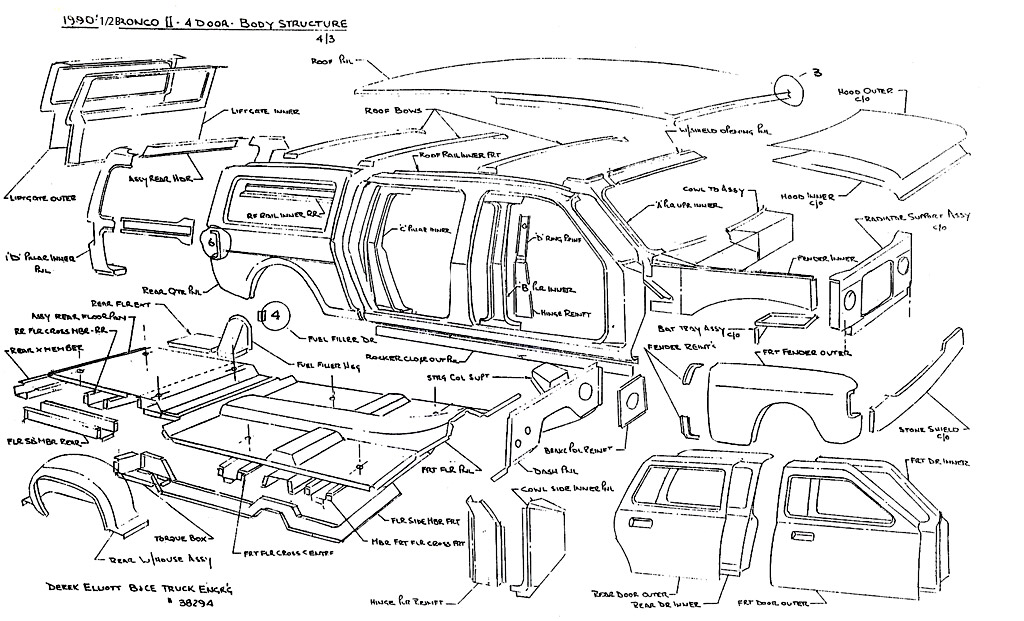
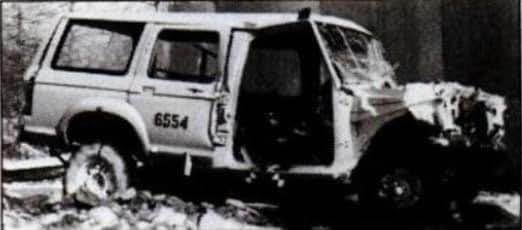
Ford apparently progressed far enough with the four-door Bronco II concept to build and crash-test prototypes.
Below is a photo of a crash-tested Bronco II four-door along with a period clipping describing the test:
Despite the appearance of the crash test prototype above, Ford has not abandoned its plan to introduce a new 4-door version of its Bronco II sport/utility vehicle in 1990. The wreckage is part of the development that every new vehicle goes through in order to satisfy Federal safety regulations.
This hulk is what remains of the Bronco II body after a high-speed frontal collision into a concrete barrier. What it suggests, in this instance at least, is that there is more work to be done in reinforcing safety sections of the vehicles body.
Buckling at the cowl and in the rocker panel are faults that must be corrected in the final Bronco II body. It appears that a previous test of this body was also run, as evidenced by extra target markings that still appear on the sheetmetal. Estimated speed of the vehicle in this crash – 30 MPH.

Concept B: The New Vehicle
The other side of the clay model represented a very different approach.
Rather than stretching the existing Bronco II into a four-door vehicle, this concept featured four doors and substantially new sheetmetal. Rather than stretching the existing Bronco II into a four-door vehicle, this concept featured four doors and all-new sheetmetal. According to Elliott’s account of the UN46 program, the hood assembly and radiator support assembly were the only major exterior components carried over from the Bronco II.
This concept was favored by several areas within Ford, including Ford Division, Light Truck Engineering Operations, Body and Electrical Operations, styling, and other design and development groups. A major advantage of the new design was that it gave Ford’s designers greater freedom to improve the appearance of the vehicle.
Ford ultimately chose to pursue this direction.
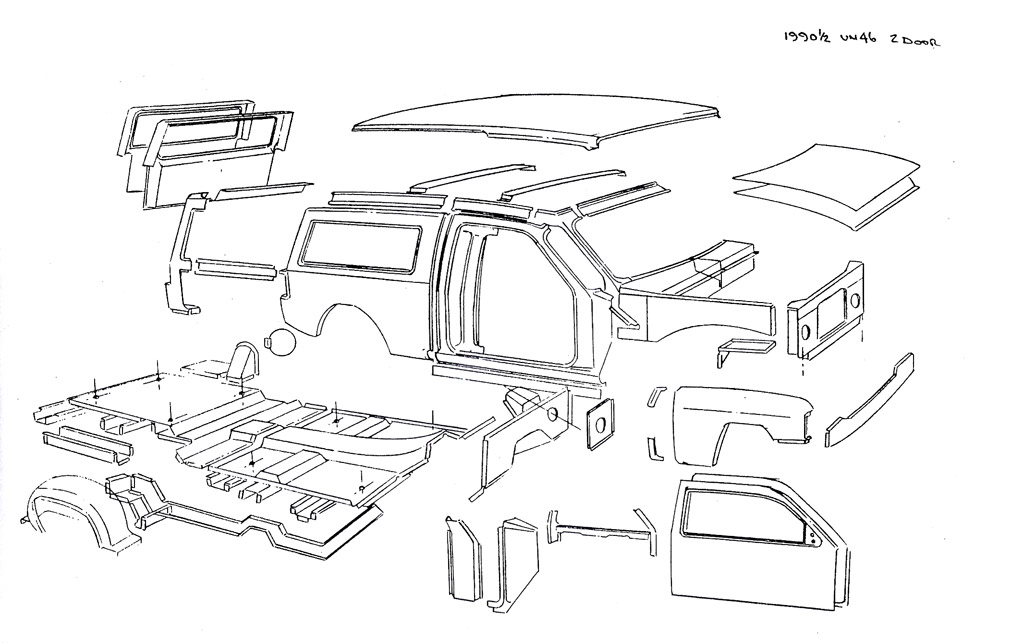
Below is an engineering drawing of a 1990-1/2 UN46 two-door.
Pursuing Concept B: The New Vehicle
The UN46 program did not have a completely straightforward path to production. Ford considered having the vehicle engineered and/or built in several locations, including:
- Brazil
- Europe
- Spain
Those options were eventually rejected because of engineering capabilities, costs, logistics, and profitability.
The project ultimately remained in the United States and at the Louisville Assembly Plant. The governor of Kentucky reportedly promised to provide $30 million for service roads and improved infrastructure if Ford would keep the UN46 in Louisville for improved employment in the area.
Ford eventually committed to keeping the vehicle’s development and production in the United States.
The UN46 1990 Ford Bronco II
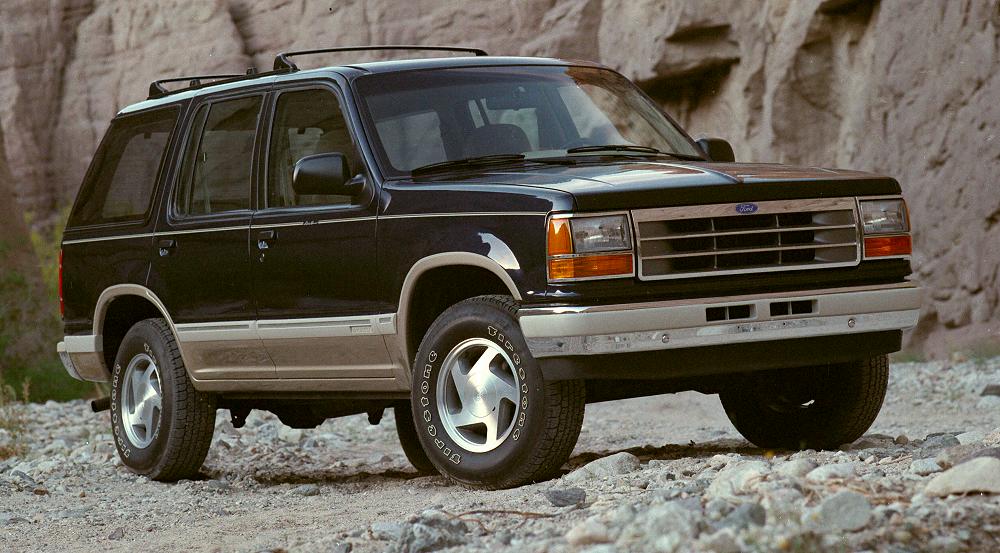
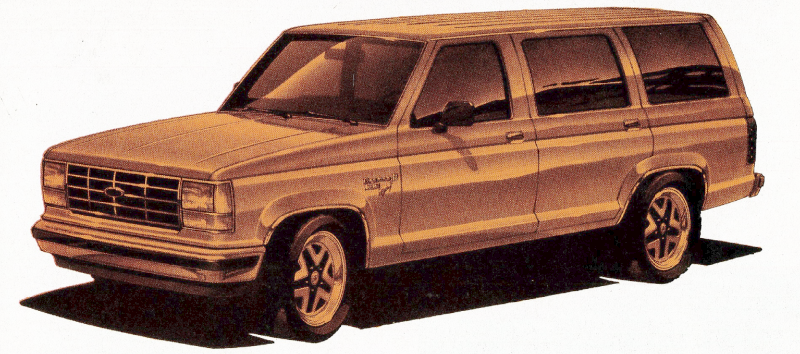
The photograph above is a Ford photo labeled “1990 Ford Bronco II Eddie Bauer prototype concept.” At first glance, you’re probably thinking, “No, that’s an Explorer.” And that’s what makes this photo so interesting.
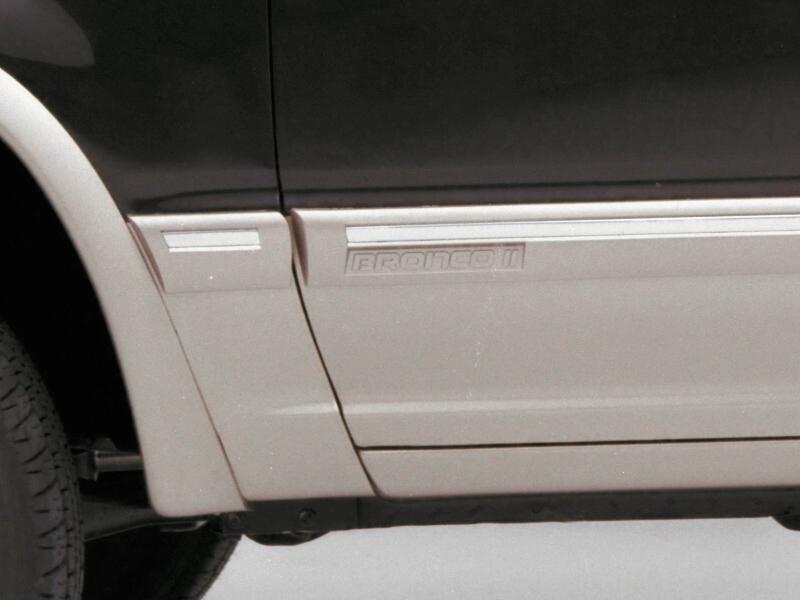
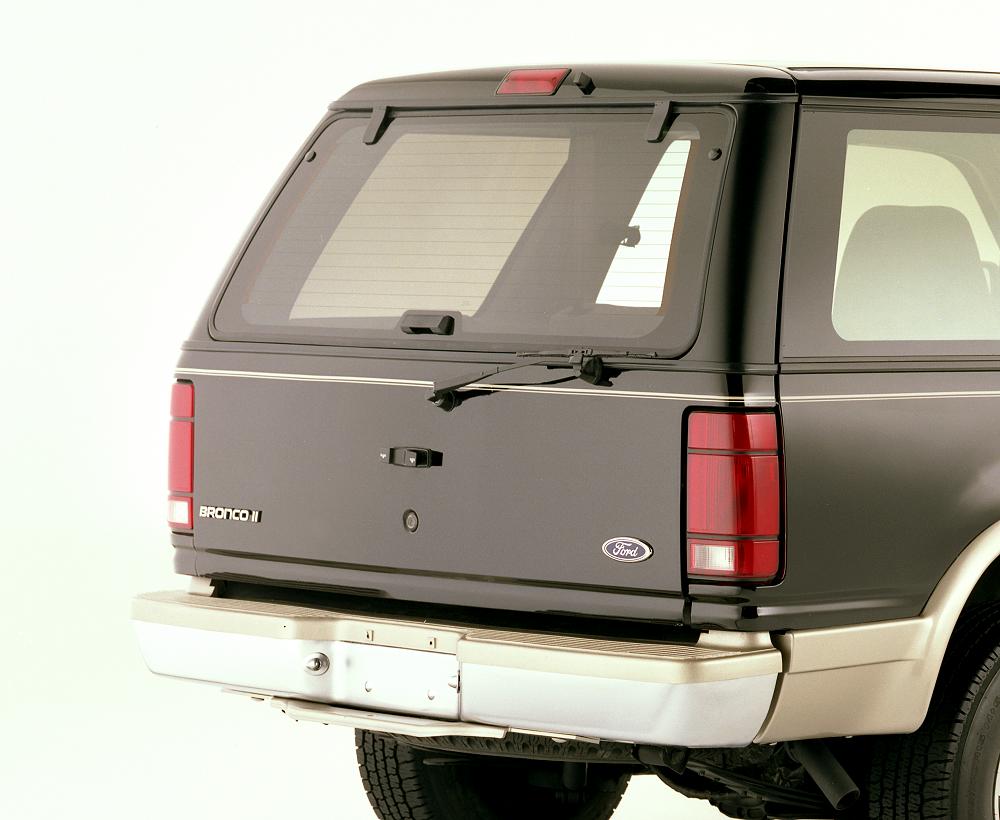
The vehicle looks remarkably similar to the 1991 Explorer that would soon enter production. But when you look closely at the photographs, there’s a “Bronco II” logo in the front-door side molding and a Bronco II emblem on the rear hatch.
This suggests that even after Ford chose to pursue Concept B — the new vehicle rather than simply stretch the existing Bronco II into a four-door, the company was still identifying the new vehicle as a Bronco II during development.

Explorer: The Name Change
So why did Ford change the name from Bronco II to Explorer?
“The Explorer name captures the design intent,” said Thomas J. Wagner, a Ford vice president and Ford Division general manager. “In consumer research ‘adventure’ and ‘individuality’ were words frequently associated with the Explorer nameplate. In its execution, the Explorer supports these associations, especially among younger men and women.
The Bronco II was dogged by reports that it was prone to rollovers. After analyzing SUV crashes involving the Suzuki Samurai, the U.S. National Highway Traffic Safety Administration (NHTSA) opened a formal study of the Ford Bronco II in 1989.
Since the new vehicle didn’t look like the existing Bronco II, people have speculated that it may have given Ford an opportunity to change the name and distance the new vehicle from the Bronco II and its negative publicity. It would also prevent that bad press from following a completely redesigned vehicle after all the work Ford had put into developing it.
The Ford Explorer was a huge success and remains in production more than 35 years later.
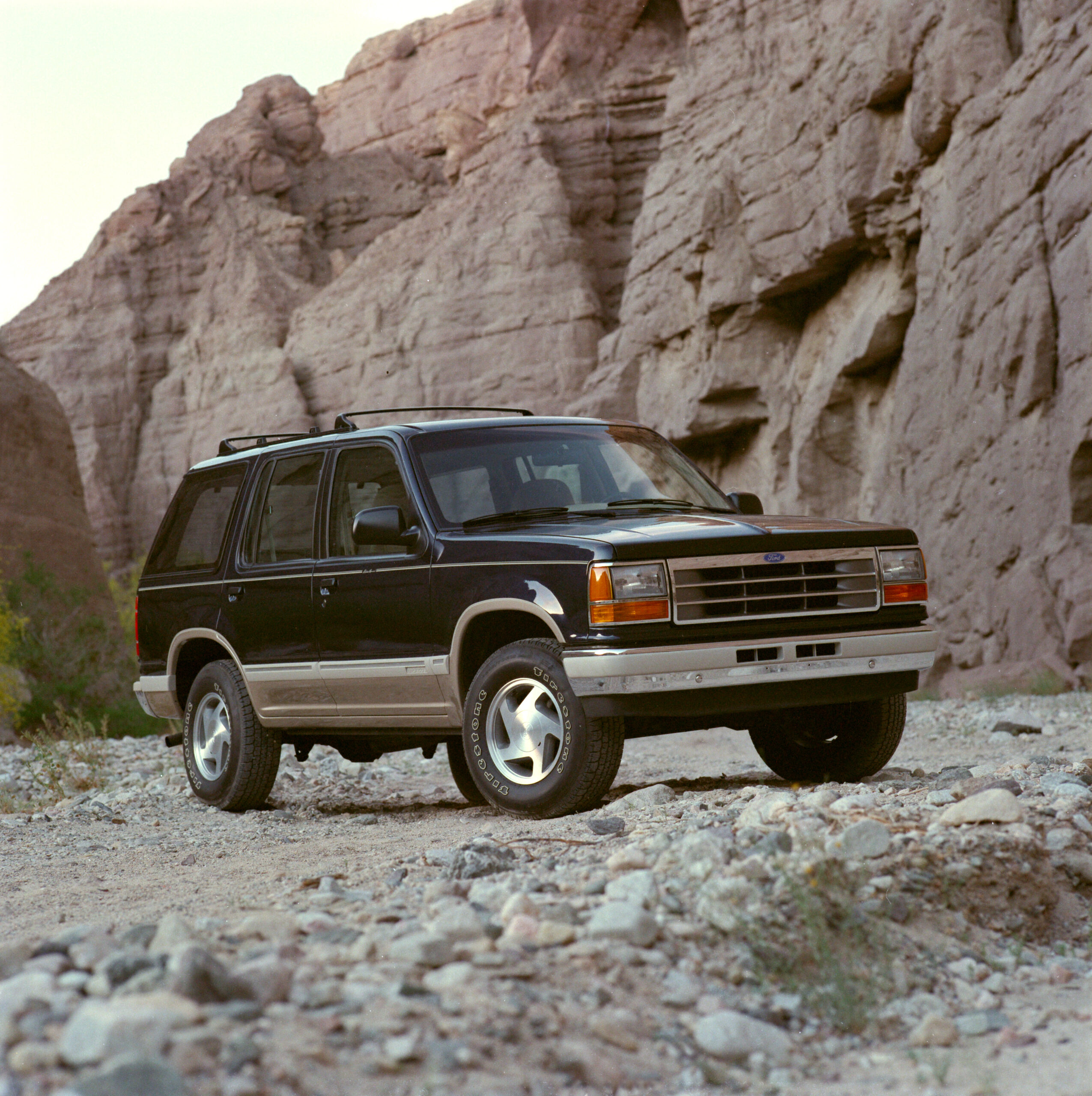
More Photos


About The Author
Jim Oaks is the founder of TheRangerStation.com, the longest-running Ford Ranger resource online since 1999. With over 25 years of hands-on experience building and modifying Ford Rangers — including magazine-featured builds like Project Transformer — Jim has become one of the most trusted authorities in the Ford Ranger off-road and enthusiast space.
Since launching TheRangerStation.com, Jim has documented thousands of real-world Ranger builds, technical repairs, drivetrain swaps, suspension modifications, and off-road adventures contributed by owners worldwide. TheRangerStation.com has been referenced in print, video and online by enthusiasts, mechanics, and off-road builders looking for practical, and experience-based information.