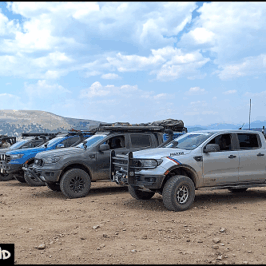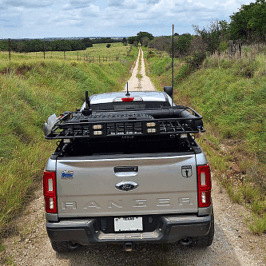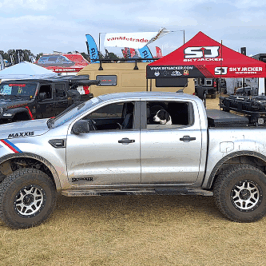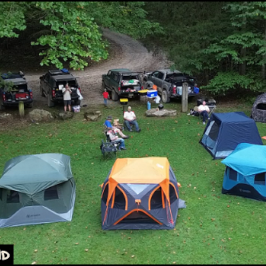
For the second year in a row, Eric (Curious Hound) has hosted a Fall Colors Campout. This year it was October 8-11 at Rifrafters Campground in Fayetteville, West Virginia and was focused on the New River Gorge area.
When Robbie, Kevin and I arrived, Eric greeted us and quickly questioned how the three of us managed to arrive at the same time. At first, I told him we ran into each other at the gas station right before we got there, but I knew he’d never believe that. The truth is that I have to pass near Robbie’s house in Tennessee on my way from Texas to West Virginia, so we met up along the way. We ran into Kevin at a gas station in Virginia. That’s my story and I’m sticking to it.
Actually, to see our trip from Tennessee to the Campout check out: Almost Heaven – The Long Way to West Virginia
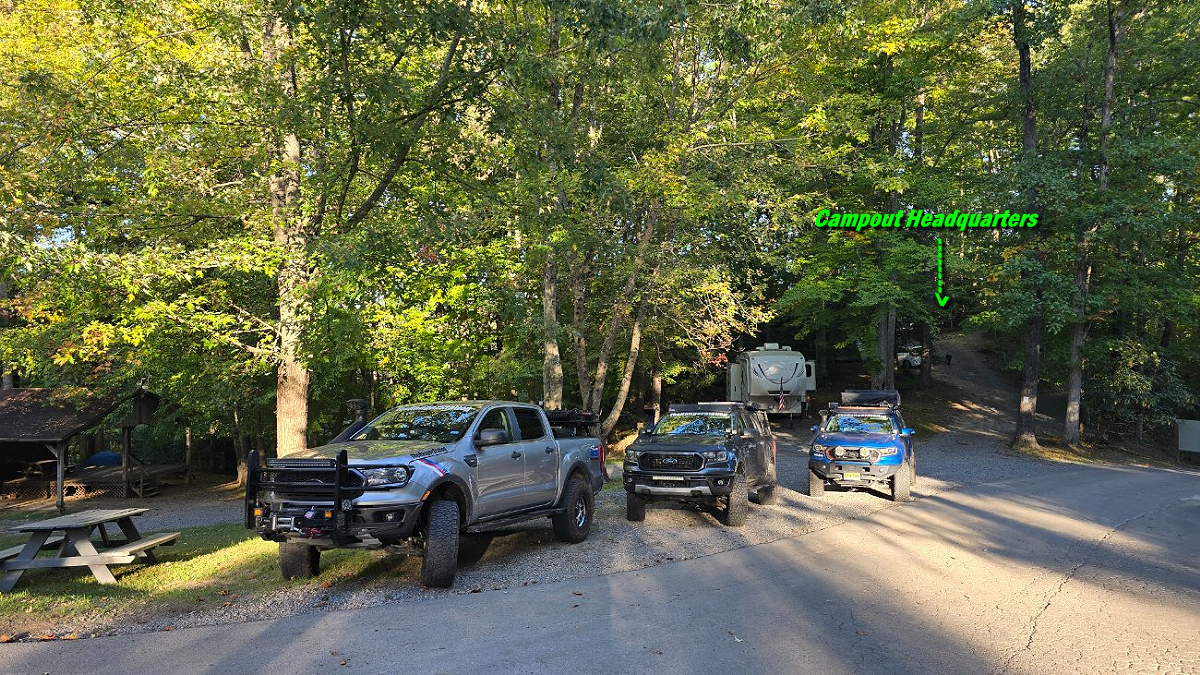
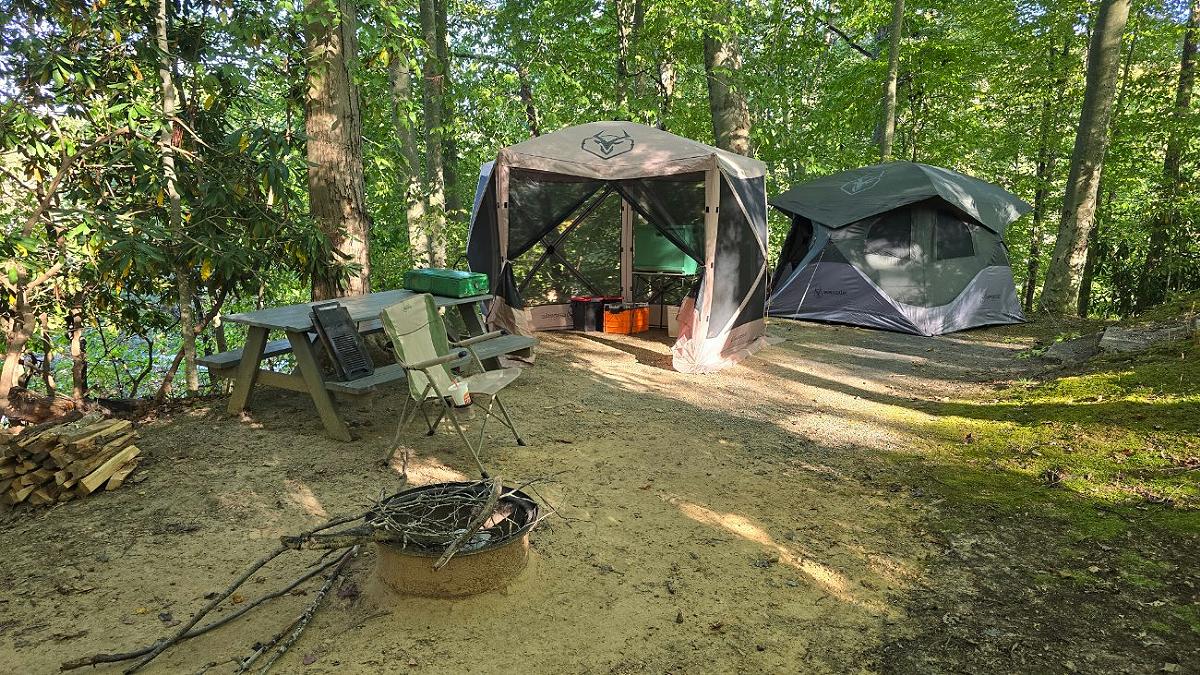
Eric’s campsite was straight up the drive across from the campground office and served as Campout Headquarters. This is where we’d meet in the mornings to start our adventures and where we’d meet in the evenings and enjoy a campfire.
Thurmond
Friday started out with us heading to the small town of Thurmond.
Thurmond was incorporated in 1903 and was named for Captain W. D. Thurmond, who settled here in 1844. He received the 73-acre site in 1873 as payment for a surveying job. Thurmond post office was established in 1888 and discontinued in 1995. The community remained small until Thomas G McKell of Glen Jean negotiated with the Chesapeake and Ohio Railway for a crossing at Dunloup Creek in 1892.
W. D. Thurmond banned alcohol from his lands, which comprised the originally incorporated portion of the town. The Dun Glen Hotel was just outside the incorporated portion. A district called “Ballyhack” or “Balahack” on the south side near the Dun Glen became notorious as Thurmond’s red light district.
Two hotels were in the town; one was called the Lafayette (known locally as the “Lay-flat”), which was close to the railroad, and the 100-room Dun Glen, which opened in 1901, became a nationally known resort. It burned down in 1930. The Thurmond National Bank (owned by Thurmond) closed in 1931, and the New River Bank (owned by the McKells) moved to Oak Hill in 1935. The decline continued into the 1950s when locomotives changed from steam to diesel, which could travel much longer distances and did not need to stop for coal and water refilling at Thurmond. The second decline to hit Thurmond was in the late 1980s, when the National Park Service began purchasing homes and properties, voluntarily, with the promise of turning the Town into a living history museum.
Today, most of Thurmond is owned by the National Park Service for the New River Gorge National Park and Preserve. The C&O passenger railway depot in town was renovated in 1995 and now functions as a Park Service visitor center. Believe it or not, the depot still functions as an unstaffed Amtrak station. The entire town is a designated historic district on the National Register of Historic Places.
According to the 2020 census, Thurmond has a population of five.
Getting to Thurmond is a unique adventure in itself. When approaching it from the more populated areas along US19 you have to cross a one lane bridge that also holds a train track. This means that you have to take turns crossing the bridge with traffic coming from the other direction.
The only other option is Beury Mountain Road which exists out of the far north end of town. That road has steep grades and tight switchbacks until you get to the top of the hill above town, and then it’s 12-miles of rocky, rough road before you reach any pavement. The road is so narrow that there are few places to pass oncoming traffic.
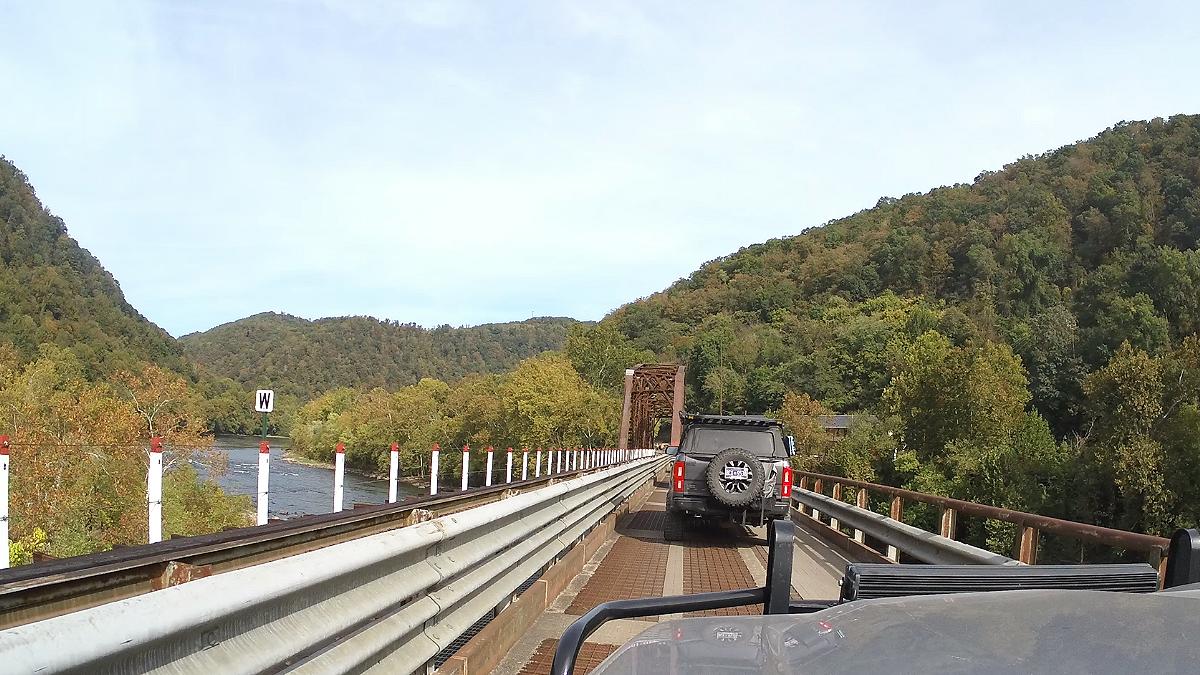
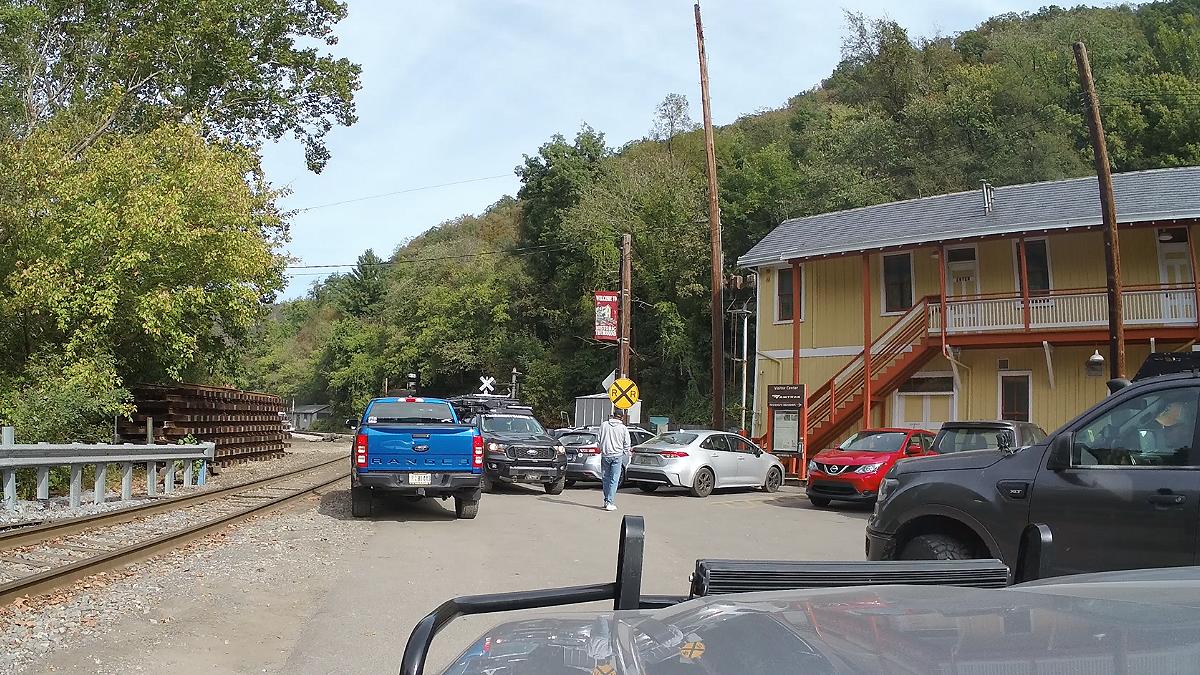
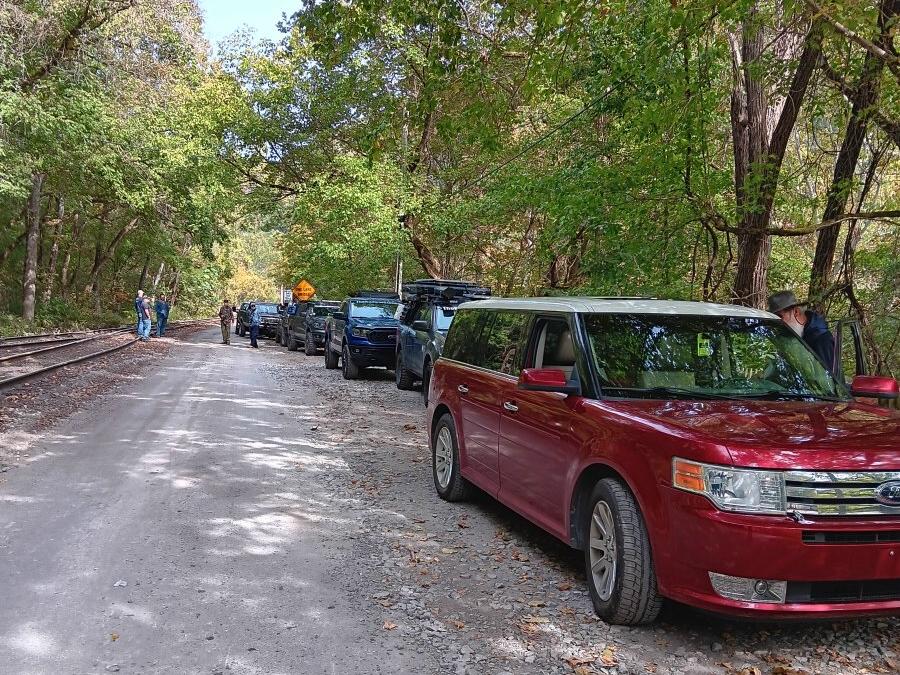
On Monday evening a train operated by RJ Corman Railroad Company carrying coal from the Alpha loadout in Pax, was coming onto the CSX mainline when about 10 cars came off the tracks near the road crossing and depot. The crossing was closed and crews were still working to clean up the debris when we arrived Friday morning. This led to a major traffic jam outside of the depot with no place to park, so we played some parking lot Jenga, headed back across the bridge, and regrouped.
Glade Creek Grist Mill
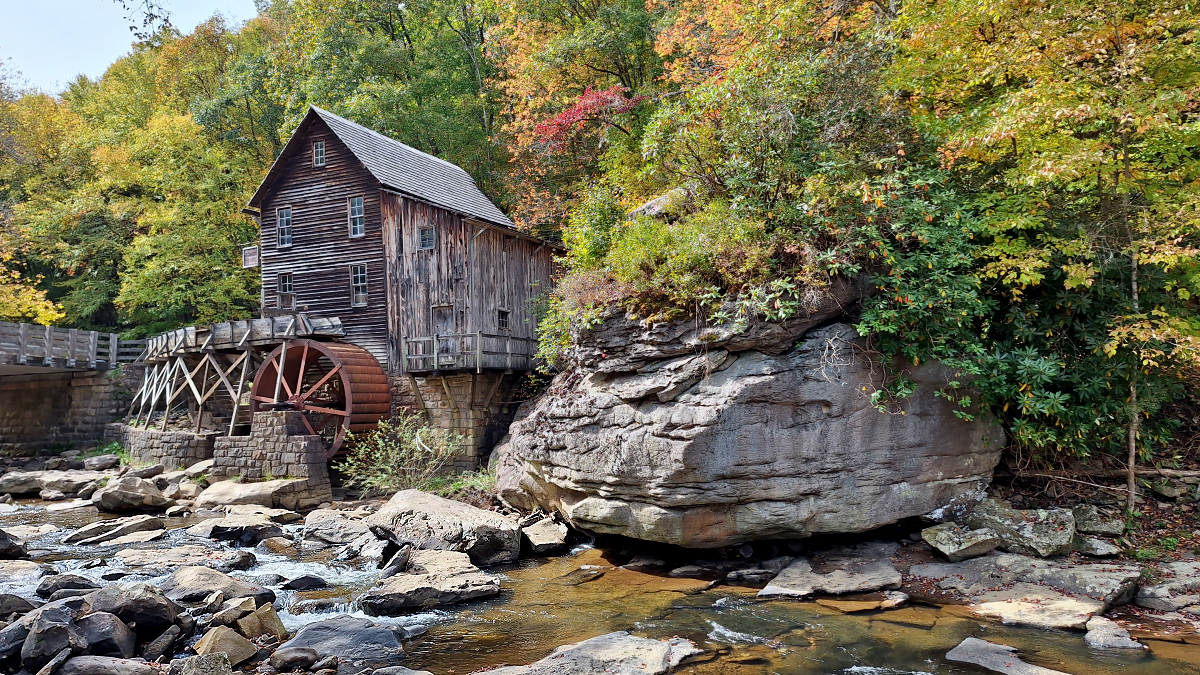
After plotting a course in the GPS, Eric lead us over to the Glade Creek Grist Mill in Babcock State Park.
The Glade Creek Grist Mill is a “Frankenstein” structure built entirely from salvaged pieces of three separate historic, deteriorating West Virginia mills. It was assembled to recreate the look and role of Cooper’s Mill, a traditional corn-grinding facility that originally stood on the grounds before the area became a state park. The wooden structure was brought in from the Stoney Creek Grist Mill, which dated back to 1890 near Marlinton. The overshot water wheel was salvaged from the Spring Run Grist Mill near Petersburg after an accidental fire destroyed the rest of that building. The internal gears and other parts and components were gathered from the Onego Grist Mill near Seneca Rocks.
The mill was completed in 1976 and is known as one of the most photographed spots in the state.
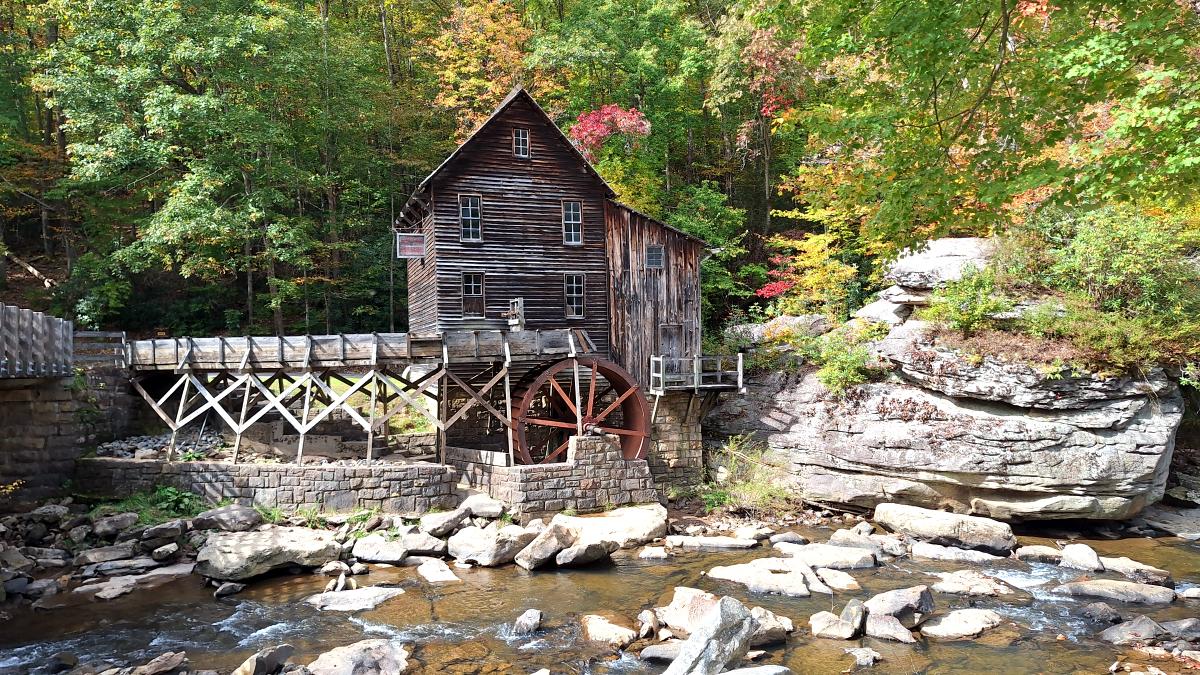
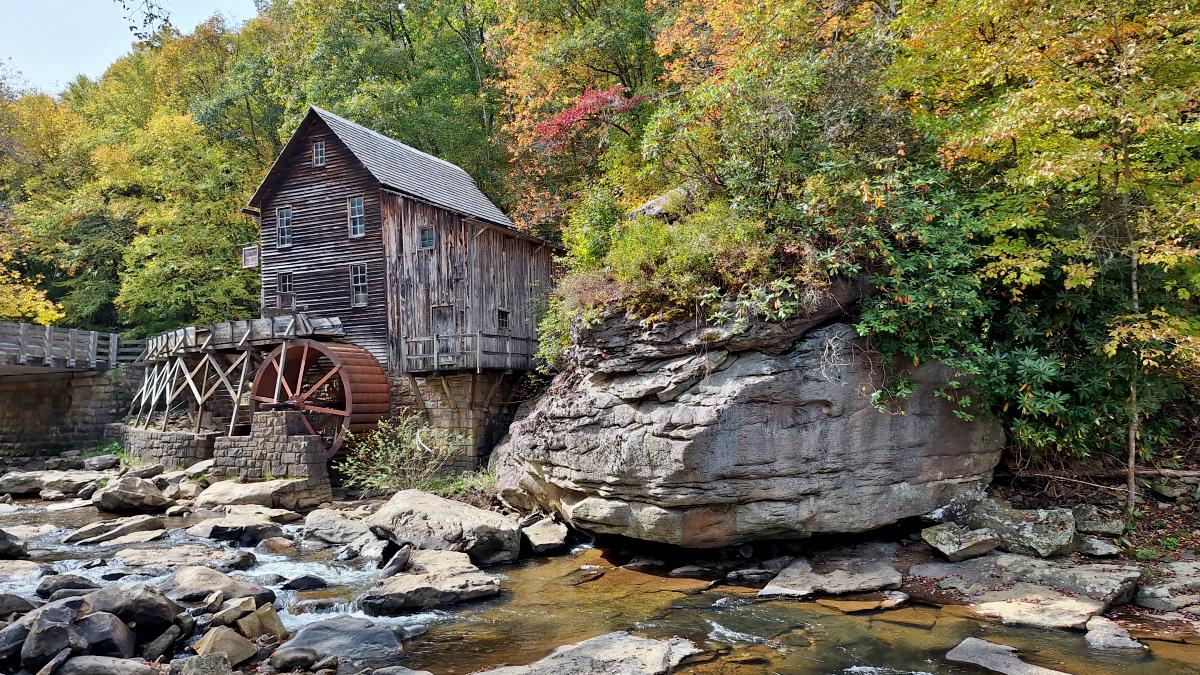
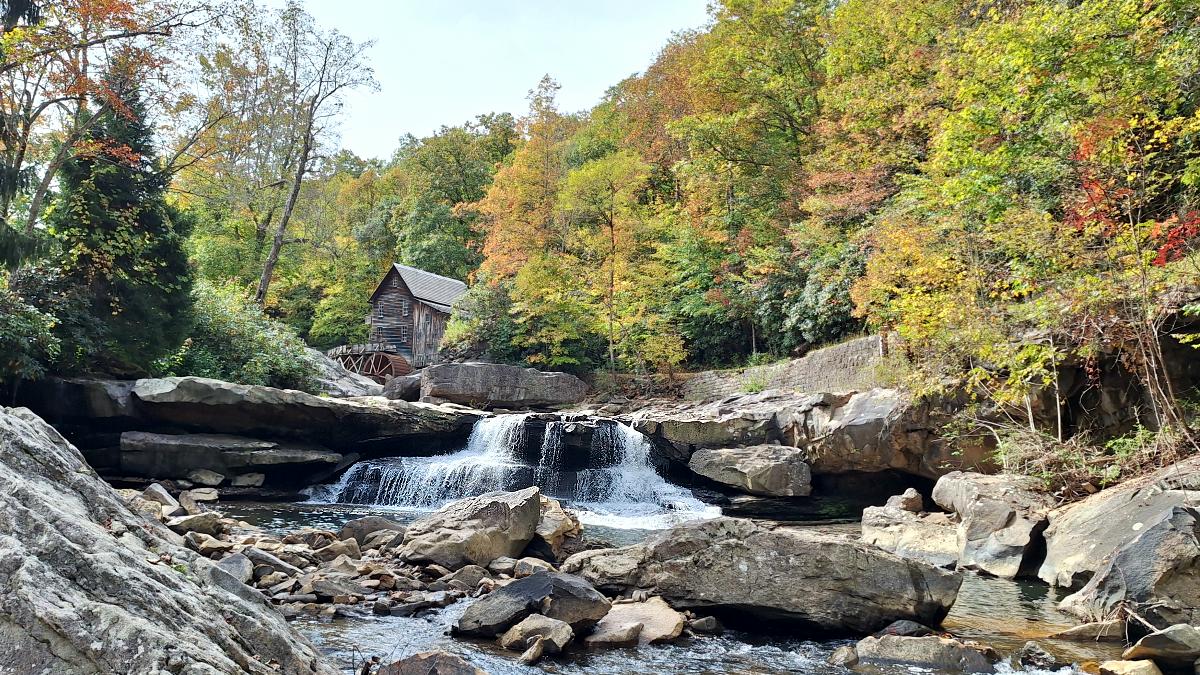
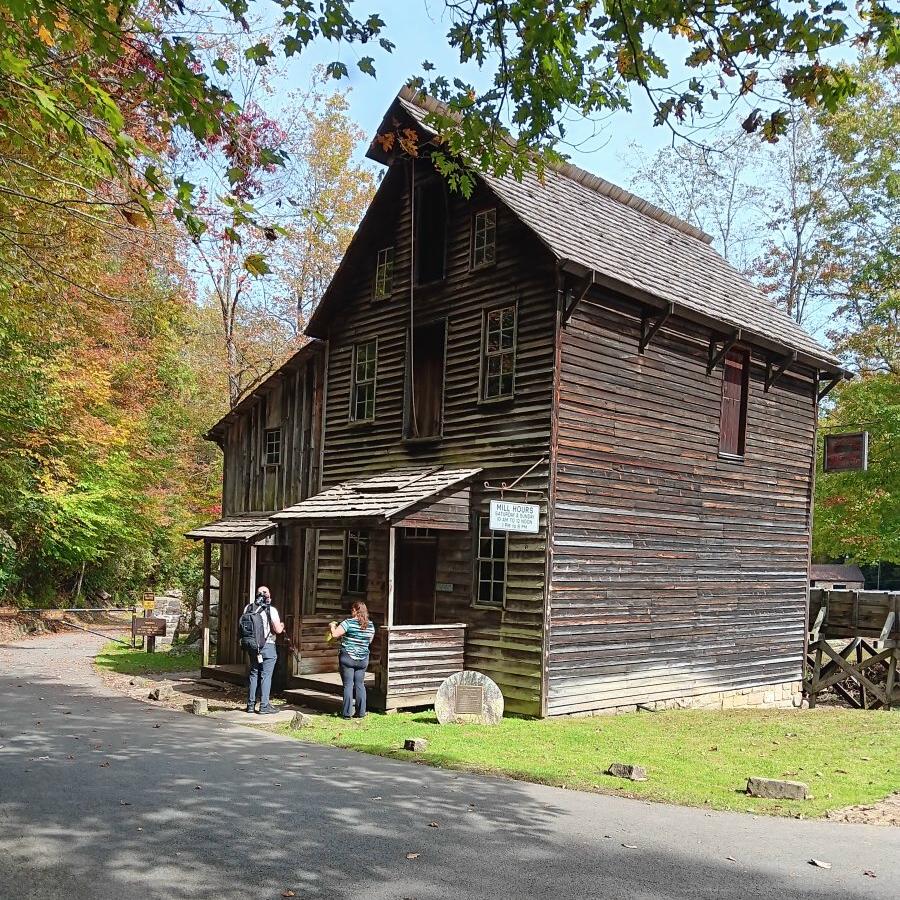
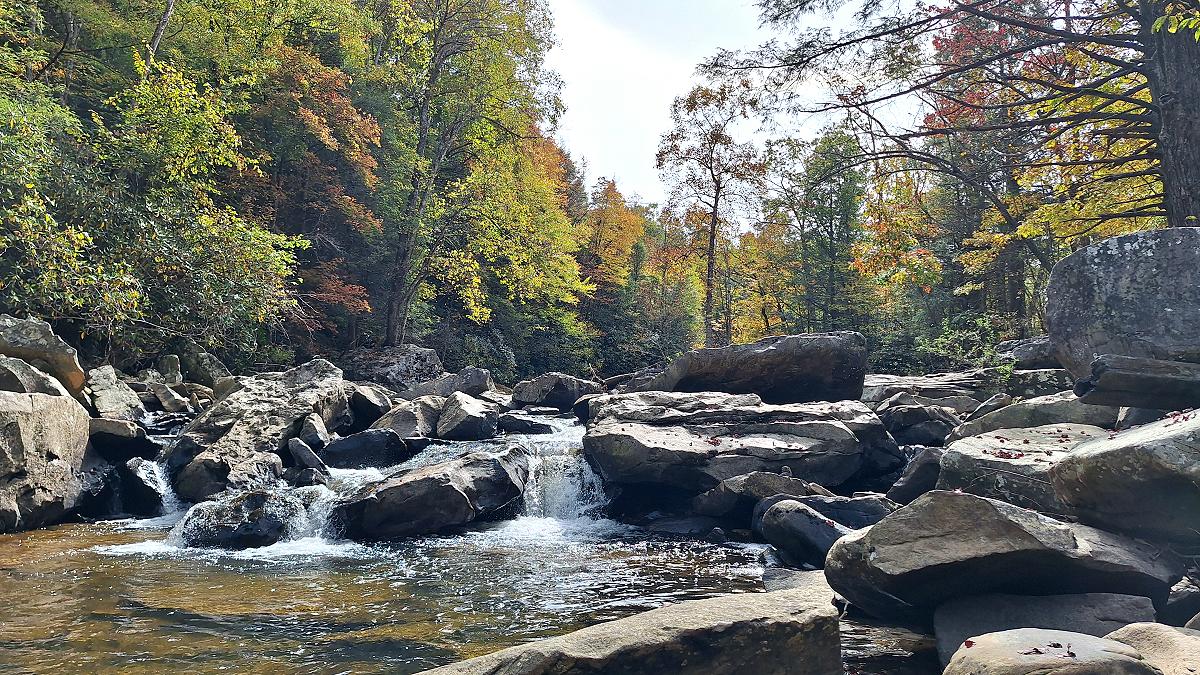
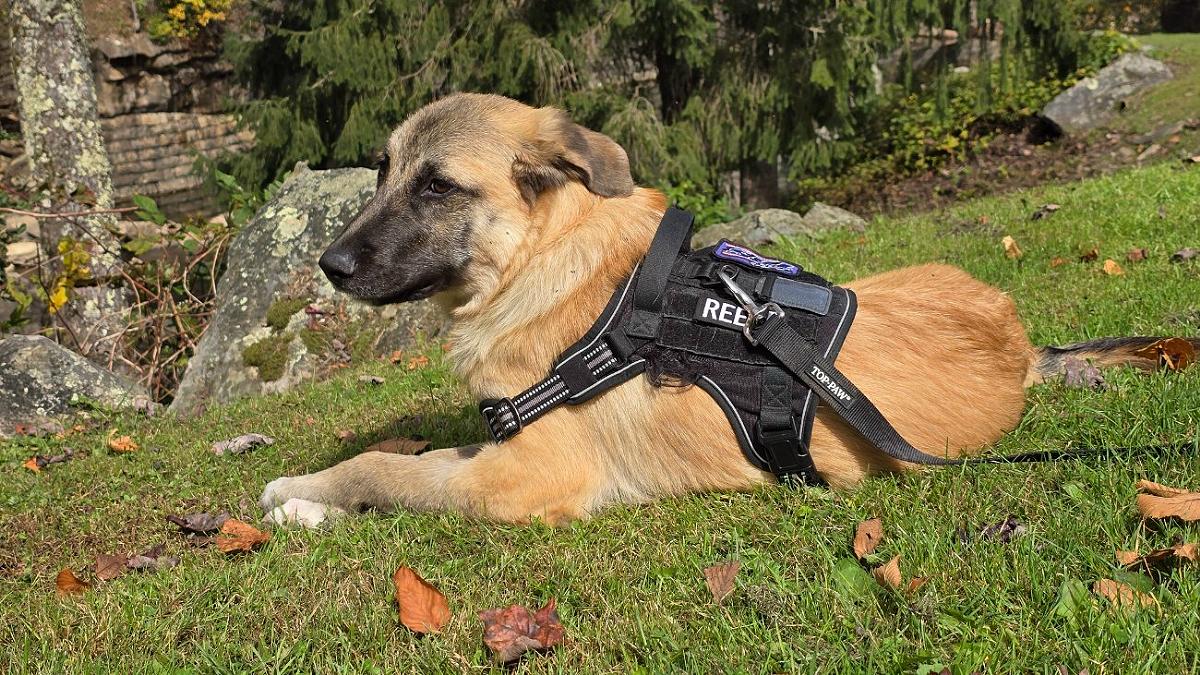
This is a picturesque park with great views of Glade Creek as well as a nice gift shop. Many of us took some time to relax on the tailgate and have some lunch. Eric took such a great photo of my puppy Reese here that I just had to share it. Reese is a 7-month-old German Shepherd mix, and this was our first trip together.
Nuttallburg
We left the grist mill and headed to see what was left of Nuttallburg.
Nuttallburg was one of almost fifty towns that sprang up along the New River in response to a growing nation’s need for coal.
In 1870, England-born entrepreneur John Nuttall saw opportunity in the coal rich New River gorge and began buying land and building infrastructure along the Keeneys Creek drainage. When the Chesapeake & Ohio Railway was completed through the gorge in 1873, the town was ready for its arrival. Nuttallburg became the second mining town in the New River gorge to ship the “smokeless” coal, processed from a mineral seam hundreds of feet above the river corridor and shipped to industrial cities hundreds of miles away.
Nuttallburg was a bustling mining community by the turn of the century, continuing to thrive after Nuttall’s death in 1897 under the direction of his heirs. The town became the focus of national attention in the 1920’s when, in an effort known as “vertical integration” to gain control of all aspects of production, automobile industrialist Henry Ford leased the town’s mines to provide coal for his company steel mills. The Fordson Coal Company made many improvements to the mine and town during the eight year tenure, but Ford’s plan for “vertical integration” failed when it became evident he could neither control, nor afford to buy, the railroad that was responsible for transportation of the coal his mines produced. He sold interests in the Nuttallburg mines in 1928.
The mines of Nuttallburg passed through three owners after Henry Ford, with production limited to primarily local use in later years as the market for New River coal declined. Production ceased in 1958 and Nuttallburg became like so many other riverside communities that rose and fell due to changes in the industry. A collection of empty buildings and structure-less foundations, concealed beneath trees and vines, is all that remains.
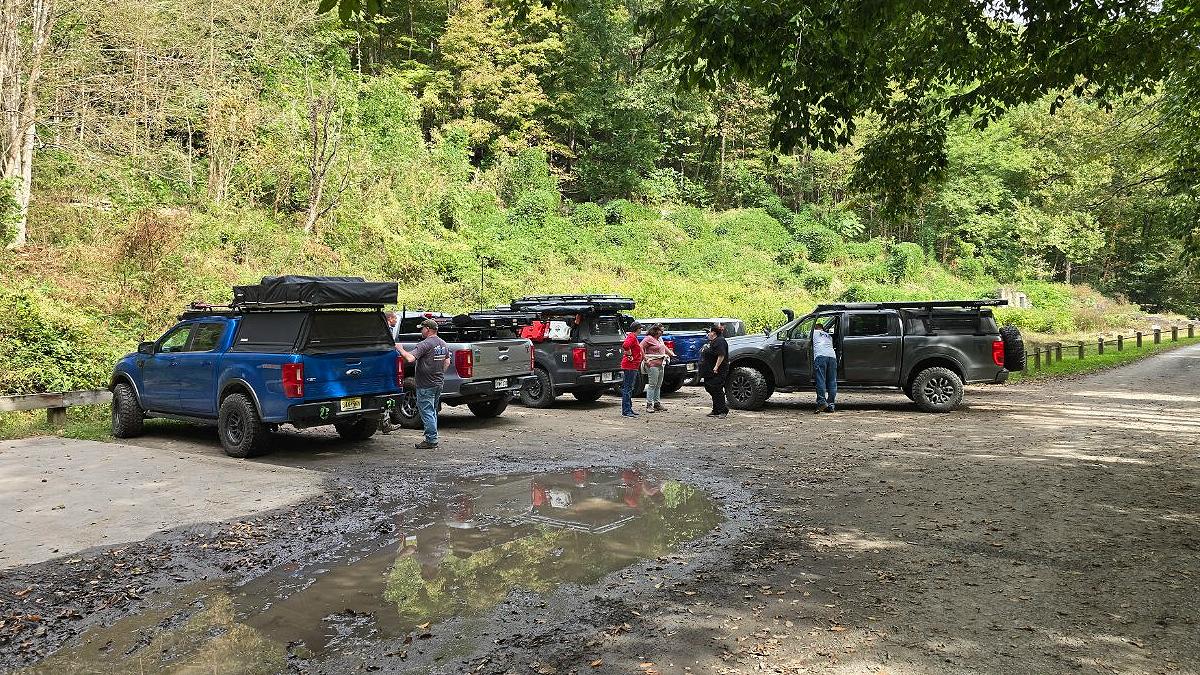
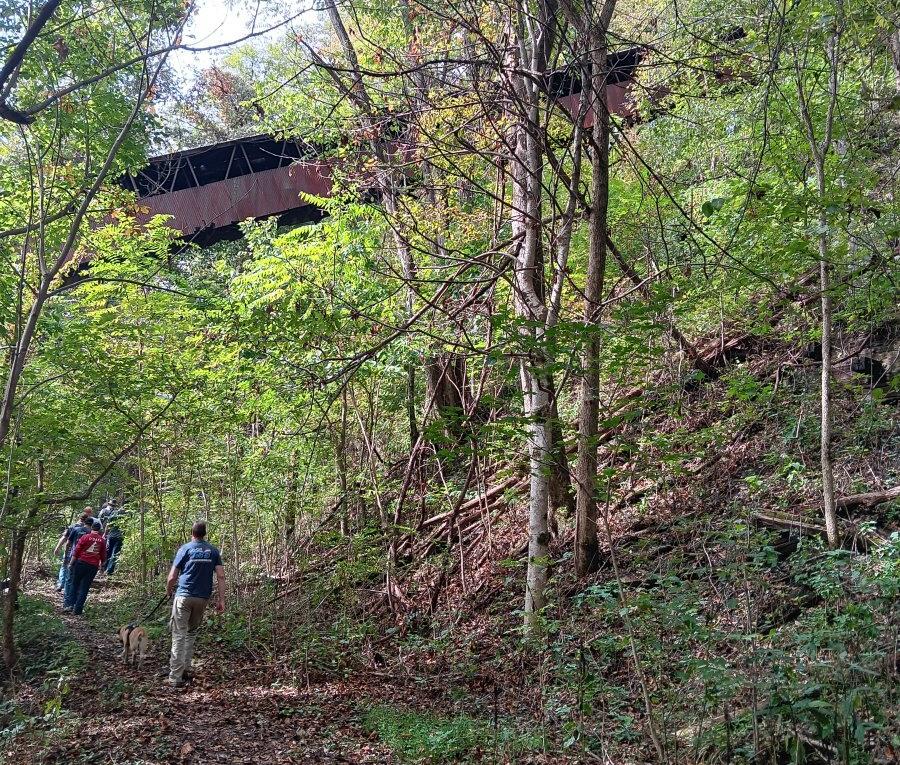
We hiked the area north of the parking lot looking at the foundations and remains of the homes and buildings that once stood here. A few people even tried to hike to the mines headhouse but had to turn back because the hillside became too steep. There were some pretty good size chunks of coal laying on the ground near the conveyor area, so I brought a chunk home as a souvenir. Maybe it will end up in someone’s stocking this Christmas.
I discovered two interesting things while gathering information for this story:
1. There’s actually a trail to the headhouse but the trailhead and parking area is on a different road than we came in on, so we wouldn’t have seen it.
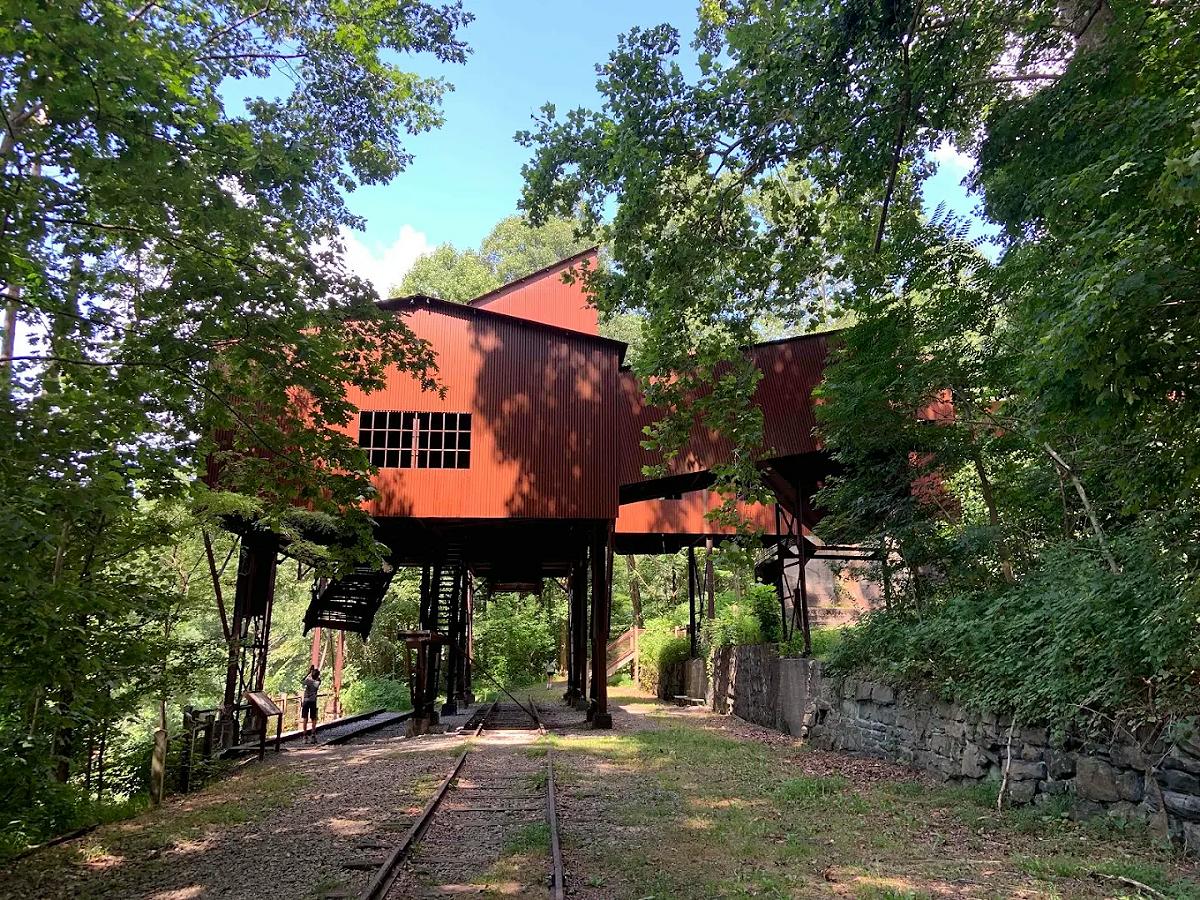
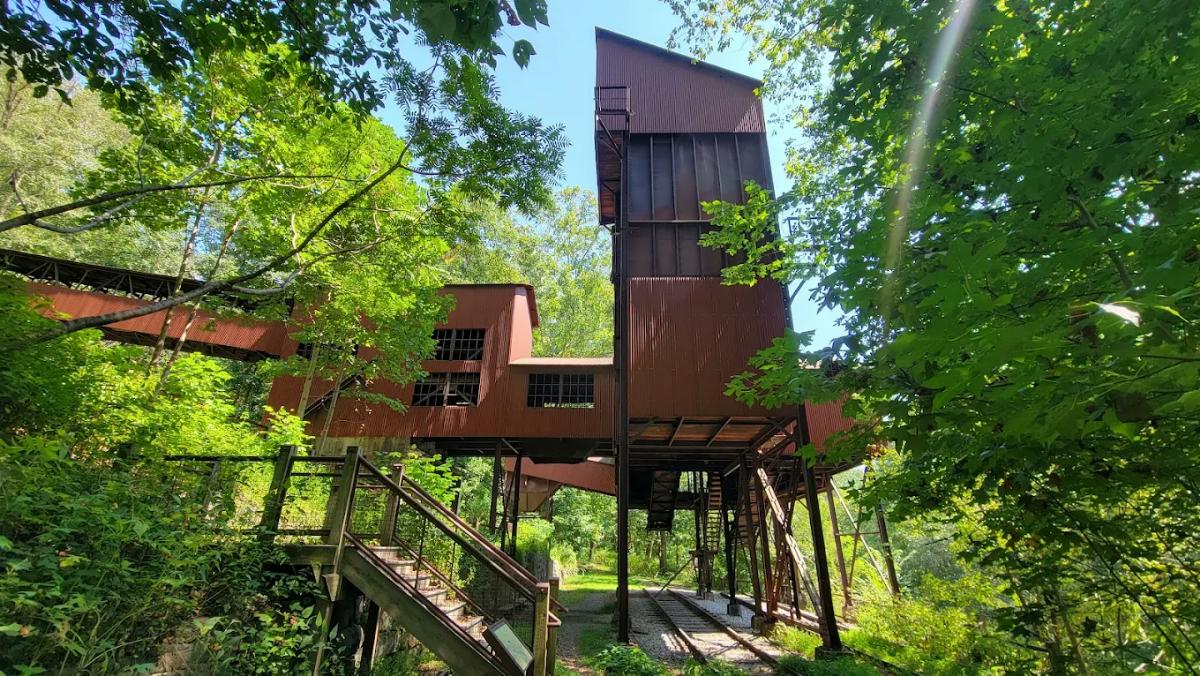
2. I don’t think any of us realized that the Nuttallburg tipple (photos below) was on the trail that led west away from the parking lot. With the state of everything else and signs of neglect, I don’t think any of us expected to find any buildings intact. The dense trees also help hide things.
NOTE: My purpose isn’t to point out our mistakes but to hopefully help the next person visiting here.
New River Gorge Bridge
After leaving Nuttallburg, the final stop for the day was the New River Gorge Bridge and Canyon Rim Visitor Center.
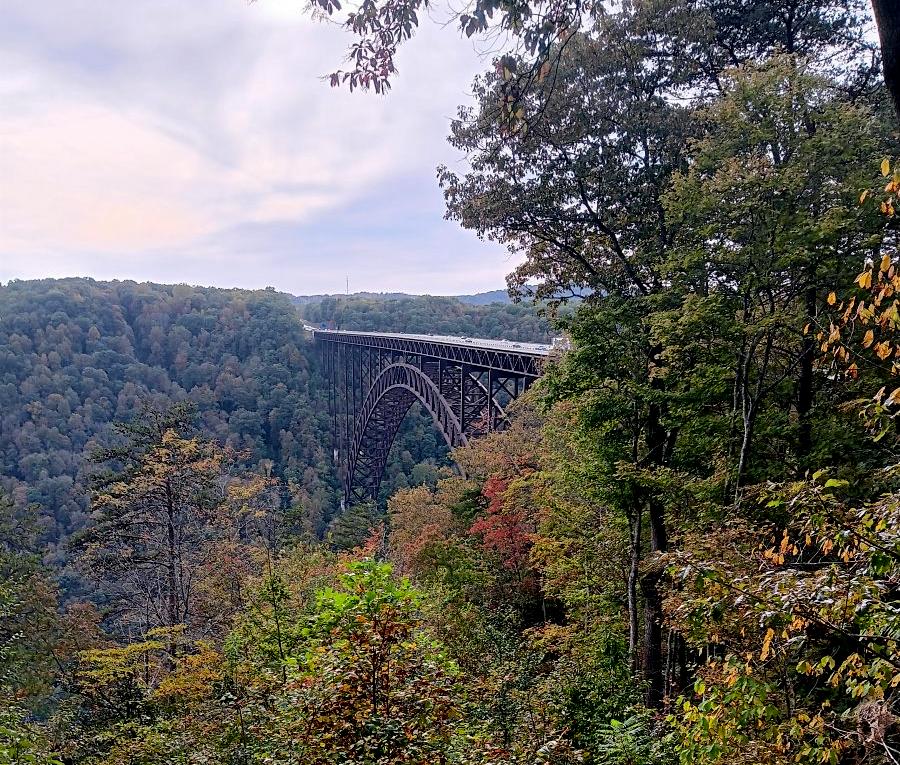
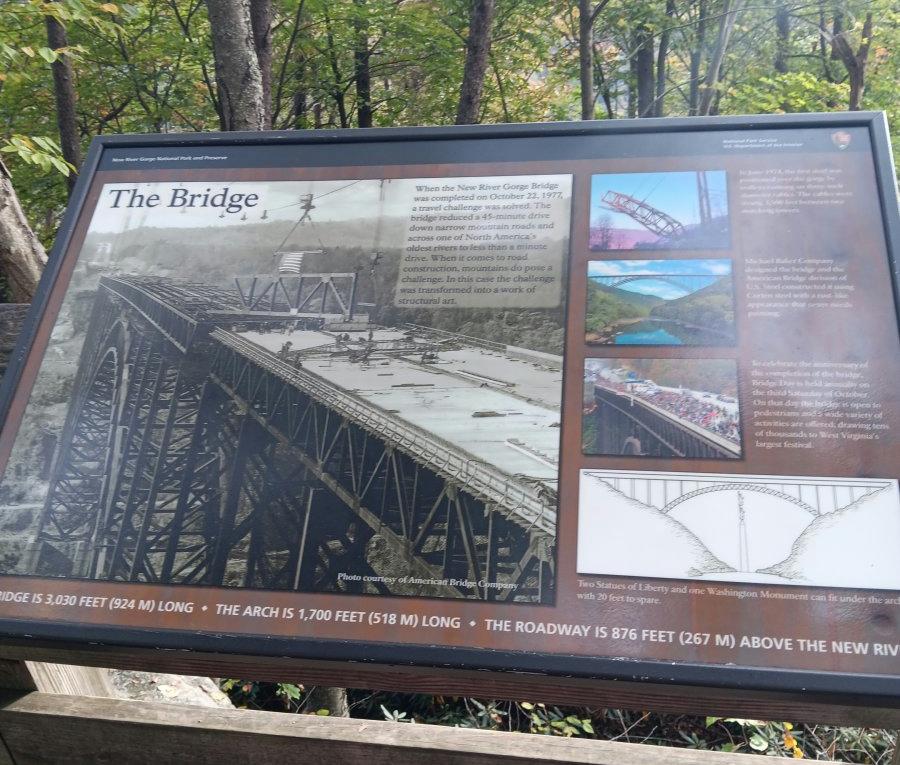
The New River Gorge Bridge is a massive engineering marvel near Fayetteville, West Virginia, that spans 3,030 feet long and stands 876 feet above the New River. Completed on October 22, 1977, for $37 million, it solved a major transit bottleneck by turning a treacherous 30-to-45-minute drive down into the canyon along Fayette Station Road into a seamless 45-second crossing on U.S. Route 19. Constructed using 88 million pounds of COR-TEN weathering steel, the bridge features a striking rust-colored patina designed to blend effortlessly into the surrounding Appalachian forest while eliminating the need for periodic repainting.
Today, the bridge is a protected landmark within the New River Gorge National Park and Preserve and is celebrated as a major cultural icon. It is featured on the West Virginia state quarter and was listed on the National Register of Historic Places in 2013. Every October, it hosts Bridge Day, the state’s largest single-day festival, during which the bridge closes to traffic so pedestrians can walk across and legally BASE jump into the gorge below. Thrill-seekers can also book guided Bridge Walk tours year-round to walk along the structural steel catwalk directly underneath the active four-lane highway.
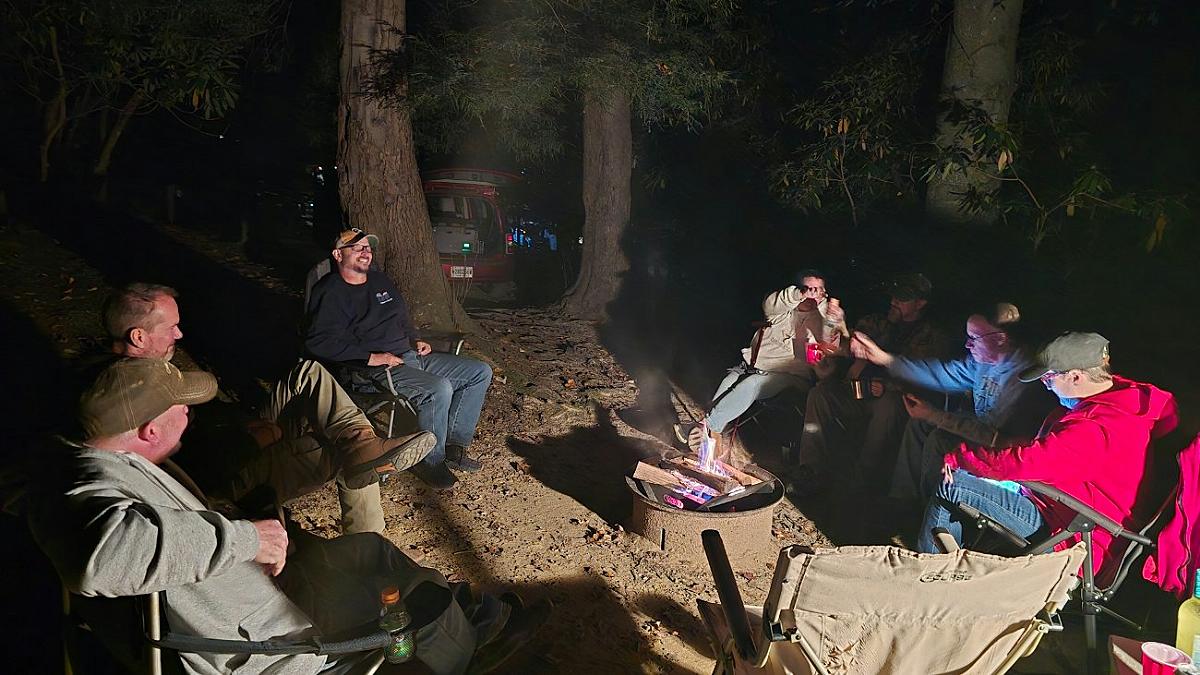
Later that evening we gathered around the campfire telling stories and just enjoying the evening.
Beckley Exhibition Coal Mine
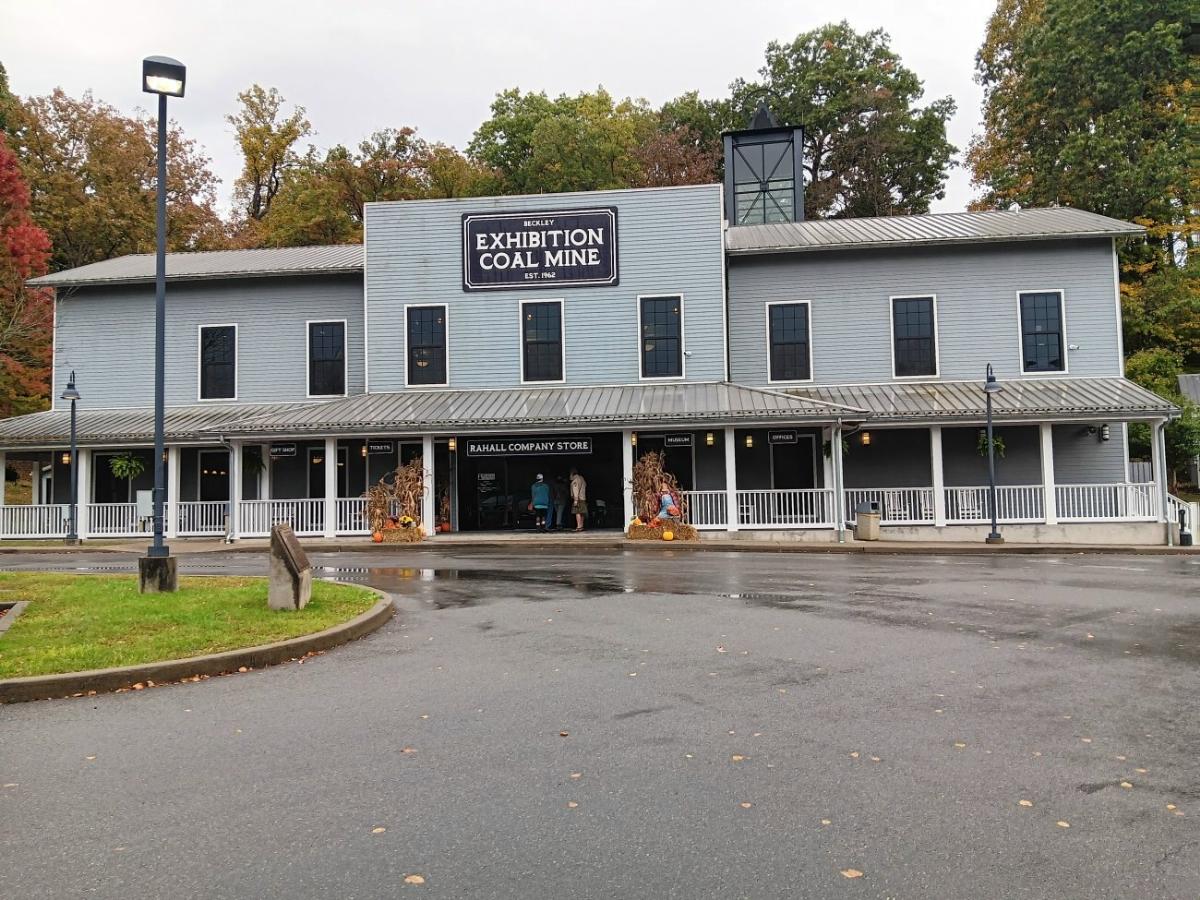
Saturday the group went to the Beckley Exhibition Coal Mine.
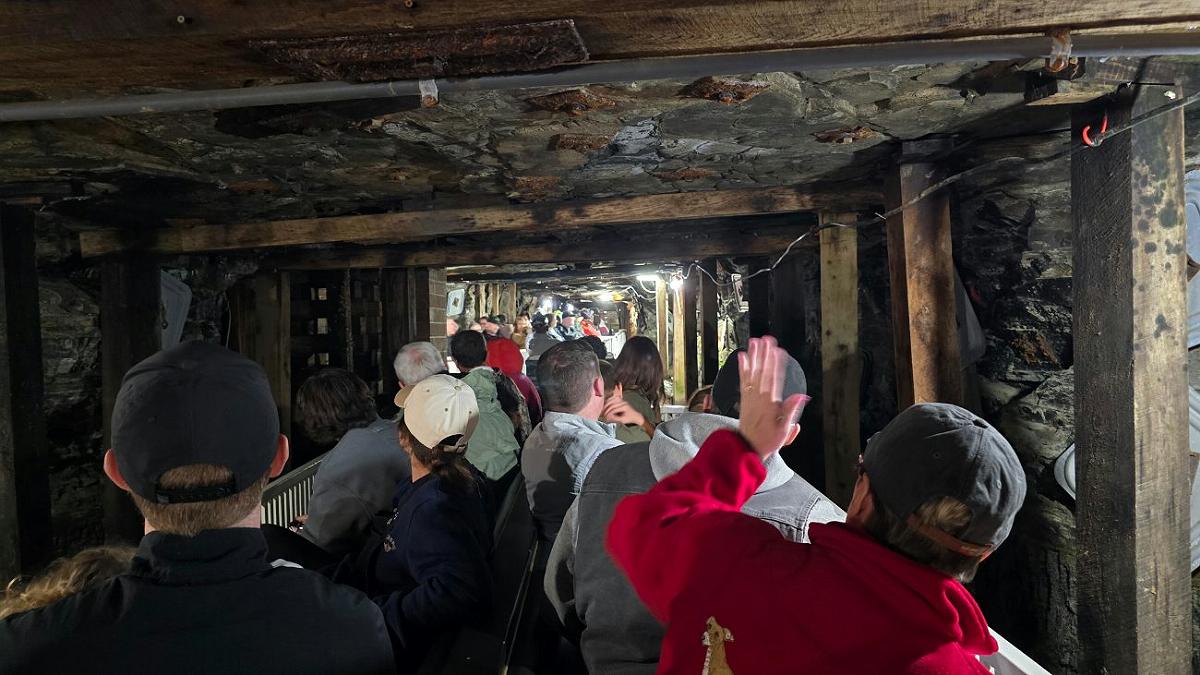
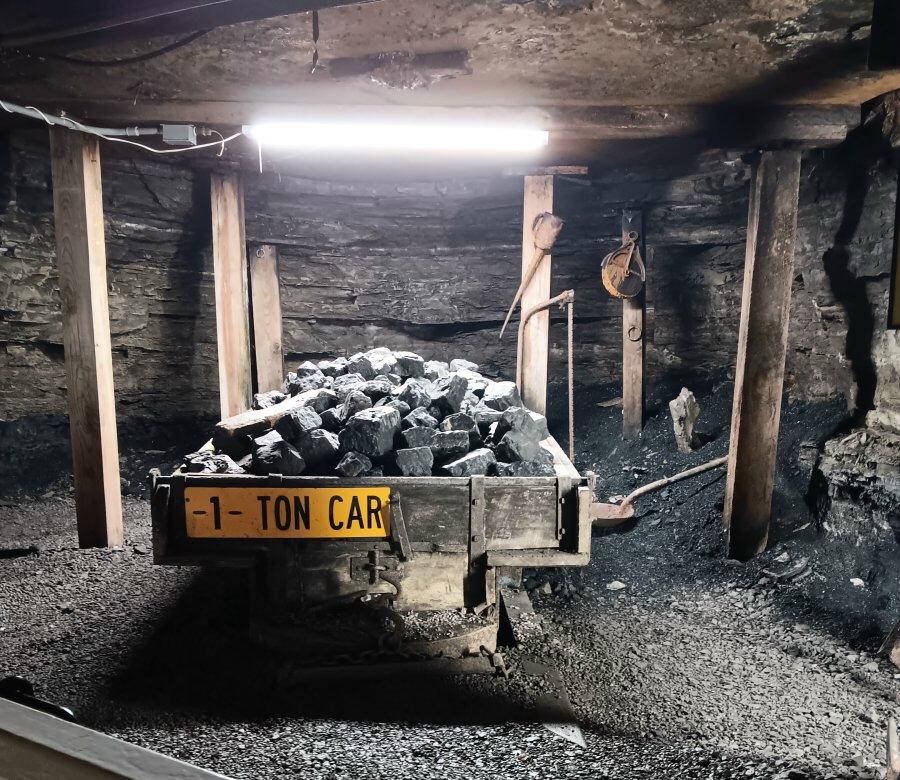
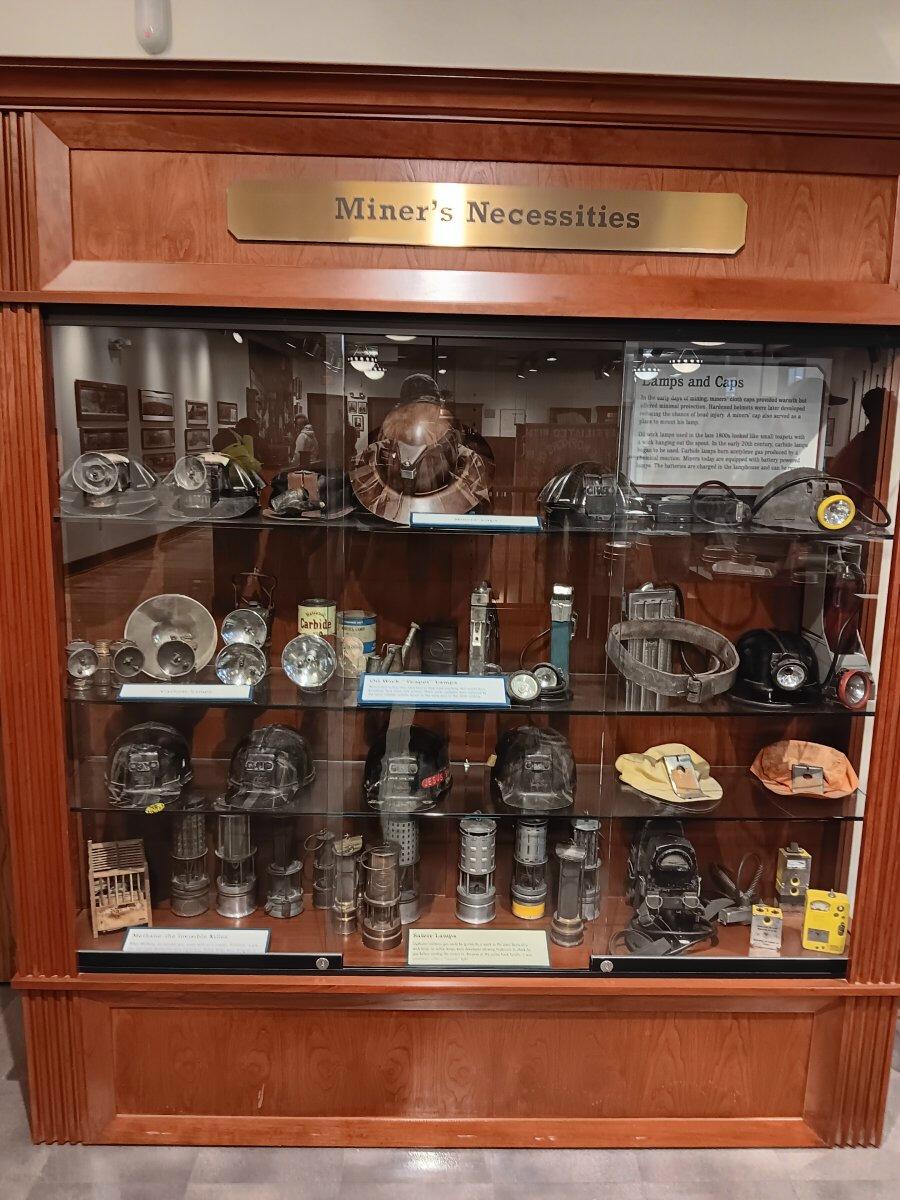
The Beckley Exhibition Coal Mine, located in New River Park in Beckley, West Virginia, is a unique living history museum centered around the former Phillips-Sprague drift mine, which originally operated from 1906 to 1953. Opened as an educational tourist attraction in 1962, the site allows visitors to ride authentic vintage railcars 1,500 feet into dark, subterranean passages. These 45-minute underground tours are led by veteran miners who offer vivid, firsthand accounts of the evolving tools, daily struggles, and structural dangers—like toxic gases and cave-ins—that defined Appalachian mining life. Because the mine stays a chilly 58°F year-round, the facility advises all guests to bring a jacket, even during hot summer months.
Beyond the subterranean ride, the complex features a meticulously recreated early 20th-century coal camp village built from historic buildings donated by surrounding communities. Visitors can tour an authentic coal company house, a superintendent’s home, a miner’s shanty, the Pemberton Coal Camp Church, and the Helen Coal Camp School to experience what daily life looked like in a traditional company town. General admission to the property is highly comprehensive, covering access to the underground tour, the historic village, a dedicated coal museum, and the nearby Youth Museum and Mountain Homestead.
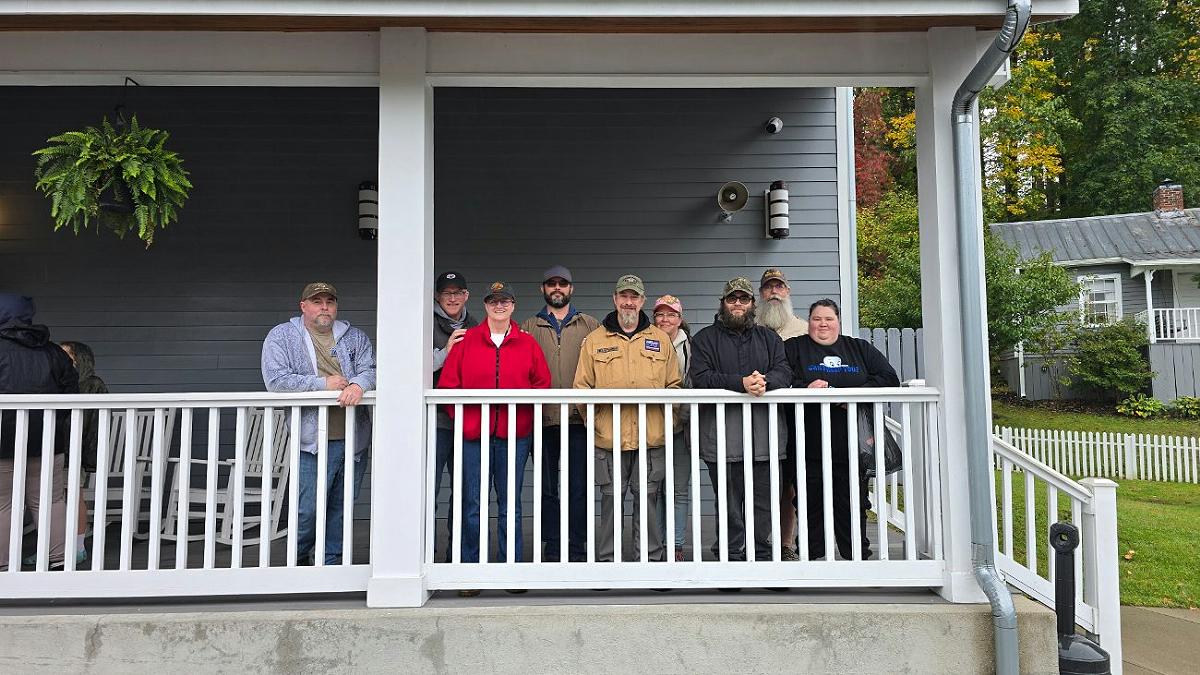
Below are a few photos from the exhibition. There is a lot to see and experience here. It isn’t just the mine underground; it’s all of the artifacts in the museum as well as the buildings in the mine camp.
Forum moderator Sgtsandman did a great job capturing the tour in photos which you can see at: TRS Event – 2026 Fall Colors Campout – Page 27
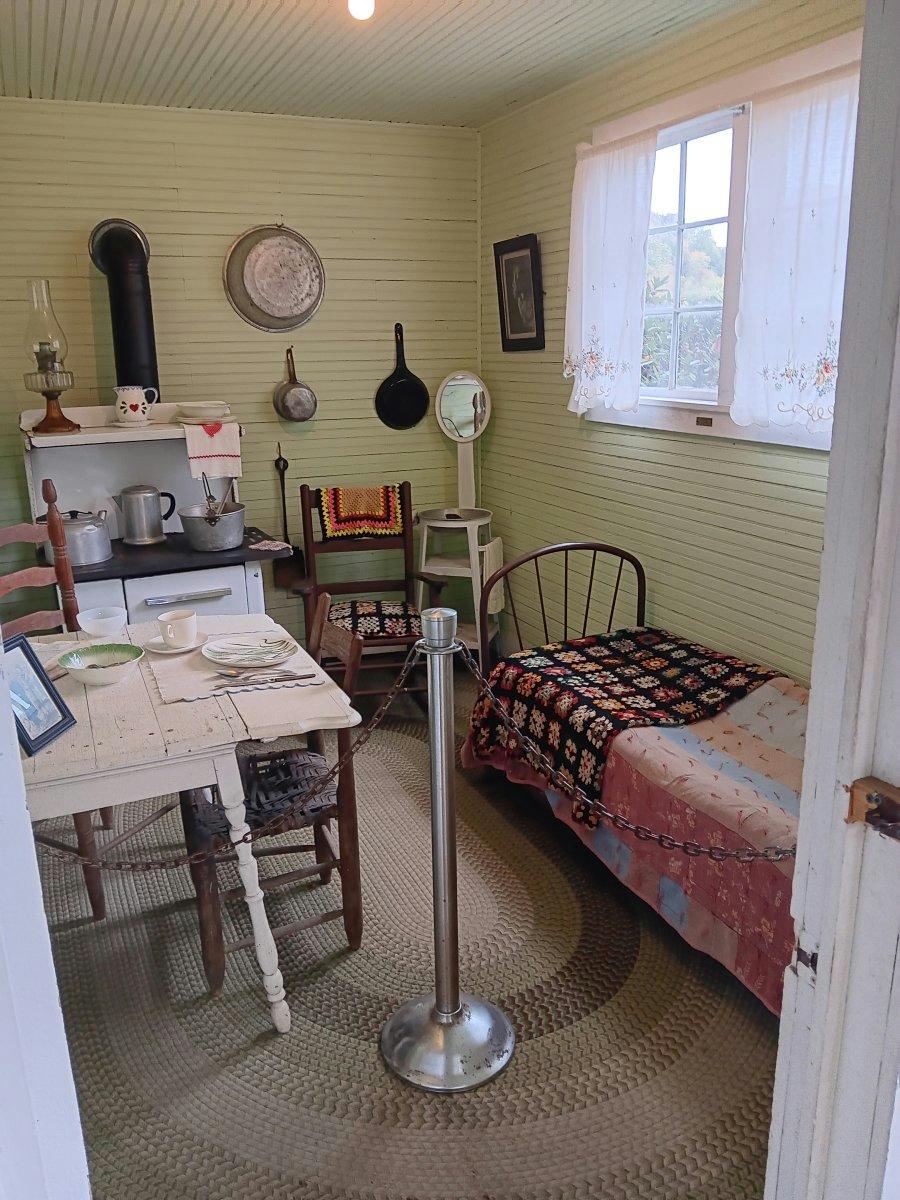
Miners Shanty
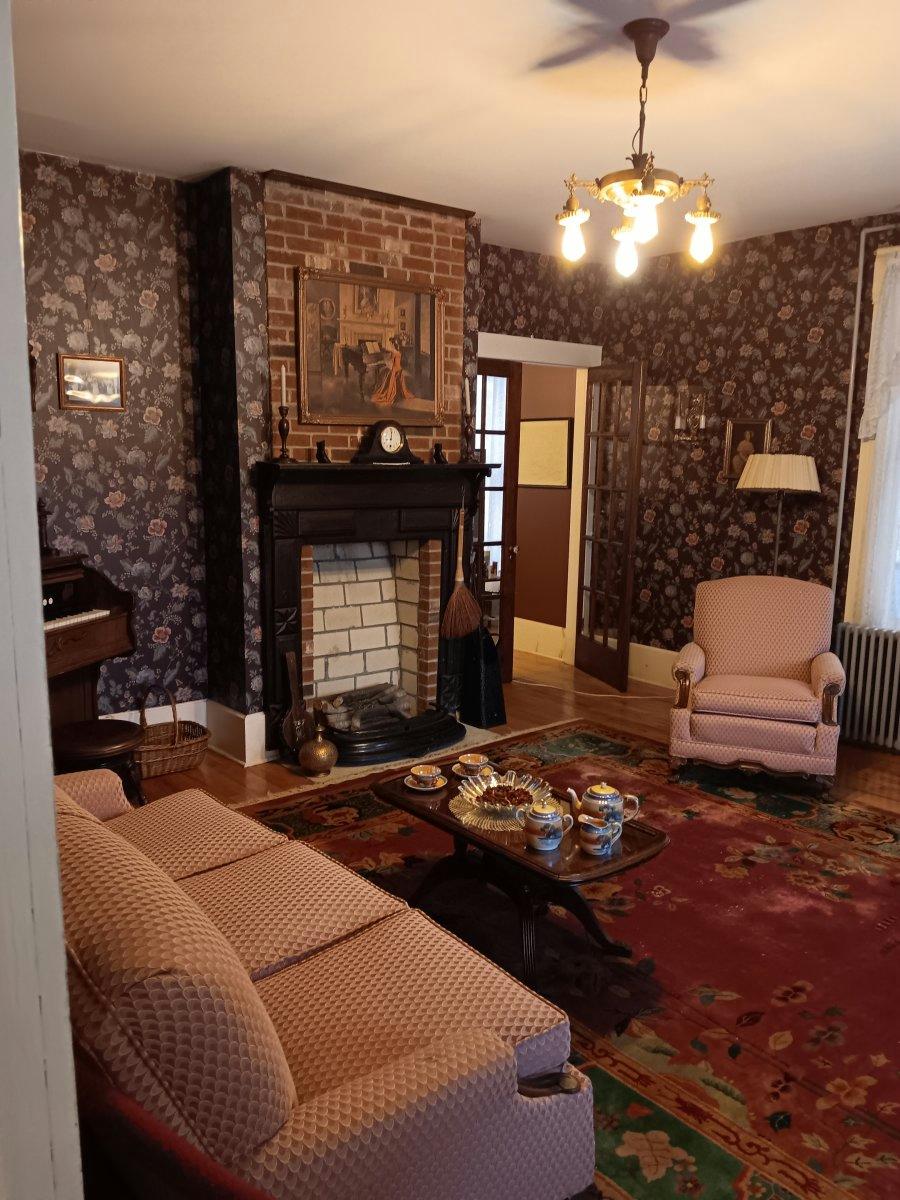
Superintendent’s House
Fayette Station Road
I really wanted to go to the Coal Mine Exhibition, but I couldn’t leave my puppy Reese alone in the truck that long, so I didn’t go. I decided to explore Fayette Station Road below the New River Bridge instead. This road use to be US19 prior to the New River Bridge. Robbie didn’t want to do the coal mine tour, so he joined me.
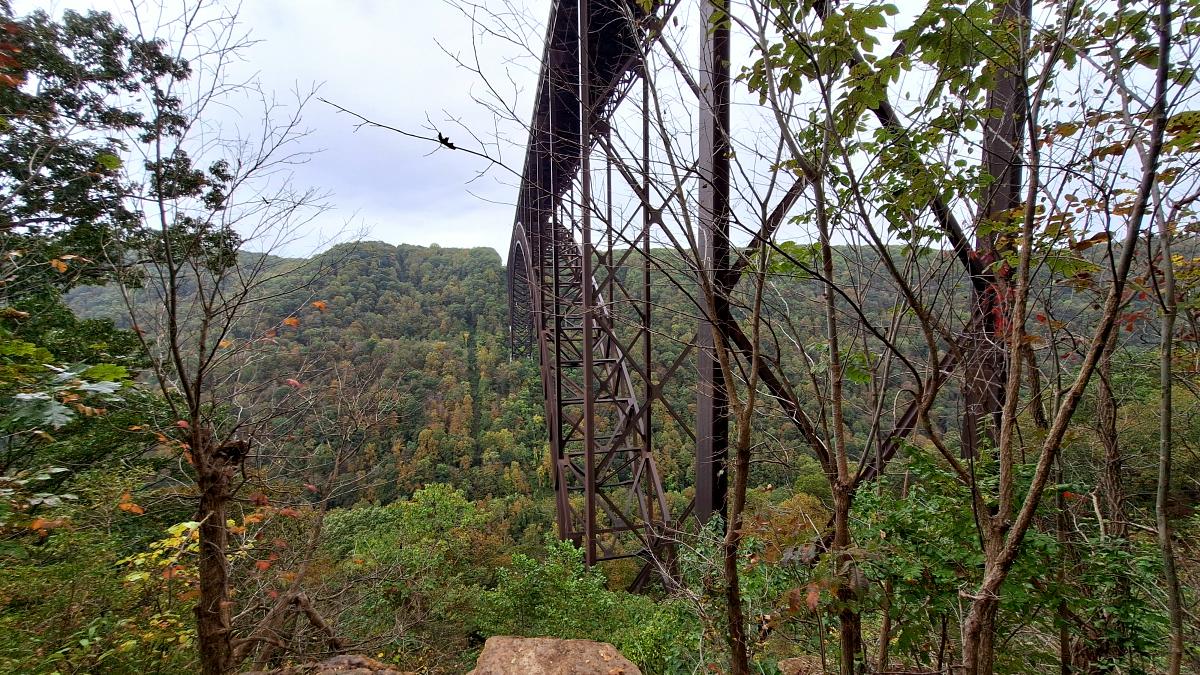
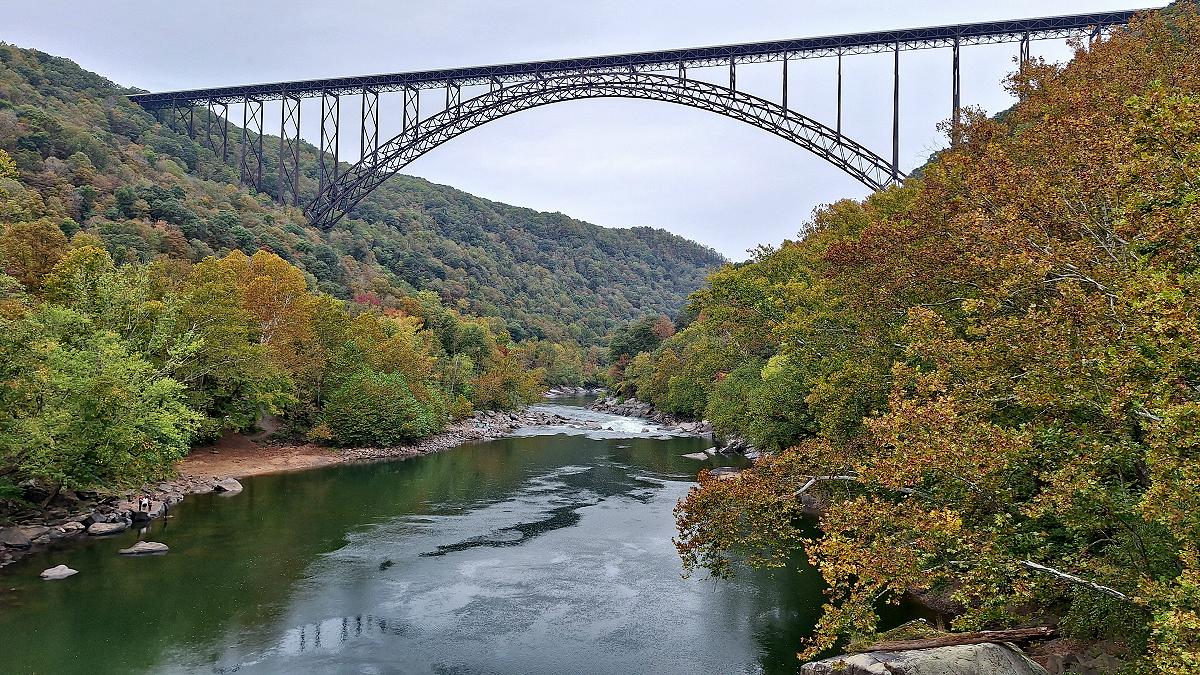
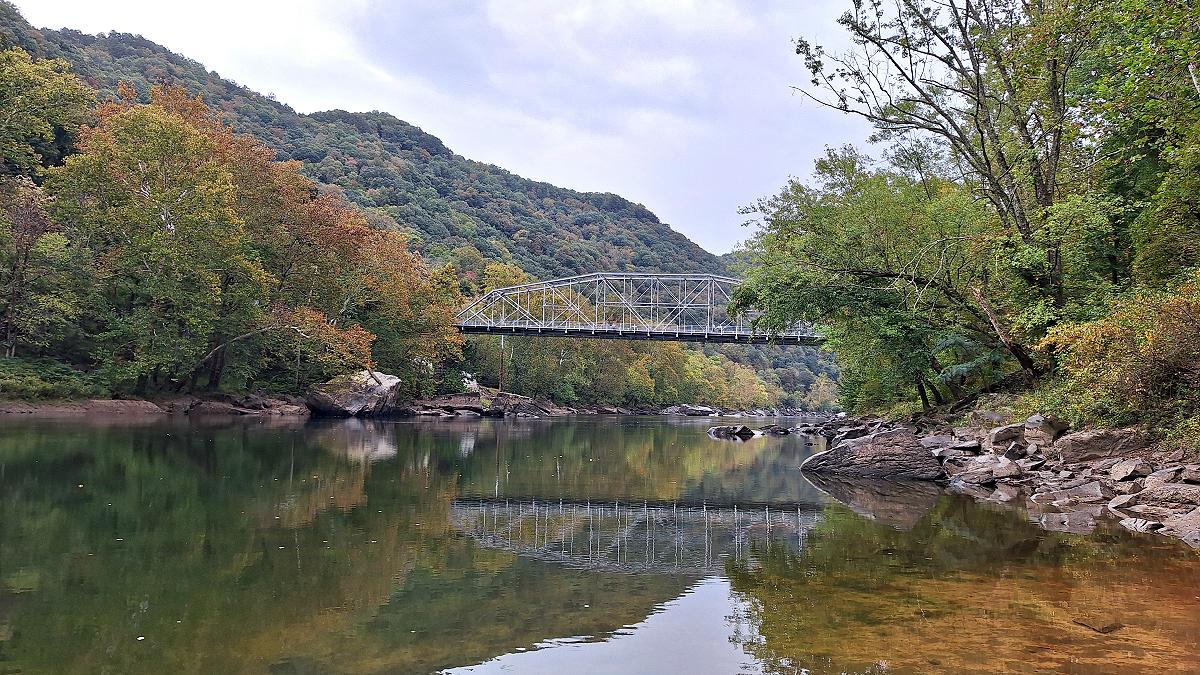
There are several places where you can pull off and look at the New River Gorge Bridge. We stopped and took a few photos and then stopped again to check out the Tunney Hunsaker Bridge (below). I actually took the above photo of the New River Gorge Bridge from this bridge.
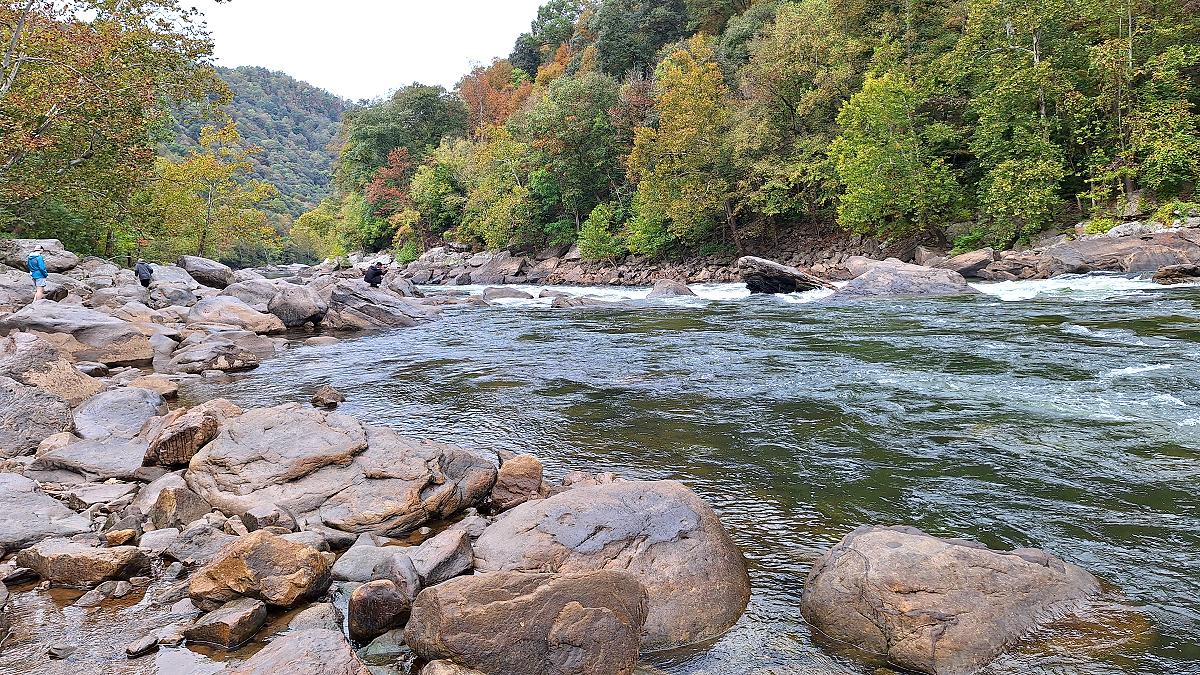
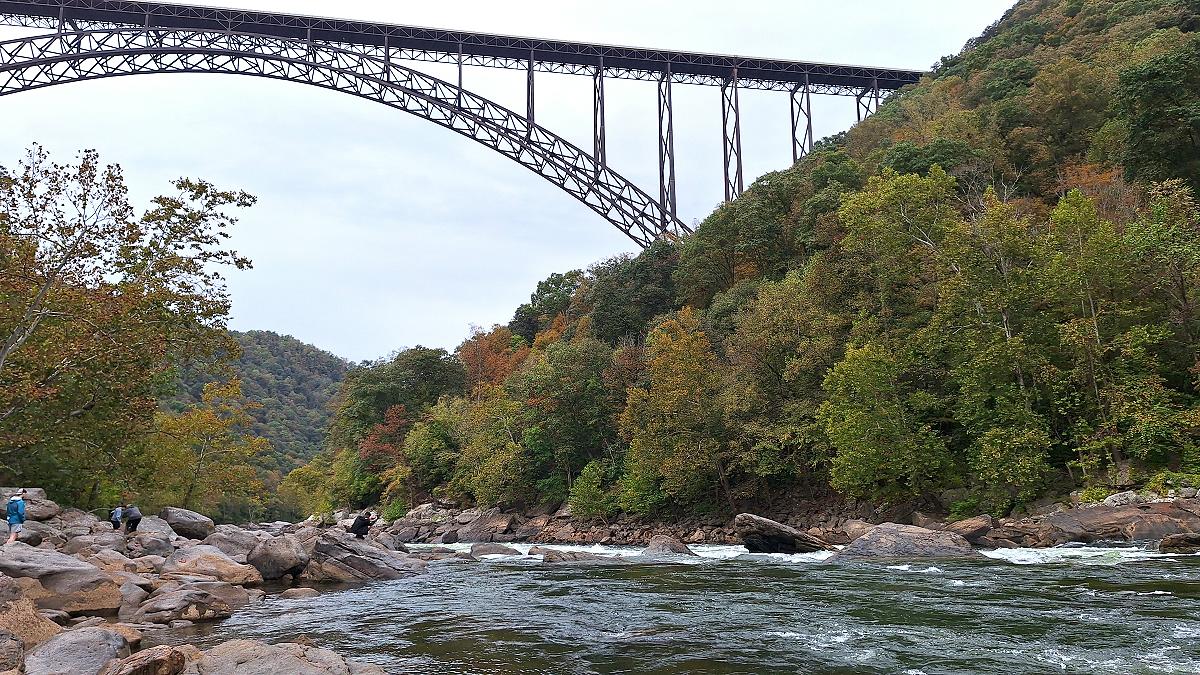
When you go a little further down the road there’s a parking area to access the river. I took the next two photos from there.
Return To Thurmond
After exploring Fayette Station Road, we decided to head back to Thurmond and see if the road was still closed. We crossed the tracks and parked on the corner of main street and then checked out the town on foot.
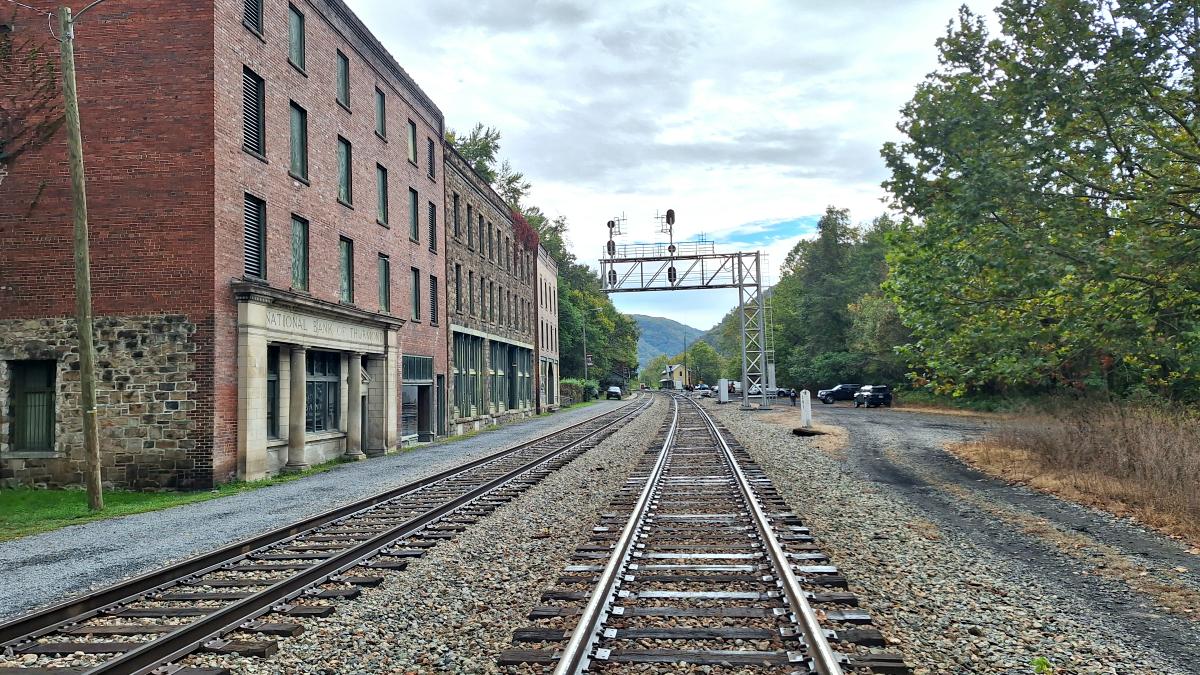
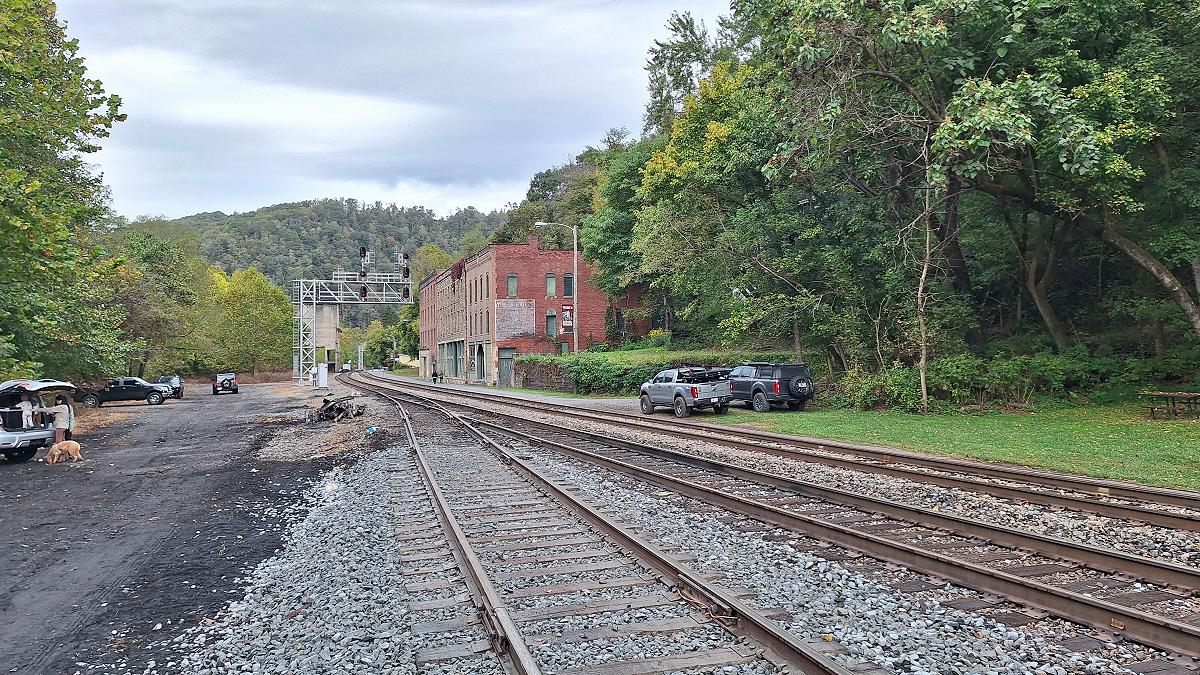
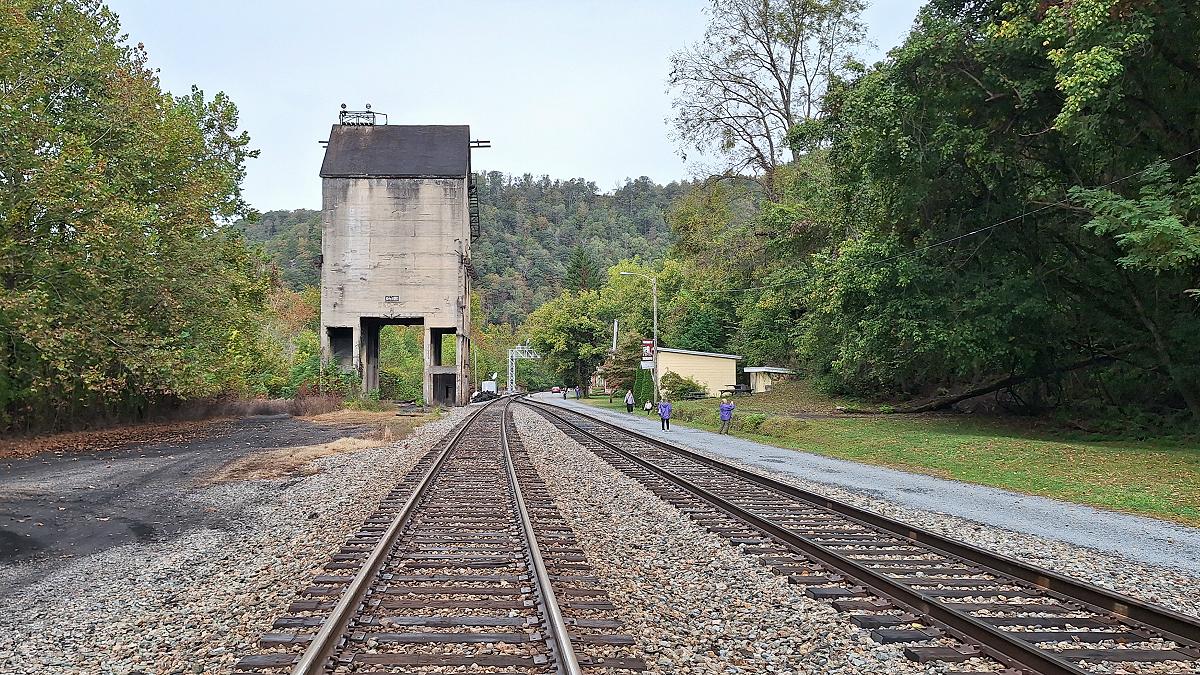
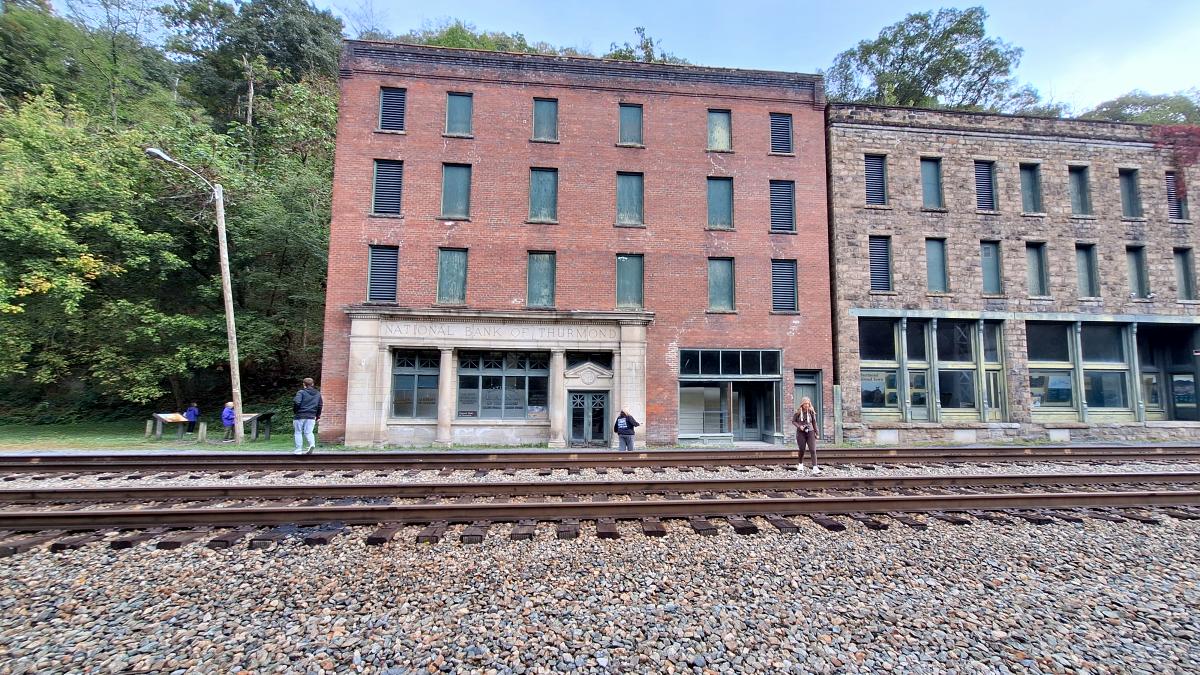
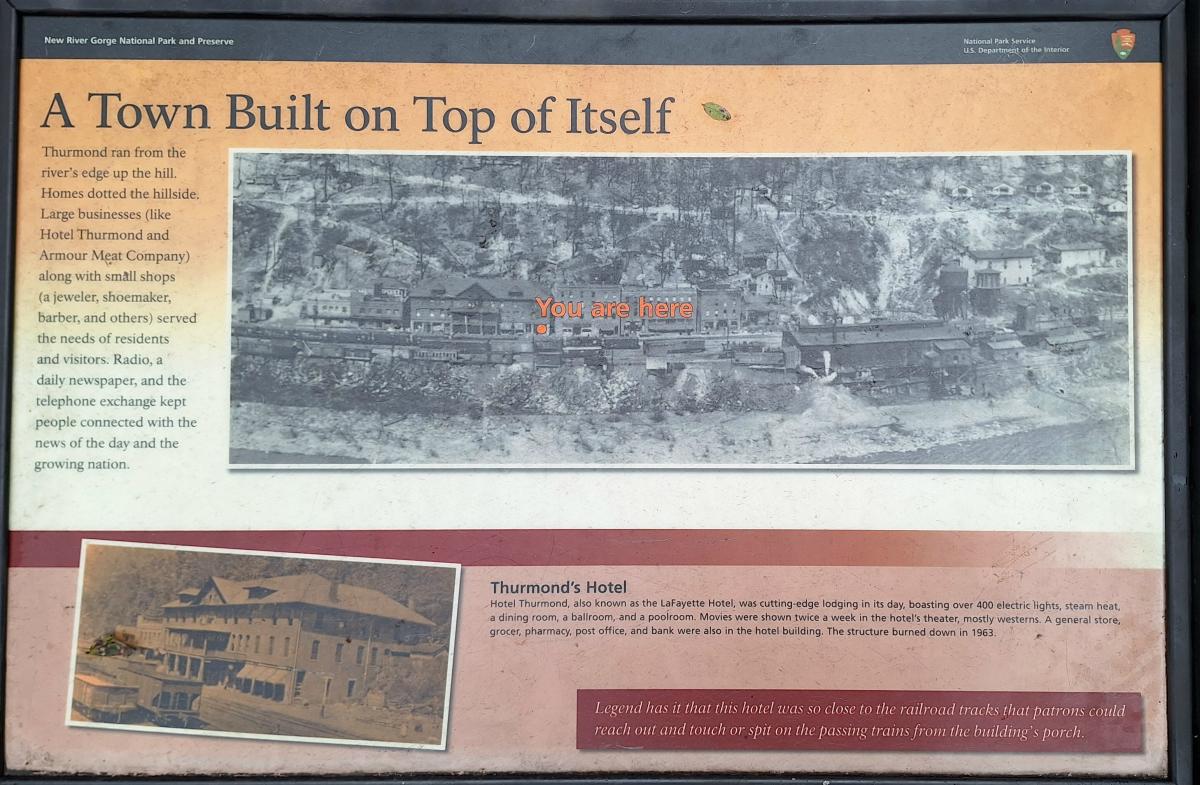
This sign reads:
A Town Built on Top of Itself
Thurmond ran from the river’s edge up the hill. Homes dotted the hillside. Large businesses (like Hotel Thurmond and Armour Meat Company) along with small shops (a jeweler, shoemaker, barber, and others) served the needs of residents and visitors. Radio, a daily newspaper, and the telephone exchange kept people connected with the news of the day and the growing nation.
Thurmond’s Hotel
Hotel Thurmond also known as the LaFayette Hotel, was cutting-edge lodging in its day, boasting over 400 electric lights, steam heat, a dining room, a ballroom, and a poolroom. Movies were shown twice a week in the hotel’s theater, mostly westerns. A general store, grocer, pharmacy, post office, and bank were also in the hotel building. The structure burned down in 1963.
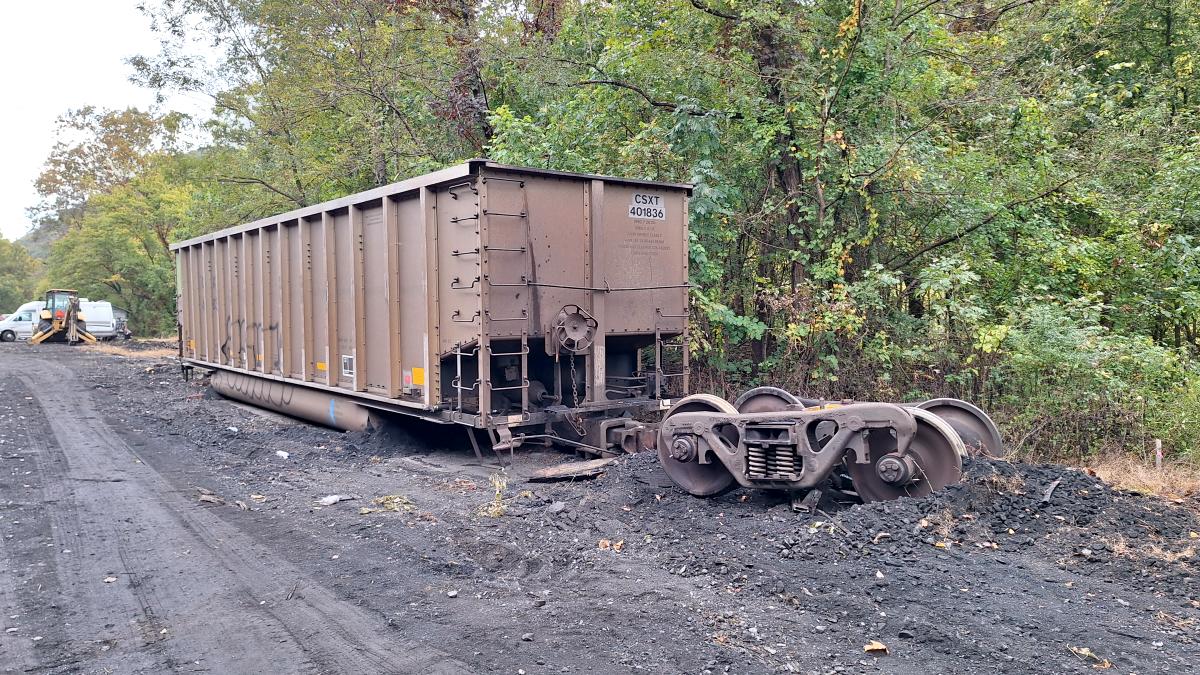
Most of the derailment had been cleaned up with the exception of this coal car. If you look closely at the photo below you can see what’s left of a yellow derailer in front of the top right wheel.
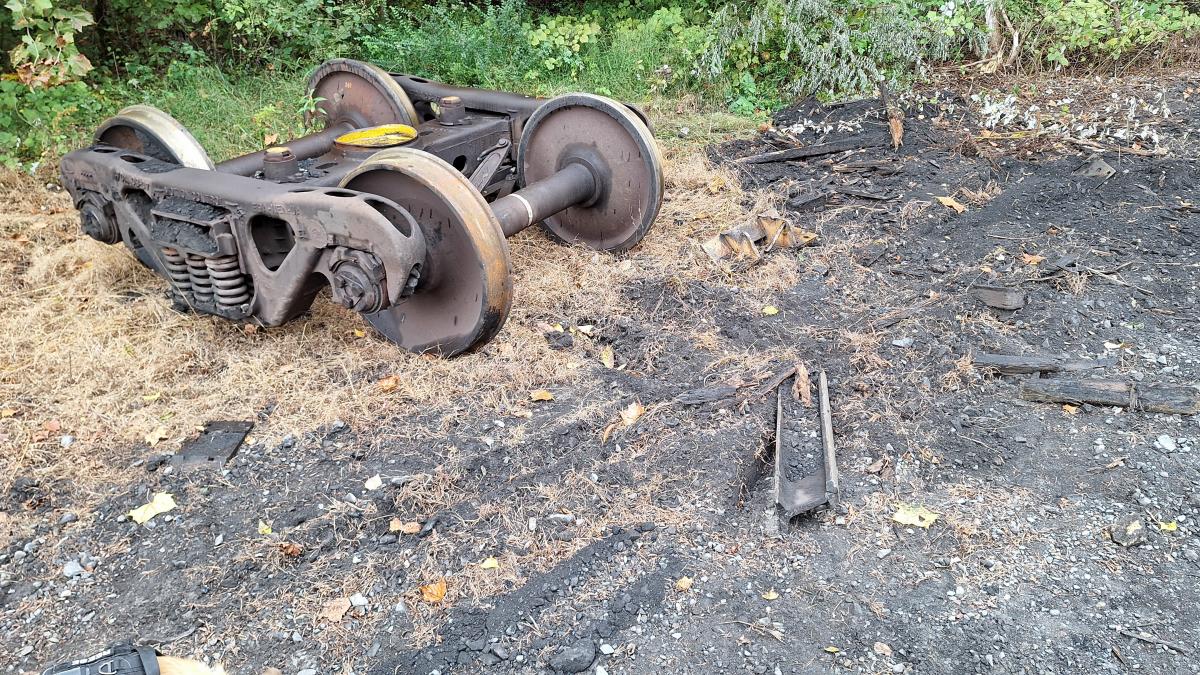
I looked at the new rails and saw that there was a new derailer installed.
The derailer is a critical safety device that sits on top of the rail and is designed to prevent runaway rail cars or unauthorized trains from rolling onto the main line. If a runaway car hits it, the device intentionally lifts the wheel and drops it off the track onto the ground (derailing it). While a derailed car causes a localized mess, it is far safer to ground a slow-moving car than to let it roll onto the main line, where it could cause a catastrophic collision with a train.
The derailer I saw on the rail had a hinge that allows it to be flipped out of the way. When a train has permission to use that track, a railroad worker manually unlocks and flips the block off the rail so the train can pass safely. The heavy spring helps assist with the weight of flipping the heavy steel block back and forth and secures it tightly in place.
Because of their safety-critical nature, these devices are almost always painted bright safety yellow or red so that train crews can easily see from a distance whether the track is clear or protected.
According to news reports the train “was coming onto the CSX mainline when about 10 cars came off the tracks”. I suspect that someone forgot to flip the derailer out of the way causing the cars to derail and destroy the derailer in the process.
Firewall Fatigue
The group had spent quite a bit of time at the coal mine exhibition. Afterwards they attempted to visit another grist mill, but Google Maps sent them to the gates of a sewage plant instead. The crap didn’t stop there (pun intended). They decided to go to a company store, but Murphy’s Law had other plans. SenorNoob’s firewall decided to give up the losing battle of flex fatigue which played havoc with the clutch and prevented him from shifting. I met up with the group while they were working on the truck.
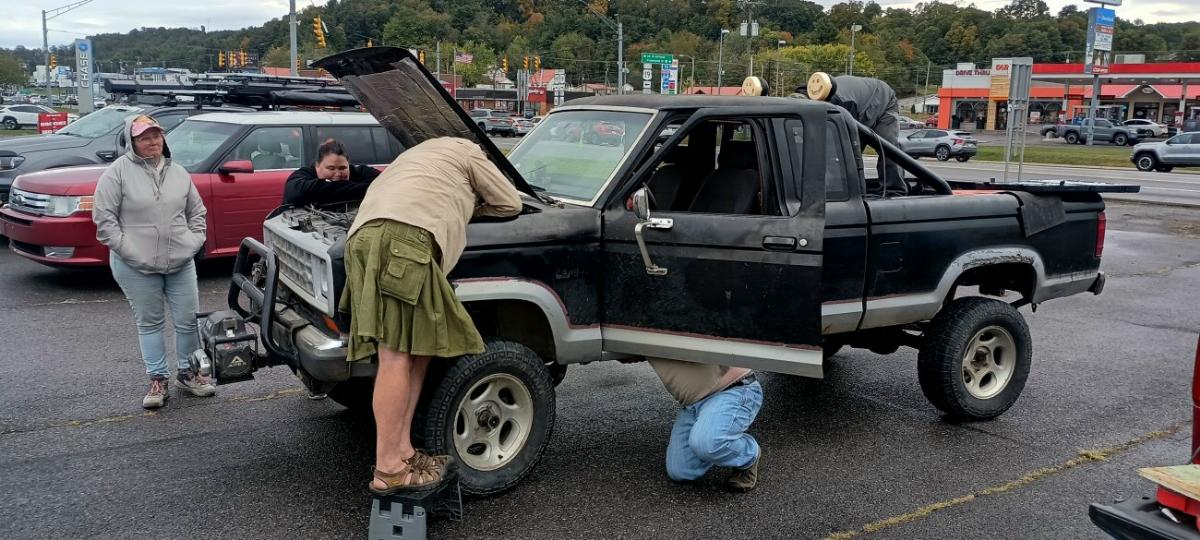
I like the way Josh T. describes the next photo “Here we have an excellent example of using the wrong tool the right way (or something like that). Using a 1/4 drive Milwaukee ratchet as a stand-in for a drill to make plates to support the broken firewall.”
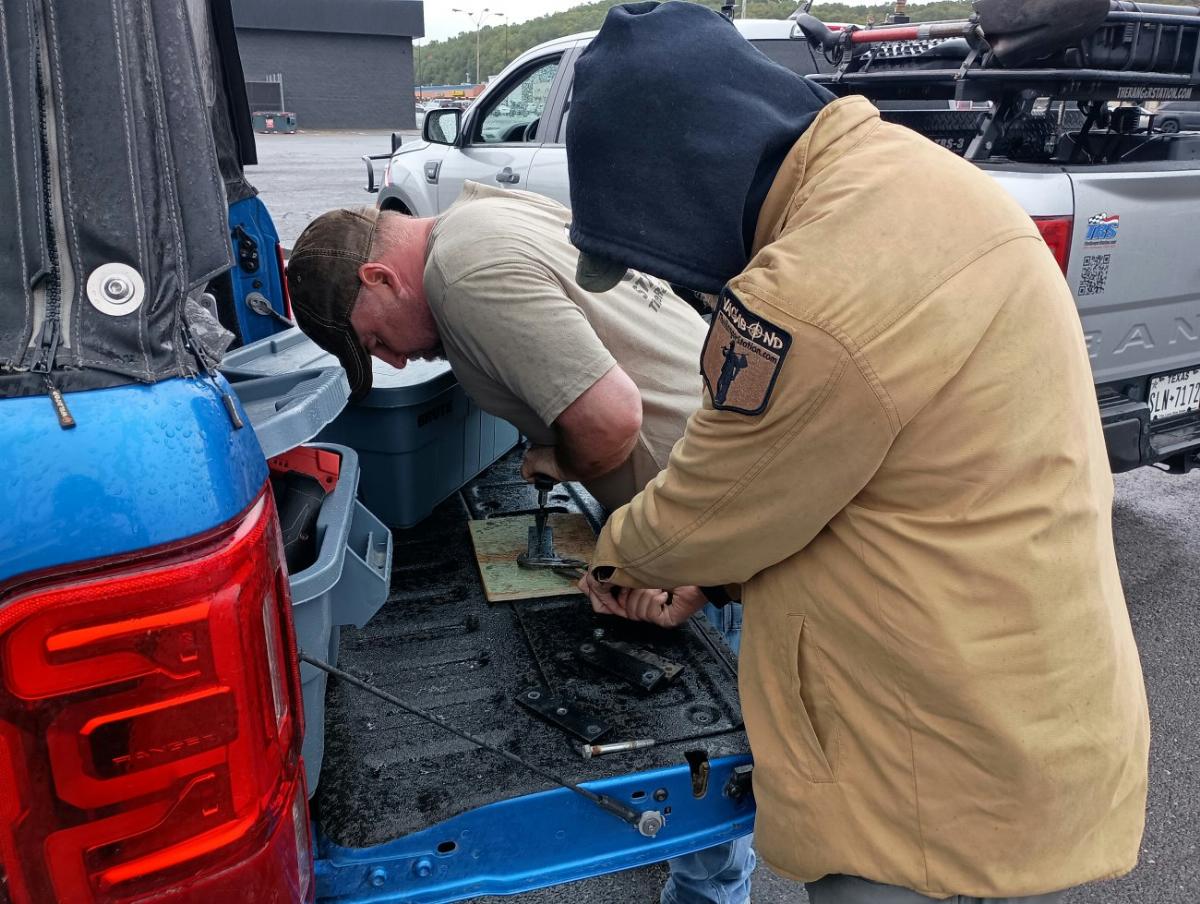
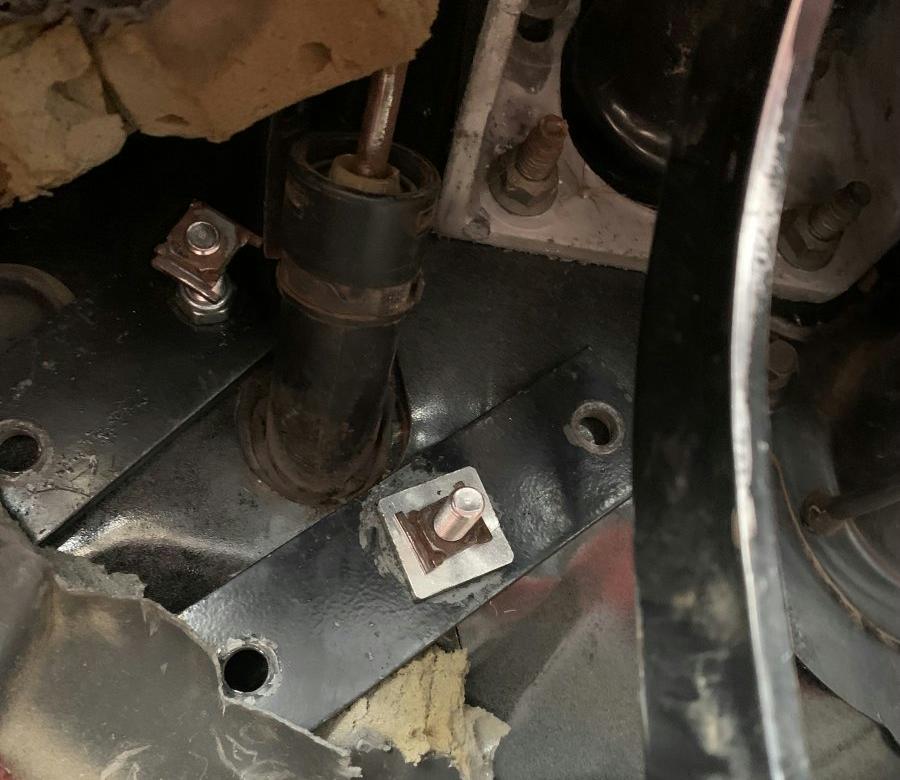
It took some creativity, but the guys managed to fix SenorNoob’s Ranger and get it back on the road.
When All Else Fails – Taco’s & Tequila
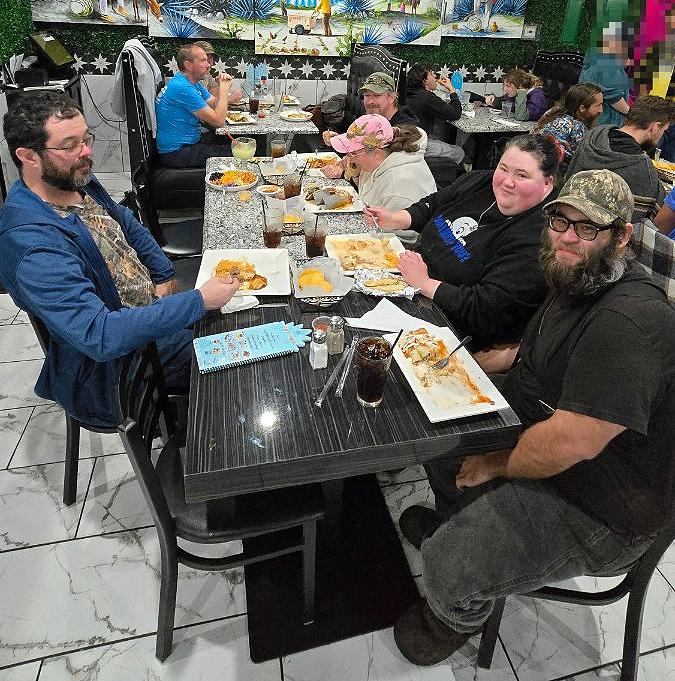
At this point the group decided to just go get dinner, so we headed to the Tequila Taco Bar in Fayetteville. The food was great!
Eric took this photo but not everyone is in it. Robbie had to leave because of a family emergency, JohnnyO and his wife left earlier in the day, and PetroleumJunkie412 and his wife are outside of the shot.
Hurricane Isaias
When I left for West Virginia, it looked like we were going to have great weather. Mother nature decided that she wanted to join our party. Checking the weather Saturday morning I saw that there was a likelihood of rain later in the evening into Sunday. I can tolerate waking up to a cold morning while camping, but I had no desire to pack up my tent and camping gear in the rain, so I packed it all up before we started our Saturday adventures.
After leaving the Tequila Taco Bar we went back to the campground and built a campfire. The rain from hurricane Isaias (now a tropical cyclone) eventually found us, but it had held off enough for us to get a pretty good day in. Around 9:30 PM everyone retired to their tents or cabin for the night, so I said my goodbyes and started the long drive back to Texas. It was an odd time to start, but I drove for a few hours and then slept in a rest area.
Conclusion
Overall, it was a great trip. Eric always does a great job organizing these gatherings, so I knew it would be worth the drive. Plus, it was nice to get away from home for a week and hang out with friends. I get as much satisfaction if not more hanging around a campfire with friends as I do exploring, so all of the sights we saw was an added bonus. Hopefully we’ll see you at the next TRS sanctioned event.
About The Author
Jim Oaks is the founder of TheRangerStation.com, the longest-running Ford Ranger resource online since 1999. With over 25 years of hands-on experience building and modifying Ford Rangers — including magazine-featured builds like Project Transformer — Jim has become one of the most trusted authorities in the Ford Ranger off-road and enthusiast space.
Since launching TheRangerStation.com, Jim has documented thousands of real-world Ranger builds, technical repairs, drivetrain swaps, suspension modifications, and off-road adventures contributed by owners worldwide. TheRangerStation.com has been referenced in print, video and online by enthusiasts, mechanics, and off-road builders looking for practical, and experience-based information.