Redneckdanger’s Four-Wheel-Steer Ranger
December 2008 Off-Road Truck of the Month
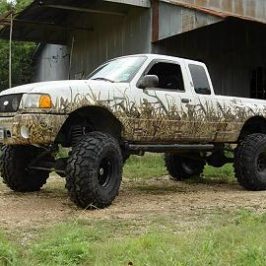
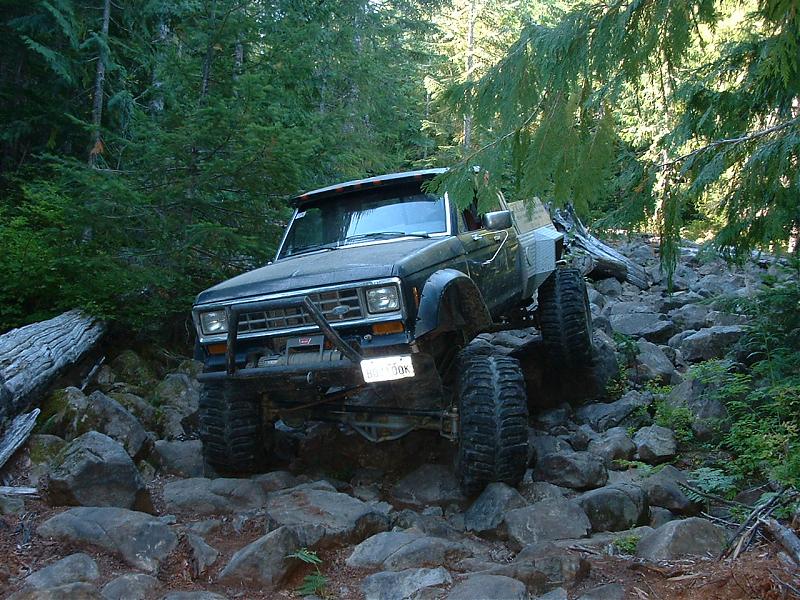
Every once in a while, a Ranger comes along that makes you stop and take a second look. Redneckdanger’s Ranger was one of those trucks.
In December 2008, I featured it as The Ranger Station’s Off-Road Truck of the Month. At the time, the truck’s photo simply linked to a forum thread titled “Pics of a 4 wheel steer streetable Ranger.” Redneckdanger had posted pictures of the build and then spent several pages answering questions about how he had put it together.
That thread is still there, but there was so much information scattered through it that the truck deserved its own page.
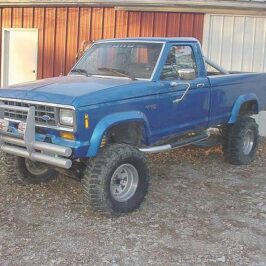
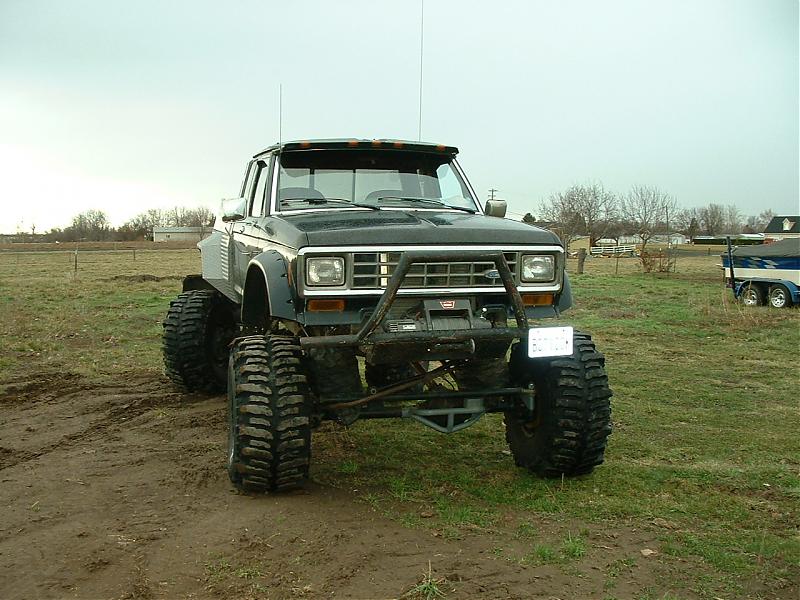
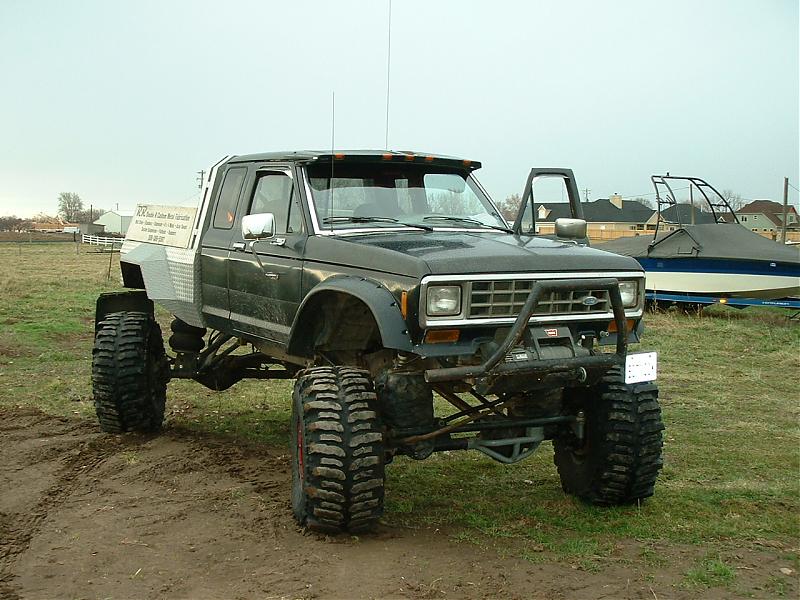
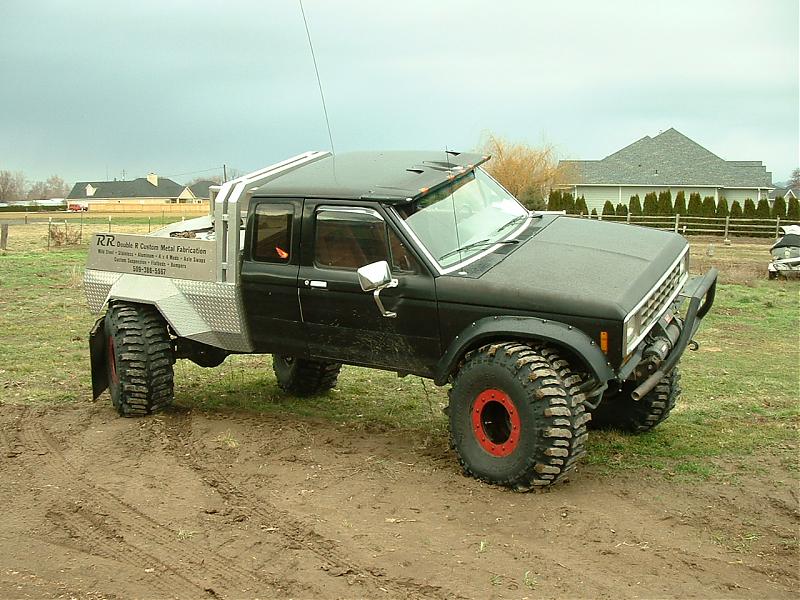
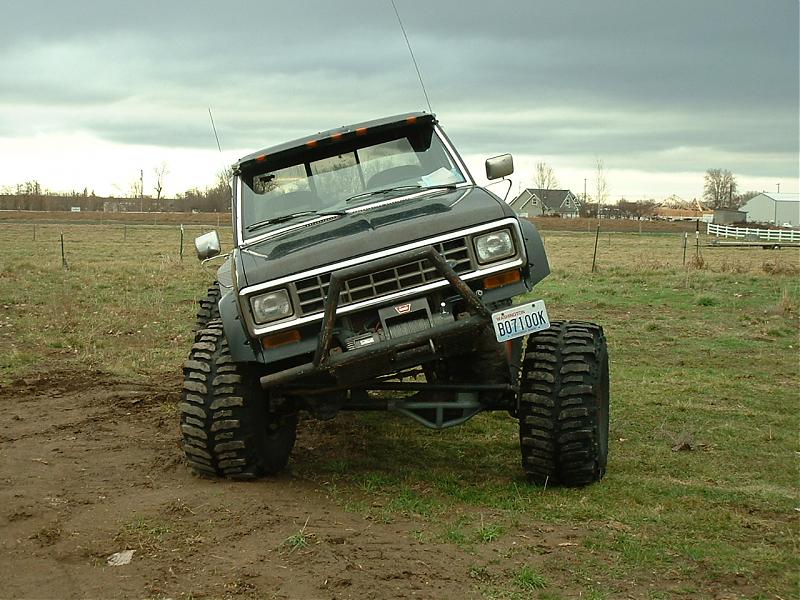
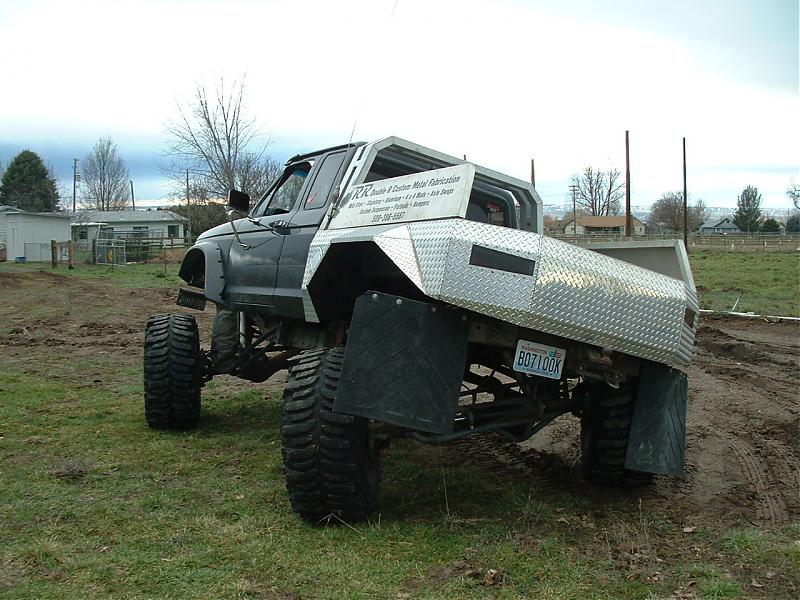
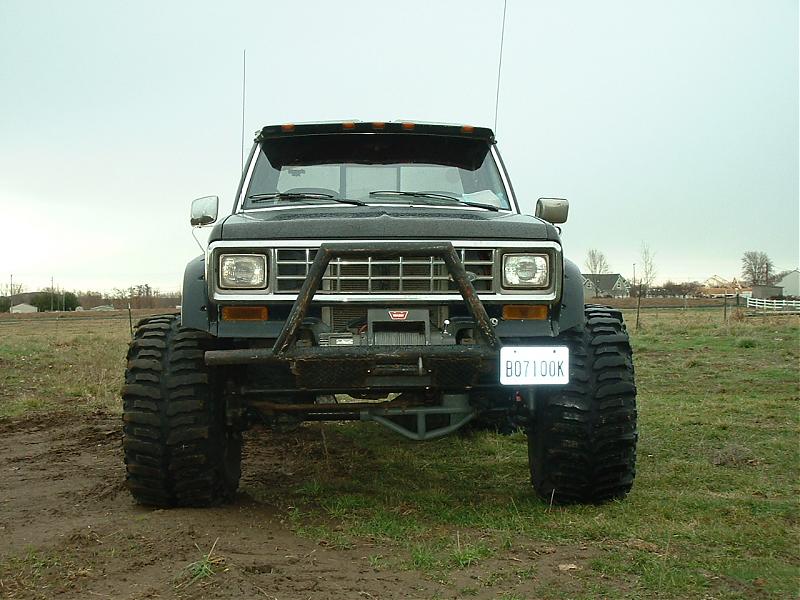
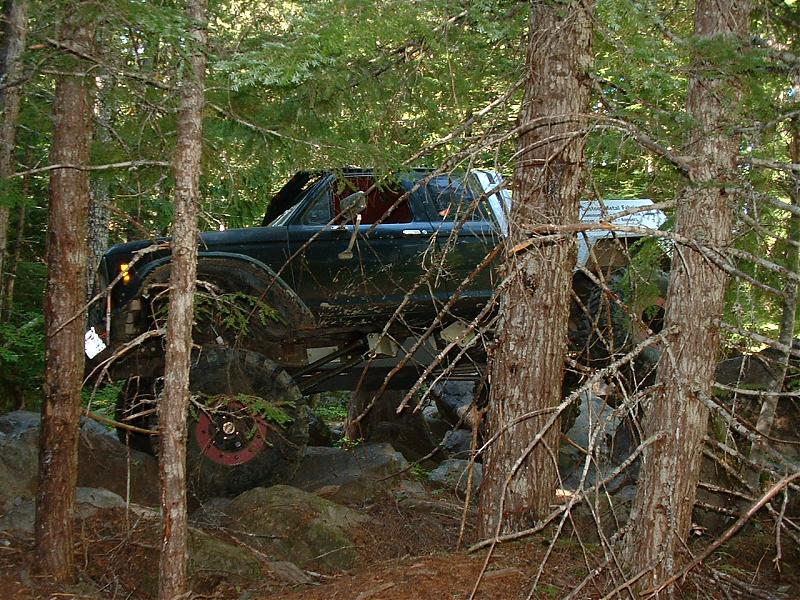
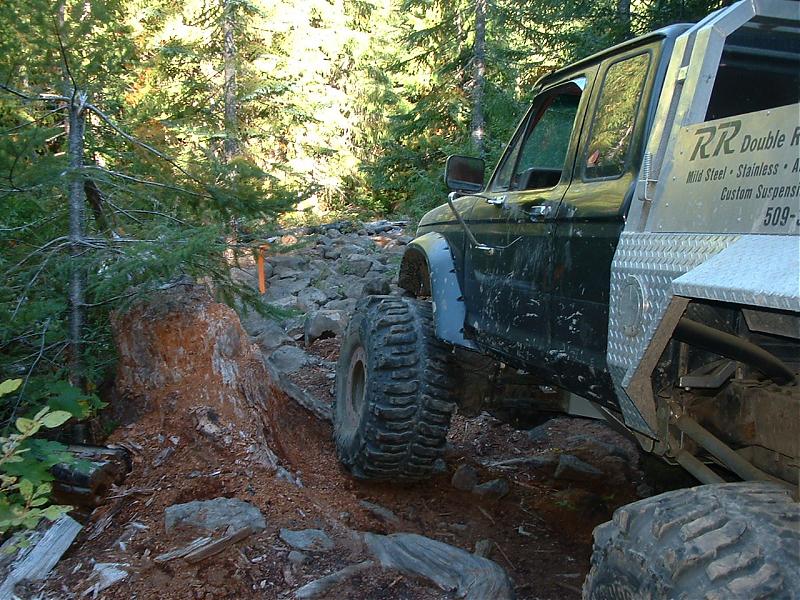
The Ranger started life mostly as a 1987 model, retaining the cab and frame. By the time redneckdanger was finished, however, it had become something considerably more unusual. A 1990 4.0L V6 provided the power, while full-size high-pinion Dana 44s went underneath both ends. The rear axle could steer, the suspension rode on large airbags, and 39.5-inch Boggers provided the traction.
Then there were the dual transfer cases, front and rear Warn winches, onboard air, custom beadlock wheels and a completely fabricated rear bed.
And despite all of that, the truck was still intended to be driven on the street.
Four-Wheel Steering
The rear steering is obviously what gets your attention first.
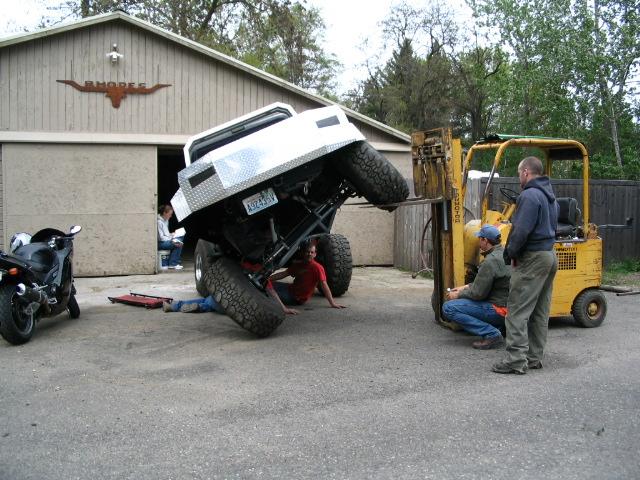
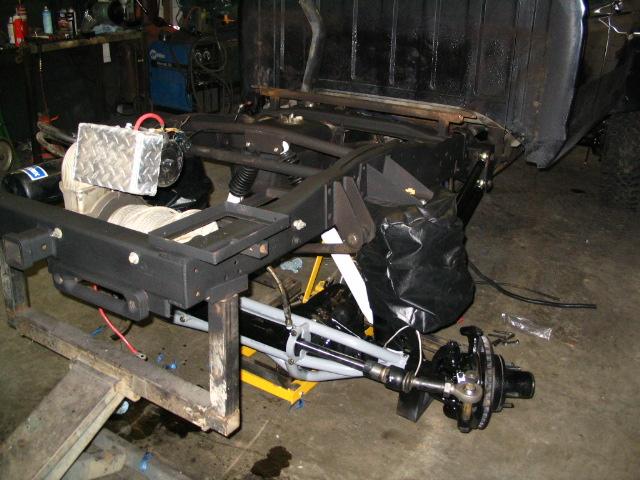
Redneckdanger built the rear steering cylinder and its mounting structure himself. An electric-over-hydraulic power unit operated the rear steering independently of the front, and he could shut the system off when driving around town.
Getting the axle to steer wasn’t particularly difficult. Getting it tight enough to make the truck behave on pavement was another matter. He experimented with different components before finding a combination that gave him the control he wanted.
Off-road, the advantage was obvious. With the front and rear axles steering, the Ranger could turn much tighter than a conventional truck and maneuver around obstacles that would require considerably more room with two-wheel steering.
That was also why the truck’s streetability mattered. Redneckdanger wasn’t interested in building something that had to live on a trailer between trails.
The Dana 44s
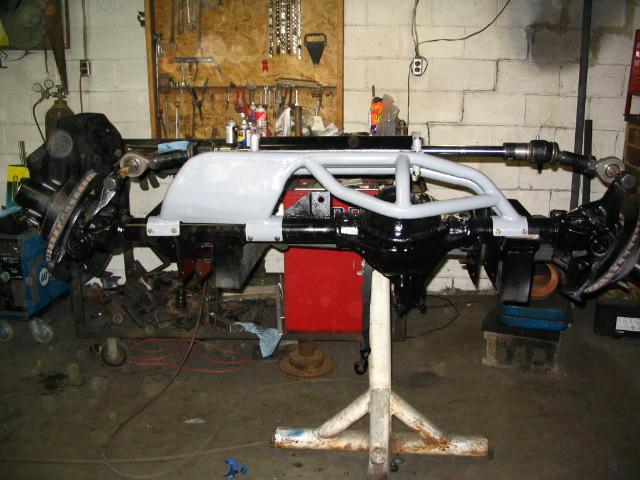
Both axles were full-size, high-pinion Dana 44s from 1978 F-150s. They were geared 4.56:1 and equipped with disc brakes and custom high-steer components. The front axle used Warn hubs and an electronic locker, while the rear had an ARB locker and was permanently engaged through drive flanges.
The obvious question was why someone building a truck on 39.5-inch tires would choose Dana 44s rather than Dana 60s.
The answer was partly practical: redneckdanger already had the 44s, and keeping them saved both weight and money. He knew the 60s were stronger, but he didn’t want to add all of that weight to the truck.
He did, however, upgrade the weak points. Superior axle shafts and CTM joints replaced the stock components after he had experienced failures with the original shafts and Spicer joints. Once those upgrades were made, he reported that the axles held up considerably better.
He also pointed out that the suspension’s ability to flex helped keep the load distributed between the axle shafts rather than putting all of the stress on one side.
The rear axle had another interesting detail. Because it was being used as a rear high-pinion axle, the ring and pinion were operating in the opposite direction from their original front-axle application. Redneckdanger wasn’t particularly worried about that, pointing out that Ford had used similar reverse-rotation Dana 44 applications in the past.
Building the Suspension
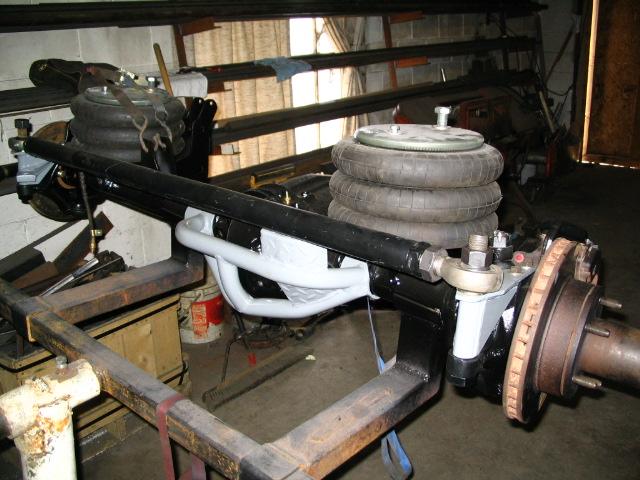
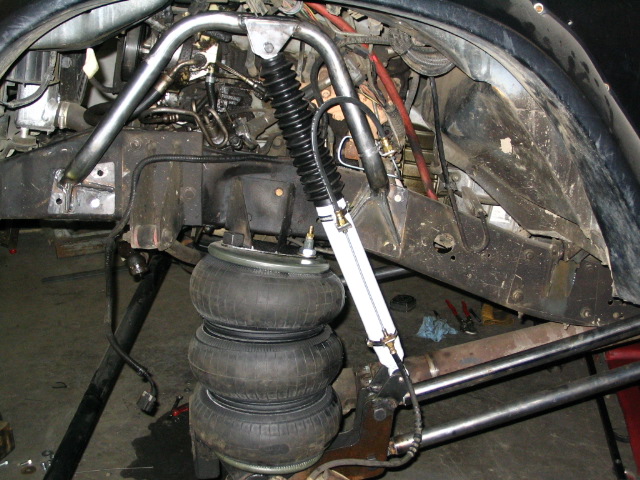
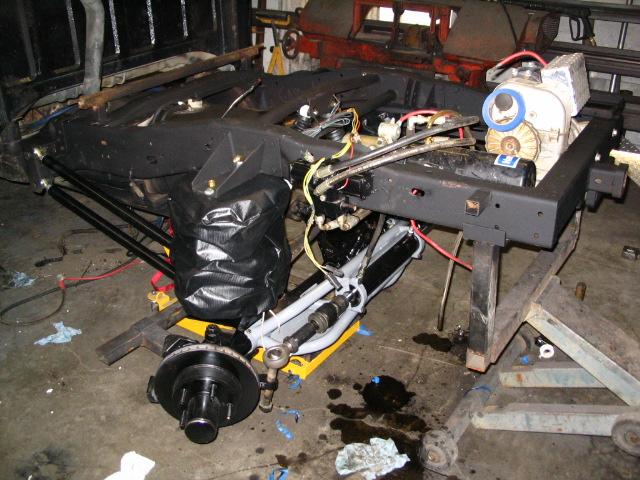
The suspension was custom four-link-style suspension with a track bar, using 14.5-inch-travel airbags at all four corners.
There was no Ranger airbag kit involved.
Redneckdanger and fellow TRS member 74bronco2 worked at a John Deere dealership, where their parts department had access to a truck airbag catalog. Rather than looking for a kit designed specifically for a Ranger, they selected airbags by size and specifications and ordered them through a local truck shop.
The four bags cost about $600.
The air system also had a linking feature designed to help maintain tire contact. When one tire was forced upward by the terrain, air could be transferred to the opposite bag, pushing that side downward.
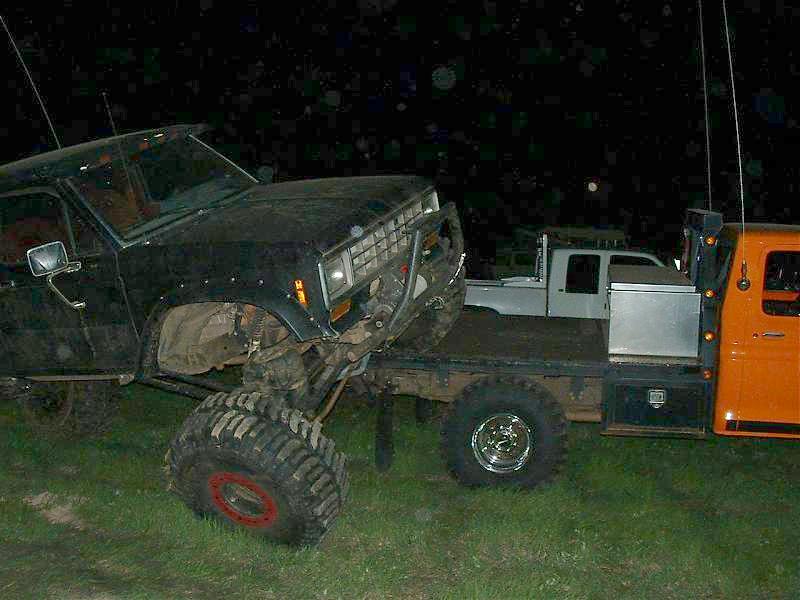
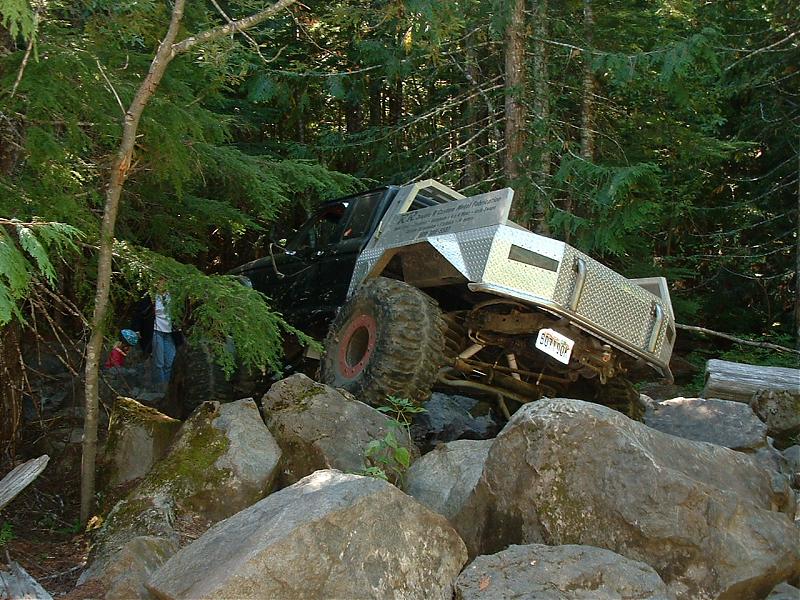
The amount of suspension travel was impressive. At a local four-wheeler gathering, the Ranger scored 980 out of 1,000 on a 30-degree ramp test.
That kind of articulation, combined with four-wheel steering, made the Ranger particularly capable in situations where keeping the tires on the ground was more important than simply having horsepower.
Built for Snow
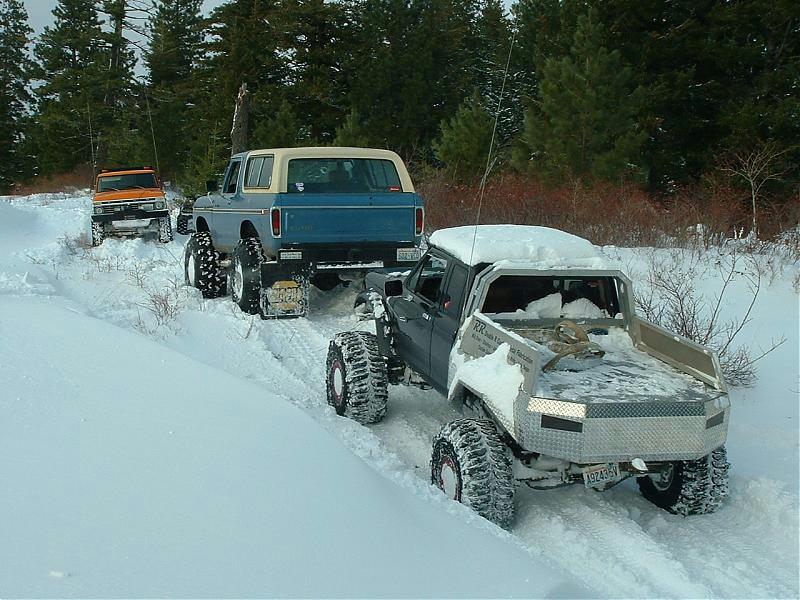
The Ranger was originally built around 38-inch tires, but redneckdanger eventually added a set of 39.5-inch Super Swamper Boggers specifically for snow wheeling.
He lived in Walla Walla, Washington, where snow was a major part of the local wheeling scene. The big tires gave the Ranger the flotation he wanted, and the beadlocks allowed him to air the tires down to extremely low pressures without worrying about losing a bead.
For normal wheeling, he had a set of 38.5-inch Boggers, while 35-inch tires were used when he wanted better street manners.
The wheels were 14 inches wide and featured both inner and outer beadlocks. Redneckdanger built them himself.
The combination of giant Boggers, beadlocks, air suspension and four-wheel steering made the Ranger particularly well suited to the kind of snow wheeling he was doing in Washington.
The Transfer Cases
The transfer-case setup was another homemade solution.
Redneckdanger started with a stock Ranger transfer case. He removed the front-output portion of the case with a bandsaw, closed the opening with an aluminum plate and retained the planetary gearset.
That modified Ranger case became the first reduction box.
Behind it he installed an NP205, building the necessary support and adapter components himself. An E4OD tailshaft was used to make the adapter shaft, along with a yoke flange from a stock Ranger rear pinion.
It was an unusual combination, but it accomplished what he wanted without buying an expensive aftermarket doubler.
The Rear of the Ranger
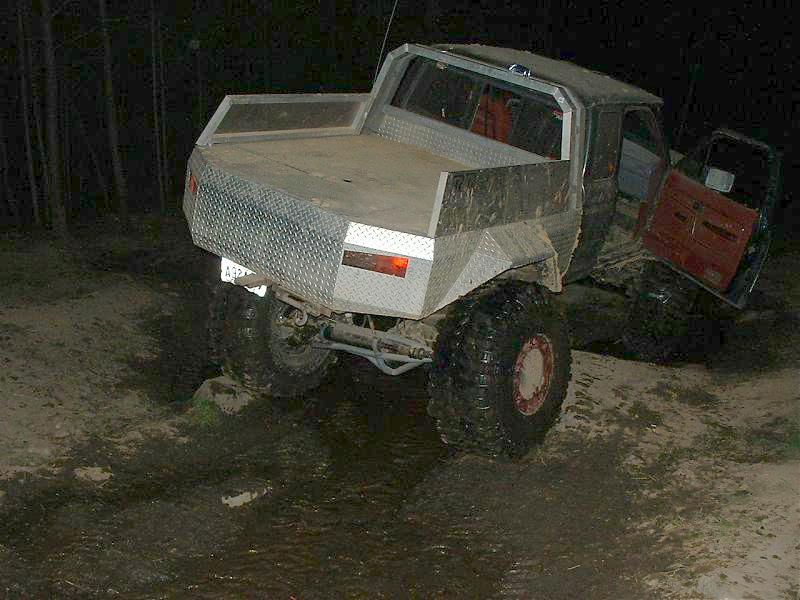
The custom rear bed was another major fabrication project.
Instead of a conventional Ranger bed, redneckdanger built a diamond-plate rear deck with storage incorporated into the structure. There were tool compartments on both sides and a concealed compartment for a 36-inch spare tire.
The deck was bedlined to make it easier to clean after a day on the trail.
The rear of the truck also housed two Optima batteries, while a 15-gallon air tank was mounted underneath. Air couplers were provided at both the front and rear.
Recovery equipment included an 8,000-pound Warn winch up front and a 9,000-pound Warn winch at the rear.
An engine-driven compressor supplied the air system, making it possible to air the tires back up after running them at extremely low pressure on the trail.
A Street-Driven Off-Road Truck
For all the extreme hardware, redneckdanger continued to drive the Ranger around town.
The rear steering could be shut off for street driving, and the 35-inch tires made the truck much easier to live with on pavement. He said he drove it quite a bit and even preferred putting miles on the Ranger rather than his 2003 PowderSmoke.
The 39.5-inch bias-ply Boggers were obviously not the ideal choice for everyday driving, but he reported that the truck still drove reasonably well considering what it was.
That was one of the more interesting aspects of the build. The goal wasn’t simply to create an off-road machine that could conquer an obstacle and then be winched back onto a trailer. Redneckdanger wanted to be able to drive the Ranger to and from the places where he used it.
The Top Truck Challenge
The Ranger had also made it into the Top Truck Challenge selection process.
Redneckdanger said he had previously entered and made it into the Top 50, but didn’t make the final group selected for the event. He believed the Dana 44s were one of the things working against the truck.
Rather than simply abandoning the 44s, he was considering ways to strengthen them further. One idea involved using outboard planetary drives, which could potentially allow the axle shafts to be stronger than conventional Dana 60 shafts while retaining the existing axles.
There was a catch: if the planetary system couldn’t be disengaged, it could make the Ranger impractical for street use.
At the time, it was still an idea rather than a completed modification, and he wasn’t sure whether he would ever build it.
More Than a Parts List
The more interesting part of this Ranger isn’t any single component.
It’s the way all of the components were put together.
The rear steering had to work on the street. The airbags had to provide articulation without sacrificing control. The Dana 44s had to survive under a truck running tires much larger than they were originally designed for. The transfer cases had to provide additional gearing without spending thousands of dollars on an aftermarket setup. And the entire truck still had to be something redneckdanger could actually drive.
By early 2009, he estimated that he had about $14,000 invested in the truck, including the multiple sets of tires and the parts he had bought while working through different ideas.
That’s not insignificant money, but it is worth remembering what was sitting there for that investment: two custom-steerable full-size axles, custom suspension, four-wheel steering, dual transfer cases, three sets of large tires, beadlocks, multiple winches, onboard air and a custom rear bed.
Most importantly, the truck reflected the person who built it.
He didn’t start with a complete recipe and order everything from a catalog. He looked at what he had, figured out what he needed, and fabricated the rest.
December 2008 Off-Road Truck of the Month
When redneckdanger’s Ranger was selected as The Ranger Station’s December 2008 Off-Road Truck of the Month, all I had to show for it was a picture and a link to his forum thread.

The thread eventually became a snapshot of the truck’s development, with redneckdanger answering questions about everything from the Dana 44s to the airbags and rear steering.
Years later, that discussion is still worth reading, but the truck deserves to be remembered without requiring somebody to dig through five pages of an old forum thread to figure out what they’re looking at.
A four-wheel-steer Ranger on 39.5s is unusual enough.
A four-wheel-steer Ranger that was street driven, built around high-pinion Dana 44s, suspended by airbags, geared through a homemade doubler, equipped with front and rear winches and designed for snow wheeling in Washington is one of those builds that stands out in the history of The Ranger Station.
That’s why it was our December 2008 Off-Road Truck of the Month.
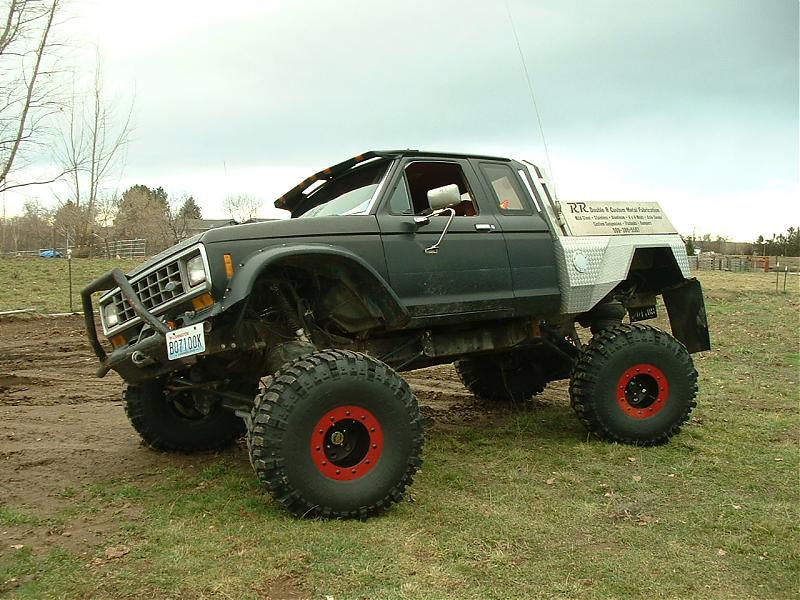
Photo Gallery
About The Author
Jim Oaks is the founder of TheRangerStation.com, the longest-running Ford Ranger resource online since 1999. With over 25 years of hands-on experience building and modifying Ford Rangers — including magazine-featured builds like Project Transformer — Jim has become one of the most trusted authorities in the Ford Ranger off-road and enthusiast space.
Since launching TheRangerStation.com, Jim has documented thousands of real-world Ranger builds, technical repairs, drivetrain swaps, suspension modifications, and off-road adventures contributed by owners worldwide. TheRangerStation.com has been referenced in print, video and online by enthusiasts, mechanics, and off-road builders looking for practical, and experience-based information.