
2012–2014 2.0L EcoBoost Engine Swap
The 2.0L EcoBoost is an interesting engine swap option for the 1983–2011 Ford Ranger because it is closely related to the 2.3L Duratec four-cylinder used in Rangers from 2001 through 2011. Both engines are derived from the Mazda L-series/Duratec engine family, giving the 2.0L EcoBoost a connection to an engine architecture already used in the Ranger.
Unlike the naturally aspirated 2.3L Duratec, the 2.0L EcoBoost uses gasoline direct injection and a turbocharger to produce substantially more power and torque. Depending on the vehicle and calibration, the 2012–2014 2.0L EcoBoost produced between 237 and 252 horsepower and 250 to 270 lb-ft of torque. The 2013–2014 Ford Focus ST version produced 252 horsepower and 270 lb-ft of torque.
In North America, the 2012–2014 2.0L EcoBoost can be found in the Ford Edge, Ford Explorer, Ford Escape, Ford Fusion, Ford Focus ST, and Lincoln MKZ. The engine was also offered in different configurations depending on the donor vehicle, so not every 2.0L EcoBoost is identical. The donor vehicle is therefore an important consideration when selecting an engine for a Ranger swap.
Although the 2.0L EcoBoost was primarily installed transversely in front-wheel-drive and all-wheel-drive vehicles, it offers a substantial increase in power over the Ranger’s factory engines. With the right combination of engine, transmission, engine management, and fabrication, it can bring modern turbocharged performance to the 1983–2011 Ford Ranger.
The purpose of this guide is to explain what is involved in installing a 2012–2014 2.0L EcoBoost into a 1983–2011 Ford Ranger.
Why The 2012–2014 2.0L EcoBoost
This guide focuses specifically on the 2012–2014 2.0L EcoBoost because Ford significantly redesigned the engine for the 2015 model year. Although both engines share the 2.0L EcoBoost name, the 2015-and-newer engine no longer shares the same basic block architecture as the earlier Duratec-based engine. Instead, the newer 2.0L uses a block design related to the 2.3L EcoBoost and uses a different turbocharger system, engine management, and other components.
Finding The Engine
It is important to identify the exact vehicle the engine came from before purchasing a used 2.0L EcoBoost. A seller advertising an engine simply as a “2.0L EcoBoost” is not providing enough information to determine exactly what you are buying. The donor vehicle, model year, engine code, and ideally the vehicle identification number (VIN) should be identified whenever possible. The VIN can be used to verify the donor vehicle’s exact year, model, engine, and factory configuration, which is particularly important when purchasing a used engine that may have been removed from the vehicle and separated from its original documentation.
| Donor vehicle | Model years | Horsepower | Torque |
|---|---|---|---|
| Ford Edge | 2012–2014 | 240 hp | 270 lb-ft |
| Ford Explorer | 2012–2014 | 240 hp | 270 lb-ft |
| Ford Escape | 2013–2014 | 240 hp | 270 lb-ft |
| Ford Fusion | 2013–2014 | 240 hp | 270 lb-ft |
| Ford Taurus | 2013–2014 | 240 hp | 270 lb-ft |
| Lincoln MKZ | 2013–2014 | 240 hp | 270 lb-ft |
| Ford Focus ST | 2013–2014 | 252 hp | 270 lb-ft |
Before purchasing a used 2.0L EcoBoost, you should determine which components are included with the engine. A complete engine assembly with its original turbocharger, intake, sensors, and wiring harness may be significantly more valuable for a swap than a bare long block. The more of the original donor system you can obtain, the easier it will be to assemble the components needed to make the engine run in the Ranger.
Although the 2.0L EcoBoost shares its basic architecture with the Ranger’s 2.3L Duratec, this is not a bolt-in engine swap. The EcoBoost was designed for a transverse front-wheel-drive platform and relies on modern engine management, direct fuel injection, electronic throttle control, and a turbocharger. Fortunately, many of the challenges have already been solved by aftermarket manufacturers and previous builders. Understanding the components required before purchasing parts will help you plan the swap, avoid unnecessary expenses, and decide which solutions best fit your project.
Components Required for the Swap
Installing a 2.0L EcoBoost into a 1983–2011 Ford Ranger requires more than just the engine. Depending on your truck and drivetrain, you’ll need several additional components to complete the swap.
Engine and Engine Accessories
- Complete 2.0L EcoBoost engine assembly
- Turbocharger and exhaust manifold
- Intake manifold and throttle body
- Fuel injectors
- High-pressure fuel pump
- Ignition coils
- Engine sensors
- Alternator and accessory drive components
- Engine wiring harness
- PCM (unless included with the engine)
Engine Wiring and Computer
The original Ford Performance M-6007-20T Controls Pack provided a purpose-built solution for running the 2.0L EcoBoost in a custom vehicle, but Ford discontinued it. It included a replacement engine-control harness, PCM, accelerator pedal, power distribution module, oxygen sensor, and OBD-II diagnostic connector.
One solution is to use the factory 2.0L EcoBoost PCM and engine wiring harness along with a purpose-built EcoBoost swap harness that connects the engine harness and PCM to the Ranger’s electrical system.
JEM-Sport offers complete 2.0L EcoBoost swap wiring harnesses and PCM programming services that allow the factory PCM to operate independently of the donor vehicle. JEM-Sport can supply a new PCM, or they can reprogram the original 2.0L EcoBoost PCM from your donor vehicle to remove the Passive Anti-Theft System (PATS). The swap harness is designed to connect the EcoBoost engine management system to the Ranger’s electrical system. Depending on the harness used, only a handful of connections to the Ranger chassis wiring may be required.

Gas Pedal
You need the electronic accelerator pedal from the donor vehicle or one that works with the donor vehicle.
Engine Orientation and Installation
The 2.0L EcoBoost was designed for transverse installation, so several components must be changed or modified before it can be installed longitudinally in a Ranger. Ford Performance originally offered the M-6006-20 Engine Orientation Kit for the 2.0L EcoBoost, but the kit has been discontinued.
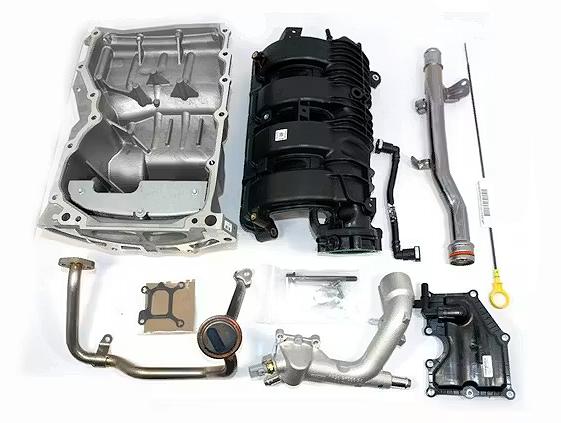
The original kit used several components from the 2015-2019 Ford Mustang 2.3L EcoBoost, including:
- FR3Z-9424-D — 2.3L EcoBoost intake manifold
- FR3Z-6675-A — oil pan
- FR3Z-6622-A — oil pickup screen and cover
- FR3Z-8K556-A — water outlet
- FR3Z-8255-A — water outlet gasket
Some of the original M-6006-20 components can still be sourced individually. There are also aftermarket solutions available for some of these components, including oil pans and other parts needed to adapt the 2.0L EcoBoost for a longitudinal installation.
The engine will also require custom engine mounts to install it in the Ranger.
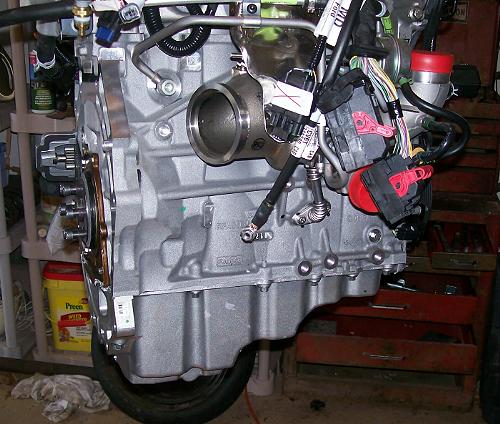
2.0L EcoBoost with Ford Mustang 2.3L EcoBoost oil pan
Engine Mounts
The driver’s side engine mount from a 2001–2011 2.3L Duratec Ranger bolts directly to the 2.0L EcoBoost and can be reused.
The passenger side requires a custom mount because the turbocharger occupies the same space as the factory Ranger mount. A common solution is to use aftermarket engine-mount plates, such as the JEM-Sport EcoBoost engine mount plates, and fabricate a custom frame-side mount to position the engine correctly in the chassis.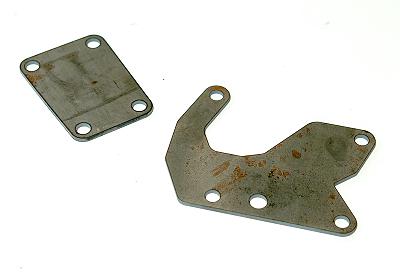
Install the engine and transmission using the driver’s side mount first, then fabricate the passenger-side mount with the engine sitting in its final position. This allows you to properly position the engine for oil pan, firewall, steering, and turbocharger clearance.
Before finalizing the engine mount design, temporarily position the engine and transmission in the chassis and check clearance at the firewall, oil pan, steering shaft, turbocharger, radiator, and hood. Spending extra time during mock-up can reduce the amount of firewall modification required and help avoid interference issues later in the build.
Don’t assume the transmission location determines where the engine belongs. Position the engine where it best fits the chassis, then modify the transmission installation as needed. Moving the engine slightly forward may improve firewall clearance but will require relocating the transmission crossmember and modifying the driveshaft. Raising the engine may improve oil pan and steering clearance but can affect hood clearance.
Firewall Clearance
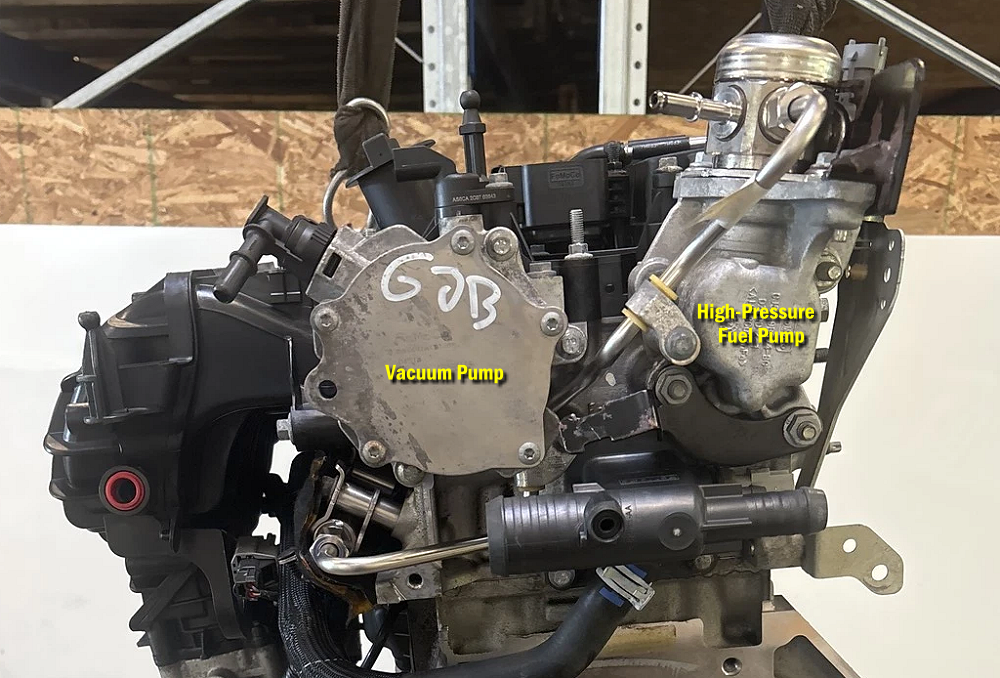
The 2.0L EcoBoost’s high-pressure fuel pump (HPFP) and mechanical vacuum pump are mounted on the rear of the cylinder head. In the Ranger engine bay, these components extend toward the firewall and can interfere with both the sheet metal and the passenger-side HVAC housing. Depending on engine placement, some firewall and HVAC modifications may be required. The amount of clearance required depends on where the engine is positioned in the chassis. Engine placement is a trade-off between firewall clearance, radiator clearance, transmission location, and driveshaft length.
Reducing Firewall Modifications
Several options may reduce the amount of firewall modification required:
- Delete the mechanical vacuum pump. The factory mechanical vacuum pump can be replaced with a vacuum pump delete plate from companies such as JEM-Sport or Mountune. Brake booster vacuum can then be supplied by an electric vacuum pump, such as the unit used on the Ford F-150. Common Ford part numbers include DL3Z-2A451-B (2013–2016, Motorcraft BRPV16 / BRPV23) and JT4Z-2A451-B (2018–2020, Motorcraft BRPV39).
- Move the engine forward. Positioning the engine slightly farther forward may provide additional clearance between the cylinder head and firewall. While this requires relocating the transmission crossmember and modifying the driveshaft, many builders may prefer these chassis modifications over cutting the firewall and HVAC housing.
Fuel System
The 2.0L EcoBoost uses gasoline direct injection (GDI), but that does not mean you need to build a 3,000 PSI fuel system. The engine’s cam-driven high-pressure fuel pump is mounted on the cylinder head and generates the high fuel pressure required by the injectors. Your job is simply to supply that pump with a steady low-pressure fuel supply.
For a stock 2.0L EcoBoost, the high-pressure pump should receive approximately 55–60 PSI of fuel pressure.
2001.5–2011 2.3L Duratec Rangers
The 2001.5–2011 2.3L Ranger already uses a returnless fuel system with an in-tank pump that supplies approximately 60 PSI. Because of this, many builders have successfully used the factory Ranger fuel pump to feed the EcoBoost’s high-pressure pump.
Run a 5/16-inch fuel line from the Ranger’s factory fuel supply to the inlet of the EcoBoost’s high-pressure fuel pump. Installing an inline fuel pressure gauge is recommended to verify that the system maintains adequate pressure under load.
Earlier Rangers and V6 Models
Earlier Rangers and many V6-powered trucks use lower-pressure fuel systems that are not suitable for the 2.0L EcoBoost. These trucks typically require a higher-pressure fuel pump capable of supplying 55–60 PSI to the engine.
If you plan to increase boost or significantly increase horsepower, consider upgrading to a higher-capacity fuel pump such as a Walbro 255 LPH or similar aftermarket unit.
Fuel Pump Control
If you’re using a factory 2.0L EcoBoost PCM, follow the wiring requirements recommended by your PCM tuner or wiring-harness supplier. If you’re using a standalone engine-management system, fuel pump control will depend on the ECU being used. Companies such as JEM-Sport can provide guidance when using a modified factory PCM with one of their swap harnesses.
Exhaust
Unlike older engines, the 2.0L EcoBoost uses an exhaust manifold that is cast directly into the cylinder head. The turbocharger bolts directly to the cylinder head, so there is no separate exhaust manifold or aftermarket header to replace.
The easiest way to begin building an exhaust system is to obtain the factory turbo outlet (downpipe elbow) from your donor engine. From there, you can fabricate a custom exhaust system using standard tubing.
If you’re using the factory PCM, you’ll also need the original oxygen sensors:
- Upstream O2 Sensor – Installed in the downpipe immediately after the turbocharger.
- Downstream O2 Sensor – Installed after the catalytic converter to monitor catalyst efficiency.
A flex joint should be installed in the exhaust system to allow for engine movement and reduce stress on the turbocharger and exhaust piping.
Steering Shaft Clearance
Steering shaft clearance should be checked while mocking the engine into position. Depending on engine placement, the driver’s side of the engine, turbocharger, engine mount, and downpipe may interfere with the factory steering shaft.
Minor engine repositioning is common during custom engine swaps, and moving the engine slightly toward the passenger side may provide additional clearance for the steering shaft and exhaust system. Some builders have also raised the engine approximately one inch to improve oil pan and steering clearance.
Finalize the engine mounts only after confirming adequate clearance between the steering shaft, exhaust, oil pan, crossmember, and firewall throughout the steering’s full range of travel.
Power Steering
Because all North American 2.0L EcoBoost donor vehicles use electric power steering, the engine was never designed to drive a hydraulic power steering pump. Builders generally choose one of two approaches:
Option 1 – Retain the Ranger’s Hydraulic Steering
Replace the factory EcoBoost A/C compressor with a hydraulic power steering pump. Companies such as JEM-Sport offer brackets that mount a BMW LF30 power steering pump on the passenger side of the engine using the factory accessory drive. This retains the Ranger’s original hydraulic steering system but eliminates the engine-driven A/C compressor.
Option 2 – Convert the Ranger to Electric Power Steering
Another option is to leave the factory EcoBoost A/C compressor in place and convert the Ranger to electric power steering. This eliminates the need to package a hydraulic pump on the engine while allowing engine-driven air conditioning to be retained.
The Ranger Station has published detailed guides covering both the GM Electric Power Steering Upgrade and a Toyota Electric Power Steering (EPS) Conversion, which may be worth considering when planning your swap.
Alternator
The factory alternator location on the transverse-mounted 2.0L EcoBoost does not work in a longitudinal Ranger installation. While it is possible to mount a small aftermarket alternator low on the engine, there is generally not enough room in that location for an alternator capable of meeting the Ranger’s electrical demands. Even the lowest-output alternator offered by Ford for the Ranger was rated at 95 amps.
A proven solution is to fabricate a custom alternator bracket from 1/4-inch steel plate that bolts to the unused accessory mounting holes on the front of the EcoBoost engine block, above the water pump and crankshaft. Mount the stock Ranger 2.3L Duratec alternator to the bracket in a reverse-facing position with the pulley facing the engine. An alternator will generate power regardless of its direction of rotation, allowing the factory Ranger alternator to be used in this configuration.
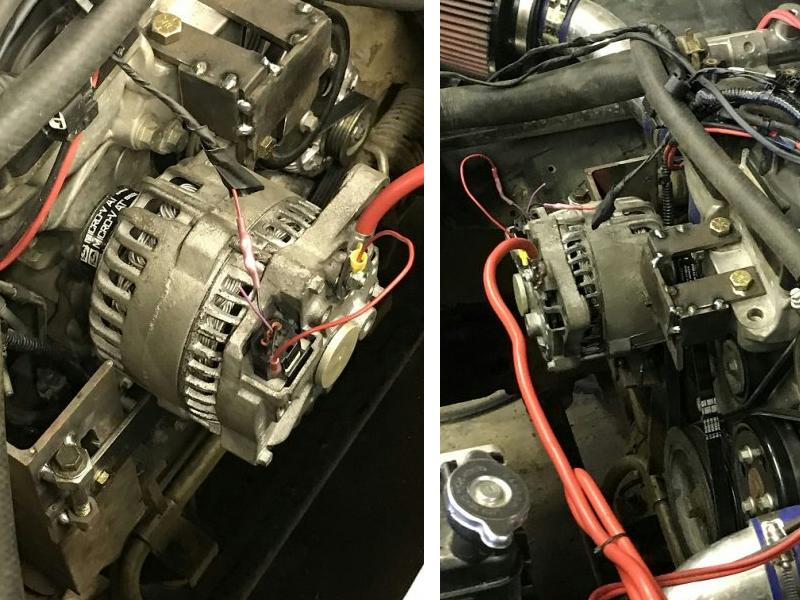
Custom front-mounted alternator bracket using the stock Ranger 2.3L Duratec alternator mounted in a reverse-facing position.
Intercooler
An intercooler is required to cool the compressed air leaving the turbocharger before it enters the engine.
Although the factory intercooler from the donor vehicle can be reused, most builders choose a universal aluminum front-mount intercooler. Universal intercoolers are inexpensive, easier to mount in the Ranger, and simplify charge-pipe routing with straight inlet and outlet connections. They also provide room for future performance upgrades.
Custom aluminum charge pipes and silicone couplers will be required to connect the turbocharger, intercooler, and throttle body.
Radiator
The 2.0L EcoBoost produces considerably more heat than the Ranger’s factory four-cylinder engines, making radiator capacity an important consideration.
Several builders have successfully used the 4.0L Ranger radiator because it is a direct-fit upgrade over the 2.3L radiator. Another option worth considering is the 1996–2001 Ford Explorer/Mercury Mountaineer 5.0L V8 radiator. It has proven to be an effective cooling solution in Explorer 5.0L V8 Ranger swaps and offers greater cooling capacity than the original four-cylinder radiator.
Depending on your installation, custom radiator hoses, electric cooling fans, and an overflow tank may also be required.
Using The 5R44E Automatic Transmission
Because the 2.0L EcoBoost shares its Mazda L-series architecture with the Ranger’s 2.3L Duratec, the 5R44E automatic transmission bolts directly to the engine without an adapter plate. You can also reuse the Ranger’s 2.3L Duratec flexplate and torque converter.
The challenge is electronic control. The 5R44E relies on a transmission controller to determine shift timing, line pressure, and torque-converter lockup. Builders generally solve this in one of two ways:
Option 1: Retain the original Ranger PCM to control the transmission while the EcoBoost PCM controls the engine. To control the transmission correctly, the Ranger PCM still needs several engine inputs, including engine speed, coolant temperature, and throttle position. These signals must be shared with or provided to the Ranger PCM. You must split/splice the factory engine sensors so both computers get data, or adapt the Ranger sensors onto the EcoBoost block to feed the truck PCM:
- Crankshaft Position (RPM)
- Engine Coolant Temperature (ECT)
- Throttle Position (TPS): The Ranger PCM must receive a throttle-position signal from the electronic accelerator pedal or an equivalent signal generated by the engine-management system.
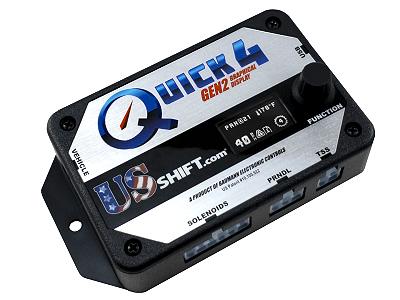
Option 2: Use a standalone transmission controller such as the US Shift Quick 4. It comes with its own wiring harness that plugs directly into the 5R44E and eliminates the need to retain the Ranger PCM solely for transmission control. The USShift controller only needs a few basic inputs from your EcoBoost engine setup to operate:
- Clean power
- Ground
- Engine RPM signal
- Throttle Position (TPS) signal from your gas pedal.
A Warning on Transmission Longevity
The factory Ranger 5R44E automatic transmission was engineered to handle the stock 2.3L Duratec’s 143 horsepower and 154 lb-ft of torque.
A stock 2.0L EcoBoost outputs roughly 240 horsepower and up to 270 lb-ft of torque right out of the box—with torque hitting violently at very low RPMs. If you have a heavy foot, the sudden surge of turbo boost will eventually slip the factory clutches or break the overdrive bands in a stock 5R44E. If you plan to use this truck as a daily driver or perform hard acceleration, it is highly recommended to have a transmission shop rebuild your transmission with heavy-duty internal clutch packs, a hardened input shaft, and a high-performance shift kit before dropping the EcoBoost in.
Upgrading to a Stronger Automatic Transmission
The 5R44E was originally designed for the 2.3L Duratec’s 143 horsepower and 154 lb-ft of torque. While it will bolt directly to the 2.0L EcoBoost, builders planning to take advantage of the EcoBoost’s additional torque should consider upgrading the transmission.
One option is to have the 5R44E professionally rebuilt with stronger internal components. Another is to use a 5R55E as the foundation for the build. The 5R55E was designed for the higher torque output of the 4.0L V6 and shares much of its architecture with the 5R44E. Builders have successfully mated the 5R55E to the 2.3L Duratec by installing the 5R44E bellhousing and torque converter on the 5R55E. This may provide a stronger transmission option for a 2.0L EcoBoost swap while retaining the bellhousing pattern needed to bolt to the EcoBoost.
Using A Manual Transmission
The factory 5-speed manual transmission used behind the 2001–2011 Ranger 2.3L Duratec is the Mazda M5OD-R1. Because the 2.0L EcoBoost shares its Mazda L-series architecture with the 2.3L Duratec, the M5OD-R1 bolts directly to the engine without an adapter plate.
The M5OD-R1 is generally considered a good choice for a stock 2.0L EcoBoost swap. While no manual transmission is indestructible, it has proven capable of handling stock EcoBoost power in Ranger applications when driven responsibly.
To complete the swap, you’ll need the following:
- Flywheel – Use a single-mass flywheel from a 2001–2011 2.3L Duratec Ranger. The factory dual-mass EcoBoost flywheel is not compatible with the Ranger transmission.
- Clutch – Use a quality aftermarket clutch designed for the 2.3L Ranger that is rated for the EcoBoost’s torque output. A stock replacement clutch is not recommended.
- Pilot Bearing – Install a new 2.3L Ranger pilot bearing in the rear of the EcoBoost crankshaft before installing the transmission.
- Slave Cylinder – Install a new hydraulic slave cylinder/throwout bearing assembly for your specific Ranger transmission.
- Slave Cylinder Shims – Some builders have found that the slave cylinder may require shimming to achieve proper clutch disengagement, particularly when using aftermarket performance clutches.
Clutch Recommendation: One forum member has had good results using a ClutchXperts Stage 2 clutch, which is rated for just under 300 horsepower and torque. Other manufacturers also offer performance clutches suitable for the M5OD-R1.
Unlike the automatic transmission, the manual transmission requires no electronic transmission controller. The EcoBoost PCM only needs to manage the engine, while the Ranger’s original reverse-light switch and clutch safety switch can continue to operate normally.
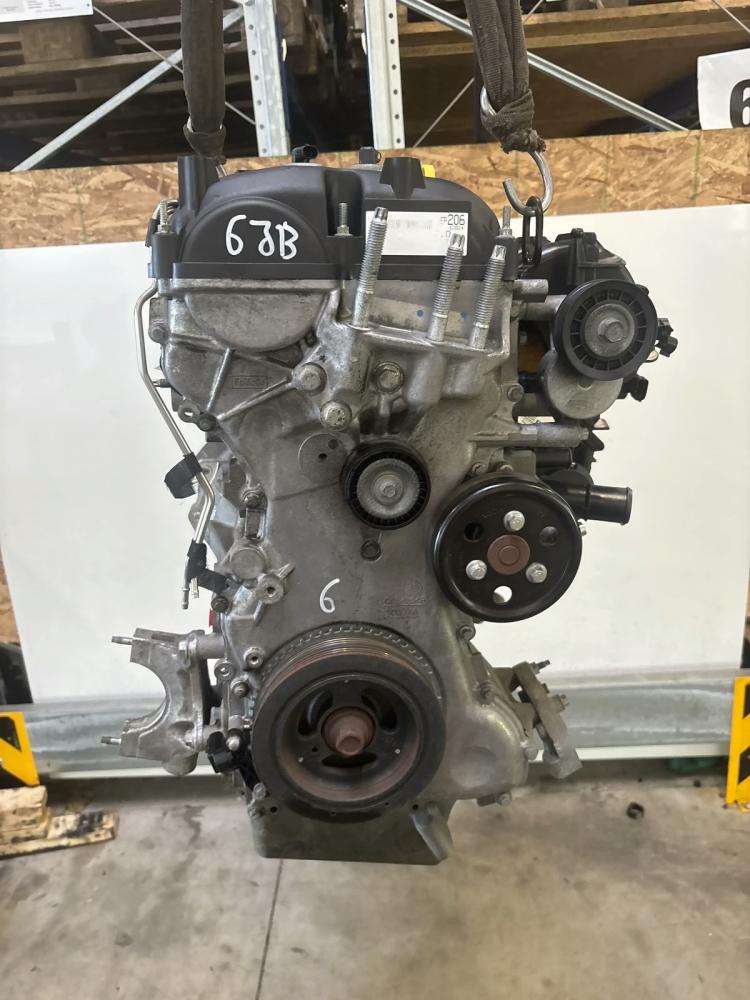
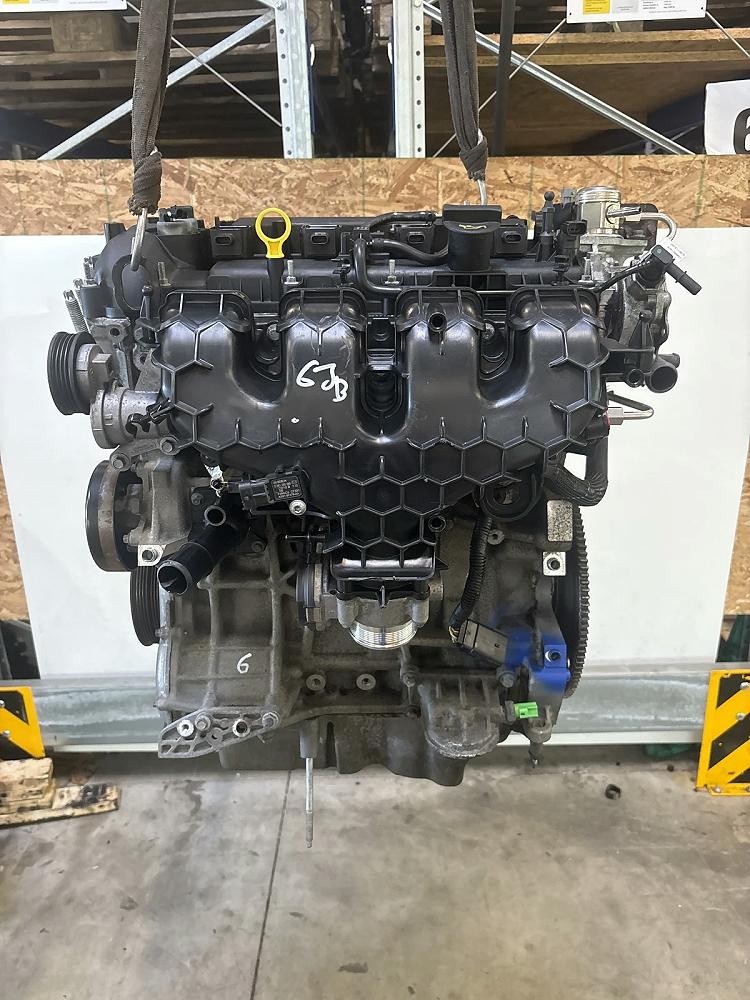
2.0L EcoBoost Photos
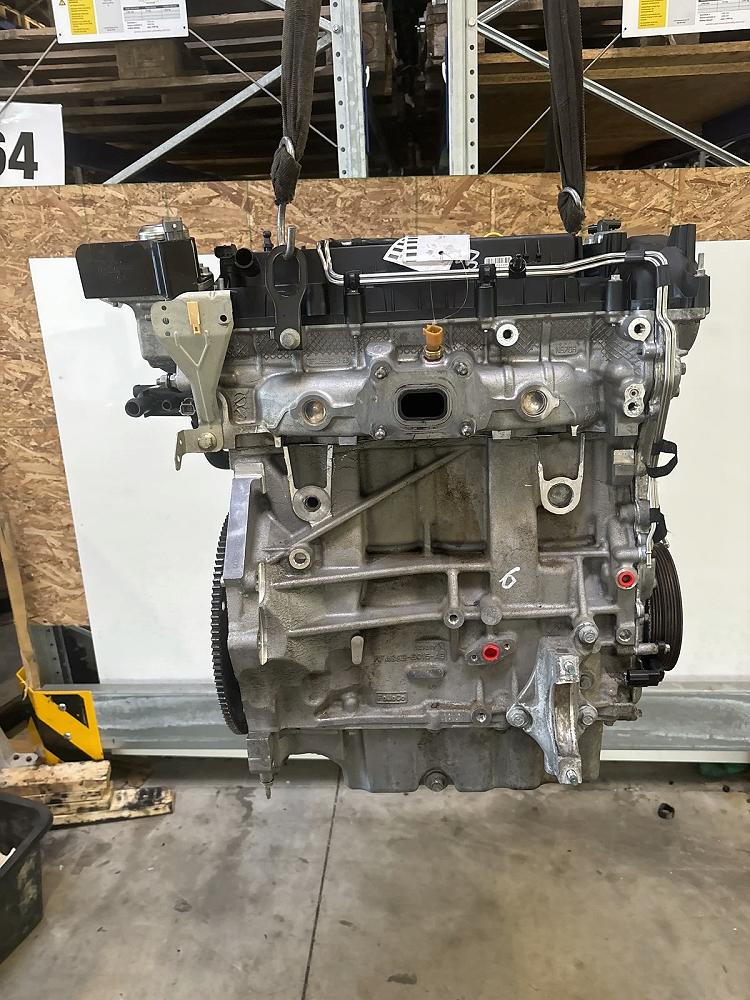
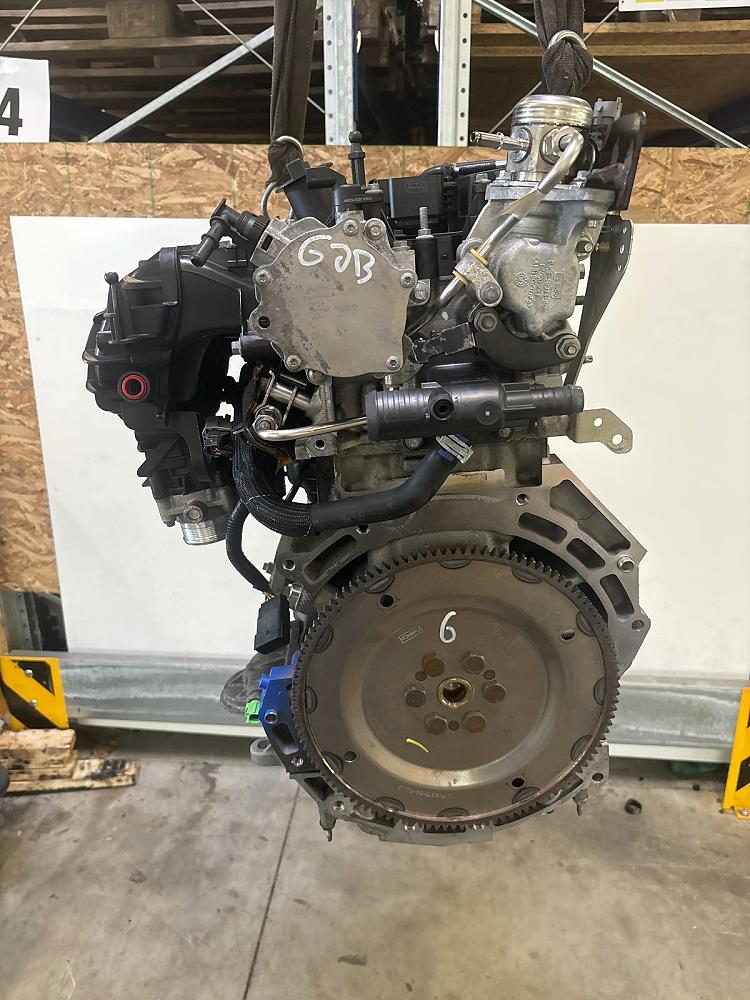
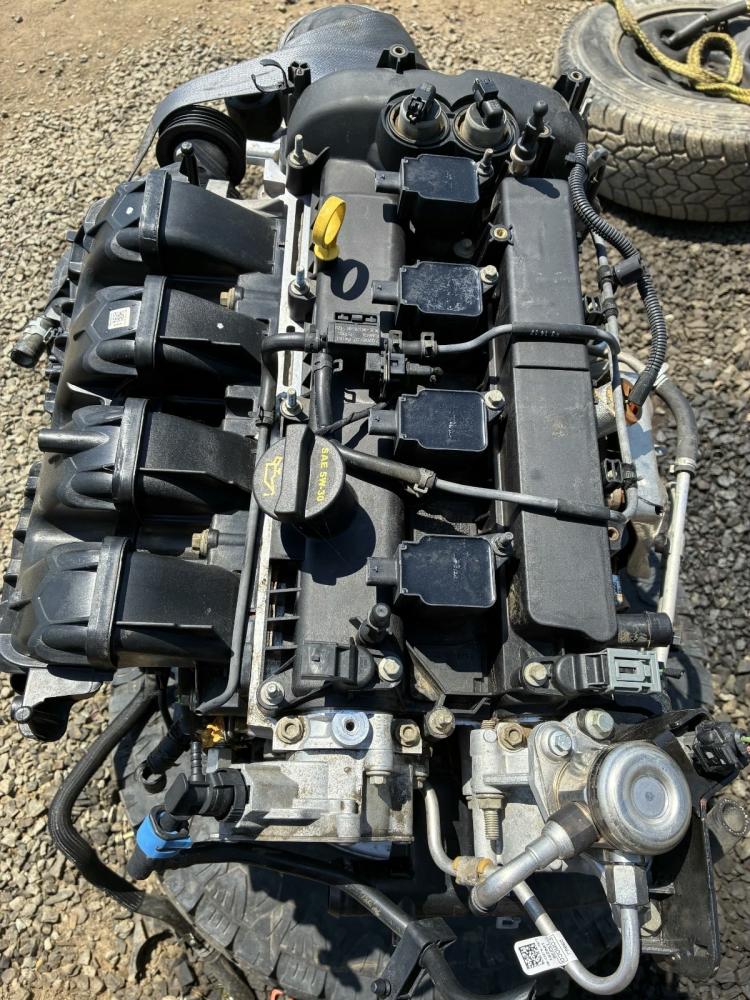
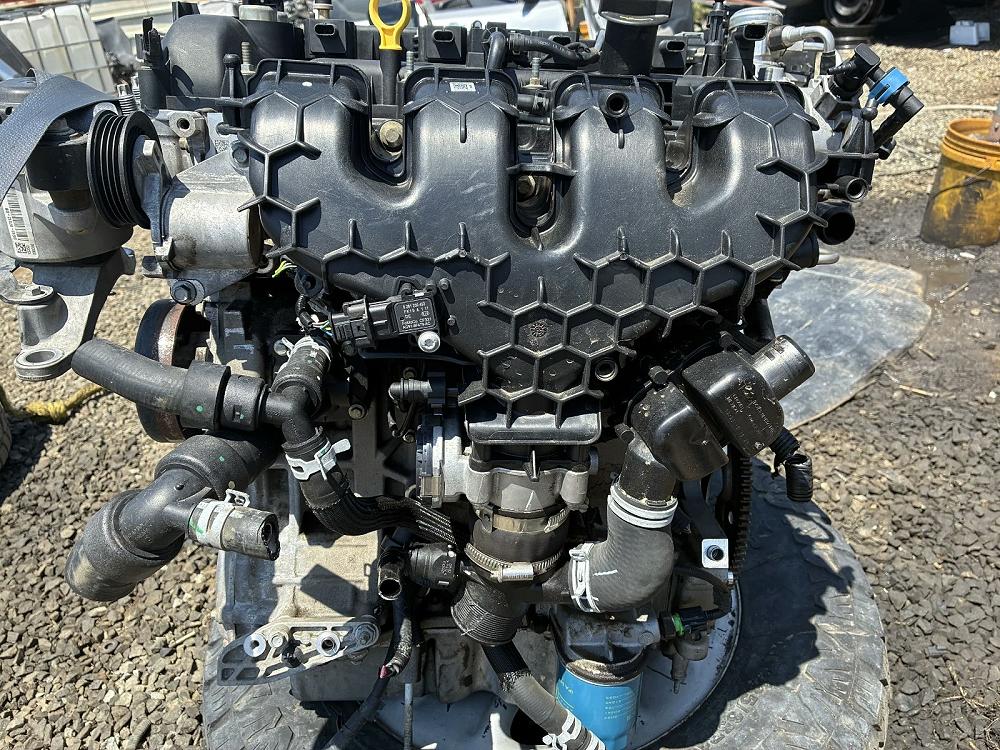
The Challenge
The 2.0L EcoBoost swap is still in its early stages within the Ford Ranger community. While the 5.0L Explorer swap has been documented and refined here for decades, the 2.0L EcoBoost swap is still evolving. The builders who tackle it today have the opportunity to improve the process and become the example that others follow.
If you’re planning this swap, don’t just repeat what someone else has done. Challenge conventional thinking. Find a way to reduce firewall modifications, preserve the factory HVAC system, retain power steering, develop a better alternator mounting solution, or simplify the engine and transmission installation. Consider the entire drivetrain as a package rather than forcing the engine to fit a predetermined location. A small change in engine placement may eliminate several fabrication challenges elsewhere in the swap.
If you discover a better solution, share it in the The Ranger Station forums. That’s how The Ranger Station has grown for more than two decades, and it’s how this guide will continue to evolve.
Related Articles
2013 EcoBoost Swap Into A Ford Ranger
About The Author
Jim Oaks is the founder of TheRangerStation.com, the longest-running Ford Ranger resource online since 1999. With over 25 years of hands-on experience building and modifying Ford Rangers — including magazine-featured builds like Project Transformer — Jim has become one of the most trusted authorities in the Ford Ranger off-road and enthusiast space.
Since launching TheRangerStation.com, Jim has documented thousands of real-world Ranger builds, technical repairs, drivetrain swaps, suspension modifications, and off-road adventures contributed by owners worldwide. TheRangerStation.com has been referenced in print, video and online by enthusiasts, mechanics, and off-road builders looking for practical, and experience-based information.