
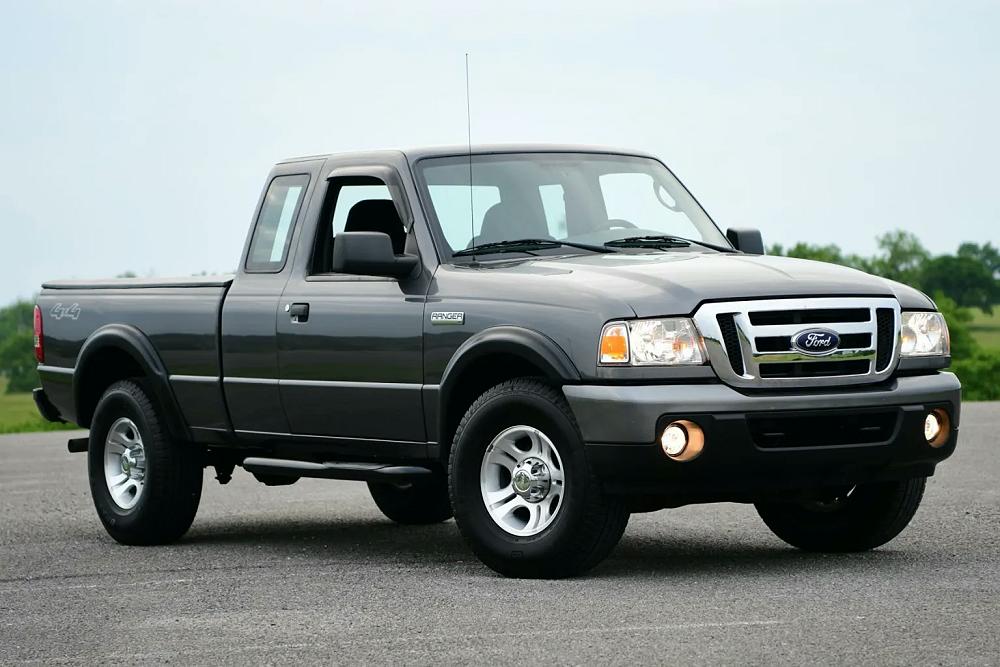
2009 Ford Ranger Problems & Recalls
The 2009 Ford Ranger was part of the final generation of the North American Ranger, which had been in production since 1983. By this point, Ford had worked out many of the issues associated with earlier versions, but there are still some reported problems and safety recalls worth knowing about when buying a used truck.
This page covers reported problems, safety recalls, and things to check when buying a used 2009 Ford Ranger.
Reported Problems
Engine Vibration – 2.3L
Some owners of 2009 Rangers equipped with the 2.3L four-cylinder engine have reported an engine or vehicle vibration.
One owner reported experiencing vibration from the time the truck was purchased new. The dealership and other mechanics reportedly acknowledged the vibration but were unable to identify a solution. Another owner described a vibration severe enough to cause numbness in their hands during longer drives.
The reports don’t establish a single cause, and vibration can originate from several different areas of a vehicle. Engine mounts, drivetrain components, tires, wheels, and other rotating components should be considered when diagnosing a vibration.
If you’re test-driving a 2009 Ranger, pay attention to unusual vibration at idle, during acceleration, and at highway speeds.
High Idle When Clutch Is Depressed – 2.3L
Some 2.3L manual-transmission Rangers have experienced an intermittent increase in engine RPM when the clutch pedal is depressed.
This condition has also been addressed in Ford service information under engine control concerns involving high idle with the clutch depressed.
If you’re looking at a 2009 Ranger with a manual transmission, pay attention to engine RPM when shifting and when coming to a stop. The engine should return to its normal idle speed rather than maintaining an unusually high RPM.
Safety Recalls
The following recalls and safety campaigns include certain 2009 Ford Rangers. Not every truck is affected by every campaign. Some recalls apply only to vehicles originally sold or registered in specific geographic areas, while others involve particular replacement airbag parts.
Always check the VIN of the individual truck to determine whether it is included and whether the required repair has been completed.
Driver-Side Airbag Inflator – NHTSA Campaign 21V-158
Ford Recall Number: 21S12
Recall Date: March 10, 2021
Affected Vehicles: Certain 2007–2011 Ford Rangers.
Ford recalled certain 2007–2011 Rangers equipped with Takata driver-side frontal airbag inflators.
The inflator propellant can degrade over time, particularly after exposure to high humidity and temperature changes. If the airbag deploys, excessive pressure can cause the inflator to rupture and send metal fragments into the passenger compartment. This could result in serious injury or death.
Ford’s remedy was to replace the driver-side airbag inflator or module with an alternate part at no charge.
Recall documents:
Passenger-Side Airbag Inflator – NHTSA Campaign 18V-046
Ford Recall Number: 18S01
Recall Date: January 11, 2018
Affected Vehicles: Certain 2009–2010 Ford Rangers.
Certain 2009–2010 Rangers were included in another Takata passenger-side airbag inflator recall.
Exposure to high humidity and temperature cycling can cause the inflator propellant to degrade. During airbag deployment, the inflator may rupture and send metal fragments toward vehicle occupants.
Ford’s remedy was to replace the affected passenger-side airbag inflator at no charge.
Recall documents:
Passenger-Side Airbag Inflator – NHTSA Campaign 17V-024
Ford Recall Number: 17S01
Recall Date: January 10, 2017
Affected Vehicles: Certain 2007–2009 Ford Rangers.
This Takata-related recall covered certain passenger-side frontal airbag inflators in 2007–2009 Rangers.
The inflator propellant can deteriorate after prolonged exposure to humidity and temperature changes. If the airbag deploys, the inflator may rupture and send metal fragments into the passenger compartment.
Ford instructed dealers to replace the affected passenger-side airbag inflator.
Recall documents:
Passenger-Side Airbag Inflator – NHTSA Campaign 16V-384
Ford Recall Number: 16S26
Recall Date: May 31, 2016
Affected Vehicles: Certain 2007–2011 Ford Rangers originally sold or registered in specified geographic areas.
Ford recalled certain 2007–2011 Rangers equipped with Takata passenger-side frontal airbag inflators.
The inflator propellant can degrade after long-term exposure to humidity and temperature cycling. If the airbag deploys, the inflator may rupture and send metal fragments into the passenger compartment, potentially causing serious injury or death.
The recall included vehicles originally sold or registered in Zone A states and territories, including Texas. Certain earlier model-year Rangers in additional Zone B states were also included.
Ford’s remedy was to replace the passenger-side airbag inflator at no charge.
Recall documents:
Airbag Replacement Parts – NHTSA Campaign 21V-081
Recall Date: February 16, 2021
Affected Vehicles: Certain 2004–2011 Ford Rangers.
This campaign involved a small number of Rangers that had previously received a Takata airbag recall repair but may have subsequently received an obsolete Takata replacement inflator during a later collision or theft repair.
The campaign involved specific vehicles identified by VIN, not every 2004–2011 Ranger.
Owners of affected vehicles were instructed to have the replacement airbag inflator addressed under the recall.
Recall documents:
Front Wheel Spindle – NHTSA Campaign 09V-040
Ford Recall Number: 09S07
Recall Date: February 3, 2009
Vehicles Affected: 11,134
Affected Vehicles: Certain 2009 Ford Ranger 4×2 models manufactured August 22, 2008, through October 13, 2008.
Ford recalled certain 2009 Ranger 4×2 trucks because some front wheel spindles were improperly manufactured.
The affected spindles could fracture during normal vehicle use. If a spindle fractures, the wheel could separate from the vehicle, increasing the risk of a crash.
Ford instructed dealers to inspect the front wheel spindles and replace them, if necessary, at no charge.
Recall documents:
What to check: This recall is especially important when looking at a 2009 4×2 Ranger. Verify that the truck falls outside the affected production group or that the recall inspection and any necessary spindle replacement were completed.
Multifunction Switch – NHTSA Campaign 11V-352
Ford Recall Number: 11C18
Recall Date: July 13, 2011
This campaign is sometimes associated with 2004–2011 Rangers because affected replacement multifunction switches were distributed to dealers for those model years.
However, the factory-built Ranger trucks specifically included in the vehicle portion of this recall were certain 2011 models, not 2009 models.
The multifunction switch contained an internal slider that could deform and cause the turn signals, taillights, hazard warning flashers, and/or brake lights to stop working.
A 2009 Ranger could be affected if it received an affected replacement switch. Check the vehicle’s repair history if the multifunction switch has been replaced.
Recall documents:
Technical Service Bulletins (TSBs)
Technical Service Bulletins (TSBs) for the 2009 Ranger are official communications between Ford & their dealerships that describe processes for troubleshooting or fixing certain common problems. All vehicle manufacturers are required by U.S. law to make their TSBs available to the public.
For a list of the TSBs for the 2009 Ford Ranger, check out: 2009 Ford Ranger TSBs
What to Check When Buying a 2009 Ford Ranger
When looking at a used 2009 Ranger, take the time to inspect the truck and drive it under different conditions.
- Check the VIN for outstanding recalls. Pay particular attention to the Takata airbag campaigns and the front spindle recall if you’re looking at a 4×2.
- Check for engine vibration. Pay attention to unusual vibration at idle, during acceleration, and at highway speeds.
- Check the idle on 2.3L manual-transmission models. Watch for unusually high RPM when the clutch pedal is depressed.
- Inspect the front suspension and steering. Look for damaged components, worn parts, and evidence of previous repairs.
- Inspect the frame and undercarriage. Look for rust, damage, and signs of off-road abuse.
- Review the maintenance history. Ask about major repairs and whether recall work has been performed.
The condition of the individual truck, its maintenance history, mileage, and how it has been used are all important when evaluating a used Ranger.
Checking for Outstanding Recalls
The recall information on this page is not a substitute for checking the VIN of the truck you are considering.
Use these resources to check for outstanding safety recalls:
Searching by year, make, and model provides general recall information. Searching by VIN tells you whether a specific vehicle has an unrepaired recall. NHTSA notes that its VIN results may not show recalls that have already been repaired, and some older recalls may no longer appear in the VIN lookup.
Related Ford Ranger Information
- 1983–2011 Ford Ranger Buyer’s Guide
- The Ranger Station Technical Library
- The Ranger Station Forums
- Ford Ranger Brochures

About The Author
Jim Oaks is the founder of TheRangerStation.com, the longest-running Ford Ranger resource online since 1999. With over 25 years of hands-on experience building and modifying Ford Rangers — including magazine-featured builds like Project Transformer — Jim has become one of the most trusted authorities in the Ford Ranger off-road and enthusiast space.
Since launching TheRangerStation.com, Jim has documented thousands of real-world Ranger builds, technical repairs, drivetrain swaps, suspension modifications, and off-road adventures contributed by owners worldwide. TheRangerStation.com has been referenced in print, video and online by enthusiasts, mechanics, and off-road builders looking for practical, and experience-based information.