
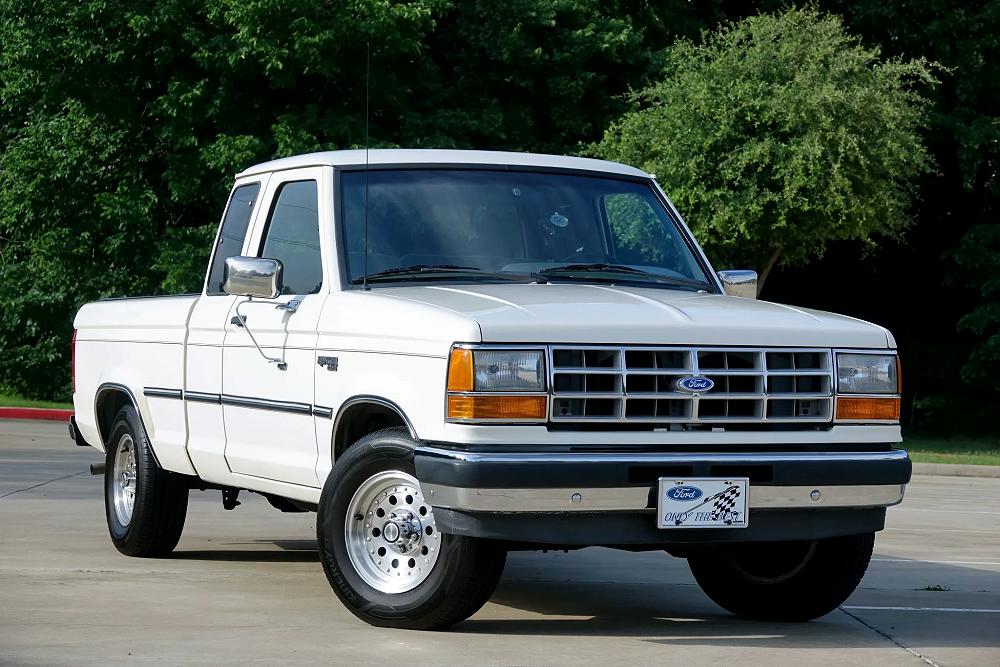
1990 Ford Ranger Problems & Recalls
The 1990 Ford Ranger brought an important change to the lineup: Ford introduced the 4.0L OHV V6, giving buyers a more powerful engine option than the 2.3L four-cylinder and 2.9L V6. The 1990 model year also continued the first-generation Ranger’s familiar body and chassis design.
There are relatively few owner complaints listed for this model year, but there are several recalls worth knowing about. Two involve the throttle linkage and the possibility of unintended acceleration, while another concerns the automatic transmission parking pawl.
Common 1990 Ford Ranger Problems
The number of reported complaints for the 1990 Ranger is small. The following issues are based on individual owner reports, not proof that every truck or a large percentage of trucks will experience them.
Wheel Bearing Failure
One owner reported a wheel bearing failure at approximately 189,000 miles. Wheel bearings are wear items, especially on older trucks that have accumulated considerable mileage or have spent time carrying heavy loads or operating off-road.
Listen for humming, growling, or grinding that changes with vehicle speed. Check for excessive wheel play and inspect the bearings during a pre-purchase inspection. On four-wheel-drive models, pay attention to the front wheel bearings and make sure the spindle nuts and bearing adjustment are correct.
Buzzing Noise From the Fuel Tank
Another owner reported a buzzing motor-like sound coming from the fuel tank area. The noise may be related to the in-tank electric fuel pump or its mounting and surrounding components.
A fuel pump can become noisy as it wears, but noise alone does not establish that the pump is failing. If the truck also has hard starting, hesitation, loss of power, or stalling, check fuel pressure and electrical supply to the pump.
Fan Belt Splitting
One complaint involved a fan belt splitting down the middle. Inspect the belt for cracking, fraying, separation, glazing, and uneven wear.
A belt that repeatedly wears or splits may indicate more than an old belt. Check pulley alignment, belt tension, and the condition of the pulleys and accessories. Replace a damaged belt before it fails on the road.
1990 Ford Ranger Recalls
89V234000 – Throttle Lever Contact With Air Inlet Tube
Date announced: December 22, 1989
Vehicles affected: Certain Ford Rangers equipped with the 4.0L V6.
The throttle lever could contact the throttle body air inlet tube. This could prevent the throttle from returning normally after the accelerator pedal was released from the full-throttle position.
If the throttle remained open, the truck could accelerate unexpectedly and the driver could lose control.
Remedy: Ford dealers were instructed to replace the air inlet tube with a redesigned part that provided additional clearance between the tube and throttle lever.
For detailed information and supporting documents, see NHTSA Recall 89V234000.
90V044000 – Throttle Lever Contact With Air Inlet Tube
Date announced: March 1, 1990
Vehicles affected: Certain 1990 Ford Rangers.
This recall also involved possible contact between the throttle lever and the throttle body air inlet tube. The interference could prevent the throttle from returning after the accelerator pedal was released, potentially causing unintended acceleration.
Remedy: Ford dealers were instructed to replace the air inlet tube with a newly designed replacement.
This is a separate campaign from 89V234000. Because both recalls involve the throttle and air inlet tube, check the truck’s VIN and recall history rather than assuming that completion of one campaign automatically addressed the other.
For detailed information and supporting documents, see NHTSA Recall 90V044000.
91V189000 – Automatic Transmission Parking Pawl
Date announced: November 4, 1991
Vehicles affected: Certain 1990–1991 Ford Rangers equipped with the automatic transmission.
The automatic transmission parking pawl may not properly engage the parking gear when the shift lever is placed in Park.
The driver may believe the truck is securely parked when the parking pawl has not actually engaged. This could allow the truck to roll away on a slope or move unexpectedly when the engine is started.
Remedy: Ford dealers were instructed to repair the transmission by installing a new parking pawl.
This recall is particularly important for a 1990 Ranger equipped with the A4LD automatic transmission. Always use the parking brake, even if the transmission appears to be holding the truck normally.
For detailed information and supporting documents, see NHTSA Recall 91V189000.
98E010000 – Aftermarket Brake Rotors
Date announced: April 8, 1998
This campaign involved certain aftermarket Aimco brake rotors sold for use on Ford and Mazda trucks.
Cracks could develop in the rotor casting around the outer diameter of the rotor hat or near the wheel stud holes. A cracked rotor could result in loss of braking.
Remedy: Aimco offered reimbursement for replacement rotors and installation.
This was a recall of specific aftermarket replacement rotors, not a recall of every original-equipment brake rotor installed on a 1990 Ranger.
For detailed information and supporting documents, see NHTSA Recall 98E010000.
06E026000 – Aftermarket Replacement Lighting
Date announced: March 23, 2006
This campaign involved certain Pro-A Motors replacement corner lamps, turn signals, and headlights sold for use on various vehicles, including the 1990 Ranger.
Some replacement combination lamps did not have the required amber side reflectors and therefore failed to meet Federal Motor Vehicle Safety Standard No. 108.
Without the required reflectors, the vehicle could be less visible to other drivers, increasing the risk of a crash.
Remedy: Pro-A Motors was to notify owners and offer to repurchase the affected lamps.
This was an aftermarket lighting recall, not a recall of the original Ford factory lighting.
For detailed information and supporting documents, see NHTSA Recall 06E026000.
NHTSA Defect Investigations
NHTSA also investigated other reported concerns involving the 1990 Ranger. An investigation does not automatically mean a recall was issued.
Two investigations listed for this model year include:
- PE92084 – Front Seat Track Failure: NHTSA investigated reports involving front seat track failure. The investigation was closed without a recall.
- PE92029 – Wheel Separation / Torque Loss: NHTSA investigated reports involving wheel separation and loss of wheel torque. The investigation was closed without a recall.
These investigations are separate from the recall campaigns listed above.
Technical Service Bulletins (TSBs)
Technical Service Bulletins (TSBs) for the 1990 Ranger are official communications between Ford & their dealerships that describe processes for troubleshooting or fixing certain common problems. All vehicle manufacturers are required by U.S. law to make their TSBs available to the public.
For a list of the TSBs for the 1990 Ford Ranger check out: 1990 Ford Ranger TSBs
What to Check When Buying a 1990 Ford Ranger
A 1990 Ranger is now more than 35 years old. Its condition, maintenance history, and previous repairs should be a major part of your buying decision.
- Check the frame: Look for heavy rust, scaling, holes, cracks, and previous repairs. Pay particular attention to suspension mounting points, crossmembers, cab mounts, and rear leaf-spring hangers.
- Inspect the wheel bearings: Listen for humming or grinding during a test drive. Check for wheel play and have questionable bearings inspected.
- Listen to the fuel pump: A loud buzzing or whining noise from the fuel tank may indicate a worn pump or another fuel-system issue. Check fuel pressure if the truck also has running problems.
- Inspect the belts: Look for cracking, fraying, splitting, and uneven wear. Check pulley alignment and accessory bearings if a belt shows unusual wear.
- Check the throttle operation: Make sure the accelerator pedal moves freely and returns promptly. Inspect the throttle linkage and air inlet tube, and verify that both throttle-related recalls were addressed if applicable.
- Check the automatic transmission: If equipped with an automatic, verify that it shifts properly and that the 91V189000 parking-pawl recall has been completed.
- Inspect the engine: Check for oil and coolant leaks, overheating, unusual noises, and signs of poor maintenance. Let the engine start cold if possible.
- Check the cooling system: Inspect the radiator, hoses, water pump, thermostat housing, and coolant condition. Look for evidence of overheating or neglected maintenance.
- Inspect the brakes: Check the brake lines, hoses, calipers, wheel cylinders, master cylinder, and booster. Look for leaks and corrosion.
- Test four-wheel drive: If the truck is a 4×4, verify that the transfer case, front axle, and hubs engage and disengage correctly.
- Inspect the tires: Check the tire brand, model, size, date codes, tread condition, and signs of damage or uneven wear. Do not assume an old tire is safe simply because it has plenty of tread.
The 1990 4.0L V6
The 4.0L OHV V6 was new to the Ranger for 1990. It gave the truck a substantial increase in displacement and torque compared with the 2.9L V6.
When shopping for one, pay attention to cooling-system condition, oil leaks, engine noise, and maintenance history. A cold start and a thorough inspection are worthwhile, particularly if the truck has high mileage.
The 2.9L V6 was also available in 1990. Its cylinder heads have a history of cracking, especially after overheating, so check for coolant loss, overheating, and signs of previous head repairs.
Check for Open Recalls
You can check a specific truck’s recall status using its VIN:
Keep in mind that the NHTSA VIN lookup may not show recalls that have already been repaired, and it does not display some recalls more than 15 years old. For an older Ranger, it is worth checking the vehicle’s service history and contacting a Ford dealer if you have questions about a particular campaign.
Related Ford Ranger Information
- 1983–2011 Ford Ranger Buyer’s Guide
- The Ranger Station Technical Library
- The Ranger Station Forums
- Ford Ranger Brochures

About The Author
Jim Oaks is the founder of TheRangerStation.com, the longest-running Ford Ranger resource online since 1999. With over 25 years of hands-on experience building and modifying Ford Rangers — including magazine-featured builds like Project Transformer — Jim has become one of the most trusted authorities in the Ford Ranger off-road and enthusiast space.
Since launching TheRangerStation.com, Jim has documented thousands of real-world Ranger builds, technical repairs, drivetrain swaps, suspension modifications, and off-road adventures contributed by owners worldwide. TheRangerStation.com has been referenced in print, video and online by enthusiasts, mechanics, and off-road builders looking for practical, and experience-based information.