
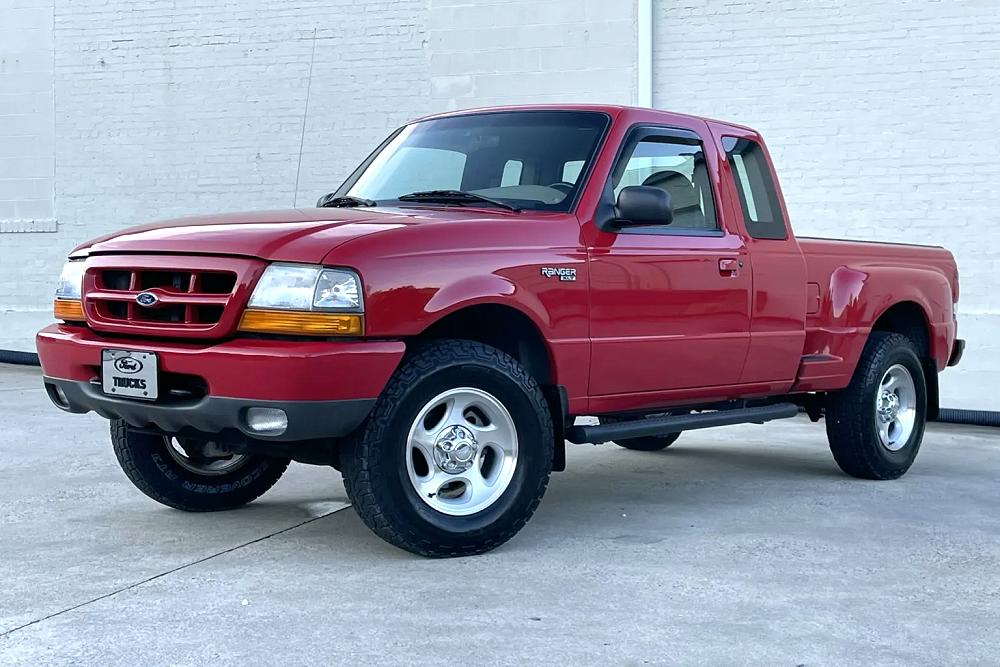
2000 Ford Ranger Problems & Recalls
Looking to buy a used 2000 Ford Ranger? There are several owner-reported problems worth checking, including automatic transmission shifting issues, unexpected acceleration reports, cruise-control switch fire concerns, and extensive frame and suspension rust.
The 2000 Ranger also had safety recall campaigns involving seat belt buckles and a limited number of 2.5L trucks with a heater return tube problem. As with any older truck, maintenance history, condition, and previous repairs are important.
Reported Problems
Automatic Transmission Problems
Automatic transmission problems are among the more frequently reported concerns with the 2000 Ranger. Symptoms include:
- The Check Engine, ABS, and O/D lights illuminating together.
- The speedometer stopping, followed by hard or delayed shifting.
- The transmission shifting hard or jerking forward.
- The shift mechanism becoming loose, allowing the truck to move out of Park.
- Complete transmission failure.
Some reports describe multiple warning lights and speedometer failure occurring before the transmission begins shifting abnormally. These symptoms can involve electronic or transmission-related faults, so scan for diagnostic trouble codes and investigate the underlying cause before assuming the transmission itself has failed.
When test-driving a Ranger, check for delayed engagement, slipping, harsh shifts, and abnormal behavior when selecting Park, Reverse, or Drive.
Unexpected Acceleration
Owners have reported Rangers accelerating without warning or surging forward while the brakes are applied. Some reports associate the behavior with cruise control.
Unexpected acceleration is a serious safety concern. Check the speed-control deactivation switch recall history and investigate any unexplained surging before driving or purchasing the truck.
Cruise-Control Switch and Fire Concerns
The speed-control deactivation switch was the subject of a major Ford recall campaign. The switch could leak internally and overheat, smoke, or burn, potentially causing an underhood fire.
The 2000 Ranger was included in the 2007 speed-control switch recall described below. Confirm that the required repair was completed.
Fuel Tank Strap and Frame Rust
Fuel tank straps and their mounting points can rust, allowing the straps to hang loose or the tank to become improperly supported.
Frame corrosion is another significant concern. Reports include:
- Rusted frame sections and crossmembers.
- Holes or cracks in the frame caused by corrosion.
- Rusted leaf spring hangers and shackles.
- Rusted fuel lines and brake lines.
- A rear bumper separating due to rust.
Inspect the frame carefully, particularly around the rear suspension and fuel tank mounting areas. Pay attention to the condition of the fuel tank straps and their attachment points.
Electrical Problems
Reported electrical concerns include:
- Smoke coming from the steering column after using the turn signal, attributed in reports to a defective multifunction switch.
- Windshield wipers turning on by themselves.
- Intermittent or failed windshield wiper motor operation.
- A radio that drains the battery overnight.
- Faulty alternators.
Check the operation of the turn signals, headlights, windshield wipers, radio, and charging system. If electrical problems are present, determine whether they are related or separate issues.
Door Ajar Light and Dome Light Problems
The dome light may remain on because the door-latch switch sticks. The door-ajar warning can also remain illuminated when the door is closed.
Check the door latches and interior lighting. A dome light that remains on can drain the battery.
Brake Line Corrosion
Rusted brake lines have been reported to leak and cause brake failure. Inspect the brake lines along the frame and near the rear axle for corrosion, wet spots, and previous repairs.
Brake line corrosion should be treated as a safety issue. Do not drive a truck with leaking or structurally compromised brake lines.
Suspension and Ball Joint Wear
Excessively worn ball joints have been reported. Check for looseness in the front suspension, uneven tire wear, clunking noises, and abnormal steering behavior.
A thorough inspection should include the ball joints, steering components, and suspension mounting points.
Seat Belt and Airbag Reports
Owners have reported airbags failing to deploy during collisions and seat belts becoming unbuckled unexpectedly.
These reports do not establish that every 2000 Ranger has a restraint-system defect. However, inspect the seat belt buckles and verify that they latch securely. Check the airbag warning light and review the truck’s recall history.
Seat Back Failure
A few reports describe the back of a seat breaking or falling backward. Check the seat frame, adjustment mechanism, and mounting points for looseness or damage.
Firestone Wilderness Tire Concerns
The 2000 Ranger was among the Ford vehicles potentially equipped with Firestone Wilderness AT tires involved in the tire tread separation safety campaigns.
These tire campaigns were not recalls of the Ranger itself. If the truck still has older Firestone Wilderness AT tires, inspect their condition, age, and identification markings carefully. Never assume an old tire is safe simply because it has adequate tread remaining.
2000 Ford Ranger Recalls
Recall applicability depends on the vehicle’s VIN, production details, and equipment. The following campaigns are important to check when researching a 2000 Ranger.
07V336 — Speed Control Deactivation Switch
NHTSA Campaign 07V336 / Ford Campaign 05S28
Certain 1998–2002 Ford Rangers were included in this recall involving the speed-control deactivation switch.
The switch could leak internally and overheat, smoke, or burn, potentially causing an underhood fire. The remedy involved installing a fused wiring harness.
00V228 — TRW Seat Belt Buckle Assemblies
NHTSA Campaign 00V228 / Ford Campaign 00S21
Certain Ford vehicles, including some 2000 Rangers, were equipped with TRW seat belt buckle assemblies whose buckle bases were not properly heat-treated. The buckles did not meet the required load-bearing standard.
In a crash, an affected buckle could fail to properly restrain the occupant.
Ford dealers were instructed to inspect the buckle date codes and replace affected assemblies.
00V094 — Heater Return Tube
NHTSA Campaign 00V094 / Ford Campaign 00S07
This campaign involved 49 pickup trucks equipped with the 2.5L OHC engine. A plugged heater return tube at the water pump could prevent coolant circulation through the heater circuit.
The resulting lack of heat could compromise windshield defrosting performance.
The remedy was replacement of the plugged heater water return tube. NHTSA’s campaign information states that the affected trucks were at transportation yards or dealerships and had not been delivered to customers.
Aftermarket Replacement Lighting Campaigns
Several NHTSA campaigns involved aftermarket replacement lamps sold for use on the Ranger and other vehicles. These included replacement corner, bumper, turn signal, and headlamp assemblies that lacked required amber side reflectors.
The campaigns included:
- 09E025 — Dope, Inc.
- 09E012 — Sabersport
- 06E026 — Pro-A Motors
These campaigns involved aftermarket replacement equipment, not original factory-installed Ranger lighting. If the truck has aftermarket lamps, check the part numbers and whether the assemblies meet applicable requirements.
Firestone Tire Safety Campaigns
The 2000 Ranger was included in tire-related safety improvement and replacement programs involving certain Firestone Wilderness AT and Radial ATX/ATX II tires.
These were tire campaigns rather than recalls of the Ranger itself. The replacement and reimbursement programs have expired, but checking the tire brand, model, size, and DOT identification remains worthwhile when inspecting an older truck.
Technical Service Bulletins (TSBs)
Technical Service Bulletins (TSBs) for the 2000 Ranger are official communications between Ford & their dealerships that describe processes for troubleshooting or fixing certain common problems. All vehicle manufacturers are required by U.S. law to make their TSBs available to the public.
For a list of the TSBs for the 2000 Ford Ranger check out: 2000 Ford Ranger TSBs
What to Check When Buying a 2000 Ford Ranger
Before purchasing a 2000 Ranger, take the time to inspect the following:
- Automatic transmission: Check for hard shifting, delayed engagement, slipping, warning lights, speedometer problems, and stored diagnostic trouble codes.
- Cruise control: Verify that the speed-control deactivation switch recall was completed.
- Frame: Inspect the frame, crossmembers, rear suspension mounting points, and bumper mounts for serious corrosion.
- Fuel tank straps: Check the straps and frame mounting points for rust or looseness.
- Brake lines: Inspect for corrosion, leaks, and questionable repairs.
- Seat belts: Verify that the buckles latch securely and check whether the TRW buckle recall inspection was completed.
- Electrical system: Test the turn signals, multifunction switch, windshield wipers, alternator, and battery.
- Dome light: Confirm that the interior light turns off when the doors are closed.
- Front suspension: Check ball joints and steering components for excessive wear.
- Tires: Inspect the age, condition, and DOT identification of all tires, especially older Firestone Wilderness AT models.
- Recall history: Check the VIN and available service records for completed recall work.
Check for Open Recalls
Use the truck’s VIN to check for outstanding recalls:
A VIN search can identify unrepaired recalls, but it may not show recalls that have already been repaired or some older campaigns. Review available service records as well.
Related Ford Ranger Information
- 1983–2011 Ford Ranger Buyer’s Guide
- The Ranger Station Technical Library
- The Ranger Station Forums
- Ford Ranger Brochures
About The Author
Jim Oaks is the founder of TheRangerStation.com, the longest-running Ford Ranger resource online since 1999. With over 25 years of hands-on experience building and modifying Ford Rangers — including magazine-featured builds like Project Transformer — Jim has become one of the most trusted authorities in the Ford Ranger off-road and enthusiast space.
Since launching TheRangerStation.com, Jim has documented thousands of real-world Ranger builds, technical repairs, drivetrain swaps, suspension modifications, and off-road adventures contributed by owners worldwide. TheRangerStation.com has been referenced in print, video and online by enthusiasts, mechanics, and off-road builders looking for practical, and experience-based information.