
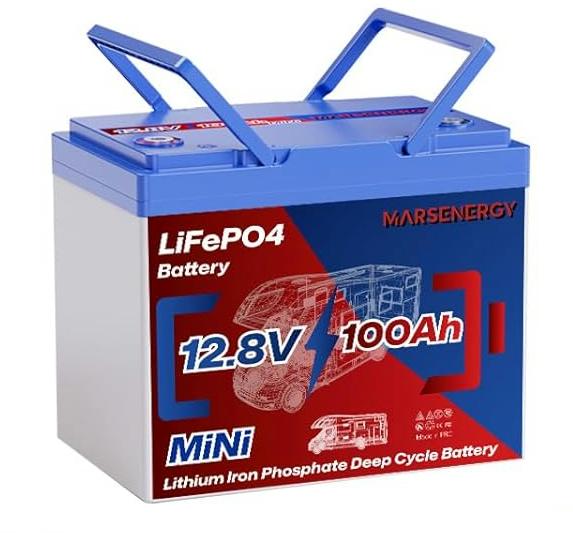
MARSENERGY 12V 100Ah Lifepo4 Battery
Lithium Battery Basics (LiFePO4 for Automotive & Overland Use)
Lithium batteries—especially LiFePO4 (Lithium Iron Phosphate)—have become a popular upgrade for auxiliary battery systems in trucks, SUVs, and overland vehicles. They offer more usable power, lighter weight, and longer lifespan compared to traditional lead-acid and AGM batteries.
If you’re running accessories like a refrigerator, lights, inverter, or camping gear, a lithium battery can provide reliable power without the voltage drop and limitations of older battery technologies.
What Is a LiFePO4 Battery?
A LiFePO4 battery is a type of lithium-ion battery designed for safety, stability, and long cycle life. Unlike traditional lead-acid batteries, lithium batteries maintain a consistent voltage during discharge and can safely use most of their stored capacity.
- Nominal Voltage: ~12.8V
- Usable Capacity: 80–100% (vs ~50% for lead-acid)
- Cycle Life: 2,000–5,000+ cycles
- Weight: Much lighter than AGM or lead-acid
Advantages of Lithium Batteries
- More usable power: You can safely discharge a lithium battery much deeper than lead-acid
- Stable voltage: Keeps accessories running consistently (great for fridges)
- Lightweight: Ideal for off-road and overland builds
- Fast charging: Charges quicker than traditional batteries
- Long lifespan: Can last several times longer than AGM or lead-acid
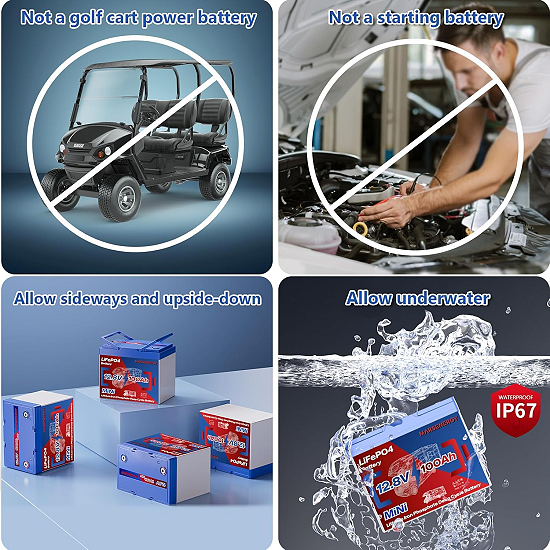
- Mounting Positions: Can be mounted on their side or upside down
Disadvantages & Limitations
- Higher cost: Upfront price is significantly higher
- Cold weather performance: Charging below freezing can damage the battery (unless it has protection)
- Charging requirements: May require a DC-DC charger for proper charging from the alternator
- Not ideal as a starting battery: Most are designed for deep cycle use, not engine starting
Charging a Lithium Battery in Your Vehicle
This is where lithium batteries differ the most from traditional systems.
Many vehicles—especially newer ones with smart alternators—do not provide the correct charging profile for lithium batteries. In these cases, a DC-DC charger is recommended to properly regulate voltage and protect the battery.
In older vehicles, some LiFePO4 batteries can be used with a simple isolator or solenoid setup, but this depends on the battery’s built-in BMS (Battery Management System).
What Is a BMS (Battery Management System)?
A BMS is built into most lithium batteries and protects the battery from:
- Overcharging
- Over-discharging
- Short circuits
- Extreme temperatures
Some advanced lithium batteries include low-temperature cutoffs and internal heaters, making them more suitable for cold climates.
Can You Run Lithium and Lead-Acid Batteries Together?
It is not recommended to directly connect lithium and lead-acid batteries in parallel. They charge and discharge differently, which can cause imbalance and reduce performance.
If you’re running a dual battery system, the lithium battery should be isolated and charged properly using a DC-DC charger or a compatible system.
Best Uses for Lithium Batteries in a Truck
- 12V refrigerators
- Camping and overlanding setups
- Auxiliary lighting
- Inverters and small appliances
- Solar power systems
Is a Lithium Battery Worth It?
If you regularly camp, overland, or run accessories with the engine off, a lithium battery can be a major upgrade. While the initial cost is higher, the increased performance, longer lifespan, and improved reliability often make it worth the investment.
For basic setups or budget builds, traditional lead-acid or AGM batteries may still be the better choice.
Personal Experience
I actually use a Victron DC to DC charger to charge a MARSENERGY LiFeP04 lithium battery (shown on this page) that is mounted in my 2021 Ford Ranger FX4 that I use to power an Explorer Bear 12V refrigerator.
See:
Adding An Auxiliary Battery To A 2019+ Newer Ford Ranger
Explorer Bear 42-Quart Fridge Review
Related Articles
Adding An Auxiliary Battery To A 2019+ Newer Ford Ranger
Last Updated:
About The Author

Jim Oaks is the founder of TheRangerStation.com, the longest-running Ford Ranger resource online since 1999. With over 25 years of hands-on experience building and modifying Ford Rangers — including magazine-featured builds like Project Transformer — Jim has become one of the most trusted authorities in the Ford Ranger off-road and enthusiast space.
Since launching TheRangerStation.com, Jim has documented thousands of real-world Ranger builds, technical repairs, drivetrain swaps, suspension modifications, and off-road adventures contributed by owners worldwide. TheRangerStation.com has been referenced in print, video and online by enthusiasts, mechanics, and off-road builders looking for practical, and experience-based information.