
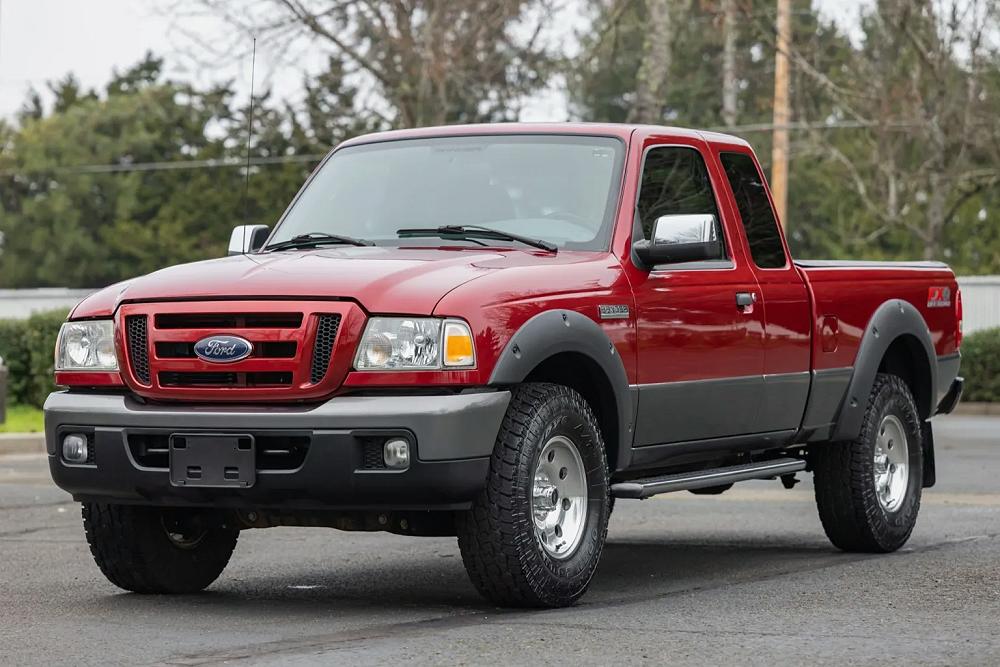
2006 Ford Ranger Problems & Recalls
Looking to buy a used 2006 Ford Ranger? There are several owner-reported problems worth knowing about, along with an extensive airbag recall history. Some of these recalls involve serious Takata airbag inflator problems, including specific 2006 Rangers that Ford and NHTSA warned owners not to drive until repaired.
Here are the reported problems and recalls to check before buying or driving a 2006 Ranger.
Reported Problems
3.0L Engine Misfires – Cylinder Head Problems
Some 2004–2006 Rangers equipped with the 3.0L Vulcan V6 may experience rough running, rough idle, and engine misfires. The check-engine light may come on with diagnostic trouble codes P0300 through P0306 or P0316.
Ford addressed this condition in Technical Service Bulletin 05-26-3. The problem can be caused by exhaust valve seat recession, which results in a loss of compression. If the exhaust valve is identified as the source of the problem, the bulletin calls for replacing both cylinder heads with updated service parts.
This is an important issue to investigate if you’re considering a 2006 Ranger with the 3.0L engine.
Ford TSB 05-26-3 – 3.0L Engine Misfire and Cylinder Head Problems
Clutch Failure at Low Mileage
Some owners have reported premature clutch failure in manual-transmission Rangers. The reports include a clutch failure around 15,000 miles and another owner who experienced repeated clutch problems.
When test-driving a manual Ranger, check for clutch slippage, difficulty shifting, unusual noises, and a clutch that engages inconsistently.
Front Hubs and Wheel Bearing Failure
There are reports of front hub and wheel bearing failures, including cases where a hub separated from the vehicle. One owner described losing a front hub while driving and later experiencing the same problem on the opposite side.
Pay attention to ABS warning lights, humming or grinding noises, looseness at the front wheels, and unusual wheel bearing noise. Have any suspected hub or bearing problem inspected before driving the truck further.
Engine Dies – Fuel Inertia Switch
Some owners report the engine shutting off unexpectedly or the truck refusing to restart until the fuel pump inertia switch is reset.
The inertia switch is designed to interrupt fuel pump power after an impact. However, reports describe switches activating unexpectedly, sometimes after hitting a bump. The switch is located under the passenger-side dashboard area.
If a Ranger has a history of randomly stalling or refusing to restart, don’t automatically assume the fuel pump is bad. Check the inertia switch and its electrical connections as part of the diagnosis.
Cracked Valve Cover
A cracked engine valve cover has also been reported. Inspect the valve covers for cracks, oil leaks, and signs of previous repairs.
Unintended Acceleration While Braking
An owner has reported a Ranger accelerating while attempting to brake. This is an individual report, not evidence of a widespread problem, but any unexpected throttle behavior should be investigated before the vehicle is driven.
Windshield Wipers Stop Working
The 2006 Ranger was included in a Ford recall involving windshield wiper motors. The concern was that insufficient grease on the wiper motor output shaft gear could cause the gear to distort or fracture, resulting in loss of wiper operation.
See the recall information below.
2006 Ford Ranger Recalls
The 2006 Ranger has an extensive airbag recall history, particularly involving Takata inflators. Several campaigns superseded earlier recalls or addressed vehicles that had already received replacement inflators.
Important: Certain 2006 Rangers were included in urgent Ford and NHTSA “Do Not Drive” warnings. Do not assume an airbag recall was completed just because a previous owner says the truck was repaired. Check the VIN and confirm the repair history.
23V306 – Passenger-Side Airbag Inflator Installed Incorrectly
Ford recall 23S08 covers certain 2004–2006 Rangers that previously received replacement passenger-side airbag inflators under an earlier recall.
The replacement inflator may have been installed in the incorrect orientation. If so, the passenger airbag may not inflate properly during a crash, increasing the risk of injury.
Dealers will inspect the inflator and reinstall it correctly if necessary, free of charge. This recall supersedes the earlier 23V125 campaign.
NHTSA Recall Report – 23V306 (PDF)
21V076 – Airbag Inflator Replacement Parts
Ford recall 21S05 concerns certain 2004–2006 Rangers that previously received a final remedy for an earlier Takata airbag recall.
Some dealers and collision repair shops had received obsolete Takata replacement inflators, and Ford could not determine whether all of those parts had been installed in vehicles. The campaign addresses the possibility that an affected Ranger received one of these replacement parts during a subsequent airbag repair.
This is not a blanket recall of every 2006 Ranger. VIN verification is necessary.
NHTSA Recall Report – 21V076 (PDF)
18V022 and 18V023 – High-Risk Takata Airbag Inflators
Ford issued an urgent recall for certain 2006 Rangers equipped with Takata airbag inflators identified as having a higher risk of rupturing.
The affected vehicles were built between August 4, 2005, and December 15, 2005. The concern involved specific inflator production dates and propellant lots. A ruptured inflator can send metal fragments into the passenger compartment, potentially causing serious injury or death.
Ford and NHTSA urged owners of affected vehicles not to drive them until the airbag repairs were completed. Ford offered towing, mobile repair assistance, and loaner vehicles for affected owners.
These campaigns are especially important because they followed fatal incidents involving ruptured Takata inflators in 2006 Rangers.
NHTSA Recall Report – 18V022 (PDF)
NHTSA Recall Report – 18V023 (PDF)
17V787 – Driver-Side Airbag Inflator
Ford recall 17S42 covers certain 2004–2006 Rangers equipped with Takata driver-side frontal airbag inflators.
The inflator may rupture during deployment, sending metal fragments into the passenger compartment and potentially causing serious injury or death.
This recall transitioned the earlier driver-side airbag recall to a final remedy using a different replacement inflator. Vehicles that received an earlier interim replacement may still have needed the final repair.
NHTSA Recall Report – 17V787 (PDF)
17V788 – Passenger-Side Airbag Inflator
Ford recall 17S42 also covers certain 2004–2006 Rangers equipped with Takata passenger-side frontal airbag inflators.
The passenger-side inflator may rupture during deployment, potentially sending metal fragments into the vehicle and causing serious injury or death.
This recall superseded the earlier passenger-side airbag recall 15V322 and provided a final replacement remedy. Vehicles that received an earlier interim repair may have needed to return to a dealer for another replacement.
NHTSA Recall Report – 17V788 (PDF)
16V036 – Driver-Side Airbag Inflator
Ford recall 16S03 covered certain 2004–2006 Rangers equipped with Takata driver-side frontal airbag inflators.
The inflator could rupture during deployment, sending metal fragments into the vehicle and potentially causing serious injury or death.
This recall was later superseded by 17V787, which provided the final remedy. Check the VIN and repair history rather than assuming that an earlier repair completed the recall.
NHTSA Recall Report – 16V036 (PDF)
15V322 – Passenger-Side Airbag Inflator
Ford recall 15S22 covered certain 2004–2006 Rangers equipped with passenger-side Takata frontal airbag inflators.
Moisture intrusion could cause the inflator to rupture during deployment, sending metal fragments into the passenger compartment.
This recall was later superseded by 17V788, which provided a final replacement remedy.
NHTSA Recall Report – 15V322 (PDF)
11V352 – Multifunction Switch / Lighting
This recall involves certain 2011 Ford Rangers and replacement service parts distributed for certain 2004–2011 Rangers.
A switch slider may deform and cause the turn signals, tail lights, hazard flashers, or brake lights to fail to activate.
The factory-built vehicle portion of this recall does not apply to a 2006 Ranger. However, a truck could be affected if it received an affected replacement service part.
NHTSA Recall Report – 11V352 (PDF)
05V520 – Windshield Wiper Motor
Ford recall 05V520 covers certain vehicles equipped with windshield wiper motors that may have been manufactured without grease on the output shaft gear.
After continuous operation on the high-speed setting, the gear could distort or fracture, causing the windshield wipers to stop working. Loss of wiper operation in bad weather could impair visibility and increase the risk of a crash.
Dealers were instructed to inspect the wiper motor and grease the gears if necessary.
NHTSA Recall Information – 05V520
Technical Service Bulletins (TSBs)
Technical Service Bulletins (TSBs) for the 2006 Ranger are official communications between Ford & their dealerships that describe processes for troubleshooting or fixing certain common problems. All vehicle manufacturers are required by U.S. law to make their TSBs available to the public.
For a list of the TSBs for the 2006 Ford Ranger check out: 2006 Ford Ranger TSBs
What to Check When Buying a Used 2006 Ford Ranger
When inspecting a 2006 Ranger, pay particular attention to:
- Airbag recalls: Check the VIN for all open Takata airbag recalls. Ask for documentation showing that the final repairs were completed.
- 3.0L engine: If equipped with the 3.0L Vulcan V6, check for rough idle, misfires, check-engine lights, and evidence of cylinder head repairs related to TSB 05-26-3.
- Manual transmission: Check for clutch slippage, unusual noises, and difficulty shifting.
- Front hubs and bearings: Listen for humming or grinding, check for looseness, and pay attention to ABS warning lights.
- Fuel inertia switch: Ask whether the truck has a history of stalling or needing the inertia switch reset.
- Valve covers: Look for cracks and oil leaks.
- Windshield wipers: Verify that the wipers work correctly at all speeds.
Check for Open Recalls
A model-year recall list does not tell you whether a specific truck has had its recalls completed. Use the VIN to check for outstanding recall repairs.
Because of the serious Takata airbag history, I would make checking the VIN one of the first steps before buying or driving a 2006 Ranger.
Related Ford Ranger Information
- 1983–2011 Ford Ranger Buyer’s Guide
- The Ranger Station Technical Library
- The Ranger Station Forums
- Ford Ranger Brochures

About The Author
Jim Oaks is the founder of TheRangerStation.com, the longest-running Ford Ranger resource online since 1999. With over 25 years of hands-on experience building and modifying Ford Rangers — including magazine-featured builds like Project Transformer — Jim has become one of the most trusted authorities in the Ford Ranger off-road and enthusiast space.
Since launching TheRangerStation.com, Jim has documented thousands of real-world Ranger builds, technical repairs, drivetrain swaps, suspension modifications, and off-road adventures contributed by owners worldwide. TheRangerStation.com has been referenced in print, video and online by enthusiasts, mechanics, and off-road builders looking for practical, and experience-based information.