
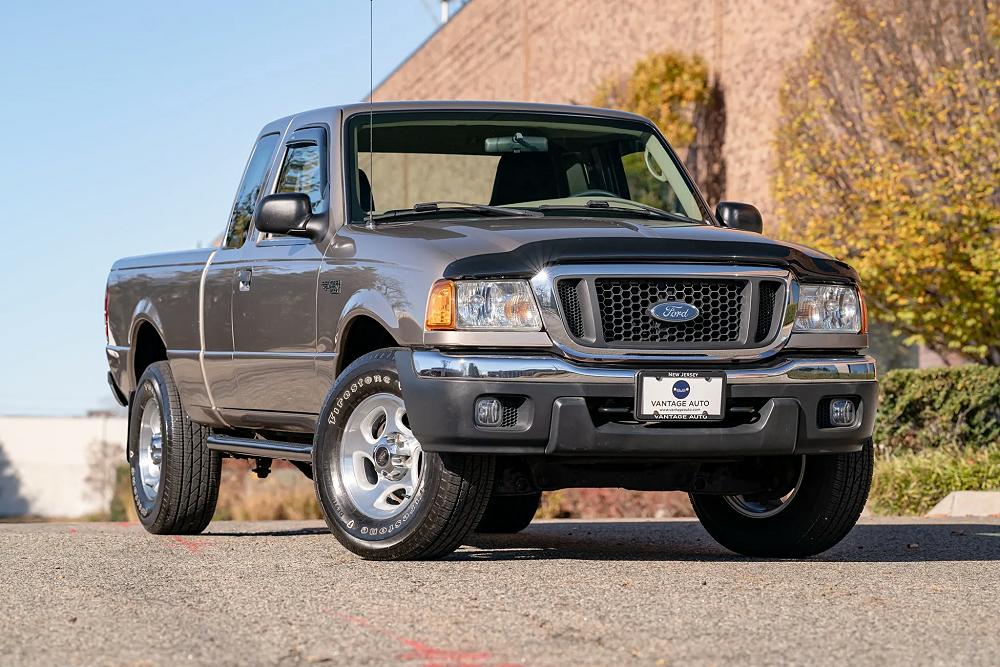
2005 Ford Ranger Problems & Recalls
Looking to buy a used 2005 Ford Ranger? There are several owner-reported problems worth knowing about, including electrical issues, fuel-pump inertia switch problems, wheel bearing failures, and frame rust. The 2005 Ranger also has an extensive Takata airbag recall history.
Here are the problems and recalls to be aware of when buying or owning a 2005 Ford Ranger.
Reported Problems
Fuel Pump Inertia Switch Overheats and Shuts Off
Numerous reports describe the fuel pump inertia cutoff switch overheating or activating unexpectedly, causing the engine to shut off while driving.
The inertia switch is designed to interrupt power to the fuel pump after an impact. However, owners have reported problems that cause the switch to cut power when there has not been a collision.
If a Ranger stalls unexpectedly, check the inertia switch and its electrical connections as part of the diagnosis. Don’t automatically assume the fuel pump itself has failed.
Electrical Problems – Horn, Wipers, and Washer Activate
One unusual electrical complaint involves the horn honking, windshield wipers running, and washer fluid spraying when the parking lights are turned on.
If these systems operate unexpectedly, inspect the lighting and multifunction switch circuits, wiring, and electrical connections. This is an owner-reported problem, not a confirmed defect affecting every 2005 Ranger.
Premature Wheel Bearing Failure
Several owners have reported premature wheel bearing failures. One of the more frequently reported problems in the complaint records for this model year involves a failed wheel bearing.
Listen for humming, grinding, or growling noises that change with vehicle speed. Check for looseness at the wheels and have any suspected bearing problem inspected.
High-Pressure Power Steering Lines Burst
An owner reported high-pressure power steering lines bursting at approximately 41,000 miles, with a reported repair cost of about $1,000.
Inspect the power steering hoses and lines for leaks, corrosion, damaged fittings, or signs of previous repairs. A sudden loss of power steering fluid can make the vehicle difficult to steer.
Engine Stalls or Shuts Off While Driving
Several owners have reported the engine shutting off unexpectedly while driving. Some reports may overlap with the fuel-pump inertia switch complaints listed above.
If the engine stalls, check for fuel delivery problems, electrical faults, and an activated inertia switch before replacing parts without a diagnosis.
Brake Lines Rust Through
Brake line corrosion has been reported on the 2005 Ranger. This is particularly important on trucks that have spent time in areas where road salt is used.
Inspect the brake lines along the frame and underbody for heavy corrosion, wet spots, or signs of leakage. Rusted brake lines can fail suddenly and result in a loss of braking ability.
Frame Rust
Reports include excessive frame rust and cases where the frame has rusted through. Pay particular attention to the rear frame sections, suspension mounting points, and areas where dirt and moisture collect.
Don’t just look at the visible sides of the frame. Inspect the inside surfaces and mounting areas as well. Serious structural corrosion can make a truck unsafe and expensive to repair.
Airbag Did Not Deploy
There have been owner reports of airbags failing to deploy during a collision. An airbag not deploying does not automatically mean the system is defective; deployment depends on crash severity, direction, and sensor conditions.
However, the 2005 Ranger is covered by multiple Takata airbag recalls. Verify that all applicable repairs have been completed and look for documentation of the final replacement inflators.
2005 Ford Ranger Recalls
The 2005 Ranger has an extensive Takata airbag recall history. Several campaigns replaced earlier repairs or addressed the possibility that replacement airbag inflators were installed incorrectly.
A recall listed for the 2005 model year does not necessarily apply to every truck. Some campaigns are limited by production date, original sales or registration location, or previous repair history.
23V306 – Passenger-Side Airbag Inflator Installed Incorrectly
Ford recall 23S08 covers certain 2004–2006 Rangers that previously received replacement passenger-side airbag inflators under an earlier recall.
The replacement inflator may have been installed in the incorrect orientation. If installed incorrectly, the passenger airbag may not inflate properly during a crash, increasing the risk of injury.
Dealers will inspect the inflator and reinstall it correctly if necessary, free of charge. This campaign expands and replaces the earlier 23V125 recall.
NHTSA Recall Information – 23V306
21V076 – Airbag Inflator Replacement Parts
Ford recall 21S05 concerns certain 2004–2006 Rangers that previously received a final remedy for an earlier Takata airbag recall.
Some dealers and collision repair shops had received obsolete Takata replacement inflators. Ford could not confirm whether all of those parts had been installed in vehicles.
The campaign addresses the possibility that an affected Ranger received one of these replacement inflators during a subsequent airbag repair. This is not a blanket recall of every 2005 Ranger.
NHTSA Recall Report – 21V076 (PDF)
17V787 – Driver-Side Airbag Inflator
Ford recall 17S42 covers certain 2004–2006 Rangers equipped with Takata driver-side frontal airbag inflators.
The inflator may rupture during deployment, sending metal fragments into the passenger compartment and potentially causing serious injury or death.
This campaign provided a final remedy for affected vehicles. Some Rangers had previously received an interim replacement and may have needed another repair.
NHTSA Recall Information – 17V787
17V788 – Passenger-Side Airbag Inflator
Ford recall 17S42 also covers certain 2004–2006 Rangers equipped with Takata passenger-side frontal airbag inflators.
The inflator may rupture during deployment, potentially sending metal fragments into the vehicle and causing serious injury or death.
This campaign provided a final replacement remedy for affected passenger-side inflators. Some vehicles that received an earlier interim repair may have needed another replacement.
NHTSA Recall Information – 17V788
16V036 – Driver-Side Airbag Inflator
Ford recall 16S03 covers certain 2004–2006 North American-manufactured Rangers equipped with Takata driver-side frontal airbag inflators.
The inflator may rupture during deployment, sending metal fragments into the vehicle and potentially causing serious injury or death.
This recall superseded the earlier regional driver-side airbag recall 14V343 for the affected vehicles.
NHTSA Recall Report – 16V036 (PDF)
15V322 – Passenger-Side Airbag Inflator
Ford recall 15S22 covers certain 2004–2006 Rangers equipped with passenger-side Takata frontal airbag inflators.
Moisture intrusion can cause the inflator to rupture during deployment, sending metal fragments into the passenger compartment and potentially causing serious injury or death.
This recall provided a replacement remedy for affected passenger-side inflators and partially superseded the earlier regional recall 14V787.
NHTSA Recall Information – 15V322
14V787 – Regional Passenger-Side Airbag Recall
Ford recall 14S28 covered certain 2004–2005 Rangers originally sold or registered in specified high-humidity locations.
The passenger-side Takata airbag inflator could rupture during deployment, sending metal fragments into the passenger compartment.
This was a regional recall and was later partially superseded by recall 15V322. It is included here as part of the 2005 Ranger’s recall history, but the later campaign is the one to check for the replacement remedy.
14V343 – Regional Takata Airbag Recall
Ford recall 14B04 covered certain 2004–2005 Rangers originally sold or registered in Florida, Hawaii, Puerto Rico, and the U.S. Virgin Islands.
The campaign involved Takata driver- and passenger-side frontal airbag inflators that could rupture during deployment.
The later 16V036 and 15V322 campaigns superseded portions of this earlier recall. Check the VIN and repair history to determine whether the truck received the required final repairs.
11V352 – Multifunction Switch / Lighting
This recall involves certain 2011 Ford Rangers and replacement service parts distributed for certain 2004–2011 Rangers.
A switch slider may deform and cause the turn signals, tail lights, hazard flashers, or brake lights to fail to activate.
The factory-built vehicle portion of this recall does not apply to a 2005 Ranger. However, a truck could be affected if it received an affected replacement service part.
NHTSA Recall Report – 11V352 (PDF)
Aftermarket Replacement Headlamp Recalls
There were also recalls involving certain aftermarket combination lamp assemblies sold for use on the 2005 Ranger and other vehicles.
These replacement lamps did not meet federal lighting requirements because they lacked required amber side reflectors. These were recalls of aftermarket replacement parts, not a recall of Ford’s original factory-installed Ranger headlamps.
If the truck has aftermarket headlights or corner lamps, check that they meet applicable lighting requirements.
Technical Service Bulletins (TSBs)
Technical Service Bulletins (TSBs) for the 2005 Ranger are official communications between Ford & their dealerships that describe processes for troubleshooting or fixing certain common problems. All vehicle manufacturers are required by U.S. law to make their TSBs available to the public.
For a list of the TSBs for the 2005 Ford Ranger check out: 2005 Ford Ranger TSBs
What to Check When Buying a Used 2005 Ford Ranger
When inspecting a 2005 Ranger, pay particular attention to:
- Airbag recalls: Check the VIN for all applicable Takata airbag campaigns. Ask for documentation showing that the final repairs were completed.
- Fuel inertia switch: Look for a history of unexpected stalling or the fuel pump shutting off.
- Electrical system: Make sure the horn, parking lights, windshield wipers, and washer system operate normally.
- Wheel bearings: Listen for humming or grinding and check for looseness at the wheels.
- Power steering: Inspect the high-pressure lines, hoses, and fittings for leaks or corrosion.
- Brake lines: Check for rust, especially along the frame and underbody.
- Frame: Inspect the entire frame, including the rear suspension mounting areas, for serious corrosion or rust-through.
- Aftermarket lighting: If replacement headlamps or corner lamps are installed, make sure they meet lighting requirements.
Check for Open Recalls
A model-year recall list does not tell you whether a specific truck has had its recalls completed. Use the VIN to check for outstanding recall repairs.
Because of the Takata airbag history, checking the VIN and confirming the final repair history should be a priority before buying or driving a 2005 Ranger.
Related Ford Ranger Information
- 1983–2011 Ford Ranger Buyer’s Guide
- The Ranger Station Technical Library
- The Ranger Station Forums
- Ford Ranger Brochures

About The Author
Jim Oaks is the founder of TheRangerStation.com, the longest-running Ford Ranger resource online since 1999. With over 25 years of hands-on experience building and modifying Ford Rangers — including magazine-featured builds like Project Transformer — Jim has become one of the most trusted authorities in the Ford Ranger off-road and enthusiast space.
Since launching TheRangerStation.com, Jim has documented thousands of real-world Ranger builds, technical repairs, drivetrain swaps, suspension modifications, and off-road adventures contributed by owners worldwide. TheRangerStation.com has been referenced in print, video and online by enthusiasts, mechanics, and off-road builders looking for practical, and experience-based information.