
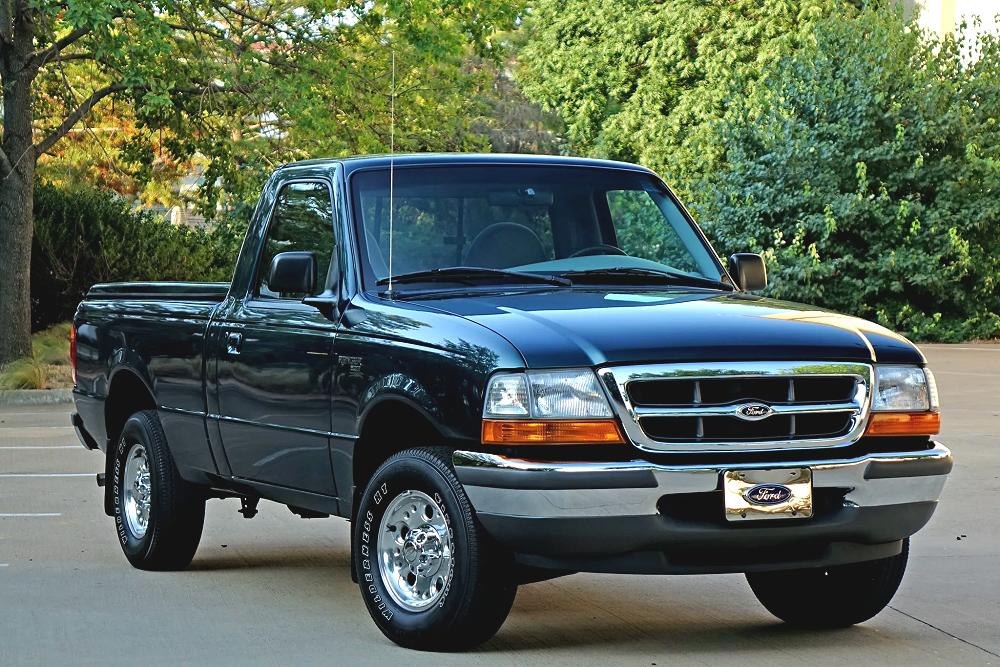
1998 Ford Ranger Problems & Recalls
Looking to buy a used 1998 Ford Ranger? There are several owner-reported problems worth checking, including automatic and manual transmission failures, engine power loss, cruise-control problems, and serious frame rust.
The 1998 Ranger also has recall history involving the cruise-control system, fuel lines on certain 4.0L trucks, and a fuel injection pulse damper on certain 3.0L trucks. As with any older truck, condition and maintenance history are important, but there are some specific areas worth inspecting before buying one.
Reported Problems
Engine Problems
Owners have reported several engine-related concerns:
- An unusual rattling or clattering noise described as sounding like marbles inside the engine.
- Loss of power and engine stalling.
- A camshaft position sensor or synchronizer becoming loose.
- A/C compressor and condenser problems that can cause engine hesitation.
The unusual engine noise should be investigated rather than automatically attributed to one specific failure. Check for stored diagnostic trouble codes, listen for abnormal noises during startup and operation, and look for evidence of overheating or poor maintenance.
If the engine loses power or stalls, check the ignition and fuel systems and scan for trouble codes before replacing parts.
Automatic Transmission Problems
The 5R55E automatic transmission has reports of internal failure, including a stripped center support and broken gear teeth. Other complaints include the overdrive light flashing and harsh shifting.
A flashing O/D light indicates that the transmission control system has detected a fault. Have the codes read before assuming the transmission needs to be replaced.
During a test drive, check for delayed engagement, slipping, harsh shifts, and unusual noises. Pay attention to whether the transmission behaves differently after it warms up.
Manual Transmission Problems
Manual transmission complaints include:
- Grinding when shifting between second, third, and fourth gears.
- Loss of first and second gears.
- Synchronizer failure that can cause additional transmission damage.
- A broken clutch and brake pedal support bracket.
The pedal support bracket deserves attention because a failure can leave the driver unable to operate the clutch or brake pedal properly.
Check the clutch pedal for looseness, unusual movement, and signs of cracking around its support. During a test drive, make sure the transmission shifts smoothly through every gear.
Fuel System and Gas Pedal Problems
The rivets securing the gas pedal have been reported to rust and break. Inspect the pedal mounting area for corrosion, looseness, and previous repairs.
The crossmember supporting the fuel tank straps can also rust. When this happens, the tank may become loose or lose proper support.
Inspect the crossmember, fuel tank straps, and their mounting points carefully. This is especially important on trucks that have spent much of their lives in areas where road salt is used.
Cruise Control Problems and Unexpected Acceleration
Cruise-control problems are among the more serious reported concerns on the 1998 Ranger. Owners have reported:
- The vehicle catching fire while parked.
- The cruise-control electrical connector catching fire under the hood.
- The engine surging or accelerating unexpectedly while slowing down.
- The throttle continuing to open or failing to return to idle when cruise control is used.
The 1998 Ranger was included in two important speed-control recall campaigns: one involving the cruise-control cable and another involving the speed-control deactivation switch.
Check the recall history and repair records for both campaigns. If the truck has unexplained acceleration or cruise-control problems, have the system inspected before driving it.
Door Ajar Light and Dome Light Problems
The door-ajar warning and interior dome light may stay on even when the doors are closed. Reports point to sticking door-latch switches.
A stuck switch can also drain the battery if the dome light remains illuminated. Check each door latch and make sure the interior lights turn off when the doors are closed.
Turn Signal Multifunction Switch
The turn signal multifunction switch has been reported to fail. Check the turn signals, hazard lights, and other functions controlled by the steering-column switch.
Also inspect the steering column for signs of heat damage or previous electrical repairs.
Heater Blend Door Failure
The heater blend door can fail and become stuck in the full-heat position. This can prevent the temperature controls from adjusting the amount of heat entering the cabin.
Test the heater controls through their full range before purchasing the truck.
Driveshaft and Rear Axle Problems
Several owners have reported rear driveshaft failures, while other reports describe the rear axle locking up.
Inspect the driveshaft for damaged joints, looseness, and unusual wear. Listen for clunks or vibrations during acceleration and deceleration. Any rear axle noise or binding should be investigated before the truck is driven regularly.
Suspension and Wheel Bearing Problems
Reported front suspension concerns include worn ball joints and wheel bearings. Excessive rust on the rear leaf spring shackles and hangers has also caused failures.
Inspect the front suspension for looseness, clunking, and uneven tire wear. Check the rear spring hangers and shackles for corrosion, cracks, and loss of structural material.
Frame and Structural Rust
Frame corrosion is one of the most important things to inspect on a 1998 Ranger. Owners have reported:
- Cracks and holes caused by excessive frame rust.
- Spare tires falling off because the frame rusted away around the carrier.
- Rear bumpers separating due to rust.
- Rear leaf spring hangers and shackles rusting and failing.
Pay particular attention to the rear frame, crossmembers, suspension mounting points, spare tire carrier, and bumper mounts. Surface rust is one thing; corrosion that has weakened or perforated the frame is a much more serious problem.
Brake Problems
Reported brake concerns include:
- Rusted brake lines that leak.
- ABS brakes locking up.
- The brake pedal going to the floor.
- A hard brake pedal and increased stopping distance.
Inspect the brake lines for corrosion and leaks. Check the brake pedal feel and make sure the ABS warning light operates normally. Any brake system problem should be diagnosed before the truck is driven.
Airbag and Seat Belt Reports
Owners have reported airbags failing to deploy during front-end collisions and seat belts that would not latch or stay latched.
These reports do not establish that every 1998 Ranger has a restraint-system defect. However, check the airbag warning light and make sure all seat belts latch securely and remain latched when pulled.
Firestone Wilderness Tire Failures
The 1998 Ranger was among the Ford vehicles that could have been equipped with Firestone Wilderness AT tires involved in tread-separation safety campaigns.
These campaigns involved tires, not a defect in the Ranger itself. Inspect any Firestone Wilderness AT or Radial ATX/ATX II tires for age, condition, and identification markings. Tires can become unsafe even when they still have usable tread.
1998 Ford Ranger Recalls
Recall applicability depends on the truck’s VIN, engine, equipment, and production date. The following campaigns are important to check.
07V336 — Speed Control Deactivation Switch
NHTSA Campaign 07V336 / Ford Campaign 05S28
Certain 1998–2002 Ford Rangers were included in this recall involving the speed-control deactivation switch.
The switch could leak internally and overheat, smoke, or burn, potentially causing an underhood fire. The remedy involved installing a fused wiring harness.
99V062 — Cruise-Control Cable
NHTSA Campaign 99V062
Certain 1998–1999 Rangers equipped with cruise control and built between January 5, 1998, and March 4, 1999, were included in this recall.
The cruise-control cable could interfere with the speed-control servo pulley and prevent the throttle from returning to idle when cruise control was disengaged. This could result in a stuck throttle and increase the risk of a crash.
Ford dealers were instructed to replace the cruise-control cables. Owners were advised not to use cruise control until the replacement could be completed.
98V201 — 3.0L Fuel Injection Pulse Damper
NHTSA Campaign 98V201
Certain light-duty pickups equipped with the 3.0L engine were included in this recall. An O-ring seal at the fuel injection pulse damper-to-fuel rail connection could be damaged, allowing fuel to leak.
Fuel leakage in the presence of an ignition source could result in a fire.
The campaign affected approximately 330 vehicles. Dealers were instructed to replace the pulse damper.
97V186 — 4.0L Fuel Line Routing
NHTSA Campaign 97V186
Certain 1998 Rangers equipped with the 4.0L engine were included in this recall. The flexible section of the chassis-mounted fuel line connecting to the engine was routed too close to the exhaust manifold and could contact it.
This could damage the fuel line and cause a fuel leak. Fuel leakage in the presence of an ignition source could result in a fire.
The remedy was to install an additional clip to hold the fuel line in its intended position. Approximately 2,000 vehicles were affected.
98V021 — Tire and Rim Identification Label
NHTSA Campaign 98V021
Certain 1998 four-wheel-drive Rangers equipped with the off-road option had incorrect tire and rim identification information on the vehicle certification label.
The label incorrectly listed a 15×7.0J rim even though the trucks were equipped with 16-inch tires. Ford sent owners a corrected label overlay with instructions for installation.
Approximately 11,500 vehicles were affected.
Aftermarket Replacement Lighting Campaigns
Several NHTSA campaigns involved aftermarket replacement lighting assemblies sold for use on the Ranger and other vehicles. These lamps did not contain the required amber side reflectors and failed to comply with Federal Motor Vehicle Safety Standard No. 108.
Campaigns included:
- 09E025 — Dope, Inc.
- 09E012 — Sabersport
- 06E026 — Pro-A Motors
These campaigns involved aftermarket replacement equipment, not original factory-installed Ranger lamps. If the truck has aftermarket lighting, check the part numbers and whether the assemblies meet applicable requirements.
06E056 — Aftermarket Purolator Fuel Filters
NHTSA Campaign 06E056
Certain aftermarket Purolator fuel filters, part number F65277, shipped between January 16 and June 2, 2006, were recalled.
The quick-connect fittings could fail to fully seat with the fuel line, potentially allowing fuel to spill and create a fire hazard.
This campaign involved replacement fuel filters, not the factory-installed fuel system on every 1998 Ranger.
Firestone Tire Safety Campaigns
The 1998 Ranger was included in tire-related safety improvement and replacement programs involving certain Firestone Wilderness AT and Radial ATX/ATX II tires.
These were tire campaigns rather than recalls of the Ranger itself. The replacement and reimbursement programs have expired, but checking the tire brand, model, age, and DOT identification remains important when inspecting an older truck.
Technical Service Bulletins (TSBs)
Technical Service Bulletins (TSBs) for the 1998 Ranger are official communications between Ford & their dealerships that describe processes for troubleshooting or fixing certain common problems. All vehicle manufacturers are required by U.S. law to make their TSBs available to the public.
For a list of the TSBs for the 1998 Ford Ranger check out: 1998 Ford Ranger TSBs
What to Check When Buying a 1998 Ford Ranger
Before purchasing a 1998 Ranger, take the time to inspect the following:
- Engine: Listen for unusual rattling or marbles-in-the-engine noises. Check for power loss, stalling, and stored diagnostic trouble codes.
- Automatic transmission: Check for transmission failure symptoms, harsh shifting, slipping, and a flashing O/D light.
- Manual transmission: Check for grinding between gears, loss of gears, and synchronizer problems.
- Pedal support bracket: Inspect the clutch and brake pedal support for cracks, looseness, or previous repairs.
- Cruise control: Verify that both the cruise-control cable and speed-control deactivation switch recalls were completed.
- Fuel system: Inspect the fuel tank crossmember and straps. On 4.0L trucks, check the fuel line routing near the exhaust manifold. On 3.0L trucks, check the pulse-damper recall history.
- Frame: Inspect the rear frame, crossmembers, spring hangers, shackles, spare tire carrier, and bumper mounts for structural corrosion.
- Driveshaft and rear axle: Check for damaged joints, vibration, clunking, and abnormal axle noises.
- Front suspension: Check ball joints and wheel bearings for looseness or wear.
- Brakes: Inspect brake lines for rust and leaks. Check ABS operation and brake pedal feel.
- Electrical system: Test the multifunction switch, turn signals, dome light, and cruise-control wiring.
- Heater: Verify that the blend door and temperature controls operate properly.
- Seat belts and airbags: Check that the belts latch securely and inspect the airbag warning light.
- Tires: Inspect tire age, condition, and DOT identification, particularly if Firestone Wilderness AT or Radial ATX/ATX II tires are installed.
- Recall history: Check the VIN and available service records for completed recall work.
Check for Open Recalls
Use the truck’s VIN to check for outstanding recalls:
A VIN search can identify unrepaired recalls, but it may not show recalls that have already been repaired or some older campaigns. Review available service records as well.
Related Ford Ranger Information
- 1983–2011 Ford Ranger Buyer’s Guide
- The Ranger Station Technical Library
- The Ranger Station Forums
- Ford Ranger Brochures
About The Author
Jim Oaks is the founder of TheRangerStation.com, the longest-running Ford Ranger resource online since 1999. With over 25 years of hands-on experience building and modifying Ford Rangers — including magazine-featured builds like Project Transformer — Jim has become one of the most trusted authorities in the Ford Ranger off-road and enthusiast space.
Since launching TheRangerStation.com, Jim has documented thousands of real-world Ranger builds, technical repairs, drivetrain swaps, suspension modifications, and off-road adventures contributed by owners worldwide. TheRangerStation.com has been referenced in print, video and online by enthusiasts, mechanics, and off-road builders looking for practical, and experience-based information.