
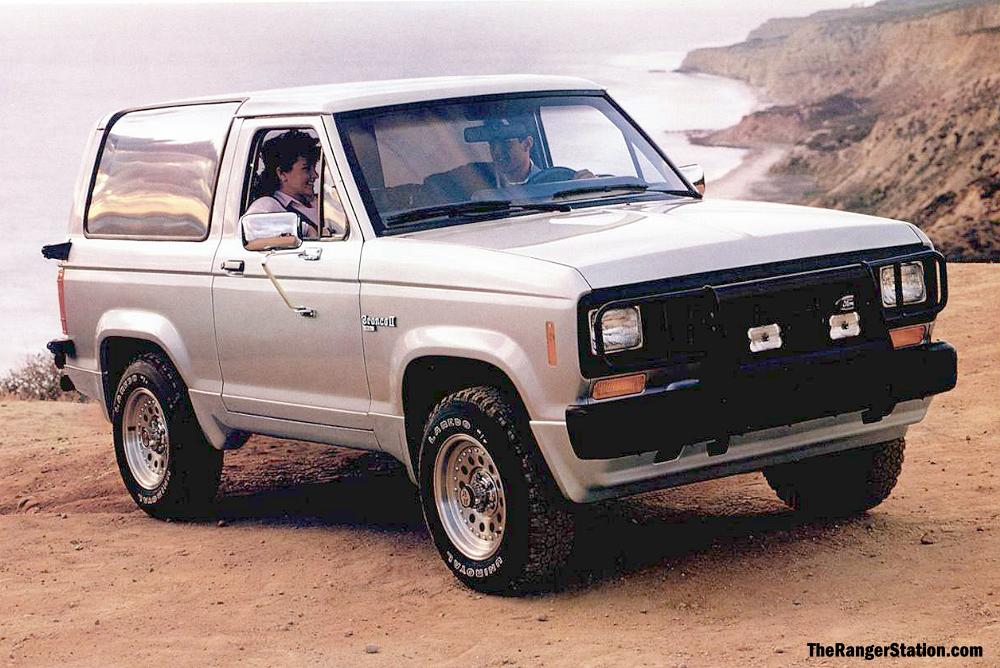
1988 Ford Bronco II XL Sport: Ford’s Sporty 4×4
When Ford introduced the Bronco II XL Sport for 1988, it gave its compact SUV a new personality.
The Bronco II had already established itself as a capable little 4×4, but Ford was seeing a growing market for compact trucks and sport utilities that were as much about lifestyle and appearance as utility. The Ranger had the Hi-Rider and STX, and the new XL Sport brought a similar attitude to the Bronco II.
The earlier XLS had already established a sporty appearance for the Bronco II with its distinctive body moldings and graphics. The XL Sport took that idea in a more rugged direction, combining the sporty look with a factory-equipped off-road appearance.
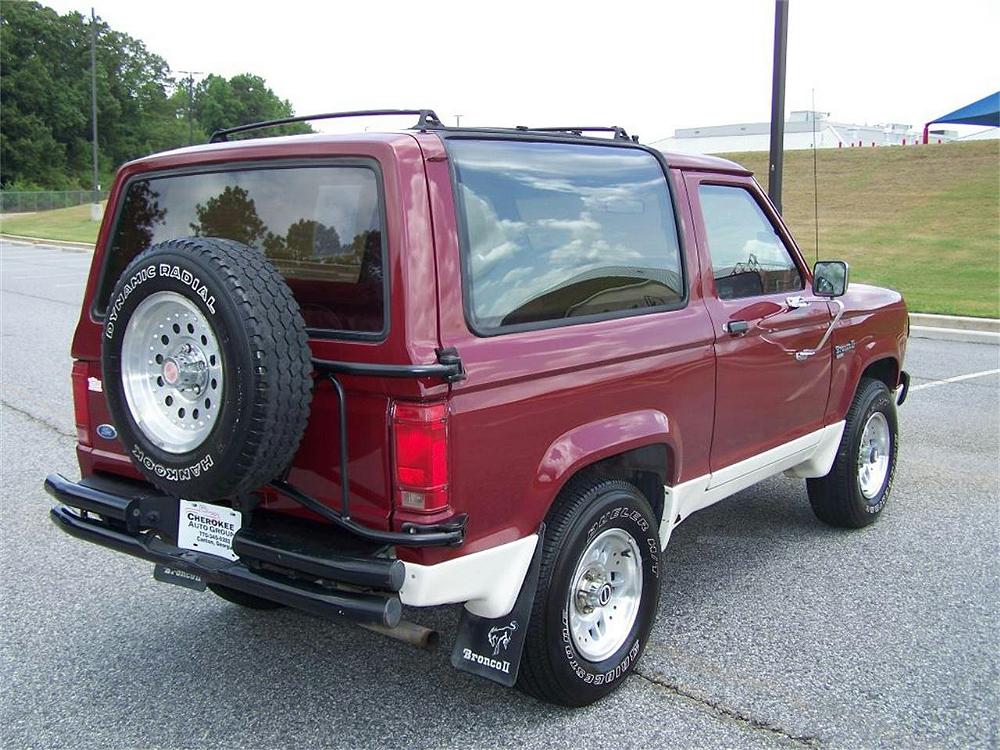
(Steel Tube Rear Bumper)
The XL Sport Package
Ford described the 1988 XL Sport as a “free-spirited” model that was easily recognized by its distinctive outfitting. Its exterior included a tubular brush/grille guard, fog lamps, black front bumper, black tubular rear bumper, protective body moldings, fender flares and a special sport fascia.
The XL Sport also included deep-dish cast-aluminum wheels and a tachometer. The combination of the wheels, body moldings, fender flares, sport fascia and tubular hardware gave the Bronco II a more aggressive appearance that looked like it belonged on a trail.
A metallic, iridescent Sport Tape Stripe kit was available as an additional appearance option.
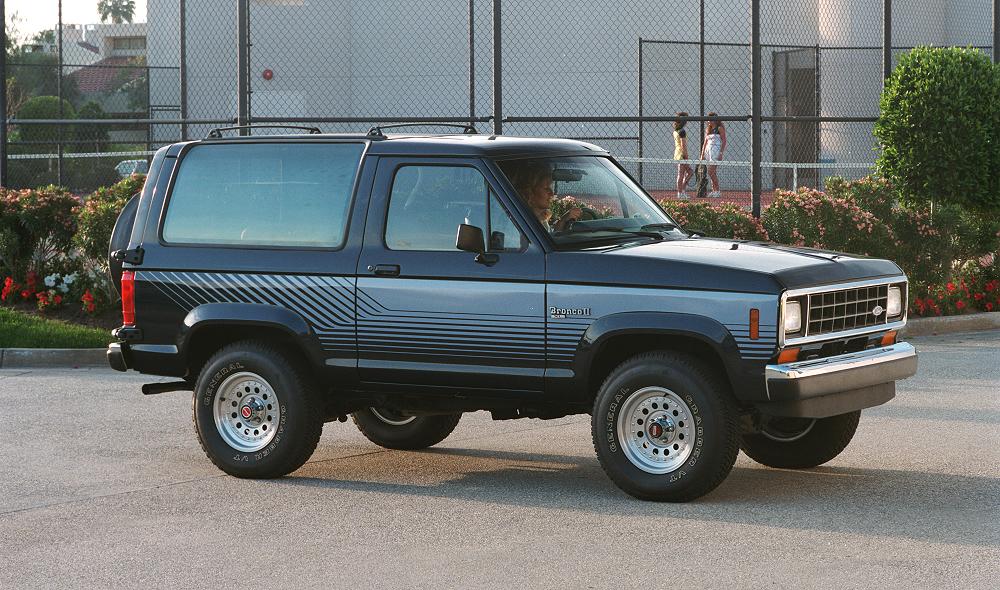
(Bronco II Sport Tape Strip Kit – Optional)
1988 Ford Bronco II XL Sport Specifications
| Specification | 1988 Bronco II XL Sport |
|---|---|
| Engine | 2.9L Cologne V6 |
| Fuel System | Multi-port electronic fuel injection |
| Horsepower | 140 hp |
| Torque | 170 lb-ft |
| Transmission | 5-speed manual overdrive or 4-speed automatic overdrive |
| Drive | 2WD or 4WD |
| Transfer Case | Manual shift or Touch-Drive electronic shift, 4WD |
| Front Suspension | Twin-I-Beam (2WD) / Twin-Traction Beam (4WD) |
| Rear Suspension | Leaf springs |
| Brakes | Power brakes with rear anti-lock system |
| Wheels | Deep-dish cast aluminum |
| Tires | P205/75R15 |
| XL Sport Equipment | Brush/grille guard, fog lamps, black front bumper, tubular rear bumper, body moldings, fender flares, sport fascia, and tachometer |
| Optional Appearance | Sport Tape Stripe |
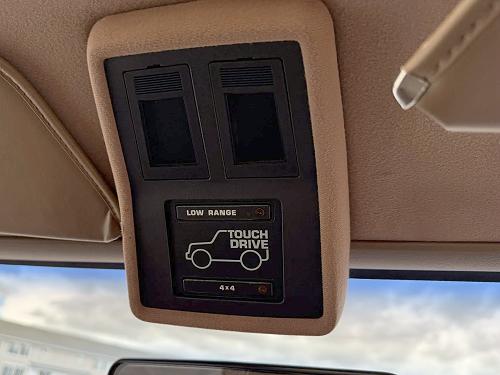
The 2.9L V6 produced 140 horsepower and 170 lb-ft of torque, and the five-speed manual and four-speed automatic were both available. 4WD Broncos used either the manual-shift transfer case or Ford’s Touch-Drive electronic shift system, with the controls located in the overhead console.
When Motor Trend Tested the XL Sport
In 1987, Motor Trend got behind the wheel of the upcoming 1988 Bronco II XL Sport and found that Ford had created a compact 4×4 that was considerably more capable and refined than its rugged appearance might suggest. The magazine was so impressed by its appearance they said, “If Manny Esquerra raced a Bronco II it would look like this.”
A short wheelbase 4×4 normally wouldn’t be expected to provide a particularly smooth ride, but the magazine found the XL Sport surprisingly composed on the highway. It described the ride as “uncharacteristic of a short wheelbase 4×4”, noting that the Bronco II was extremely smooth, with no bucking and only slight leaning in corners. Motor Trend attributed that behavior to the computer-generated spring rates and gas-pressurized shocks.
Once the pavement ended, the XL Sport’s personality changed. Motor Trend put the Bronco II through everything from slow rock-crawling maneuvers to high-speed jumps (not recommended) and came away impressed with its off-road capability, describing the XL Sport as having the “tough-truck feel Ford is famous for.”
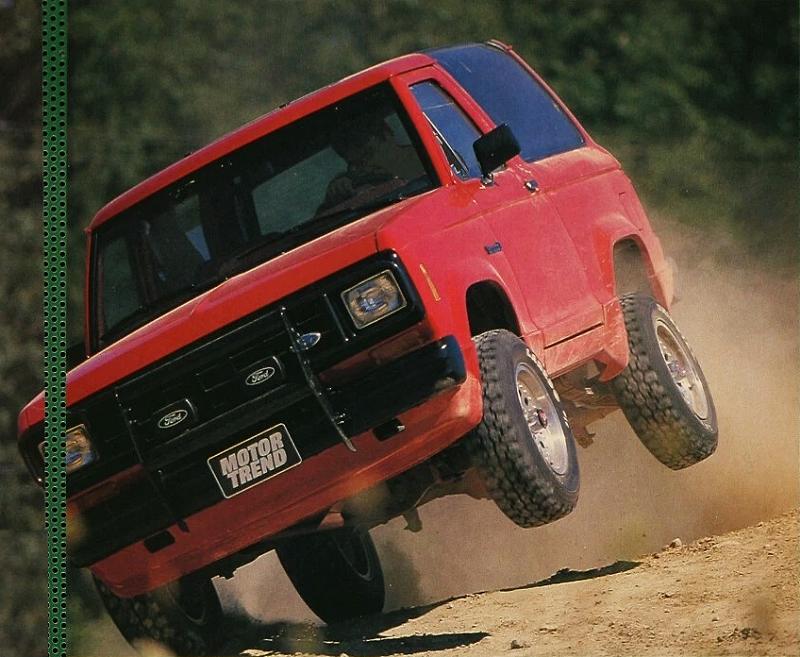
With approximately 6.5 inches of axle clearance, the Bronco II was able to clear virtually every obstacle the test crew put in front of it. When placed in low-range 4WD, the XL Sport’s capability was further enhanced, particularly with the available rear limited-slip differential.
The Bronco II’s compact dimensions also worked to its advantage off road. Its short overhangs produced an approximately 29-degree approach angle and 24-degree departure angle, allowing the XL Sport to negotiate abrupt ditches without hanging up its front or rear ends.
Motor Trend found that it did an impressive job of absorbing rough terrain without violently tossing the occupants around. The magazine specifically credited the Bronco II’s generous amount of suspension travel with its ability to soak up the bumps without trying to launch the occupants through the roof.
What makes the Motor Trend test interesting isn’t simply that the magazine liked the XL Sport’s off-road ability. It’s that the on-road and off-road characteristics complemented each other.
The same Bronco II that could crawl over rocks, cross abrupt ditches and absorb rough terrain could also cruise the highway with a smoothness that Motor Trend considered unusual for a short wheelbase 4×4.
1989–1990: The XL Sport Gets a New Look
The XL Sport wasn’t a one-year model. Ford carried it into 1989 and 1990, the final two years of Bronco II production. What changed was the Bronco II itself.
For 1989, Ford gave the Bronco II a major exterior and interior update. The squared-off 1984–1988 front end was replaced with a smoother, more aerodynamic design, while the interior received a new driver-oriented instrument panel and other updates. The basic suspension and drivetrain architecture remained largely unchanged.
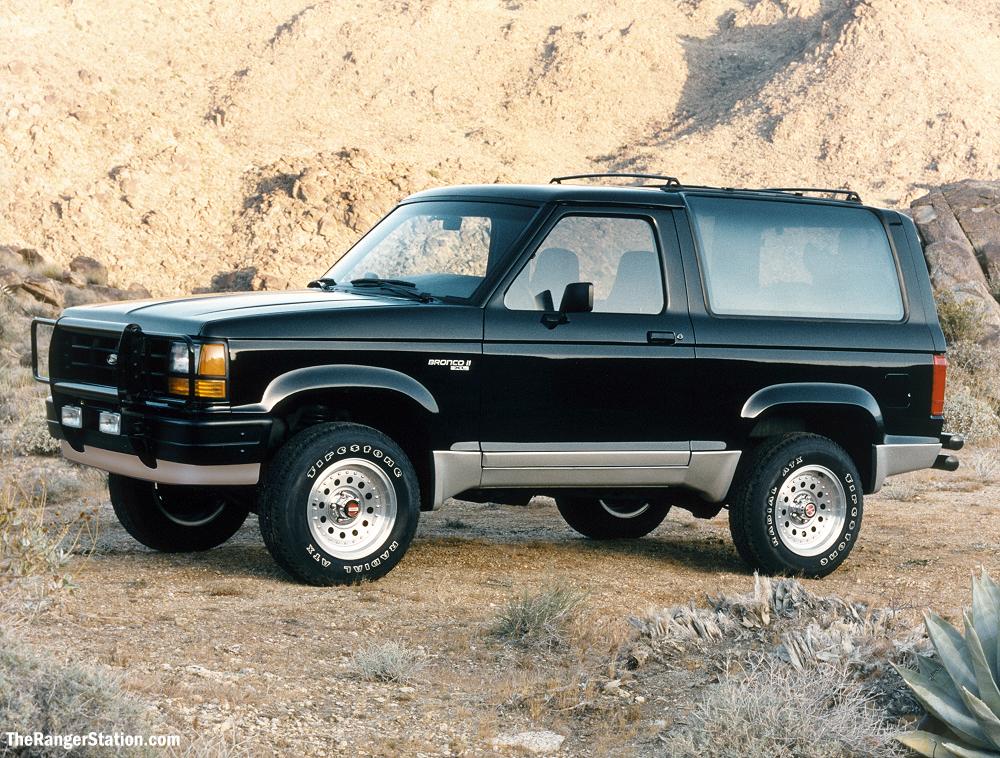
(1989 Ford Bronco II XL Sport)
Again, the XL Sport came with a tubular brush/grille guard, tubular rear bumper, fog lamps, body moldings, fender flares, deep-dish cast-aluminum wheels, wraparound front bumper and a tachometer.
XLT With the Sport Appearance Package
According to Ford’s 1988 sales brochure, the XL Sport was “easily identified by its distinctive outfitting,” including the brush/grille guard, fog lamps, black tubular rear bumper, black front bumper, fender flares and front fascia. Ford calls this collect of parts the Sport Appearance Package. The Sales brochure also states that the Sport Appearance Package in an option that can be ordered on the XLT.
The 1989 & 1990 sales brochure makes the same distinction. It describes the XL Sport as an XL featuring the Sport Appearance Package, including the brush/grille guard, fog lamps, protective fender flares, black wraparound front bumper and black tubular rear bumper with stone deflector. Again, the Sport Appearance Package listed as an available option on the XLT.
The XL Sport came with the normal ‘XL’ fender badge and didn’t come with any decals or badges that Identified it as an ‘XL Sport’. So, if you knew what to order, you could actually order the Sport Appearance Package on an XLT and create your own (unofficial) ‘XLT Sport’.
That means it’s possible that you may think you’re looking at an XL Sport based on the bumpers and body moldings but find that it’s actually an ‘XLT’ with a Sport Appearance Package and not a true XL Sport.
Related Articles / Links
1984-1990 Ford Bronco II Specs & Facts
Bronco II Trim Levels & Packages
Ford Bronco II Production Numbers
Ford Bronco II Sales Brochures
About The Author

Jim Oaks is the founder of TheRangerStation.com, the longest-running Ford Ranger resource online since 1999. With over 25 years of hands-on experience building and modifying Ford Rangers — including magazine-featured builds like Project Transformer — Jim has become one of the most trusted authorities in the Ford Ranger off-road and enthusiast space.
Since launching TheRangerStation.com, Jim has documented thousands of real-world Ranger builds, technical repairs, drivetrain swaps, suspension modifications, and off-road adventures contributed by owners worldwide. TheRangerStation.com has been referenced in print, video and online by enthusiasts, mechanics, and off-road builders looking for practical, and experience-based information.