
Submitted By: JuBean
After removing the four bolts that hold the seat and the Torx bolt on the seat belt track remove the seat from the vehicle.
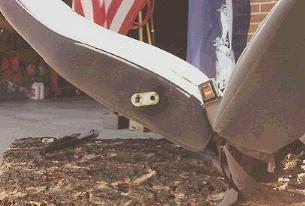
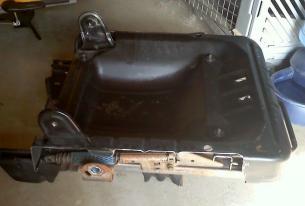
(Image #1)
The next step is to remove the flip down console. To do this remove the plug in the left rear corner of the console and remove the Torx bolt. Your seat should look like image #1.
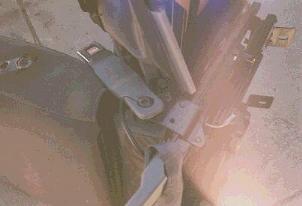
(Image #2)
After removing the metal plate there is a little knob that needs to be cut or broken off, I broke mine by trying to unscrew it.
Next remove the seat belt (the Torx bolt is the same size as the others).
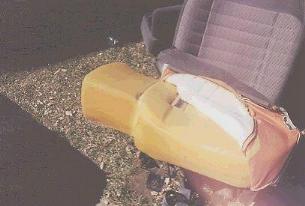
(Image #3)
With the seat belt out of the way pull back the seat cover (image #3).
There is a depression in the cushion; this is where you want to cut. I used a utility knife, but a hacksaw will make a much nicer cut.
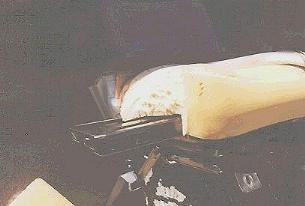
(Image #4)
Under the cushion is a metal support (image #4), to remove this lift up the main seat cushion (image #5) and cut the support out. I used a Dremel tool with a heavy cut off wheel, but if you are more patient than I am a hacksaw will work just fine.
CAUTION: If you use a cutoff tool, be cautious of sparks setting the foam on fire. You may want to cover the foam to keep sparks from hitting it.
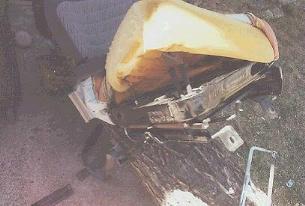
(Image #5)
After you remove the support grind (or file) any sharp edges you have just created so they cannot do any damage.
Now pull the seat cover back over the seat and play with it to decide just how much you want to cut off and how much you want to fold under. You can try to cut and sew it for a “factory” look but this will probably end in disaster if not done by a professional. I cut out a fair amount and then tucked the seat cover under the main support and tied it down with bailing wire.
Reattach the seat belt and put the seat back in your truck. I recommend running out to your local auto parts store and getting some seat covers to cover the hole where the console was, but this is not necessary.
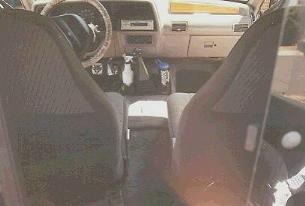
(Image #6)
Caution, take your time, if you screw up there is not much you can do.
About The Author
Jim Oaks is the founder of TheRangerStation.com, the longest-running Ford Ranger resource online since 1999. With over 25 years of hands-on experience building and modifying Ford Rangers — including magazine-featured builds like Project Transformer — Jim has become one of the most trusted authorities in the Ford Ranger off-road and enthusiast space.
Since launching TheRangerStation.com, Jim has documented thousands of real-world Ranger builds, technical repairs, drivetrain swaps, suspension modifications, and off-road adventures contributed by owners worldwide. TheRangerStation.com has been referenced in print, video and online by enthusiasts, mechanics, and off-road builders looking for practical, and experience-based information.