
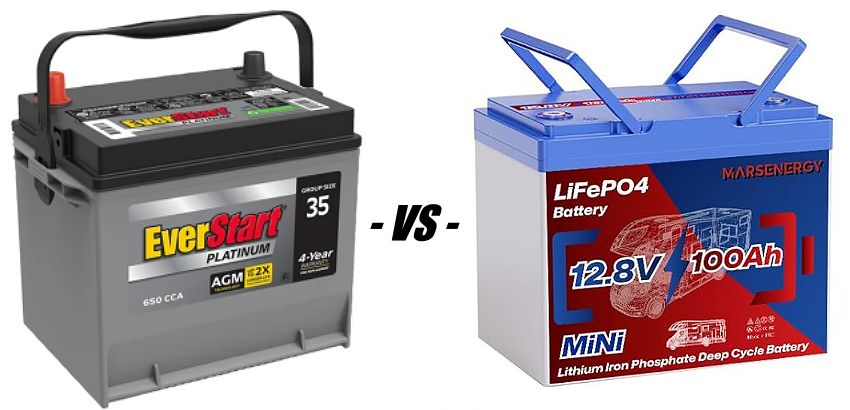
AGM vs LiFePO4 Batteries for Overlanding
Choosing between an AGM (Absorbed Glass Mat) battery and a LiFePO4 (Lithium Iron Phosphate) battery is one of the most important decisions when building an overland or auxiliary power system.
Both battery types can power accessories like refrigerators, lights, air compressors, and inverters—but they perform very differently in real-world use.
Quick Comparison
| Feature | AGM Battery | LiFePO4 Battery |
| Usable Capacity | ~50% | 80–100% |
| Weight | Heavy | Lightweight |
| Cycle Life | 300–800 cycles | 2,000–5,000+ cycles |
| Voltage Stability | Drops during use | Very stable |
| Charging Speed | Moderate | Fast |
| Cold Weather | Performs well | Limited (charging below freezing) |
| Cost | Lower upfront | Higher upfront |
AGM Batteries: Pros & Cons
Pros:
- Lower initial cost
- Works with standard vehicle charging systems
- Reliable in cold weather
- Simple installation (no special chargers required)
Cons:
- Only about 50% usable capacity
- Voltage drops as the battery discharges
- Shorter lifespan compared to lithium
- Heavy and bulky
LiFePO4 Batteries: Pros & Cons
Pros:
- Much higher usable capacity (more runtime)
- Consistent voltage (great for fridges and electronics)
- Long lifespan (can last years longer than AGM)
- Lightweight
- Faster charging
Cons:
- Higher upfront cost
- May require a DC-DC charger
- Charging limitations in freezing temperatures
- More complex setup depending on vehicle
Real-World Overlanding Use
For overlanding, the biggest difference comes down to usable power and efficiency.
An AGM battery rated at 100Ah typically only gives you about 50Ah of usable power if you want to avoid damaging it. A comparable 100Ah LiFePO4 battery can safely provide nearly the full 100Ah.
This means a lithium battery can often replace a much larger and heavier AGM setup while providing longer runtime—especially important when running a refrigerator overnight.
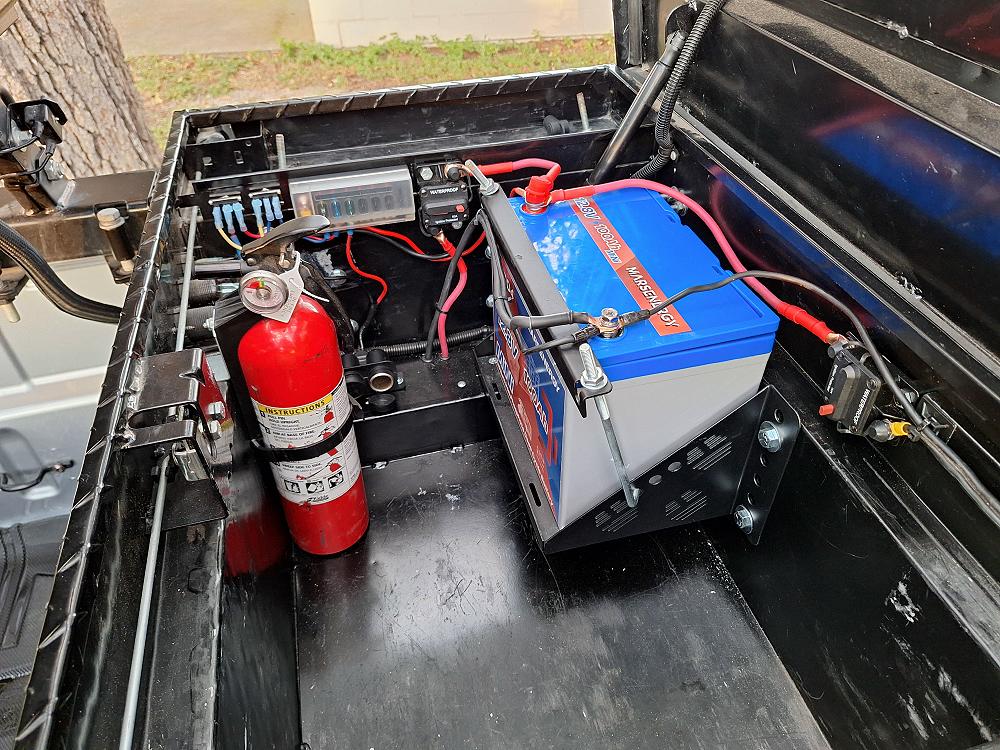
I actually have a DC-DC charger charging a LiFeP04 lithium battery in my 2021 Ford Ranger FX4 that I use to power my Explorer Bear 12V Refrigerator.
Charging Considerations
AGM batteries are simple and work well with traditional alternators and isolator setups.
LiFePO4 batteries may require a DC-DC charger, especially in newer vehicles with smart alternators. Some lithium batteries with built-in battery management systems (BMS) can work in simpler setups, but proper charging is critical for performance and longevity.
Which One Should You Choose?
Choose AGM if:
- You want a simple, budget-friendly setup
- You don’t run heavy loads for long periods
- You frequently operate in cold climates
Choose LiFePO4 if:
- You run a fridge or camp regularly
- You want maximum runtime and efficiency
- You want to reduce weight
- You’re willing to invest more upfront for long-term performance
Final Thoughts
Both AGM and LiFePO4 batteries have their place in overland builds. AGM is a proven, simple solution, while lithium offers significantly better performance for those who rely heavily on auxiliary power.
If you’re building a serious overland setup or running power-hungry accessories, LiFePO4 is often the better long-term investment.
Related Articles
Adding An Auxiliary Battery To A 2019+ Newer Ford Ranger
Last Updated:
About The Author

Jim Oaks is the founder of TheRangerStation.com, the longest-running Ford Ranger resource online since 1999. With over 25 years of hands-on experience building and modifying Ford Rangers — including magazine-featured builds like Project Transformer — Jim has become one of the most trusted authorities in the Ford Ranger off-road and enthusiast space.
Since launching TheRangerStation.com, Jim has documented thousands of real-world Ranger builds, technical repairs, drivetrain swaps, suspension modifications, and off-road adventures contributed by owners worldwide. TheRangerStation.com has been referenced in print, video and online by enthusiasts, mechanics, and off-road builders looking for practical, and experience-based information.