This is all FWIW....
When we were at the Off-Roadeo there was a somewhat newer LR at the maintenance area for the Broncos.
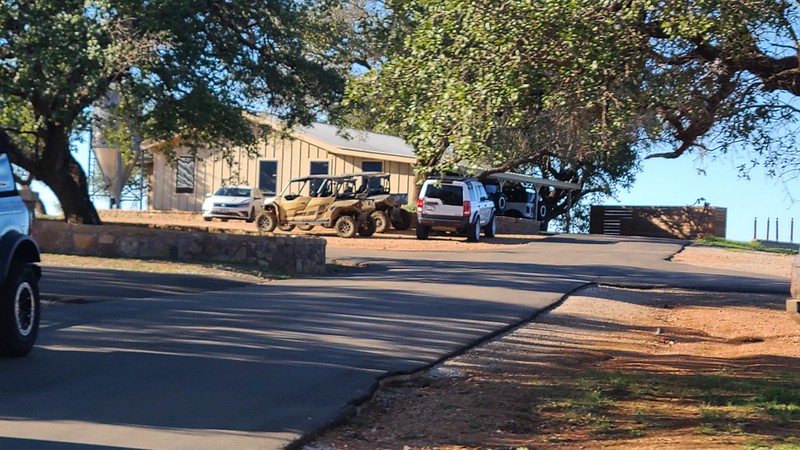
That night at the bonfire thing but someone asked why it was there. I didn't catch the why but it came up that at least one of the instructors's theory of why Ford bought Rover was to get their traction control tech, Rover had all the mode stuff the Bronco is so proud of now way back then.
I checks and most of the Bronco's Goat modes are there, name and all:
LR3 - Terrain response Cheat Sheet - Hi I seem to remember someone had made a Terrain Response cheat sheet with best settings for various Off Road conditions but can't seem to find it. Does anyone know who and where it was posted?
landroverforums.com
How much truth there is to it I don't know but I know Rover's traction control is pretty highly thought of software wise so it does kind of make sense that if you can buy your way into it... which also sort of checks out because Ford's early TC totally and completely sucked. After the late '00 Rover purchase all the sudden Ford's TC could do more than taunt you by pulling power.
Well according to Google AI: "
Ford absolutely absorbed Land Rover’s pioneering electronic traction tech during the PAG years, and the DNA of Land Rover's Terrain Response system is directly woven into the Bronco's G.O.A.T. (Goes Over Any Type of Terrain) modes.
While the
initial motivation for the 2000 buyout was corporate empire-building, the massive prize Ford actually took home from the marriage was Land Rover's specialized off-road intellectual property.
The technical lineage from the 2000s Rover systems to the modern Bronco highlights how this tech evolved:
1. The Birth of Terrain Response (LR3 vs. Bronco)
When Ford owned Land Rover, British engineers were developing a revolutionary software-driven system for the 2005 Land Rover LR3 called
Terrain Response. Before this, off-roading required drivers to manually figure out when to lock differentials, disconnect sway bars, or modulate the throttle.
Terrain Response simplified this by grouping complex mechanical adjustments under user-friendly icons:
- Normal / Special Programs Off
- Grass/Gravel/Snow (prioritizes traction control, dulls throttle, starts in higher gears)
- Mud/Ruts (allows tire spin to clear tread, alters shift points)
- Sand (holds gears high, aggressive throttle response to keep momentum)
- Rock Crawl (forces low-range, softens throttle to prevent jerking)
If you look at a 6G Bronco’s G.O.A.T. mode dial today, the programming logic is identical. Ford's
Normal, Eco, Sport, Slippery, Mud/Ruts, Sand, and Rock Crawl modes change the exact same parameters: throttle mapping, transmission shift points, traction control intervention, ABS sensitivity, and steering feedback.
2. The Ford Transfer: From "Terrain Management" to G.O.A.T.
When Ford sold Land Rover to Tata in 2008, they didn't just delete the software archives. Ford retained the licensing and institutional knowledge of how those multi-mode algorithms were built.
Almost immediately after the sale, Ford rebranded this intellectual property as the
Terrain Management System (TMS) and implemented it across their domestic lineup:
- 2011 Ford Explorer: It ditched its traditional mechanical 4WD for a unibody setup utilizing a console dial with "Mud/Ruts," "Sand," and "Grass/Gravel/Snow" modes—a direct, watered-down copy of the LR3 system.
- 2017 Ford Raptor: Ford dialed up the performance capability of the software, introducing "Baja Mode" and advanced electronic terrain logic for high-speed desert running.
By the time Ford engineered the current Bronco, the engineering team took that matured, Raptor-spec Terrain Management software, married it back to a heavy-duty mechanical 4x4 system with locking diffs and a disconnecting sway bar, and slapped the historic "G.O.A.T." marketing name on it."