
This how-to is about replacing my passenger side worn out CV shaft on my 2003 Ranger 4×4. This will apply to many other years also.
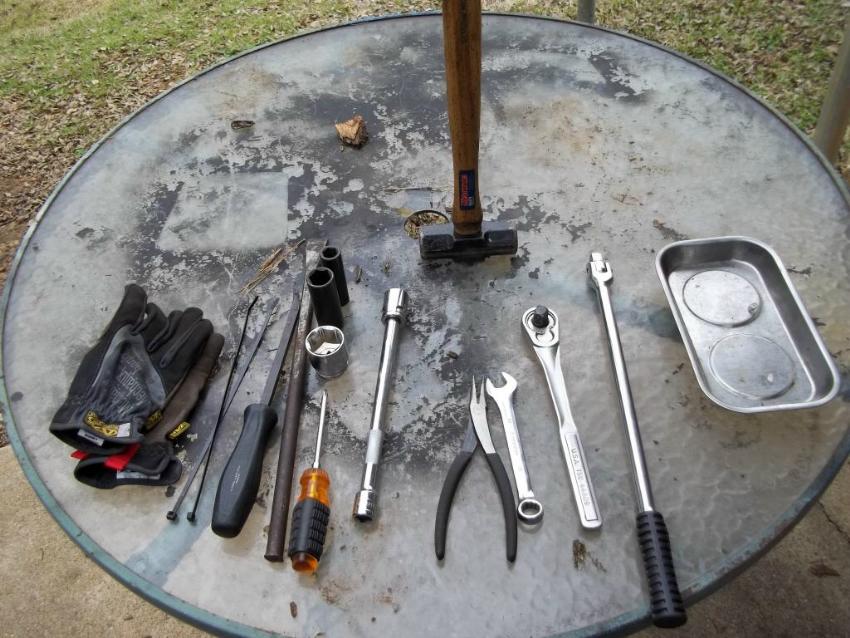
Tools Required:
- Jack
- Jack Stands
- 4-Way Lug Wrench to Remove Lug Nuts
- 15 mm Socket
- 21 mm Socket
- 1-1/4 in Socket
- 1/2 in Ratchet
- 1/2 in Breaker Bar
- 15 mm Wrench
- Needle Nose Pliers
- Hammer
- screwdriver
- Pry Bar
- Zip Ties
Step 1
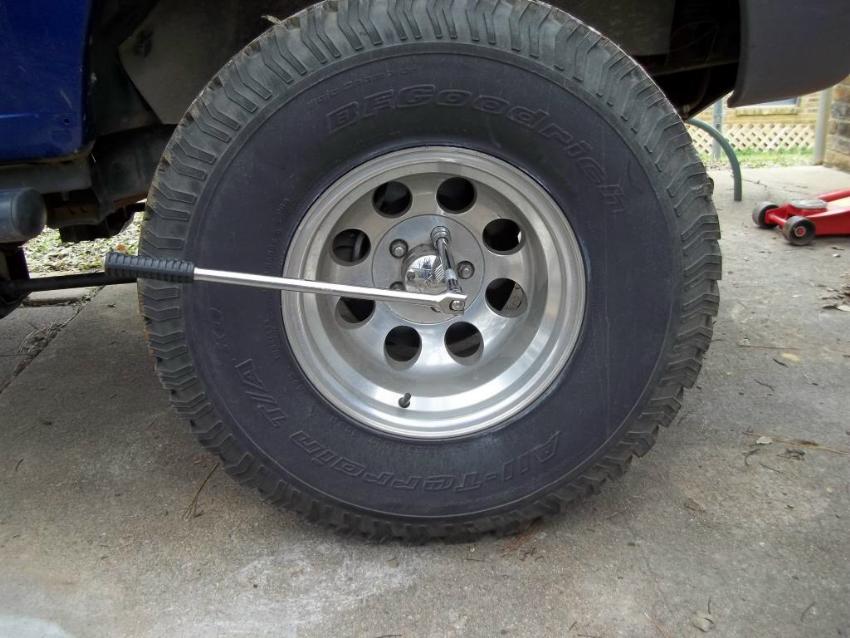
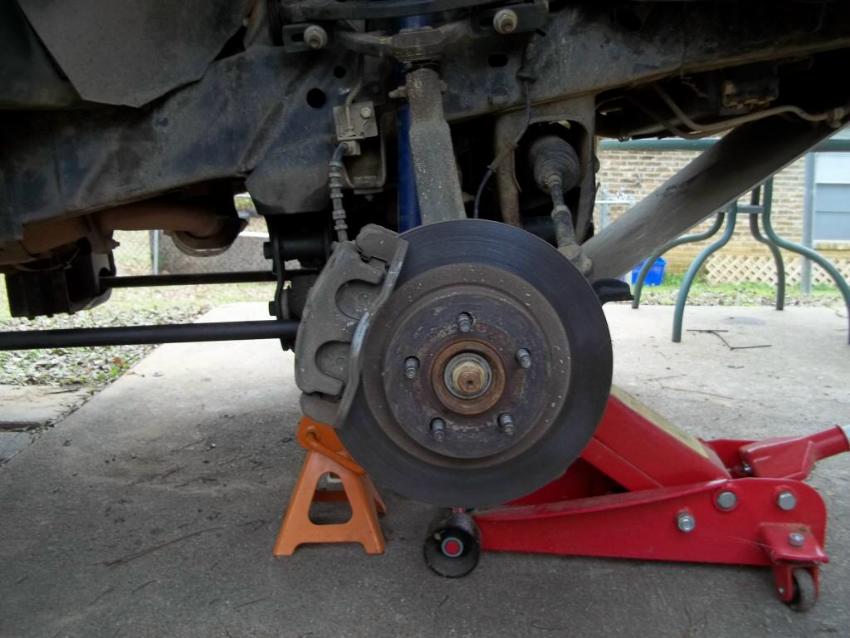
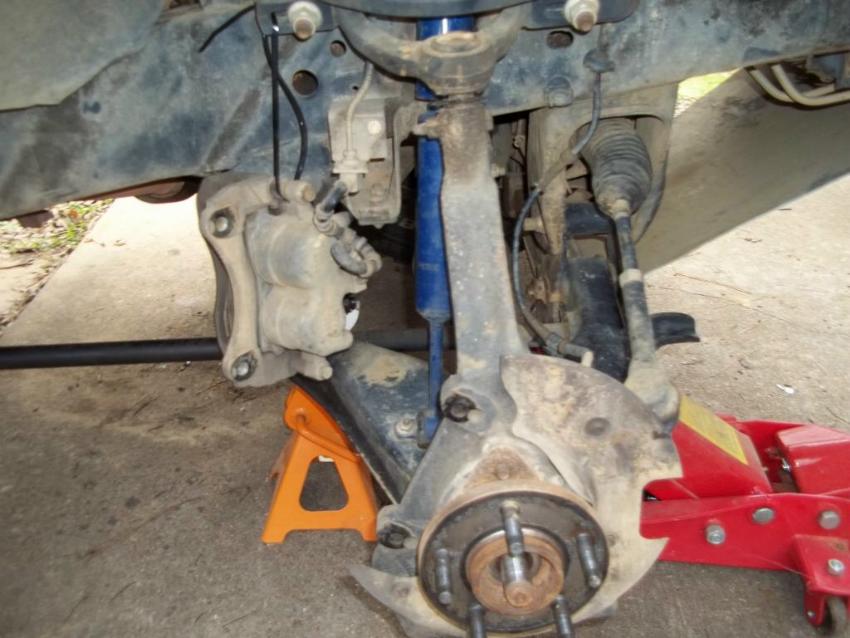
Jack up truck and secure it with jack stands. Now remove the wheel.
Step 2
Remove Axle nut
You can do this 2 ways, have a buddy sit inside the truck and hold the brakes or use a screwdriver like I did to stop the axle from turning. Eat your Wheaties and give it hell. Use 1/2 in breaker bar and 1-1/4 in socket.
Step 3
Locate and remove your brake caliper bolts. 15mm socket.

Top bolt
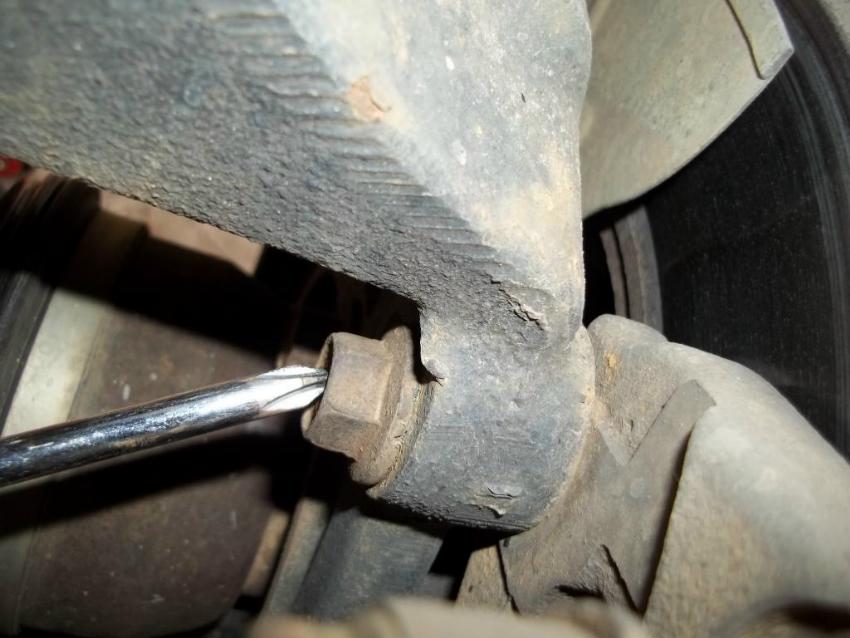
Bottom bolt
Step 4
Use zip ties to secure brake caliper out of the way. DO NOT let it dangle by the brake fluid hose.
Step 5
Remove upper ball joint pinch bolt, use 15mm socket and 15mm wrench. To remove the bolt use a screwdriver and hammer to drive the bolt out.
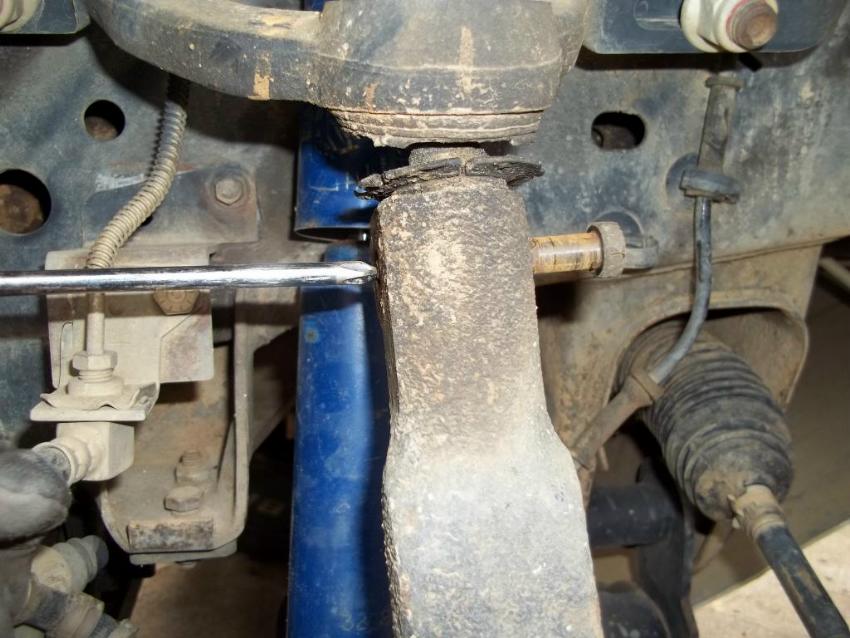
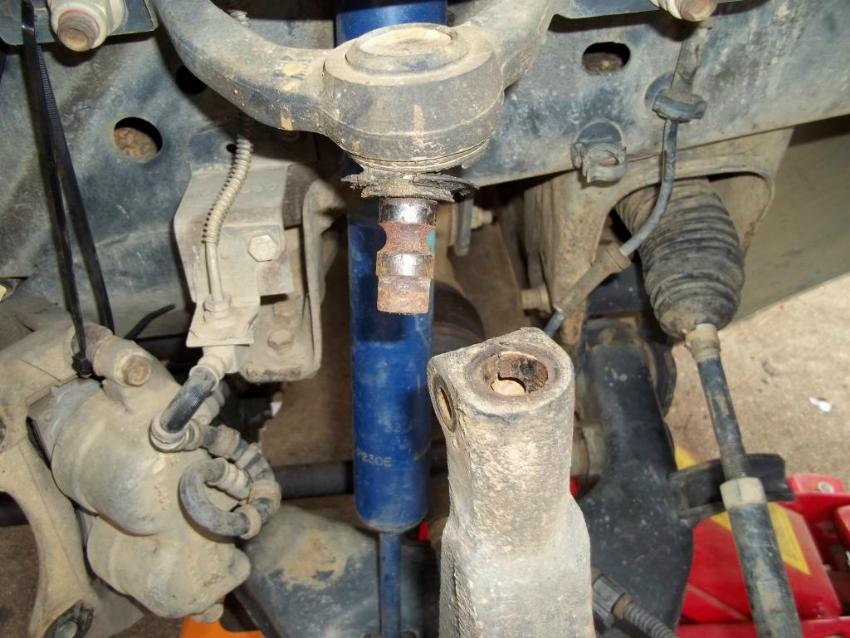
Now using the hammer hit the upper control arm to separate the upper ball joint from the knuckle.
Step 6
Remove tie rod end from knuckle. Use 21mm wrench and needle nose pliers to remove cotter pin.
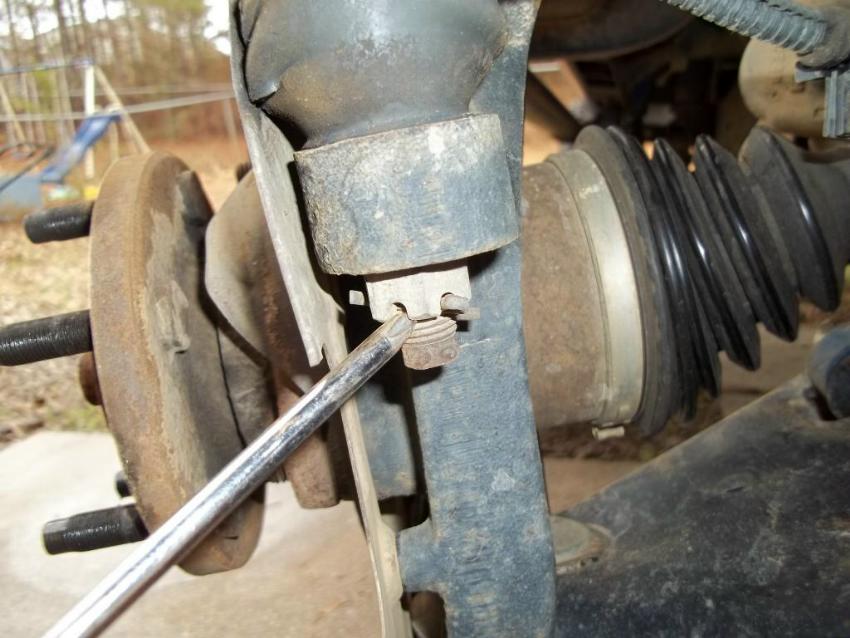
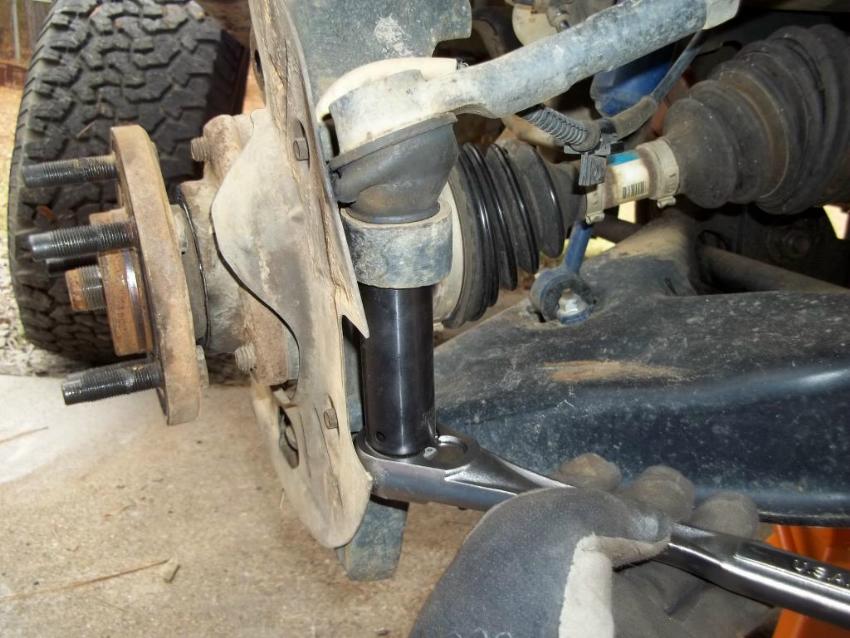
Use hammer to separate tie rod end from knuckle.
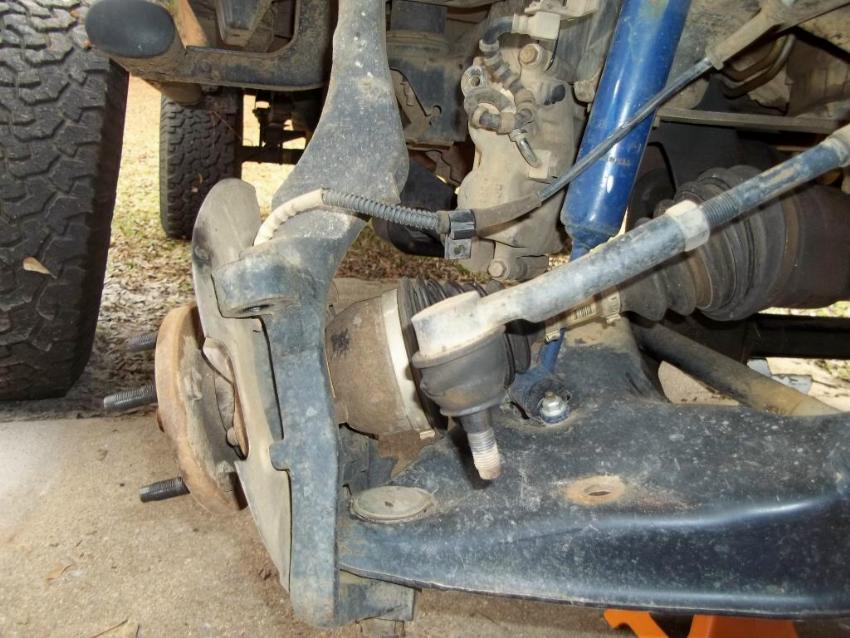
Step 7
Now you are ready to remove the CV shaft. Separate the front part of the CV shaft from hub then prepare to remove the back of the shaft from the front axle. Use a pry bar and hammer to remove the shaft from the axle.
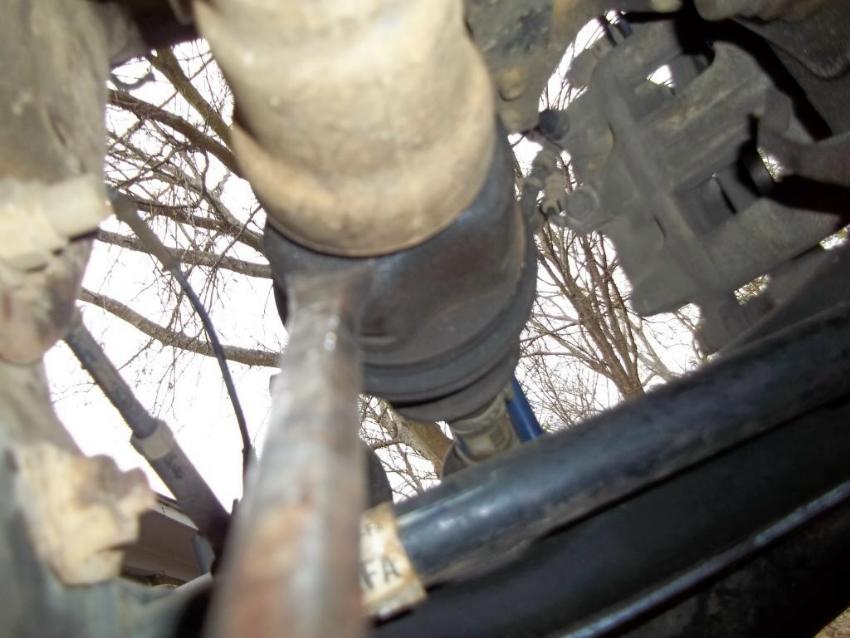
Pull the shaft out

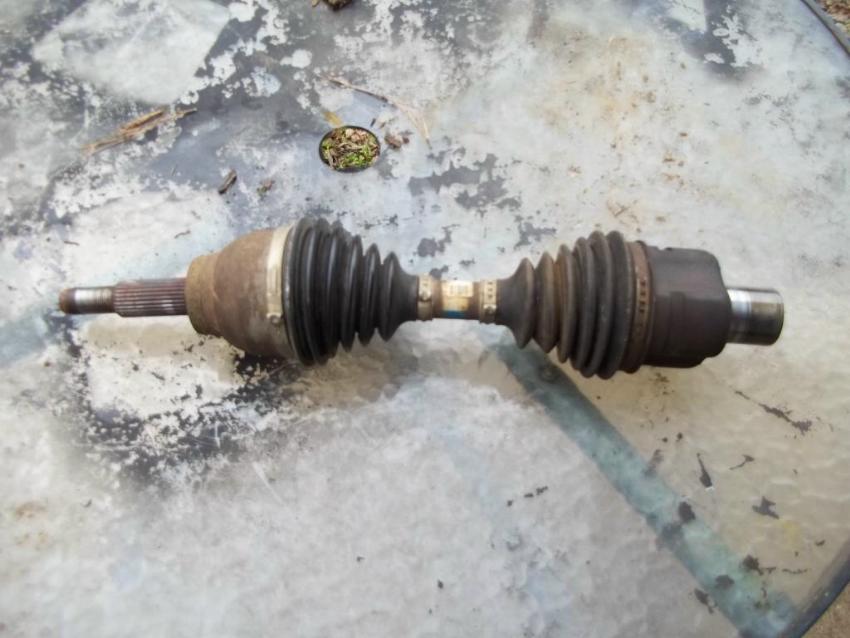
Now reverse everything and you are done.
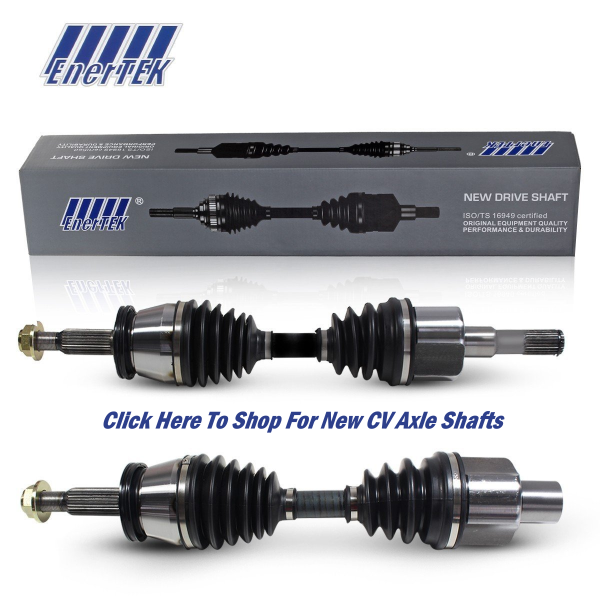
Need A New CV Shaft?:
About The Author
Jim Oaks is the founder of TheRangerStation.com, the longest-running Ford Ranger resource online since 1999. With over 25 years of hands-on experience building and modifying Ford Rangers — including magazine-featured builds like Project Transformer — Jim has become one of the most trusted authorities in the Ford Ranger off-road and enthusiast space.
Since launching TheRangerStation.com, Jim has documented thousands of real-world Ranger builds, technical repairs, drivetrain swaps, suspension modifications, and off-road adventures contributed by owners worldwide. TheRangerStation.com has been referenced in print, video and online by enthusiasts, mechanics, and off-road builders looking for practical, and experience-based information.