
Introduction
There have been reports of loose intake bolts on some of the Ford 4.0L engines built in the 1990’s. Here’s how to check and tighten them.
Check
- Check for loose lower intake manifold bolts.
- Pull your #5 plug and check it out. If you see the fuzzy head or have some oil present around the sides of the plug, then bingo.
The 1993-1994 have this problem very often. Usually, you can fix it by simply tightening the bolts, but sometimes you need a new gasket.
Do you notice a loss of oil with no leaks? Say 1-quart every 1500-3000 miles?
Tightening
You will need:
- 1/4″ Socket Drive
- 6″ extension
- Short wobble adapter (the broken neck socket adapter)
- 10mm socket
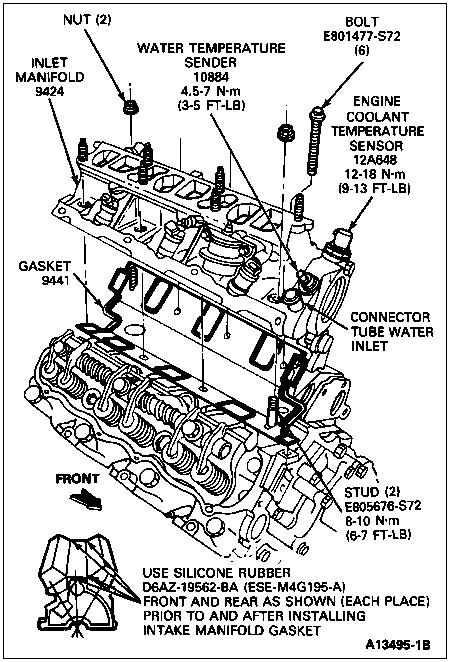
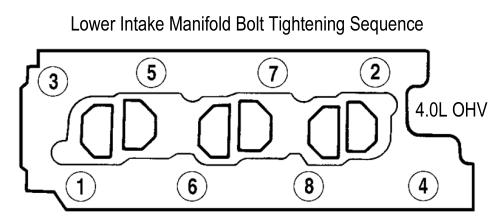
Follow the pictures below for the location and proper tightening sequence. Most should be able to solve the problem by simple tightening, but some may need to replace the entire gasket as it may be shot. Make sure you follow the sequence for tightening!
Tighten the bolts (in the proper sequence) and torquing them to 21-25 Nm (15-18 ft lb),
Related Articles
Rebuilding And Improving A Ford 4.0 Engine
How To Build A Ford 4.0L For Power
How To Build And Modify Ford V-6 Engines (.pdf)
Ford 4.0L Camshaft Synchronizer
Ford Camshaft Position Sensor (CMP) / 3.0L, 4.0L & 5.0L
Supercharging A Ford Ranger 4.0 OHV V6
Last Updated:
About The Author

Jim Oaks is the founder of TheRangerStation.com, the longest-running Ford Ranger resource online since 1999. With over 25 years of hands-on experience building and modifying Ford Rangers — including magazine-featured builds like Project Transformer — Jim has become one of the most trusted authorities in the Ford Ranger off-road and enthusiast space.
Since launching TheRangerStation.com, Jim has documented thousands of real-world Ranger builds, technical repairs, drivetrain swaps, suspension modifications, and off-road adventures contributed by owners worldwide. TheRangerStation.com has been referenced in print, video and online by enthusiasts, mechanics, and off-road builders looking for practical, and experience-based information.