
Introduction
This page tells you what size head unit and speakers fit in a 1983-2011 Ford Ranger
| Year | Receiver Depth | Front Speakers | Rear Speakers | ||||||
|---|---|---|---|---|---|---|---|---|---|
| Location | Size | Depth | Location | Size | Depth | Notes | |||
| 1983-1984 | 9-Inches | Dash | 3-1/2″ | 1-9/16″ | N/A | — | — | — | |
| 1985-1988 | 9-Inches | Dash | 3-1/2″ | 1-9/16″ | Cab Corner | 5×7″ | 2-1/2″ | — | |
| 1989-1992 | 7-1/4-Inches | Door | 6-1/2″ | 2-1/8″ | N/A | — | — | — | |
| 1993-1994 | 7-3/4-Inches | Door | 6×8″ | 5-3/4″ | Cab Corner | 6×8″ | 2-7/16″ | — | |
| 1995-1999 | 7-1/2-Inches | Door | 6×8″ | 4-1/4″ | Cab Corner | 6×8″ | 2-7/16″ – 4-3/4″ | Varies | |
| 1989-1992S | 7-1/4-Inches | Door | 6-1/2″ | 2-1/4″ | Cab Corner | 6×8″ | 2-1/2″ | SuperCab | |
| 1993-1994S | 7-3/4-Inches | Door | 6×8″ | 5-3/4″ | Cab Corner | 6×8″ | 4-3/8″ | SuperCab | |
| 1995-1998S | 7-1/2-Inches | Door | 6×8″ | 4-1/4″ | Cab Corner | 6×8″ | 4-3/8″ | SuperCab | |
| 1999 2DRS | 7-1/2-Inches | Door | 6×8″ | 4-1/4″ | Cab Corner | 6×8″ | 4-3/8″ | SuperCab | |
All Rangers except the 1983 and 1984 can use either the DIN style receiver or the shaft style receiver.
The 1983-1984 Rangers only accept the shaft style receiver.
Years ending in ‘S’ denotes super cab. All others are regular cab.
Shaft Style Receivers- have two knobs on either side of the receiver and fit a 3-hole opening. The center hole is rectangular, and the outside holes are round for the shafts.
DIN Style Receivers- fit through a single rectangular hole in the dash. Din Style units mount from the front, sliding into a metal sleeve that attaches to the factory radio’s side support system.
NOTICE: This page is out of date. If you have any information on speaker and receiver dimensions that fit the Ford Ranger, please contact us. Thanks.
Related Articles
New Stereo / No Sound / Factory Amplifier
Probox Loaded Universal Enclosure
Last Updated:
About The Author
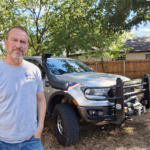
Jim Oaks is the founder of TheRangerStation.com, the longest-running Ford Ranger resource online since 1999. With over 25 years of hands-on experience building and modifying Ford Rangers — including magazine-featured builds like Project Transformer — Jim has become one of the most trusted authorities in the Ford Ranger off-road and enthusiast space.
Since launching TheRangerStation.com, Jim has documented thousands of real-world Ranger builds, technical repairs, drivetrain swaps, suspension modifications, and off-road adventures contributed by owners worldwide. TheRangerStation.com has been referenced in print, video and online by enthusiasts, mechanics, and off-road builders looking for practical, and experience-based information.