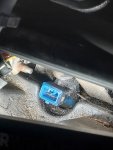
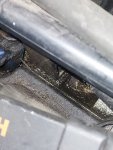
I tried to look it up. All it said was all engines have a test port and it's located on the fuel manifold on the top of the engine somewhere.
You can listen to my little problem I just had with my older Bronco II and see if it may give you a idea.
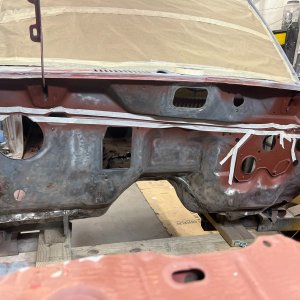
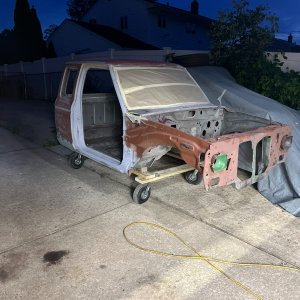
I retro fitted a fuel injected 2.9 in my 84 BII that originally was a 2.8 carb. So I had to swap all the fuel injection system over. Everything went smooth, I drove it all year from last spring to a few weeks ago. As I was using it, I noticed, especially on a cold morning start, that it cranked excessively before starting. Then I caught it a few times, it was actually starting when I let off the keyswitch. I had another column with a new ignition switch, and my column had a worn out lower bushing, so I changed the whole column out. Didn't fix it.
As it got colder and colder, the problem would get worse. I found on a morning start, I had to hold down the pedal partially, and keep cranking and then letting up. If I cranked too long it would flood. It got to the point it would not hardly start at all so I did some serious wiring and diagrams inspection, and a bunch of testing.
Come to find out, there is a wire that comes from the ignition switch on the BII that I tied to the red/lightgreen wire in the EECIV harness. This red/lightgreen powers the EEC relay, the ignition coil and the TFI ignition. I used the white/lightblue from the 84 harness to power this circuit from the keyswitch. But apparently it's not large enough. When it's cranking, there is too much voltage drop in this circuit, and I am getting a weak spark. I found that if I ran a jumper wire to this circuit straight from the battery,, it starts right up, and it was about 20 degrees outside today.
Which leads me to your problem. I wonder if you can pick a critical spot in your EEC harness that supplies voltage, and monitor this during a first start up and then after you tap the throttle. I wonder if the voltage is jumping up significantly on one of your circuits when you tap the throttle. Of course if the voltage then stays up, then the engine is going to run better, which will make the voltage stay up because the alternator is spinning faster.