
The 30-Spline TTB: Pushing the Dana 35 to the Breaking Point
The Breaking Point: From 35s to 37s
For years, the Dana 35 TTB in “El Chingón” Bronco II was nearly bulletproof. Running 35-inch tires and a locked front end, the owner never experienced a shaft failure. However, everything changed with the move to 37-inch Pitbull Rockers and the multiplied torque of a transfer case doubler.
The initial problem was classic: the U-joint C-clips would “spit” out, allowing the caps to eject and the yokes to self-destruct. The owner attempted several stages of fixes:
- Full-Circle Clips: A significant improvement, but with 37s, the yoke ears eventually stretched, allowing the caps to walk.
- Welded Caps: Tacking the caps 50% into the ears lasted two years, but eventually, the metal itself reached its fatigue limit—snapping a yoke ear entirely off.
- Twisted Splines: Upon inspection, even the 27-spline inner shafts were showing signs of twisting.
The verdict was clear: the stock 27-spline architecture and cast yokes could no longer handle the load. To keep the 5×4.5 bolt pattern and run 37s reliably, the build had to move to a 30-spline Chromoly “Super Dana 35.”
The Missing Link: Why the Dana 50 Hybrid?
The jump to 30-spline was born out of necessity. While 4340 Chromoly shafts are available for the Dana 35, there is a gaping hole in the aftermarket: no one makes a Chromoly center slip yoke for the Dana 35 or 44 TTB.
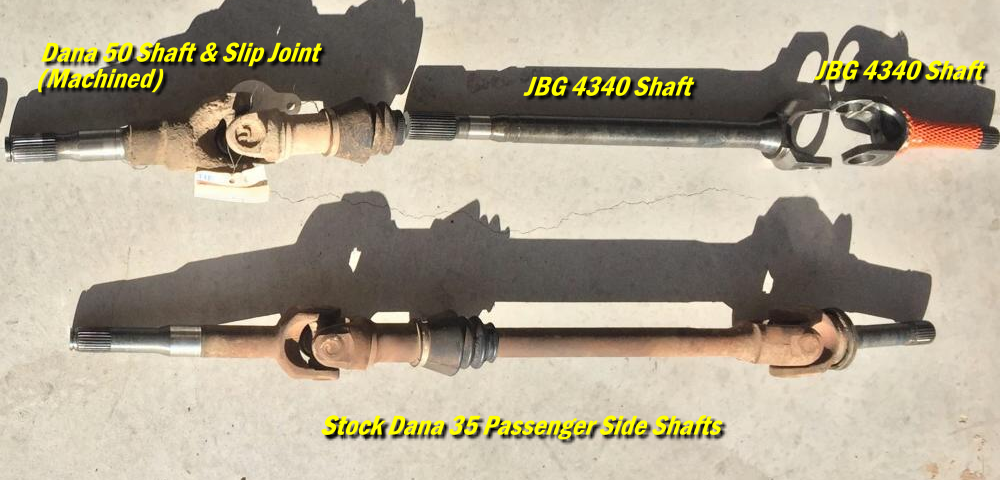
To solve the stretching-ear problem at the center of the axle, the owner turned to the Dana 50 TTB. The Dana 50 passenger inner and slip yoke utilize massive 1350-series joints with external snap-ring retention. This hybrid approach allowed for a 30-spline carrier and 3/4-ton strength without the “can of worms” involved in a full axle swap.
The Driver-Side Secret: The Dutchman Shaft
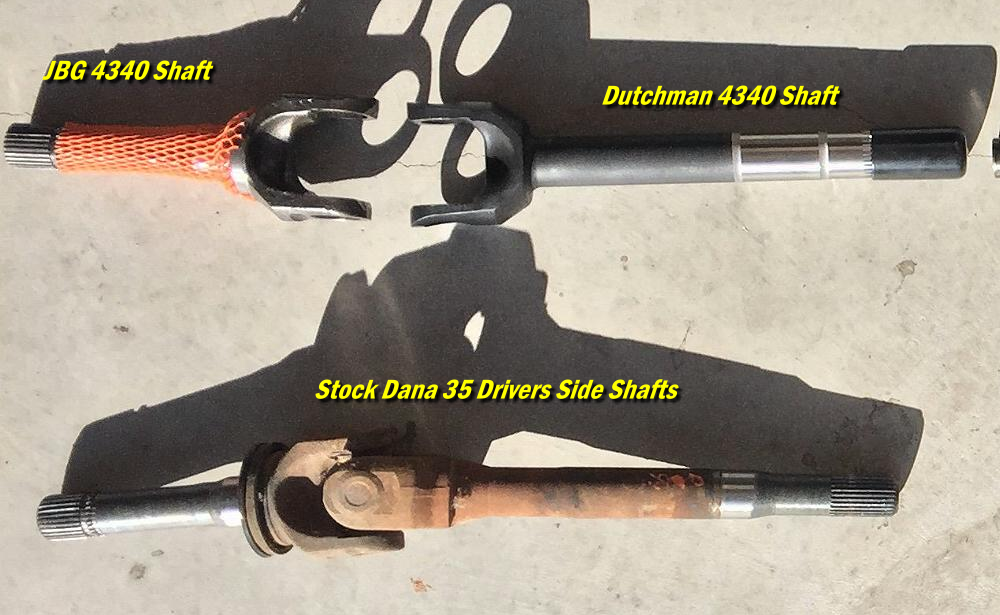
The foundation of a 30-spline Dana 35 is the driver-side inner shaft. Since no off-the-shelf 30-spline option exists for the TTB, a custom 4340 Chromoly shaft from Dutchman is required.
Precision: Unlike “import” shafts that suffer from core shift, the Dutchman shaft is fully machined. This provides critical clearance inside the knuckle, reducing the “witness marks” and binding that lead to snapped axle ears.
Dimensions: It measures 13.3125″ long. While the owner originally measured 13.265″, Dutchman cuts in 1/16″ increments, making the 13.3125″ the functional standard.
The Dana 50 Center Joint: Solving the Puzzle
Upgrading to a Dana 35/50 hybrid brings 1350-series strength and superior external snap-ring retention to the center of your axle. However, this is far from a bolt-in swap. It requires a specific combination of parts and precision machining to work.
1. Solving the Length & Spline Engagement
A stock Dana 35 assembly (inner shaft + slip yoke) has a total length of 16.10″ (11.04″ shaft / 5.06″ yoke). When moving to Dana 50 parts, the math changes:
The Problem: The common 1984-1997 Dana 50 assembly is only 14.89″ total. This is over an inch short, leaving dangerously low spline engagement at ride height.
The Fix: Use the 1980-1983 Dana 50 slip yoke. This yoke is 5.25″ long. When paired with the 10.08″ Dana 50 inner shaft, it helps recover the engagement lost by the shorter Dana 50 components.
2. The Machinist’s Fix: Locker & C-Clip Interference
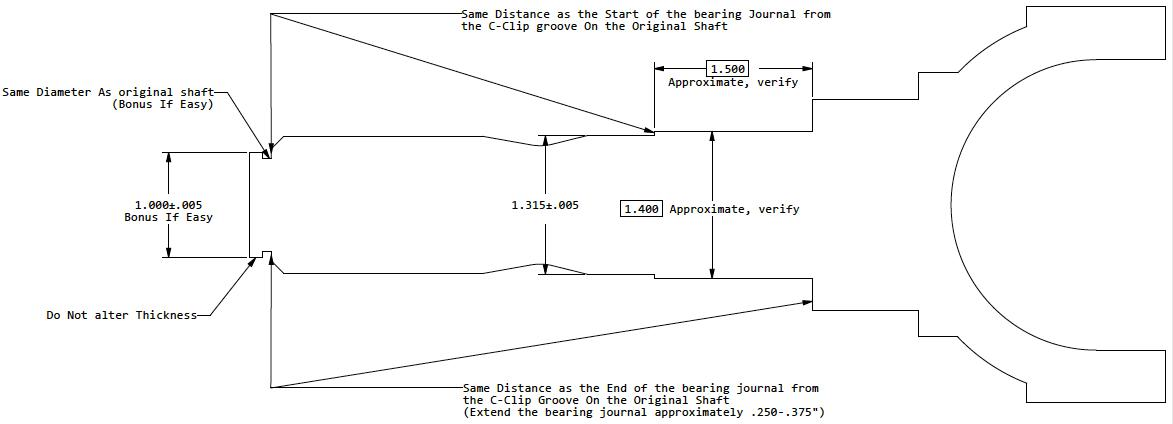
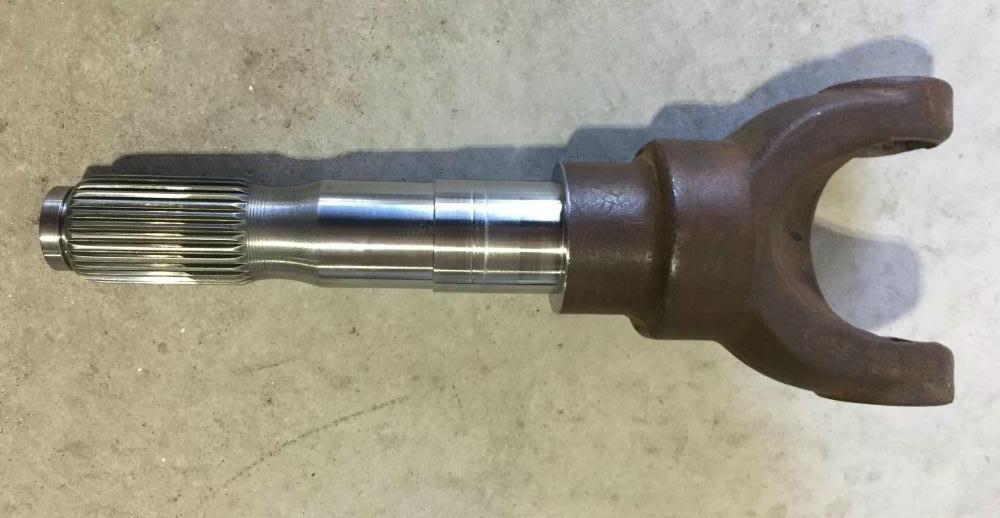
If you are using a 30-spline Yukon Zip Locker, a standard Dana 50 shaft will not fit without secondary lathe work.
Journal Interference: The “neck down” area on a Dana 50 shaft is significantly shorter than a Dana 35. The shaft will bottom out against the locker’s bearing journal before it can seat.
C-Clip Boss: The boss on the Dana 50 shaft is larger in diameter, which prevents the C-clip from seating in the side gear pocket.
The Solution: Provide your machinist with a stock Dana 35 shaft for reference. They must turn down the C-clip boss and extend the neck-down relief to match the D35 profile.
3. The Clearancing Requirement
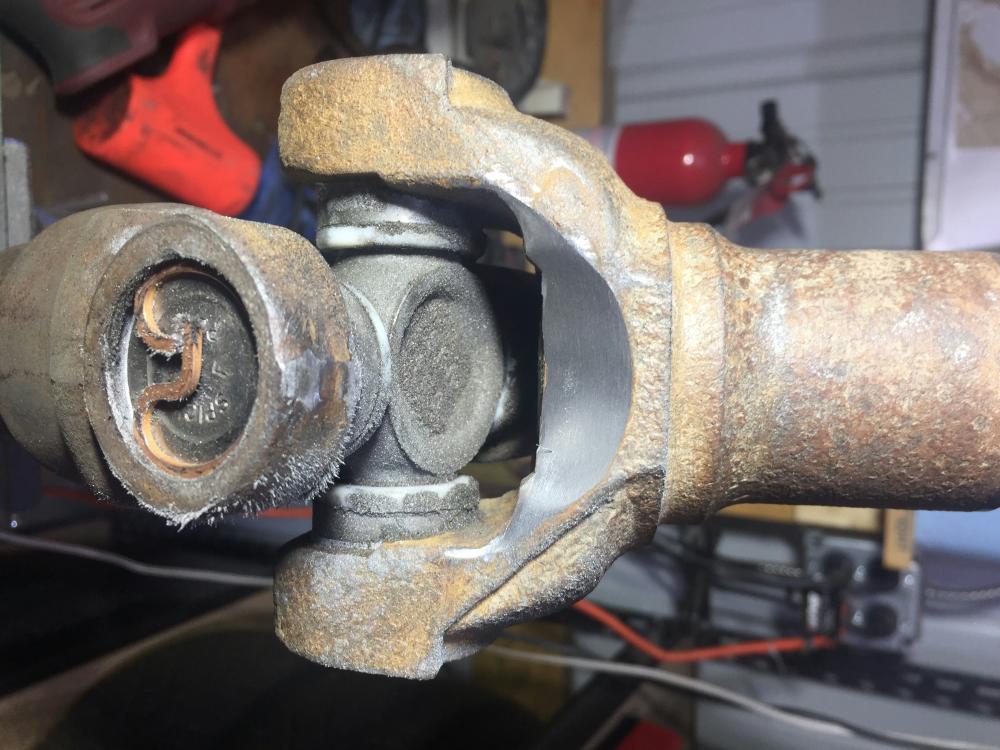
While the move to Dana 50 parts is done for strength, the actual shaft diameter increase is a lesson in diminishing returns; the neck-down is only about .010″ larger than a stock Dana 35 shaft. The true gain is in the massive yoke. However, out of the box, the Dana 50 yoke is a liability—it will bind at just 20° of angle.
Manual Clearancing: You must carefully clearance the yoke with a grinder to achieve at least 28° of travel (be careful not to break through into the splines). Without this work, the center joint will bind and self-destruct during normal suspension cycling.
The Assembly: From Driver to Passenger
Achieving this level of strength requires a specific recipe of custom and repurposed parts:
- Driver-Side Outer: JBG 4340 Chromoly Stub Shaft.
- U-Joint: Spicer 5-760X with 30mm Full-Circle Snap Rings.
- Driver-Side Inner: Dutchman Custom 4340 Chromoly. (30-spline, 13.3125″ long, 1.315″ seal surface).
- Differential: 30-Spline Yukon Zip Locker (Jeep D35 application).
- Passenger-Side Inner: Dana 50 TTB Inner Shaft. (Turned down on a lathe to match D35 bearing/seal surfaces).
- Center Joint: Spicer 5-1350X. (Massive 1350-series strength with external snap rings).
- Slip Yoke: Dana 50 TTB Slip Yoke. (Clearanced for 30°+ angularity).
- Passenger Intermediate: JBG 4340 Chromoly Shaft.
- U-Joint: Spicer 5-760X with 30mm Full-Circle Snap Rings.
- Passenger-Side Outer: JBG 4340 Chromoly Stub Shaft.
The Reality of 37-Inch Tires
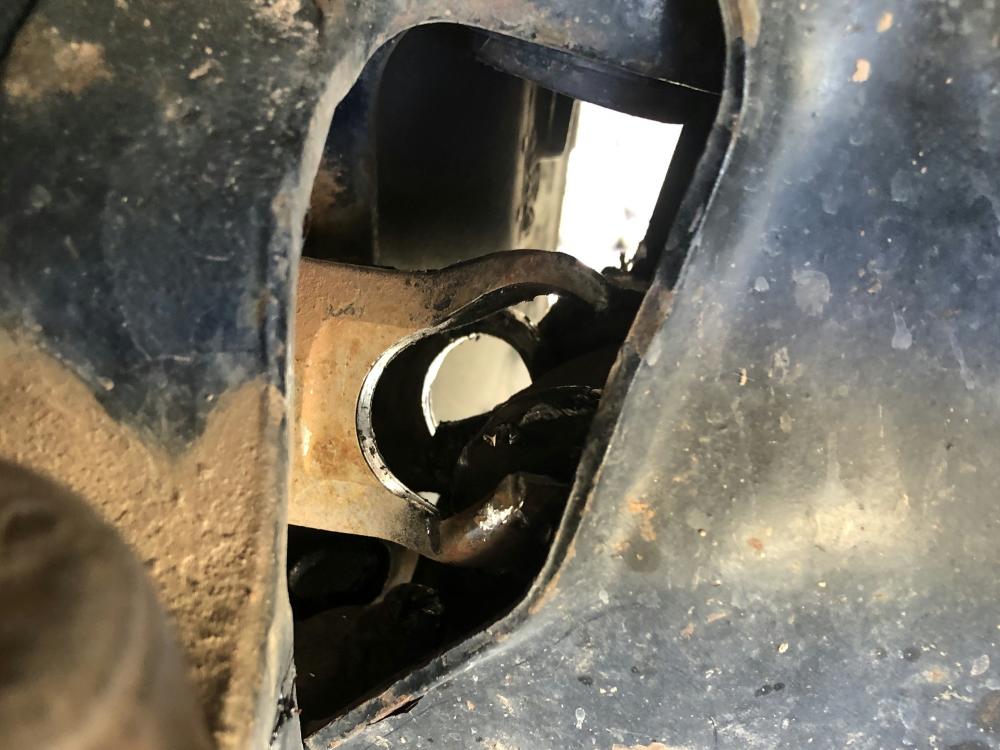
Despite the 30-spline Chromoly and 1350 joints, “El Chingón” eventually suffered another failure: a twisted 4340 ear at the knuckle. The diagnosis? Steering Bind.
Witness marks proved the shafts were physically prying themselves apart at full lock. This is the ultimate lesson: 4340 shafts and heavy-duty hubs (like the AVM XP) will hold 35s indefinitely. But with 37s and a doubler, even the “Super Dana 35” requires constant vigilance. If you see bind marks, adjust your stops—or accept that you’ve reached the absolute physical limit of the compact TTB platform.
Locking Hubs
What’s interesting to note in this build is that the Dana 35 used the Warn 37780 ‘Jeep Hubs’ and never reported a break. Instead, the axles were breaking at the yoke where the passenger side axle shaft and outer stub shaft meet at the steering knuckle. These hubs are no longer available, but the AVM Xtreme Performance Hubs are a stronger if not stronger replacement.
Conclusion
We’ve seen from this that the Dana 35 with heavy duty locking hubs can handle a 35-inch tire off-road. The only real weak point is the poor wheel bearing spacing at the hub. If you’re doing a lot of highway miles, you may benefit from doing a Dana 44 knuckle / hub swap, but that’s going to change your wheel bolt pattern.
Running 37-inch tires on a Dana 35 is possible, but you’d have to switch to chromoly shafts and a 30-spline differential like what was done here. I would strongly suggest that you swap in a Dana 44 instead.
Going with a tire larger than 37-inches would require a Dana 60 axle.
Related Articles
Dana 44 Knuckle Swap On To Dana 35
Should You Replace A Dana 35 TTB With A Dana 44?
Dana 44 Spindle & Hub Conversion On Dana 35 TTB
Beefing Up The Ford Ranger Dana 35 TTB
Warn Jeep Hubs for the Dana 35
About The Author
Jim Oaks is the founder of TheRangerStation.com, the longest-running Ford Ranger resource online since 1999. With over 25 years of hands-on experience building and modifying Ford Rangers — including magazine-featured builds like Project Transformer — Jim has become one of the most trusted authorities in the Ford Ranger off-road and enthusiast space.
Since launching TheRangerStation.com, Jim has documented thousands of real-world Ranger builds, technical repairs, drivetrain swaps, suspension modifications, and off-road adventures contributed by owners worldwide. TheRangerStation.com has been referenced in print, video and online by enthusiasts, mechanics, and off-road builders looking for practical, and experience-based information.