

Technical Service Bulletin
Make: Ford
Number: 23-2011
Title: Illuminated MIL With Misfires DTCs/Water In Spark Plug Wells And/Or Corrosion On Ignition System Components
Date: 1/13/2023
Models: 2019-2022 Ranger
Summary: Some 2019-2022 Ranger vehicles may exhibit an illuminated malfunction indicator lamp (MIL) with diagnostic trouble codes (DTCs) P0300, P0301, P0302, P0303, P0304 and/or P0316 stored in the powertrain control module (PCM). This may be due to water build up in the spark plug well(s) which can lead to signs of corrosion on ignition system components. To correct the condition, follow the Service Procedure to resolve the source of all DTCs and to install an engine appearance cover.
Issue: Some 2019-2022 Ranger vehicles may exhibit an illuminated malfunction indicator lamp (MIL) with diagnostic trouble codes (DTCs) P0300, P0301, P0302, P0303, P0304 and/or P0316 stored in the powertrain control module (PCM). This may be due to water build up in the spark plug well(s) which can lead to signs of corrosion on ignition system components. To correct the condition, follow the Service Procedure to resolve the source of all DTCs and to
install an engine appearance cover.
Action: Follow the Service Procedure to correct the condition on vehicles that meet all of the following criteria:
- 2019-2022 Ranger
- Illuminated MIL with DTCs P0300, P0301, P0302, P0303, P0304 and/or P0316 stored in the PCM
- Presence of water in one or more of the spark plug well(s) and/or signs of corrosion on ignition system components
- Engine appearance cover not installed
Parts:
- L1MZ-6A949-C Engine Appearance Cover Kit
- XG-3-A Motorcraft Silicone Brake Caliper Grease and Dielectric Compound (as needed)
As Needed indicates the amount of the part may vary and/or is not a whole number. Parts can be billed out as non-whole numbers, including less than 1.
Warranty Status: Eligible under provisions of New Vehicle Limited Warranty (NVLW)/Emissions Warranty/Service Part Warranty (SPW)/Special Service Part (SSP)/Extended Service Plan (ESP) coverage. Limits/policies/prior approvals are not altered by a TSB. NVLW/Emissions Warranty/SPW/SSP/ESP coverage limits are determined by the identified causal part and verified using the OASIS part coverage tool.
Labor Times:
Description: 2019-2022 Ranger: Install Engine Cover Following The Service Procedure (Do Not Use With Any Other Labor Operations)
Times: 0.3 Hrs.
Repair/Claim Coding: Causal Part: 21022A68 / Condition Code: 68
Service Procedure
1. Resolve engine misfire DTCs P0300, P0301, P0302, P0303, P0304, and/or P0316 per normal diagnostics outside of this article. Refer to Powertrain Control/Emission Diagnosis (PC/ED) Manual. Proceed to Step 2.
2. Open the hood to access the engine compartment.
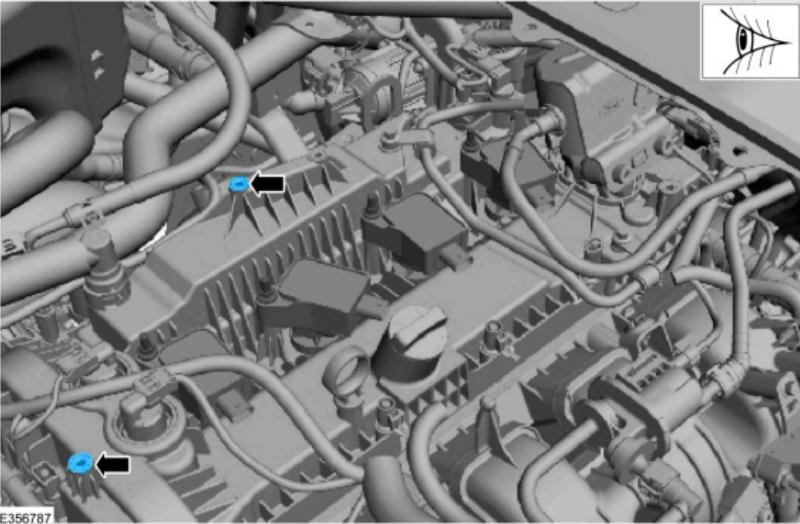
3. Locate the 2-engine appearance cover mounting bosses on the valve cover. (Figure 1)
(Figure 1)
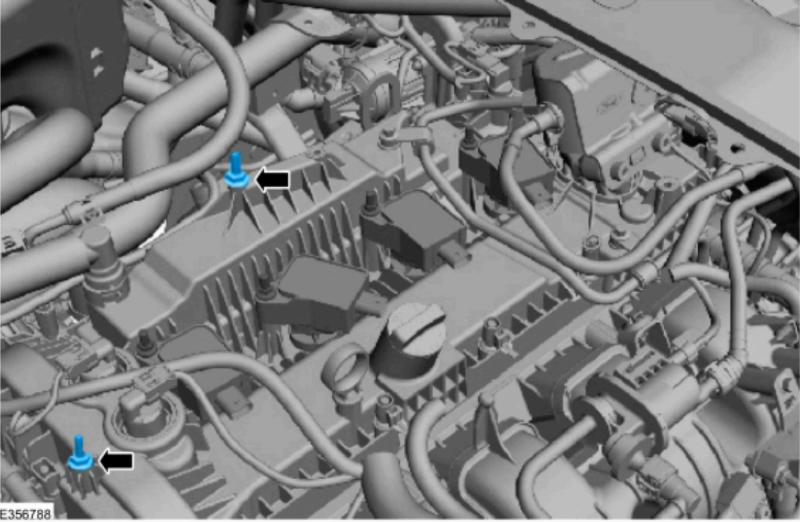
4. Install the 2-engine appearance cover stud bolts to the valve cover and tighten to 10 Nm (89 lb-in). (Figure 2)
(Figure 2)
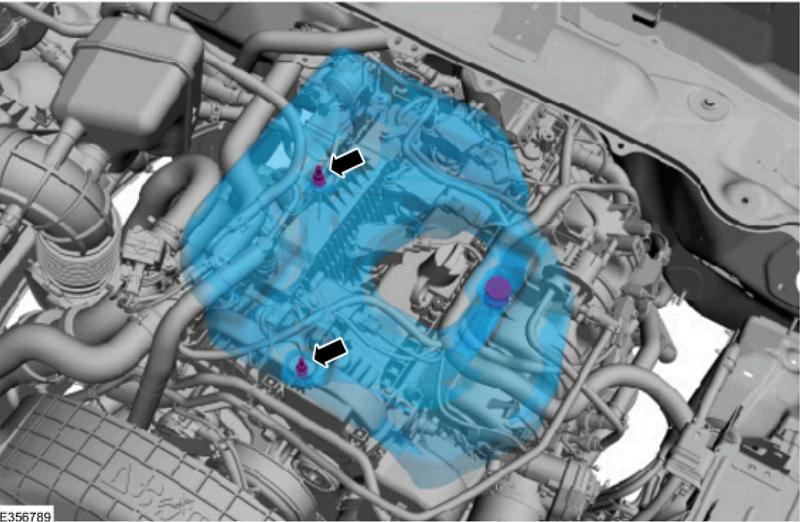
5. Lubricate each grommet on the engine appearance cover with silicone brake caliper grease and dielectric compound or equivalent to aid in installation of the cover.
6. Install the engine appearance cover. (Figure 3)
(Figure 3)
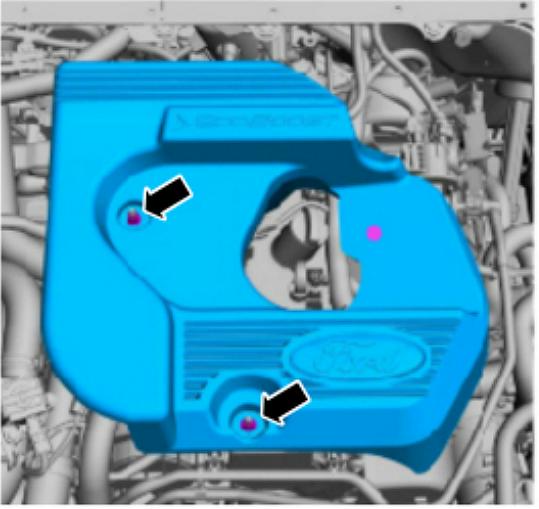
7. Install the 2 engine appearance cover nuts and tighten to 10 Nm (89 lb-in). (Figure 4)
CHECK OUT: How To Keep Water Out Of Your Spark Plugs
About The Author
Jim Oaks is the founder of TheRangerStation.com, the longest-running Ford Ranger resource online since 1999. With over 25 years of hands-on experience building and modifying Ford Rangers — including magazine-featured builds like Project Transformer — Jim has become one of the most trusted authorities in the Ford Ranger off-road and enthusiast space.
Since launching TheRangerStation.com, Jim has documented thousands of real-world Ranger builds, technical repairs, drivetrain swaps, suspension modifications, and off-road adventures contributed by owners worldwide. TheRangerStation.com has been referenced in print, video and online by enthusiasts, mechanics, and off-road builders looking for practical, and experience-based information.