Tire Load Ratings & Speed Ratings (P, LT & ST Tires Explained)
Tire load ratings and speed ratings determine how much weight your tire can safely carry and how fast it can safely travel under load. Choosing the correct tire type is critical for towing, hauling, off-roading, and everyday driving.
If you drive a Ford Ranger, tow a trailer, haul equipment, or run oversized tires, understanding these ratings ensures your truck is equipped for the real-world stress you’re putting on it.
In this guide, you’ll learn:
- The difference between Passenger (P), Light Truck (LT), and Special Trailer (ST) tires
- How to read tire sidewall markings
- What load index numbers and load range letters mean
- How speed ratings affect durability and performance
- Which tire type is best for towing and hauling
The Three Main Types of Tires
There are three primary tire categories used on trucks and trailers:
- Passenger (P) Tires – Designed for passenger vehicles and light-duty use
- Light Truck (LT) Tires – Built for hauling, towing, and higher load capacity
- Special Trailer (ST) Tires – Engineered specifically for trailer stability
Many tire problems occur when passenger tires are installed on vehicles that regularly tow or haul heavy loads. While a passenger tire may fit physically, it may not provide the structural strength required for truck use.
Passenger (P) Tires Explained
Passenger tires are identified by the letter “P” before the tire size (example: P235/75R15). These tires are optimized for ride comfort, fuel economy, and daily driving.
If your Ranger is primarily used as a street truck, lowered build, or performance setup without hauling heavy loads, a passenger tire may be appropriate.
How to Read a Passenger Tire Sidewall
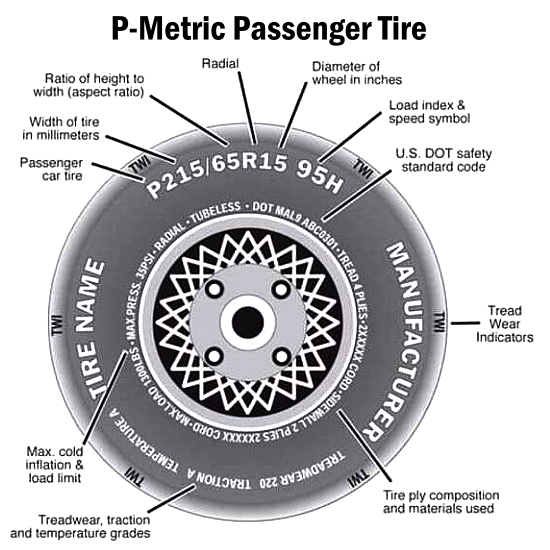
- P – Indicates passenger vehicle tire
- Nominal Width – Tire width in millimeters (sidewall to sidewall)
- Aspect Ratio – Height-to-width ratio of the sidewall
- R – Radial construction
- Rim Diameter – Wheel diameter in inches
- Load Index – Maximum weight each tire can support
- M+S – Mud and Snow designation
- Speed Rating – Maximum sustained speed capability
Passenger Tire Speed Ratings
The speed rating indicates the maximum speed a tire can sustain safely under load.
| Rating | Maximum Speed |
|---|---|
| Q | 99 mph |
| R | 106 mph |
| S | 112 mph |
| T | 118 mph |
| U | 124 mph |
| H | 130 mph |
| V | 149 mph |
| W | 168 mph* |
| Y | 186 mph* |
*Tires exceeding 149 mph may use the designation “ZR.”
Light Truck (LT) Tires Explained
Light Truck tires are identified by “LT” before the tire size (example: LT245/75R16). These tires are engineered for higher load capacity, stronger construction, and higher inflation pressures.
Every component of an LT tire is reinforced to handle the added stress of towing, hauling cargo, and off-road use.
Why Choose LT Tires?
- Heavier steel belts
- Stronger sidewalls
- Higher inflation pressures
- Greater load-carrying capacity
- Improved durability under load
Reading an LT Tire Sidewall
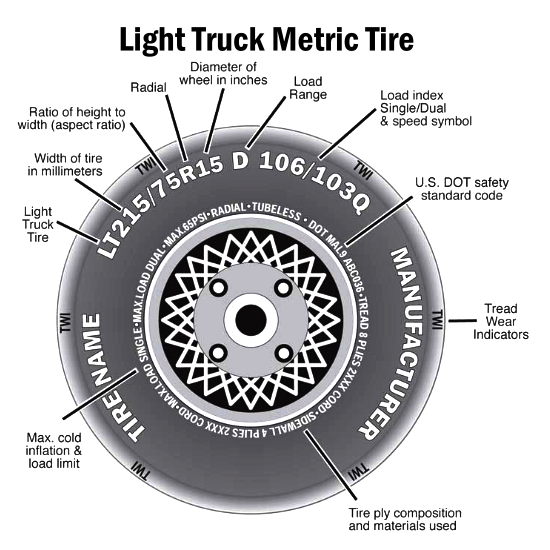
- LT – Light Truck designation
- Max Load (Single) – Maximum load when used individually
- Max Load (Dual) – Maximum load when used in dual configuration
- Load Range – Load capacity classification
LT Tire Load Range Chart
| Load Range | Ply Rating | Max Load | Max PSI |
|---|---|---|---|
| B | 4 Ply | 1,430 lbs | 35 PSI |
| C | 6 Ply | 2,205 lbs | 50 PSI |
| D | 8 Ply | 2,623 lbs | 65 PSI |
| E | 10 Ply | 3,042 lbs | 80 PSI |
| F | 12 Ply | 3,415 lbs | 95 PSI |
Common LT tire formats include:
- LT-Metric (example: LT245/75R16 E)
- LT-Flotation (example: 31×10.50R15 C)
- LT-Numeric (example: 7.50R15 D)
Special Trailer (ST) Tires
Special Trailer (ST) tires are designed specifically for trailer use. Unlike automotive tires, ST tires have stiffer sidewalls to reduce trailer sway and improve stability at highway speeds.
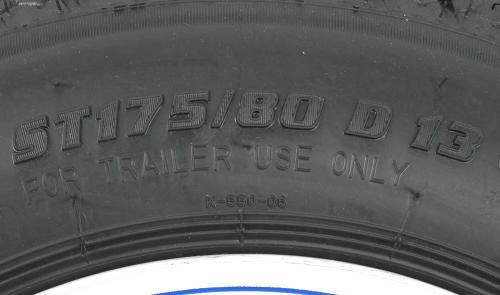
Why Use ST Tires on Trailers?
- Improved trailer stability
- Reduced sway
- Higher load ratings for trailer applications
- Designed for sustained highway towing
Both LT and ST tires are rated for trailer use, but ST tires are specifically optimized for the unique dynamics of trailer towing.
How to Choose the Right Tire for Your Ranger
- Daily driving only: Passenger tires may be sufficient.
- Occasional hauling or light towing: Consider LT tires.
- Frequent towing, heavy loads, off-road use: LT Load Range C, D, or E is recommended.
- Trailer use: Use ST or properly rated LT tires only.
Final Thoughts
Tires are one of the most important safety components on your truck or trailer. Saving money by installing the wrong tire type can compromise load capacity, braking performance, stability, and durability.
Always verify your vehicle’s required load rating, inflation pressure, and intended use before purchasing tires. When in doubt, choose a tire designed for the maximum weight and stress your vehicle will encounter.
Related Articles
How To Choose An Off-Road Tire
Tire Size Calculator & Size Chart
Mustang Wheels On Your Ford Ranger
1983-2011 Ford Ranger Tire Fitment Guide
Last Updated:
About The Author

Jim Oaks is the founder of TheRangerStation.com, the longest-running Ford Ranger resource online since 1999. With over 25 years of hands-on experience building and modifying Ford Rangers — including magazine-featured builds like Project Transformer — Jim has become one of the most trusted authorities in the Ford Ranger off-road and enthusiast space.
Since launching TheRangerStation.com, Jim has documented thousands of real-world Ranger builds, technical repairs, drivetrain swaps, suspension modifications, and off-road adventures contributed by owners worldwide. TheRangerStation.com has been referenced in print, video and online by enthusiasts, mechanics, and off-road builders looking for practical, and experience-based information.