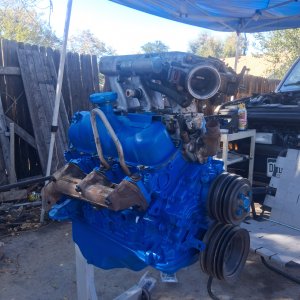
Unanticipated performance improvement


Featured Build Threads

mikkelstuff

5+ Year Member

U.S. Military - Veteran
Joined
Mar 26, 2018
Messages
825
Points
601
City
Brighton, CO
Vehicle Year
2002
Engine
3.0L
Transmission
Automatic
My credo
Friend of Bill W.
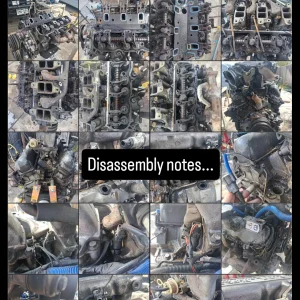
I replaced the 3.0L in my 2002 4WD Ranger XLT last summer following a blown head gasket at some 166,000 miles. It would have cost half the price of an engine just to replace the head gasket and timing chain, so went with a Jasper rebuilt engine.

This had been my Dad's truck which I inherited after his passing in 2015. From the first, I found this 3.0L to be a real dog. Oh it would run 80 mph all day long. It just took a while to get up to speed so entering the interstate was a challenge.

So now, with a newly rebuilt 3.0L, I find the performance much improved. This truck will actually accelerate!

This makes me wonder if this original engine might have had head gasket leakage or even a cracked head all along. None the less, it is pleasing to have more power with this 3.0L.
 
I'm on record here saying this a few times - I should start the Vulcan fan club - but the 3.0 is underrated. Sure, you need to wind it up to 4 grand if you really want to move but just gives you a bit of V6 Mustang thrill. Anyway, the redline is at least 4500. 😆

If it got 30MPG I'd be making marriage plans.
 
4500? That's not even power peak, redline is the other side of 6k.
 
I have to rev the crap out of my 2.3L... Maybe that's just a Ranger thing?
 
The 3.0L is actually underrated and a really reliable engine.
 
Yeah, the 3.0 is a rev-happy motor. Redline is over 6k. I found mine pulled hard from like 2,800 to about 5k, so with a manual I just got it up into those numbers and kept it there until I was cruising.

I’d like to rebuild that truck and stick a turbo or two on, I think it would respond well
 
I liked the 3.0 Vulcan in Taurus/ Sables and even more when they landed in Tempos and early Probes but think the torque curve isn't suited to trucks. When I decided to order a new 04 Ranger I planned to get a 3.0 because I never liked the Rube Goldberg engineered 4.0 SOHC. I drove a regular cab 4x4 Ranger with a 3.0, 5 speed, and 4.10 gears during lunch one day. I accelerated up the interstate ramp and shifted into 5th at about 62 mph just as I crested the hill- and immediately had to shift back into 4th. I ordered the 4.0. I think a 3.0 in a 2wd might work OK but I wanted and needed a 4x4.
 
I ran a Taurus 3.0 in front of an M5OD in a 99 Rwd Ranger and it was fantastic. Good power band and decent on gas.
 
Yeah, I would take one over a SOHC for sure.

Never have driven one though. :icon_rofl:
 
I drove my 3.0 Ranger for a few years before I learned how to really drive it. I also thought it was a dog with no guts. Once I learned that it was a high revving engine, I let it sing. With the solid axle rear end, it pulled my trailer better than the 4.0 Explorer Sport trac I had during the same time.
 
I've had the 2.5l in my 99', 2.3l in my 01, and now a 3.0l in my 00', all with the 5spd M5OD. Honestly all 3 felt very similar on the highway, but the 3.0l has a little more grunt if you give it some gas at a lower rpm in whatever gear you're in. The 3.0l is my current favorite.

Sure the timing cover was a pain, but I got it done. And yea you need to remove the exhaust to drop the Trans for a clutch job, but I'll manage.
 
Unanticipated performance improvement

​
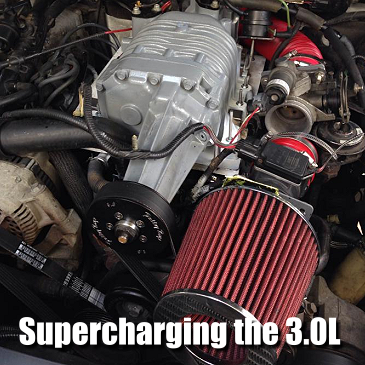
A supercharger will put some pep in your step.

 
I suspect everyone who says the 3.0 has decent power lives in less hilly terrain than I do, that's great if it works for you, the 3.0 was a good engine after the first 2 years. In 1986 we had piston slap trouble with 3.0's and replaced a bunch of them, in 1987 we had a ton of broken off shore head bolts.
 
The 3.0L went through some changes over time in the Ranger.

Chronological Rating Changes & Why They Happened

1991–1995: The Baseline Introduction
  • Horsepower: 145 hp @ 4800 RPM
  • Torque: 165 lb-ft @ 3600 RPM
Why it changed: Ford introduced the iron-block, pushrod 3.0L Vulcan to the Ranger lineup in 1991 to replace the older Cologne 2.9L V6. Designed from the start with electronic fuel injection, the early Ranger variant included lower-friction pistons, a strengthened block, and a roller camshaft to provide a durable, stable baseline.

1996–1997: Transition to Distributorless Ignition (EDIS)
  • Horsepower: 147 hp @ 5000 RPM
  • Torque: 162 lb-ft @ 3250 RPM
Why it changed: For the 1995 and 1996 model years, Ford updated the 3.0L with minor internal refinements and transitioned it to a distributorless Electronic Ignition System (EDIS) using a waste spark system. This improved idle smoothness and lowered the torque peak to 3250 RPM, making the low-end pull slightly more accessible despite a negligible drop in peak torque numbers.

1998–1999: The Cylinder Head and Intake Overhaul
  • Horsepower: 145 hp @ 5000 RPM
  • Torque: 178 lb-ft @ 3750 RPM
Why it changed: In 1998, Ford implemented substantial revisions to the Vulcan's upper architecture. Changes to the combustion chamber shape, revised cam timing, engine management mapping, and a redesigned aluminum intake manifold sacrificed a small amount of peak horsepower but yielded a massive jump in torque (up to 178 lb-ft) to help the small truck move under load.

2000–2001: The Cast Aluminum Intake Peak
  • Horsepower: 150 hp @ 4750 RPM
  • Torque: 190 lb-ft @ 3650 RPM
Why it changed: Further refinements to Ford's EEC-V engine management profiles and optimized airflow properties pushed the Vulcan to its highest torque rating in the Ranger's history. At 190 lb-ft, the engine hit its mechanical stride right before Ford began introducing composite materials to the induction setup.

2002: The Plastic Composite Changeover
  • Horsepower: 146 hp @ 5050 RPM
  • Torque: 180 lb-ft @ 3500 RPM
Why it changed: In 2001, Ford introduced a plastic composite upper intake manifold. While lighter and cheaper to manufacture, the changes in plenum volume and runner dynamics altered the engine's breathing characteristics, resulting in a slight drop to 146 horsepower and 180 lb-ft of torque for the 2002 model year.

2003–2004: Variable Calibration Tuning
  • Horsepower: 154 hp @ 5200 RPM
  • Torque: 180 lb-ft @ 3900 RPM
Why it changed: Ford re-tuned the powertrain control module (PCM) calibrations to squeeze a bit more high-RPM breathing capability out of the composite manifold setup. This bumped peak power to its highest historical point (154 hp), though it pushed the torque curve further up the rev range.

2005–2008: Final Emissions and SAE Standardization
  • Horsepower: 148 hp @ 4900 RPM
  • Torque: 180 lb-ft @ 3950 RPM
Why it changed: Output dropped slightly in the Vulcan’s final years due to stricter emissions compliance standards and Ford’s adoption of updated SAE J1349 certified power measurement guidelines, which altered how net power was officially tested and reported across the board.


 
I suspect everyone who says the 3.0 has decent power lives in less hilly terrain than I do, that's great if it works for you

I have never drove one but I read they like to rev like my 2.8. 2.8 got around ok, just wind it tight and let her eat.
 

Event Coverage

Sponsored Ad

Featured Ranger Based Vehicle

TRS Latest Video

Official TRS Merchandise

Follow TRS On Instagram

Back
Top