
Introduction
There was a time that if you wanted a bright off-road light, your option was basically a 100-watt round halogen light. Time and technology has changed, and now you have the choices of:
- Halogen
- HID
- LED
Then you have the choices of:
- Spot beam
- Flood beam
- Driving beam
- Spread beam
So how do you choose? Hopefully this article will give you enough information to help you pick the light that will best suit your needs.
Beam Patterns
When choosing a light, you’ll find that they come in different beam patterns. You’ll need to understand what these beam patterns are to better understand the light you need. The diagram below should help quite a bit.
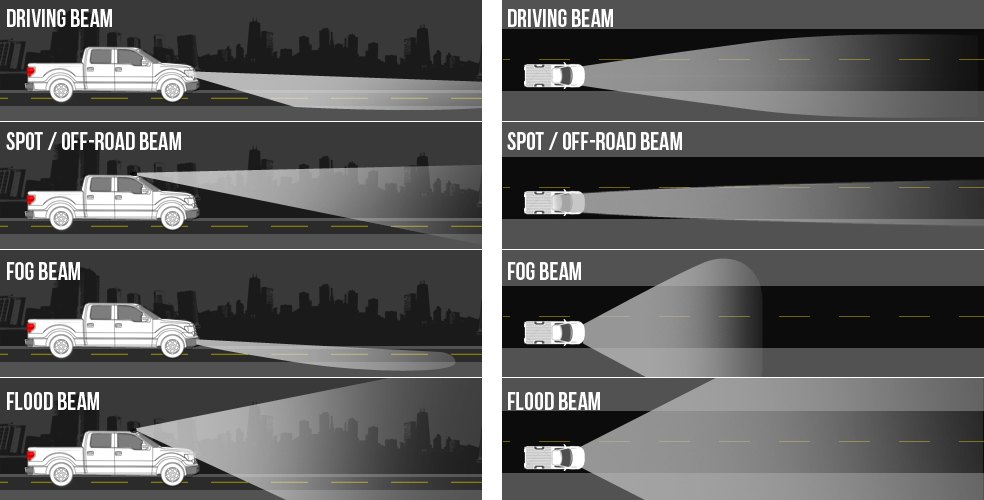
Driving Beams – Driving beams are designed to supplement your high beams by illuminating an area further and wider than your headlights are capable of.
Spread Beams – Spread beams are similar to driving beams, but tend to be brighter, wider, and possibly taller as they are not required to follow specific SAE or ECE safety standards. Spread beam lights are great lights for multi-purpose off-road use.
Spot Beams – Spot beams project a focused beam of light the longest distance of all the light beam patterns. These lights are also referred to as long range lights. These are great when you need to see things in the distance well before you get to them.
Flood Beams – Flood beams don’t focus the light to allow it to project as far as spot beams and instead creates a large wide pattern of light that floods an area with an extremely tall vertical and wide horizontal light pattern. These lights are typically used as work lights and back-up lights to see a broader area at shorter distances.
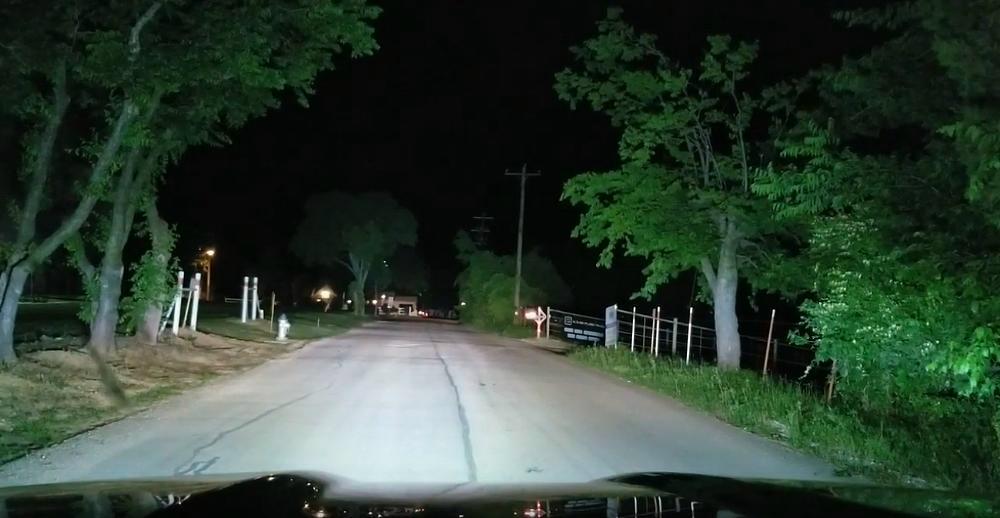
(LED lightbar with a combination of spot beams and flood beams)
Spot / Flood Combinations – Most LED light bars will come with a combination of spot beams and flood beams. These are great because they not only project light down the trail, but light up everything in your field of vision in front of the truck.
Fog Beams – Fog lights are intended to be mounted below the headlights and project a beam pattern which is very wide horizontally and narrow vertically. This pattern lights up a pathway close to the ground but does not light the airborne particles in the line of sight while driving – this increases the visibility in harder to see conditions. Fog beams are very useful in dust, fog, rain and snow.
Degrees of Light
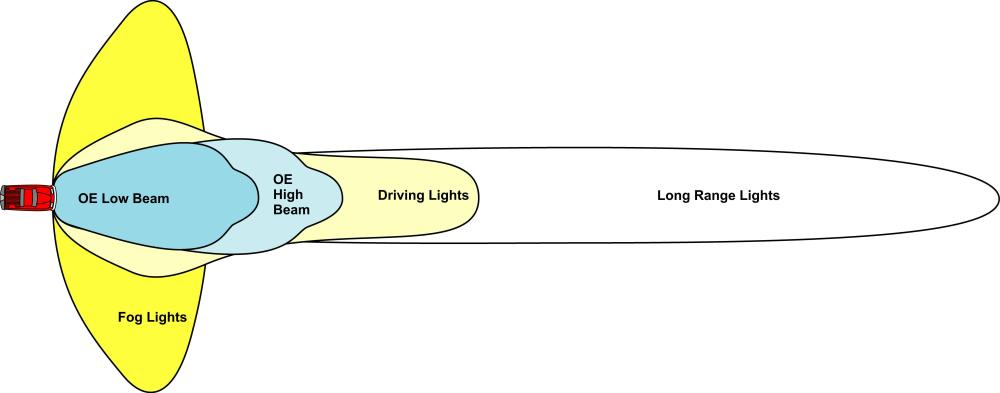
When you start looking at LED lights, you’ll see that in addition to listing how many watts the lights are, some will indicate the degree of the LED beam. For example, you’ll commonly find a light bar listed as a 30-degree spot, and 60-degree flood combo. The diagram below will give you a better idea of what that means.
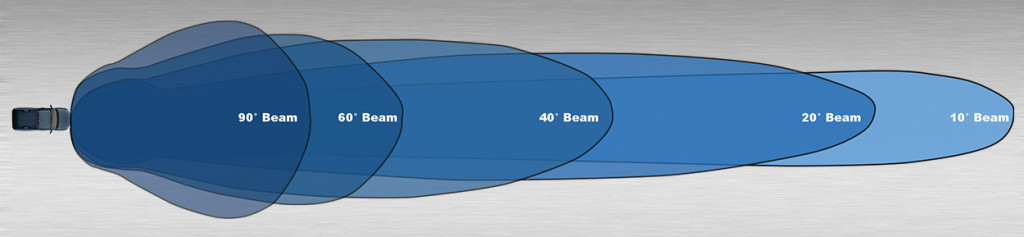
You can see that the 30-degree beam would extend between the 20 degree and 40-degree range in the patterns shown above. If you really wanted a long-range off-road light, you would want something with a 10–20-degree spot.
Halogen Off-Road Lights
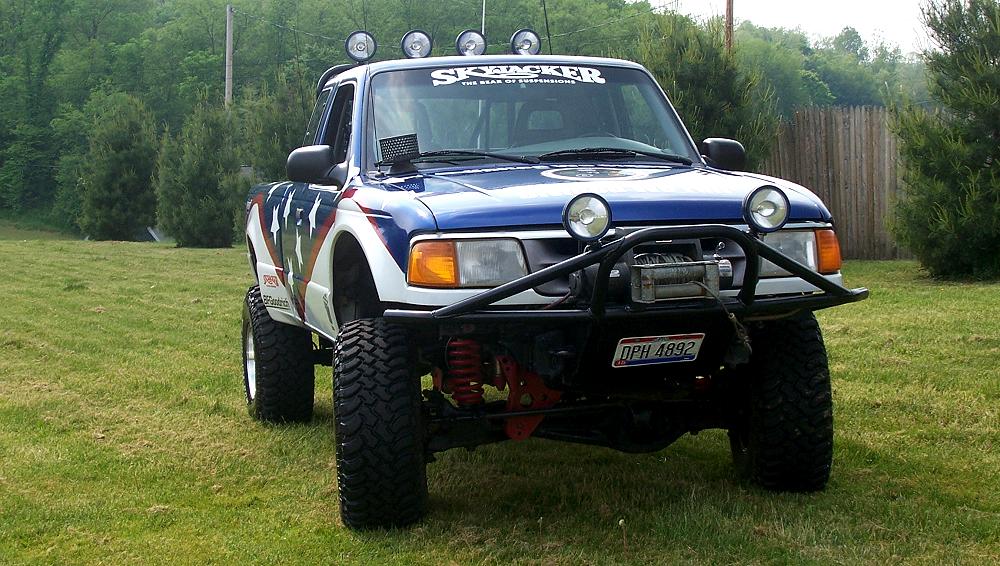
Halogen lights have been around for a really long time and are still the cheapest long-range light you can buy. Most halogen off-road lights use a H3 halogen bulb which is pretty inexpensive to replace.
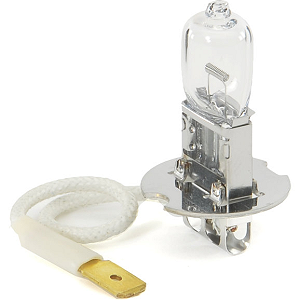
(Typical 100-Watt Halogen Bulb)
A typical 12-volt 100-watt halogen light will draw slightly more than 8 amps. Adding (4) 100-watt lights to your truck could potentially consume more than 33 amps. Combine this with the engine ignition, fuel pump, heater blower motor / AC, stereo, and any other electronics in your truck, and you could be challenging your charging system to keep up. Due to the number of amps they draw, you’ll need to make sure they are properly wired with at least 12-gauge wire and a relay. With a relay, a switch is used to trigger the relay under the hood, which then sends power from the battery to the light. This keeps all those amps from being pulled through the switch and melting it. Also, using wiring smaller than 12-gauge would likely result in the wire melting, and could be a fire hazard. If you have to run the wire a long distance, you’ll want a larger 10-gauge wire.
KC Hilites sells their lights kits with a wiring harness to simplify it for you.
Halogen lights have a yellowish light beam that becomes more evident when you’re using them with LED and HID lighting.
Halogen bulbs put off heat. Accidentally turning one on with a cover over the light could result in the cover being melted.
Cons:
- Amp draw
- Yellowish light beam
HID Off-Road Lights
HID (high-intensity discharge) bulbs have tungsten electrodes instead of a filament. These electrodes are sealed in a quartz tube filled with Xenon gas and various metal salts which are ignited by a ballast (igniter that bumps up the voltage) to produce an extremely intense amount of light. These lights are also known as Xenon lights because of the inert noble gas used inside the bulbs.
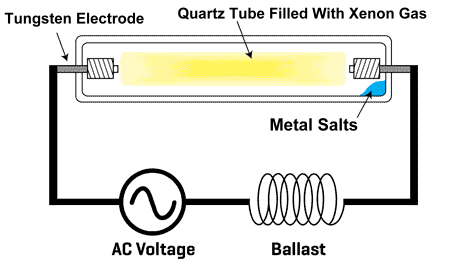
(HID Bulb Diagram)
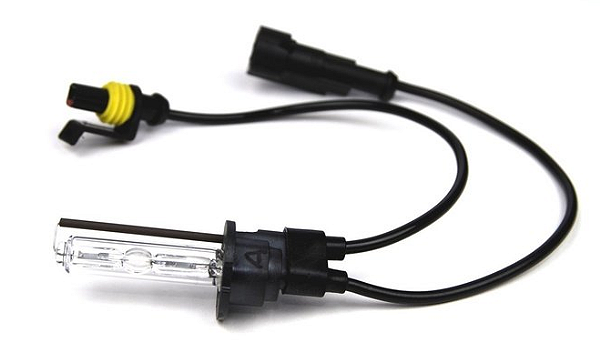
(HID Bulb)
Most modern HID lights have the ballast built into the light housing, but some off-road HID lights have an externally mounted ballast.
HID’s generally draw 60 percent less current than a standard 100-watt halogen light. A typical 12-volt 35-watt HID light draws about 3 amps. You could very easily run two of these lights to a switch in the dash without a relay, although using a relay is still the better and safer option.
HID’s are capable of exceeding 2-3 times the distance to similar wattage Halogens and LEDs. When mounted side by side, a lit 100-watt halogen bulb seems yellow and dim next to an HID. These lights have been available since the 1990’s, but their high cost keep them out of the reach of most off-road enthusiasts.
Perhaps the biggest disadvantage of HIDs is that most do not instantly light up to full power when switched on. It takes a few seconds for them to ignite. The lower cost lights are usually slower to fire than the higher-end HID lights.
Cons:
- Cost
- Do not instantly light up
Warning About Roof Mounted Lighting
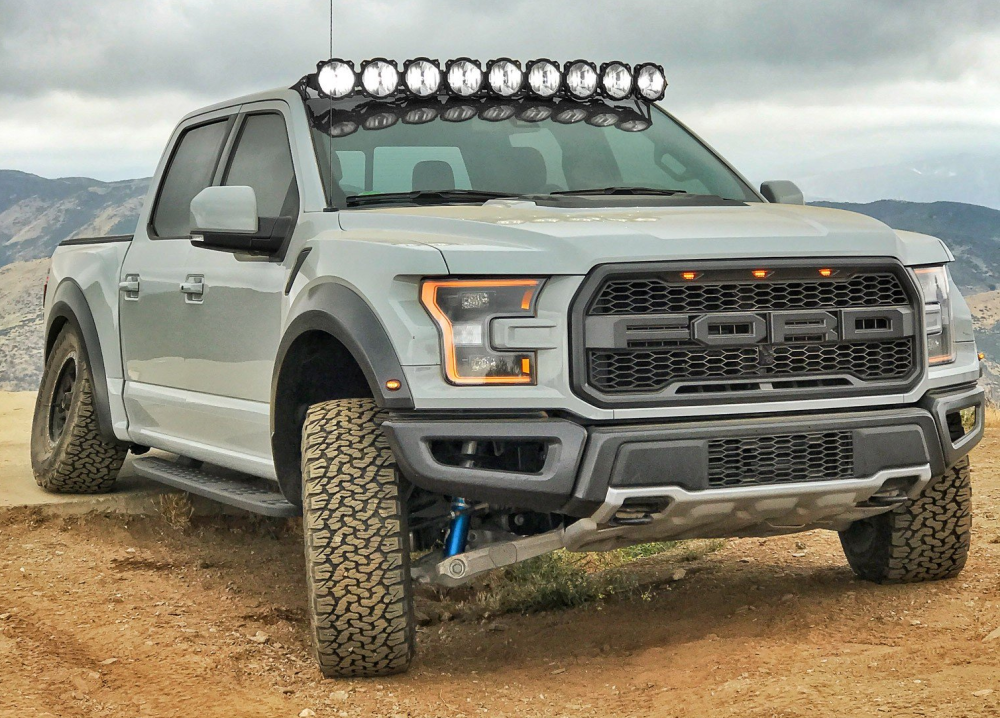
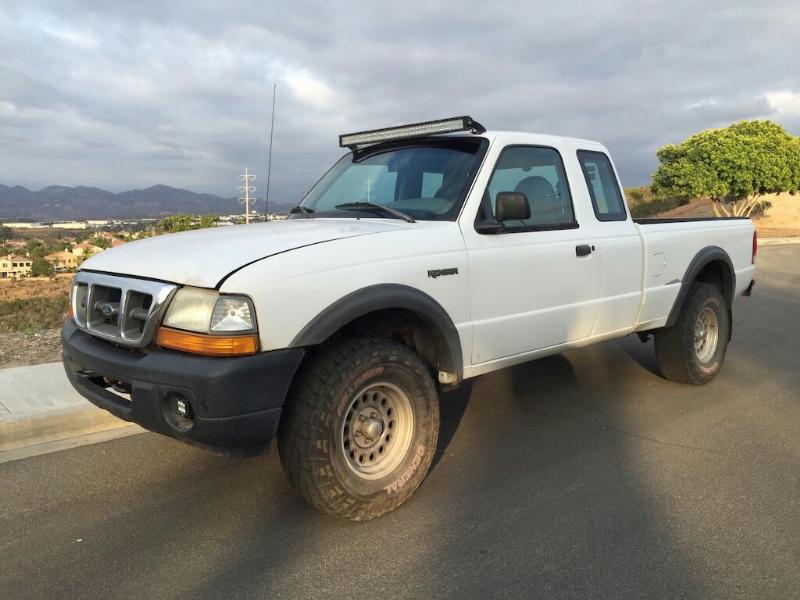
You see a lot of people that mount their LED light bars above their windshield. The LED light will reflect off of the snow and heavy rain that’s in front of your windshield and can get so bad that it makes it difficult to see. It can also reflect off of your hood at night and become very annoying very quickly.
Also, getting the lightbar into the air stream can cause it to whistle, or make a high pitch sound like metal on metal.
I’m not saying that you shouldn’t do it, I’m just making sure that you’re aware of the possibilities negative effects if you do.
LED Off-Road Lights
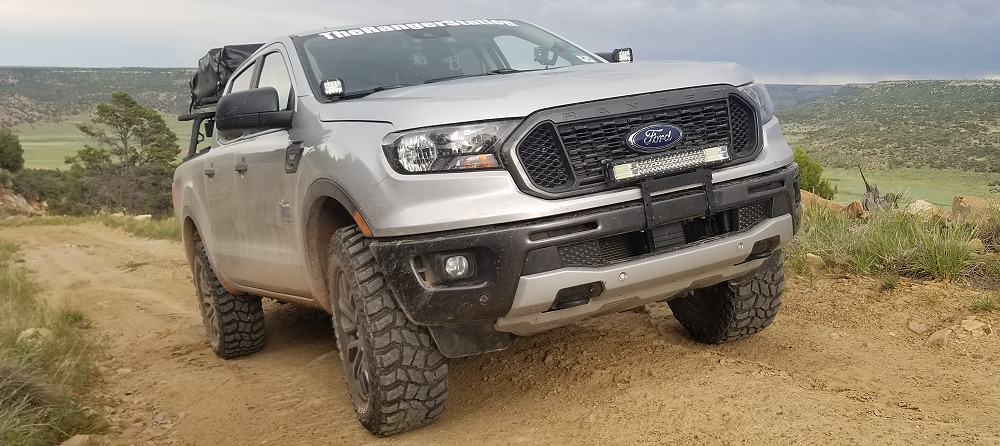
LED (Light-Emitting Diode) lights are a two-lead semiconductor light source. They are illuminated solely by the movement of electrons in a semiconductor material. They do not ignite a gas like halogen and HID lights do. Their compact size, durability, long life, low amp draw, and absolute brightness make them appealing to most off-roaders.

(LED Diode)
Single, Double, or Triple Row Lights:
How far a LED light projects its beam of light depends on the depth and diameter of the reflector the LED sits in.
The majority of LED light bars you find have a double row of LED lights in them. Some companies even offer a triple row of lights. The problem with the triple row of lights is that the reflectors are smaller to allow room for a third row. The smaller reflector won’t project the light as far, so in reality, that triple row bar with more LED lights may not project a light any further than the double row bars do.
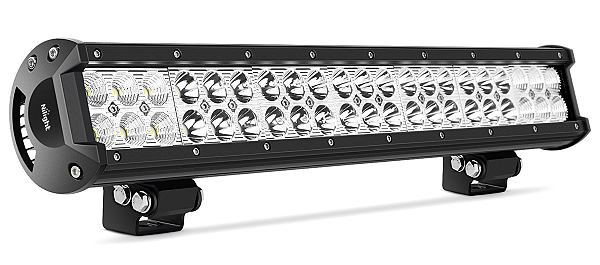
(Double Row LED Light Bar)
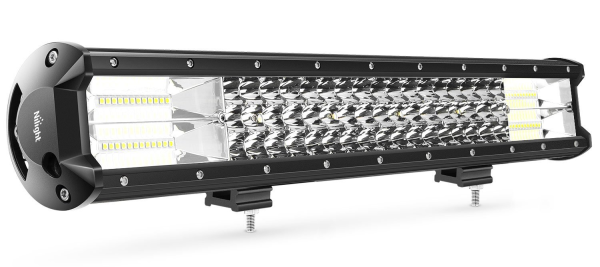
(Triple Row LED Light Bar)
You can also find single row LED light bars. A lot of these are designed to be low profile and not take up much space. Still, if you look at the reflectors in the single row light below, and compare it to the triple row light above, you can see where it has a larger reflector to project the beam of light farther.
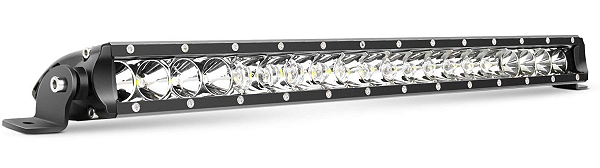
(Single Row LED Light Bar)
By comparison, an off-road race truck using LED lights will have a much larger reflector to really project the light a long way:
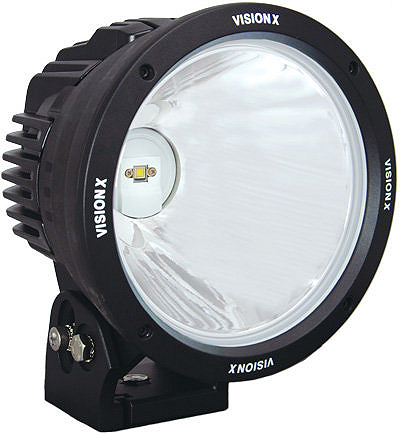
Unfortunately, lights like these are pretty expensive.
Cons:
- If an LED burns out, it can’t simply be replaced like a bulb.
- The large lights are extremely expensive
Measuring Light Output
With halogen lights, light output was typically measured in Watts. In lighting, watts measure energy consumption—not brightness.
Historically, when incandescent bulbs were the only option, wattage was used as a shorthand for light output because more power generally meant more light. With modern energy-efficient technology like LEDs and CFLs, this is no longer the case.
Key Differences
- Watts (W): The amount of electrical power a bulb uses.
- Lumens (lm): The actual measure of visible light output (brightness).
- Efficacy: The efficiency of a bulb, measured in lumens per watt (lm/W).
Comparison Guide (Typical 800 Lumens)
To get the same amount of light (about 800 lumens), different bulb types use vastly different amounts of power:
- Incandescent: ~60 Watts
- Halogen: ~43 Watts
- CFL: ~13–15 Watts
- LED: ~8–10 Watts
How Many Lumens Do You Need?
To really understand how bright an LED light is, you need to know how many lumens it puts out. For reference, a modern halogen high beam headlight bulb puts out about 1,700 lumens. 3,400 lumens for the pair.
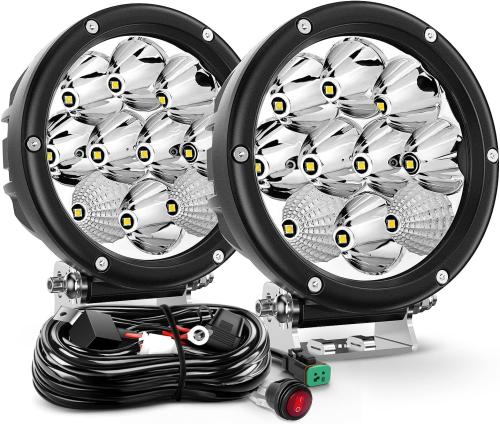
I have a pair of these Nilight 7-Inch Round LED Off-Road Lights on one of my vehicles. Together they put out 6,500 lumens which is almost twice the light as my high beams.
Calculating Lumens (lm) From Watts (W)
Knowing the Lumen output of a light tells you how bright it is. To convert Watts to Lumens, you multiply the wattage by the light’s luminous efficacy (the number of lumens produced per watt).
The standard calculation for light output is:
Lumens = Watts × Luminous Efficacy (lm/W)
Standard LED: ~80-100 lm/W (Example: 50W x 100 lm/W = 5,000 lm)
High-Efficiency LED: 110-150+ lm/W (Example: 50W x 150 lm/W = 7,500 lm)
Halogen Bub: 16-24 lm/W (Example: 50W x 24 lm/W = 1,200 lm)
Incandescent Bulb: ~14-15 lm/W (Example: 50W x 15 lm/W = 750 lm)
NOTE: Lumen calculator available at the bottom of the page.
Related Article
Upgrading 2019+ Headlights To LED
Last Updated:
About The Author
Jim Oaks is the founder of TheRangerStation.com, the longest-running Ford Ranger resource online since 1999. With over 25 years of hands-on experience building and modifying Ford Rangers — including magazine-featured builds like Project Transformer — Jim has become one of the most trusted authorities in the Ford Ranger off-road and enthusiast space.
Since launching TheRangerStation.com, Jim has documented thousands of real-world Ranger builds, technical repairs, drivetrain swaps, suspension modifications, and off-road adventures contributed by owners worldwide. TheRangerStation.com has been referenced in print, video and online by enthusiasts, mechanics, and off-road builders looking for practical, and experience-based information.