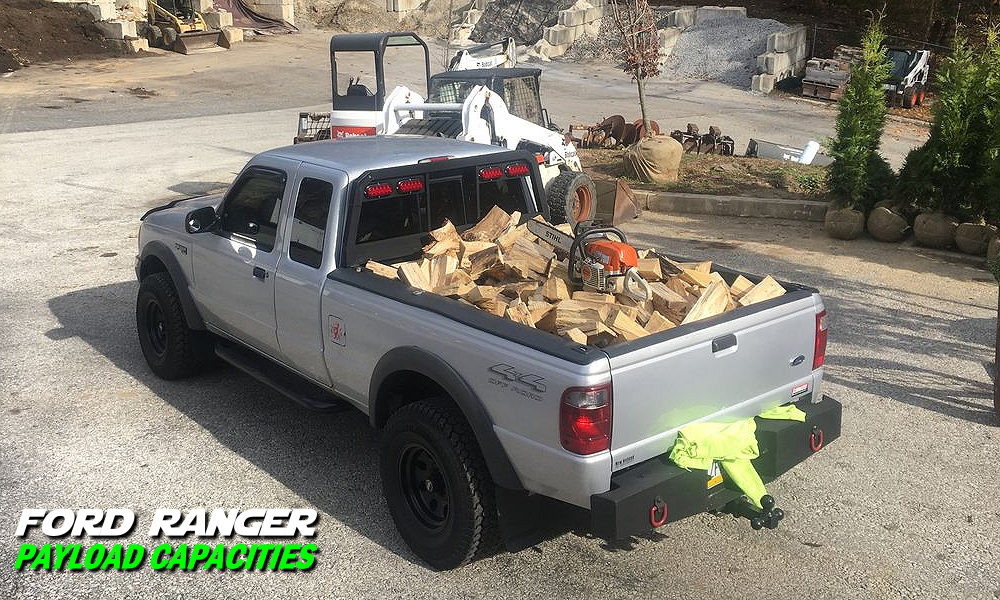
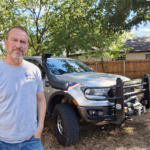
Payload capacity is one of the most misunderstood specifications on a Ford Ranger. While enthusiasts obsess over lift height, tire size, and horsepower, very few stop to consider how much weight their truck was actually designed to carry. Whether you’re building an overland rig, hauling work equipment, or loading up for a weekend trail ride, exceeding your Ranger’s payload rating affects braking, handling, drivetrain longevity, and overall safety. Before bolting on steel bumpers, rooftop tents, drawer systems, and recovery gear “just in case,” it’s critical to understand what your truck can realistically handle — and why those numbers matter.
What Happens If You Exceed Payload Capacity?
Exceeding your Ford Ranger’s rated payload capacity puts stress on systems that were only engineered to operate safely within specific limits. While the truck may still move and drive, overloading can reduce braking performance, affect handling, increase heat in critical components, and accelerate wear. The consequences aren’t always immediate, but repeated overloading can shorten the life of major parts and reduce overall safety.
Overheated brakes and reduced stopping power (brake fade)
Increased stopping distances
Engine and transmission overheating
Premature transmission wear or failure
Sagging or damaged suspension components
Accelerated axle and wheel bearing wear
Reduced steering control and stability
Increased tire wear or blowout risk
Potential legal and liability issues in the event of an accident
Center of Gravity
Center of Gravity is an important consideration when hauling things in your truck. How you load your truck is going to affect its center of gravity which also affects how it handles. For more information check out Center of Gravity
Understanding the Terms
Before diving into the year-by-year numbers, it’s important to understand what those ratings actually mean.
Maximum Payload
Maximum payload is the most weight your Ranger can carry in addition to its own curb weight. This includes passengers, cargo, tools, recovery gear, aftermarket accessories, and any factory options that weren’t part of the base configuration. If you add weight — whether it’s a steel bumper, rooftop tent, winch, or extra fuel — it reduces your available payload. Payload ratings assume the truck is properly equipped from the factory, and every additional pound must be subtracted from that number.
GAWR (Gross Axle Weight Rating)
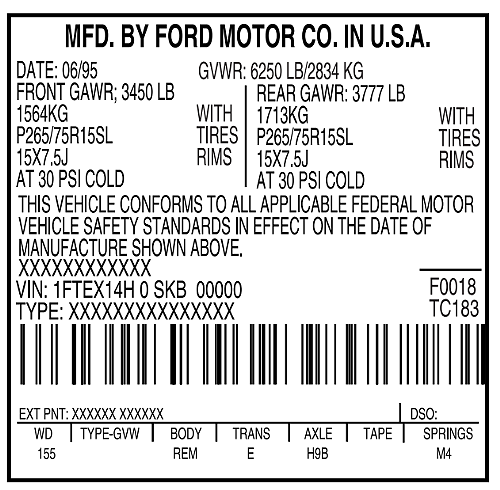
GAWR is the maximum weight a single axle can safely support. Your Ranger has a front GAWR and a rear GAWR, listed on the Safety Compliance Certification Label on the driver’s door or door pillar. Even if your total vehicle weight is within limits, you can still overload one axle — which is common when cargo is concentrated in the bed. The load carried by each axle must never exceed its individual GAWR.
GVWR (Gross Vehicle Weight Rating)
GVWR is the maximum allowable weight of the entire vehicle when fully loaded. That includes the truck itself, passengers, cargo, fuel, accessories — everything. This number is also listed on the Safety Compliance Certification Label. Exceeding GVWR means the truck is operating beyond its engineered limits for suspension, braking, frame strength, cooling, and drivetrain components.
In simple terms: GVWR is the total limit, GAWR protects each axle individually, and payload is the remaining capacity available for everything you add to the truck.
Safety Compliance Certification Label
The Safety Compliance Certification label is on the driver’s door jamb and lists the trucks Gross Vehicle Weight Rating (GVWR) and the front and rear Gross Axle Weight Ratings. see the example below. You can find scales at truck stops, landfills, and sand and gravel companies.
Tire and Loading Sticker
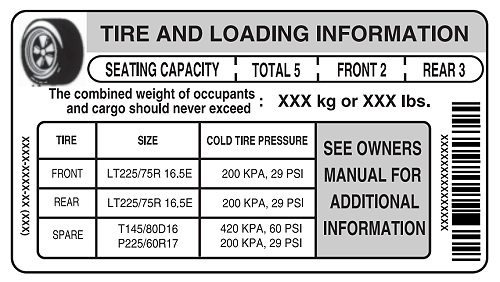
Beginning in 2005, Ford added a “Tire and Loading Information” label to the driver’s door jamb that clearly lists a truck’s maximum combined weight of occupants and cargo. For 2004 and older Rangers, however, that number isn’t spelled out so conveniently. Owners are left to interpret GVWR and axle ratings on their own — or guess.
1993-2023 Ford Ranger Payload Charts
The charts below provide the factory maximum payload ratings for each model year and configuration. From 1983-2011 the Ford Ranger had an optional payload package with an increased payload capacity generally referred to as ‘Payload Package 2’. From 1984-1989 there was also an optional ‘Camper Package’.
Payload Package 2: Payload Package 2 included increased rear spring rates and heavy-duty gas-charged shocks. It also included 10-inch brake drums. If you have a standard cab Ford Ranger with a 7.5-Inch rear axle and 10-inch drum brakes, it has a payload package.
Camper Package: A special Camper Package prepares the Ranger for aftermarket camper applications. It includes front and rear stabilizer bars, heavy-duty shock absorbers, the optional 1,760/1,770-lb payload package, heavy-duty springs, P205/75R14XL BSW highway tires, and selected minimum axle ratio.
These payloads are broken down by year. If you have a Ford Ranger and the GVWR for your truck matches the GVWR and configuration under ‘Payload Package #2 Identification (GVWR)’ then your Ranger has the Payload Package.
WARNING: The appropriate loading capacity of your vehicle can be limited either by volume capacity (how much space is available) or by payload capacity (how much weight the vehicle should carry). Once you have reached the maximum payload of your vehicle, do not add more cargo, even if there is space available. Overloading or improperly loading your vehicle can contribute to loss of vehicle control and vehicle rollover
2019-2023 Ford Ranger Payload Ratings
Base Payloads
Configuration
Drivetrain
Payload (lbs)
SuperCab
4×2
1,860
SuperCab
4×4
1,650
SuperCrew
4×2
1,770
SuperCrew
4×4
1,560
Notes:
2019-2023 Ford Ranger models do not offer a separate Payload Package; payloads shown are for properly equipped vehicles with standard equipment.
2011 Ford Ranger Payload Ratings
Base & Optional Payloads
Configuration
Drivetrain
Base (lbs)
Pkg #2 (lbs)
Regular Cab SWB
4×2
1,130
—
SuperCab SWB
4×2
1,420
—
SuperCab SWB
4×2
1,130
1,560 #2
SuperCab SWB
4×4
1,370
1,500 #2
Payload Package #2 Identification (GVWR)
Configuration
GVWR (lbs)
SuperCab 4×2 SWB
5,100
SuperCab 4×4 SWB
5,280
Notes:
#2 = Payload Package #2, includes upgraded rear springs and gas-charged shocks.
“—” in a table cell indicates the payload or package was not available for that configuration.
2010 Ford Ranger Payload Ratings
Base & Optional Payloads
Configuration
Drivetrain
Base (lbs)
Pkg #2 (lbs)
Regular Cab SWB
4×2
1,160
—
SuperCab SWB
4×2
1,400
—
SuperCab SWB
4×2
1,100
1,430
SuperCab SWB
4×4
1,270
1,400
Payload Package #2 Identification (GVWR)
Configuration
GVWR (lbs)
SuperCab 4×2 SWB
5,100
SuperCab 4×4 SWB
5,280
Notes:
#2 = Payload Package #2, includes upgraded rear springs and gas-charged shocks.
“—” in a table cell indicates the payload or package was not available for that configuration.
2009 Ford Ranger Payload Ratings
Base & Optional Payloads
Configuration
Drivetrain
Base (lbs)
Pkg #2 (lbs)
Regular Cab SWB
4×2
1,180
—
Regular Cab LWB
4×2
1,160
—
SuperCab SWB
4×2
1,260
—
SuperCab SWB
4×2
1,340
1,600
SuperCab SWB
4×4
1,380
1,520
Payload Package #2 Identification (GVWR)
Configuration
GVWR (lbs)
SuperCab 4×2 SWB
5,100
SuperCab 4×4 SWB
5,280
Notes:
#2 = Payload Package #2, includes upgraded rear springs and gas-charged shocks.
“—” in a table cell indicates the payload or package was not available for that configuration.
2008 Ford Ranger Payload Ratings
Base & Optional Payloads
Configuration
Drivetrain
Base (lbs)
Pkg #2 (lbs)
Regular Cab SWB
4×2
1,260
1,620
Regular Cab SWB
4×2 Sport
1,540
—
Regular Cab LWB
4×2
1,260
1,620
Regular Cab SWB
4×4
1,260
1,500
Regular Cab LWB
4×4
1,260
1,500
SuperCab SWB
4×2
1,260
1,660
SuperCab SWB
4×4
1,260
1,560
Payload Package #2 Identification (GVWR)
Configuration
Drivetrain
GVWR (lbs)
Regular Cab SWB
4×2
4,700
Regular Cab SWB Sport
4×2
4,840
Regular Cab LWB
4×2
4,720
Regular Cab SWB
4×4
5,000
Regular Cab LWB
4×4
5,040
SuperCab SWB
4×2
5,000
SuperCab SWB
4×4
5,000
Notes:
Payload Package #2 was optional on 4×2 SWB and LWB; standard on 4×4 XLT and Sport models.
“—” in a table cell indicates the payload or package was not available for that configuration.
2004–2007 Ford Ranger Payload Ratings
Ford brochures for 2004–2007 primarily list maximum loaded trailer weight rather than payload. Based on available information and comparison with 2001–2003 Rangers, typical max payload for properly equipped vehicles (Payload Package #2) is estimated around 1,540–1,560 lbs. Payload Package #2 is available on 4×2 and 4×4 models (not available on SPORT 4×2) and includes increased rear spring rates and heavy-duty gas-charged shocks on 4×2 or premium gas-charged shocks on 4×4.
Year
Configuration
Drivetrain
Estimated Max Payload (lbs)
2004–2007
Regular Cab
4×2
1,560
2004–2007
Regular Cab
4×4
1,540
2004–2007
SuperCab
4×2
1,560
2004–2007
SuperCab
4×4
1,540
Notes:
Estimated payload values based on comparison with 2001–2003 Ford Rangers and Payload Package #2 availability.
Actual payload depends on equipment, options, and passengers; always consult your Ford Dealer for exact capacities.
Payload Package #2 includes upgraded rear spring rates and heavy-duty shocks.
2001–2003 Ford Ranger Payload Ratings
2001 Ford Ranger
Configuration
Drivetrain
Max Payload (lbs)
Regular Cab
4×2
1,640
Regular Cab
4×4
1,540
SuperCab
4×2
1,580
SuperCab
4×4
1,500
2002 Ford Ranger
Configuration
Drivetrain
Max Payload (lbs)
Regular Cab
4×2
1,640
Regular Cab
4×4
1,540
SuperCab
4×2
1,560
SuperCab
4×4
1,580
2003 Ford Ranger
Configuration
Drivetrain
Max Payload (lbs)
Regular Cab
4×2
1,640
Regular Cab
4×4
1,540
SuperCab
4×2
1,660
SuperCab
4×4
1,560
Notes:
Maximum capabilities shown are for properly equipped vehicles (Payload Package #2) with required equipment and a 150-lb driver. Weight of additional options, passengers, and cargo must be deducted.
Payload Package #2 includes increased rear spring rates and heavy-duty gas-charged shocks on 4×2, or increased rear spring rates and premium gas-charged shocks on 4×4.
For additional information, see your Ford Dealer.
2000 Ford Ranger Payload Ratings
Base & Optional Payloads
Configuration
Drivetrain
Base (lbs)
Pkg #2 (lbs)
Regular Cab
4×2
1,260
1,660
Regular Cab
4×4
1,260
1,540
SuperCab
4×2
1,260
1,620
SuperCab
4×4
1,260
1,540
Payload Package #2 Identification (GVWR)
Configuration
GVWR (lbs)
Regular Cab 4×2
4,800
Regular Cab 4×4
5,020
SuperCab 4×2
4,960
SuperCab 4×4
5,140
Notes:
Payload Package #2 applies to applicable 4×2 and 4×4 trims.
“—” in a table cell indicates the payload or package was not available for that configuration.
1999 Ford Ranger Payload Ratings
Base & Optional Payloads
Configuration
Drivetrain
Base (lbs)
Pkg #2 (lbs)
Regular Cab SWB
4×2
1,260
1,660
Regular Cab LWB
4×2
1,260
1,660
Regular Cab SWB
4×4
1,260
1,550
Regular Cab LWB
4×4
1,260
1,540
SuperCab
4×2
1,260
1,620
SuperCab
4×4
1,260
1,520
Payload Package #2 Identification (GVWR)
Configuration
GVWR (lbs)
Regular Cab 4×2 SWB
4,740
Regular Cab 4×2 LWB
4,800
Regular Cab 4×4 SWB
4,980
Regular Cab 4×4 LWB
5,020
SuperCab 4×2
4,900
SuperCab 4×4
5,120
Notes:
Payload Package #2 applies to applicable 4×2 and 4×4 trims.
“—” in a table cell indicates the payload or package was not available for that configuration.
1998 Ford Ranger Payload Ratings
Base & Optional Payloads
Configuration
Drivetrain
Base (lbs)
Pkg #2 (lbs)
Regular Cab SWB
4×2
1,260
1,660
Regular Cab LWB
4×2
1,260
1,660
Regular Cab SWB
4×4
1,260
1,500
Regular Cab LWB
4×4
1,260
1,500
SuperCab
4×2
1,260
1,620
SuperCab
4×4
1,260
1,500
Payload Package #2 Identification (GVWR)
Configuration
GVWR (lbs)
Regular Cab 4×2 SWB
4,740
Regular Cab 4×2 LWB
4,800
Regular Cab 4×4 SWB
4,980
Regular Cab 4×4 LWB
5,020
SuperCab 4×2
4,900
SuperCab 4×4
5,120
Notes:
Payload Package #2 applies to applicable 4×2 and 4×4 trims.
“—” in a table cell indicates the payload or package was not available for that configuration.
1997 Ford Ranger Payload Ratings
Base & Optional Payloads
Configuration
Drivetrain
Base (lbs)
Pkg #2 (lbs)
Regular Cab SWB
4×2
1,250
1,650
Regular Cab LWB
4×2
1,250
1,650
Regular Cab SWB
4×4
1,250
1,550
Regular Cab LWB
4×4
1,250
1,550
SuperCab
4×2
1,250
1,550
SuperCab
4×4
1,250
1,450
Payload Package #2 Identification (GVWR)
Configuration
GVWR (lbs)
Regular Cab 4×2 SWB
4,680
Regular Cab 4×2 LWB
4,700
Regular Cab 4×4 SWB
4,960
Regular Cab 4×4 LWB
4,980
SuperCab 4×2
4,880
SuperCab 4×4
5,100
Notes:
Payload Package #2 was standard on 4×4 XLT and STX models.
“—” in a table cell indicates the payload or package was not available for that configuration.
1996 Ford Ranger Payload Ratings
Base & Optional Payloads
Configuration
Drivetrain
Base (lbs)
Pkg #2 (lbs)
Regular Cab SWB
4×2
1,250
1,650
Regular Cab LWB
4×2
1,250
1,650
Regular Cab SWB
4×4
1,250
1,550
Regular Cab LWB
4×4
1,250
1,550
SuperCab
4×2
1,200
1,550
SuperCab
4×4
1,250
1,450
Payload Package #2 Identification (GVWR)
Configuration
GVWR (lbs)
Regular Cab 4×2 SWB
4,680
Regular Cab 4×2 LWB
4,700
Regular Cab 4×4 SWB
4,960
Regular Cab 4×4 LWB
4,980
SuperCab 4×2
4,880
SuperCab 4×4
5,100
Notes:
Payload Package #2 was standard on 4×4 XLT and STX models.
“—” in a table cell indicates the payload or package was not available for that configuration.
1995 Ford Ranger Payload Ratings
Base & Optional Payloads
Configuration
Drivetrain
Base (lbs)
Pkg #2 (lbs)
Regular Cab SWB
4×2
1,250
1,650
Regular Cab LWB
4×2
1,250
1,650
Regular Cab SWB
4×4
1,250
1,550
Regular Cab LWB
4×4
1,250
1,550
SuperCab
4×2
1,200
1,550
SuperCab
4×4
1,250
1,450
Payload Package #2 Identification (GVWR)
Configuration
GVWR (lbs)
Regular Cab 4×2 SWB
4,680
Regular Cab 4×2 LWB
4,700
Regular Cab 4×4 SWB
4,960
Regular Cab 4×4 LWB
5,000
SuperCab 4×2
4,880
SuperCab 4×4
5,100
Notes:
Payload Package #2 was standard on STX 4×4 models.
“—” in a table cell indicates the payload or package was not available for that configuration.
1994 Ford Ranger Payload Ratings
Base & Optional Payloads
Configuration
Drivetrain
Base (lbs)
Pkg #2 (lbs)
Splash
—
1,050
—
Splash
4×4
1,250
1,500
Regular Cab SWB
4×2
1,250
1,650
Regular Cab LWB
4×2
1,250
1,650
Regular Cab SWB
4×4
1,250
1,550
Regular Cab LWB
4×4
1,250
1,550
SuperCab
4×2
1,200
1,550
SuperCab
4×4
1,250
1,450
Payload Package #2 Identification (GVWR)
Configuration
GVWR (lbs)
Regular Cab 4×2 SWB
4,660
Regular Cab 4×2 LWB
4,700
Regular Cab 4×4 SWB
4,580
Regular Cab 4×4 LWB
4,880
Regular Cab Splash 4×4
4,840
SuperCab 4×2
4,860
SuperCab 4×4
5,060
SuperCab Splash 4×4
5,080
Notes:
“—” in a table cell indicates the payload or package was not available for that configuration.
Payload Package #2 applies to applicable 4×2 and 4×4 trims as listed above.
Splash trim is a special edition and has its own payload limits distinct from Regular Cab and SuperCab.
1993 Ford Ranger Payload Ratings
Base & Optional Payloads
Configuration
Drivetrain
Base (lbs)
Pkg #2 (lbs)
Regular Cab SWB
4×2
1,250
1,650
Regular Cab LWB
4×2
1,250
1,650
Regular Cab SWB
4×4
1,250
1,550
Regular Cab LWB
4×4
1,250
1,550
SuperCab
4×2
1,240
1,550
SuperCab
4×4
1,250
1,500
Payload Package #2 Identification (GVWR)
Configuration
GVWR (lbs)
Regular Cab 4×2 SWB
4,660
Regular Cab 4×2 LWB
4,700
Regular Cab 4×4 SWB
4,840
Regular Cab 4×4 LWB
4,880
SuperCab 4×2
4,820
SuperCab 4×4
5,040
Notes:
All Base and Payload Package #2 numbers are shown. “—” would indicate an unavailable package (not applicable for 1993).
1992 Ford Ranger Payload Ratings
Base & Optional Payloads
Configuration
Drivetrain
Base (lbs)
Pkg #2 (lbs)
Regular Cab SWB
4×2
1,200
1,620
Regular Cab LWB
4×2
1,200
1,620
Regular Cab SWB
4×4
1,200
1,400
Regular Cab LWB
4×4
—
1,400
SuperCab
4×2
1,260
—
SuperCab
4×4
1,300
—
Payload Package #2 Identification (GVWR)
Configuration
GVWR (lbs)
Regular Cab 4×2 SWB
4,580
Regular Cab 4×2 LWB
4,580
Regular Cab 4×4 SWB
4,680
Regular Cab 4×4 LWB
4,720
Notes:
“—” in a table cell indicates the payload or package was not available for that configuration.
1991 Ford Ranger Payload Ratings
Base & Optional Payloads
Configuration
Drivetrain
Base (lbs)
Pkg #2 (lbs)
Regular Cab SWB
4×2
1,200
1,700
Regular Cab LWB
4×2
1,200
1,620
Regular Cab SWB
4×4
1,200
1,400
Regular Cab LWB
4×4
1,200
1,400
SuperCab
4×2
1,260
—
SuperCab
4×4
1,300
—
Payload Package #2 Identification (GVWR)
Configuration
GVWR (lbs)
Regular Cab 4×2 SWB
4,580
Regular Cab 4×2 LWB
4,580
Regular Cab 4×4 SWB
4,640
Regular Cab 4×4 LWB
4,680
Notes:
Payload Package #2 was included with Standard Cab 4×4 Sport, Custom, XLT, and STX trim levels.
“—” in a table cell indicates the package was not available for that configuration.
1990 Ford Ranger Payload Ratings
Base & Optional Payloads
Configuration
Drivetrain
Base (lbs)
Pkg #2 (lbs)
Regular Cab SWB
4×2
1,200
1,700
Regular Cab LWB
4×2
1,200
1,620
Regular Cab SWB
4×4
1,200
1,400
Regular Cab LWB
4×4
1,200
1,400
SuperCab
4×2
1,260
—
SuperCab
4×4
1,300
—
Payload Package #2 Identification (GVWR)
Configuration
GVWR (lbs)
Regular Cab 4×2 SWB
4,580
Regular Cab 4×2 LWB
4,580
Regular Cab 4×4 SWB
4,600
Regular Cab 4×4 LWB
4,640
Notes:
Payload Package #2 was included with Standard Cab 4×4 Custom, XLT, and STX trim levels.
“—” in a table cell indicates the package was not available for that configuration.
1989 Ford Ranger Payload Ratings
Base & Payload Package #2 Ratings
Configuration
Drivetrain
Base Payload (lbs)
Payload Package #2 (lbs)
Regular Cab SWB
4×2
1,200
1,700
Regular Cab LWB
4×2
1,200
1,620
Regular Cab SWB
4×4
1,400
—
Regular Cab LWB
4×4
1,360
—
SuperCab
4×2
1,300
—
SuperCab
4×4
1,300
—
Payload Package #2 Identification (GVWR)
Configuration
GVWR (lbs)
Regular Cab 4×2 SWB
4,580
Regular Cab 4×2 LWB
4,580
Notes:
Payload Package #2 was available only on Regular Cab 4×2 models in 1989.
If a configuration shows “—” under Payload Package #2, that configuration did not offer the package.
Payload Package #2 was included with the optional Camper Package.
Camper Package included front and rear stabilizer bars, heavy-duty gas-pressurized shocks, heavy-duty front springs, Regular Cab Payload Package #2, and P215/70Rx14SL BSW all-season tires.
1988 Ford Ranger Payload Ratings
Base & Payload Package #2 Ratings
Configuration
Drivetrain
Base Payload (lbs)
Payload Package #2 (lbs)
Regular Cab SWB
4×2
1,210
1,605
Regular Cab LWB
4×2
1,210
1,625
Regular Cab SWB
4×4
1,205
1,600
Regular Cab LWB
4×4
1,210
1,590
SuperCab
4×2
1,310
1,505
SuperCab
4×4
1,300
1,610
Payload Package #2 Identification (GVWR)
Configuration
GVWR (lbs)
Regular Cab 4×2 SWB
4,320
Regular Cab 4×2 LWB
4,340
Regular Cab 4×4 SWB
4,540
Regular Cab 4×4 LWB
4,580
SuperCab 4×2
4,540
SuperCab 4×4
4,900
Notes:
Payload Package #2 was included with the optional Camper Package on Regular Cab 2WD SWB/LWB models.
Camper Package included front and rear stabilizer bars, heavy-duty gas-pressurized shocks, heavy-duty front springs, and P215/70Rx14SL BSW all-season tires.
1,590 lb payload was available on Regular Cab LWB 4×4 models equipped with the optional heavy-duty front suspension.
1987 Ford Ranger Payload Ratings
Base & Optional Payloads
Configuration
Drivetrain
Base (lbs)
Pkg #2 (lbs)
Camper (Pkg #3) (lbs)
Regular Cab SWB
4×2
1,220
1,630
1,780
Regular Cab LWB
4×2
1,210
1,625
—
Regular Cab SWB
4×4
1,205
1,600
—
Regular Cab LWB
4×4
1,210
1,590
—
SuperCab
4×2
1,330
1,625
—
SuperCab
4×4
1,340
1,615
—
Payload Package #2 Identification (GVWR)
Configuration
GVWR (lbs)
Regular Cab 4×2 SWB
4,260
Regular Cab 4×2 LWB
4,300
Regular Cab 4×4 SWB
4,480
Regular Cab 4×4 LWB
4,500
SuperCab 4×2
4,620
SuperCab 4×4
4,800
Camper Package / Payload Package #3 GVWR
Configuration
GVWR (lbs)
Regular Cab 4×2 SWB
4,460
Regular Cab 4×2 LWB
4,500
Notes:
Payload Package #2 was available on Custom and XLT Regular Cab 4×2 SWB/LWB, 4×4 SWB/LWB, and SuperCab 4×4 SWB/LWB.
Payload Package #3 (Camper Package) was available only on 2WD Regular Cab SWB/LWB models and includes: front and rear stabilizer bars, heavy-duty gas-pressurized shocks, heavy-duty front springs, and P215/70Rx14SL BSW all-season tires.
1,590 lb payload was available on Regular Cab LWB 4×4 with optional heavy-duty front suspension only.
“—” in a table cell indicates the package was not available for that configuration.
1986 Ford Ranger Payload Ratings
Base & Optional Payloads
Configuration
Drivetrain
Base (lbs)
Pkg #2 (lbs)
Camper (Pkg #3) (lbs)
Regular Cab SWB
4×2
1,220
1,610
1,760
Regular Cab LWB
4×2
1,220
1,610
1,760
Regular Cab SWB
4×4
1,225
1,635
—
Regular Cab LWB
4×4
1,230
1,620
—
SuperCab
4×2
1,365
1,600
—
SuperCab
4×4
1,215
1,625
—
Payload Package #2 Identification (GVWR)
Configuration
GVWR (lbs)
Regular Cab 4×2 SWB
4,260
Regular Cab 4×2 LWB
4,300
Regular Cab 4×4 SWB
4,480
Regular Cab 4×4 LWB
4,500
SuperCab 4×2
4,480
SuperCab 4×4
4,740
Camper Package / Payload Package #3 GVWR
Configuration
GVWR (lbs)
Regular Cab 4×2 SWB
4,420
Regular Cab 4×2 LWB
4,460
Notes:
Payload Package #3 (Camper Package) was available only on 2WD Regular Cab SWB/LWB models and includes front and rear stabilizer bars, heavy-duty gas-pressurized shocks, heavy-duty front springs, 1,760-lb payload package, P205/75R14SL BSW all-season steel-belted tires, and selected minimum axle ratio.
A similar Camper Package was also available for the Regular Cab 4×4 model.
“—” in a table cell indicates the package was not available for that configuration.
For further information regarding recommended equipment for camper applications, refer to the 1986 Ford Recreation Vehicles catalog from your Ford Dealer.
1985 Ford Ranger Payload Ratings
Base & Optional Payloads
Configuration
Drivetrain
Base (lbs)
Pkg #2 (lbs)
Camper (Pkg #3) (lbs)
Regular Cab SWB
4×2
1,215
1,605
1,755
Regular Cab LWB
4×2
1,200
1,615
1,765
Regular Cab SWB
4×4
1,215
1,625
—
Regular Cab LWB
4×4
1,220
1,610
—
Payload Package #2 Identification (GVWR)
Configuration
GVWR (lbs)
Regular Cab 4×2 SWB
4,240
Regular Cab 4×2 LWB
4,280
Regular Cab 4×4 SWB
4,440
Regular Cab 4×4 LWB
4,480
Camper Package / Payload Package #3 GVWR
Configuration
GVWR (lbs)
Regular Cab 4×2 SWB
4,400
Regular Cab 4×2 LWB
4,440
Notes:
A special Camper Package prepares the Ranger for aftermarket camper applications. It includes front and rear stabilizer bars, heavy-duty shock absorbers, the optional 1,755/1,765-lb payload package, heavy-duty springs, P205/75R14SL BSW all-season tires, and selected minimum axle ratio. Content varies slightly depending on engine and transmission choice.
A similar package is offered for 4×4 models. Consult the 1985 Ford Recreation Vehicles catalog for details on required or recommended equipment for trailer towing or camper applications.
Heavy-duty front suspension (4×4 models) with 2,750-lb GAWR includes heavy-duty front springs with air bag, heavy-duty frame, heavy-duty front and rear shock absorbers, auxiliary transmission oil cooler with automatic overdrive, 1,600-lb payload package, 3.45 axle with 2.8L engine, and 5-speed transmission on long-wheelbase models.
“—” in a table cell indicates the package was not available for that configuration.
1984 Ford Ranger Payload Ratings
Base & Optional Payloads
Configuration
Drivetrain
Base (lbs)
Pkg #2 (lbs)
Camper (Pkg #3) (lbs)
Regular Cab SWB
4×2
1,235
1,610
1,760
Regular Cab LWB
4×2
1,220
1,620
1,770
Regular Cab SWB
4×4
1,230
1,620
—
Regular Cab LWB
4×4
1,210
1,620
—
Payload Package #2 Identification (GVWR)
Configuration
GVWR (lbs)
Regular Cab 4×2 SWB
4,220
Regular Cab 4×2 LWB
4,260
Regular Cab 4×4 SWB
4,420
Regular Cab 4×4 LWB
4,480
Camper Package / Payload Package #3 GVWR
Configuration
GVWR (lbs)
Regular Cab 4×2 SWB
4,380
Regular Cab 4×2 LWB
4,420
Notes:
A special Camper Package prepares the Ranger for aftermarket camper applications. It includes front and rear stabilizer bars, heavy-duty shock absorbers, the optional 1,760/1,770-lb payload package, heavy-duty springs, P205/75R14XL BSW highway tires, and selected minimum axle ratio.
Content varies slightly depending on engine and transmission choice. For camper application, the 2.3L I-4 engine is the required minimum. Heavy-duty battery, automatic transmission, super engine cooling, and low-mount western swingaway mirrors are recommended.
A similar package is offered for 4×4 models. Consult the 1984 Ford Recreation Vehicles catalog or your Ford Dealer for details on required or recommended equipment for trailer towing or camper applications.
“—” in a table cell indicates the package was not available for that configuration.
1983 Ford Ranger Payload Ratings
Base & Optional Payloads
Configuration
Drivetrain
Base (lbs)
Pkg #2 (lbs)
SWB
4×2
1,210
1,620
LWB
4×2
1,200
1,605
Payload Package #2 Identification (GVWR)
Configuration
GVWR (lbs)
Regular Cab SWB
4,200
Regular Cab LWB
4,220
Notes:
Payload Package #2 includes power brakes, heavy-duty rear springs, and a 2,700-lb capacity rear axle.
“—” in a table cell would indicate the package was not available for that configuration (not applicable for 1983).
Jim Oaks is the founder of TheRangerStation.com, the longest-running Ford Ranger resource online since 1999. With over 25 years of hands-on experience building and modifying Ford Rangers — including magazine-featured builds like Project Transformer — Jim has become one of the most trusted authorities in the Ford Ranger off-road and enthusiast space.
Since launching TheRangerStation.com, Jim has documented thousands of real-world Ranger builds, technical repairs, drivetrain swaps, suspension modifications, and off-road adventures contributed by owners worldwide. TheRangerStation.com has been referenced in print, video and online by enthusiasts, mechanics, and off-road builders looking for practical, and experience-based information.