
Introduction
For decades people have been converting the 1983-1985 Ford Ranger 2.8L and 1984-1985 Ford Bronco II 2.8L from a TFI ignition to a Duraspark ignition. This involved removing the TFI distributor (and attached ignition module) and feedback carburetor and replacing them with a Duraspark distributor for a 1975-1979 Ford Mustang II / Pinto, Duraspark ignition module, ignition coil, and a standard 350cfm 2-barrel carburetor.
The Problem
The problem is that the 1975-1979 Duraspark Distributors are hard to find and have been unavailable from the aftermarket.
The Solution
The solution and easier conversion is to purchase a Powerspark distributor for the Ford 2.8L V6 that has an ignition module built into it.
Ford Cologne V6 Bosch Type Distributor from Powerspark
Wiring The Distributor
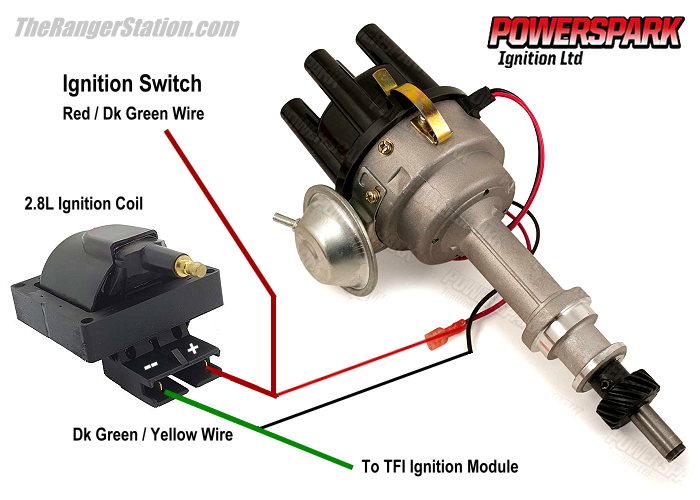
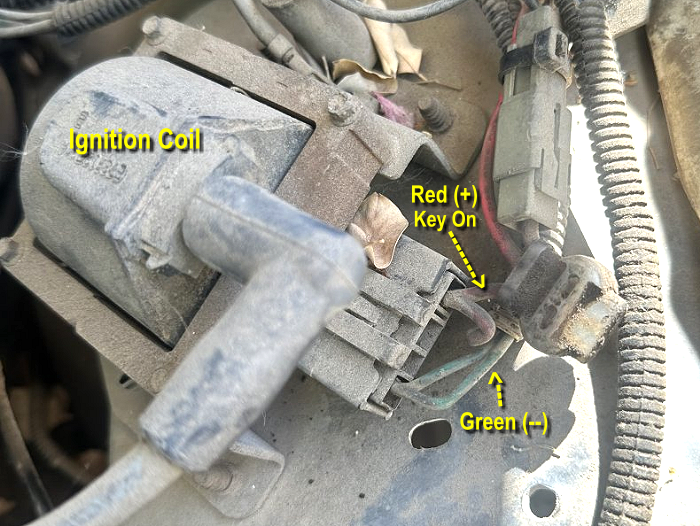
Red Wire – There is Red Wire with a Green Stripe that feeds power to the (+) side of the ignition coil. The Red Wire on your Powerspark distributor needs to tap into that.
NOTE: Make sure that your Red / Green wire has 12V in both the ‘Start’ and ‘Run’ key positions. Your original connect in the factory harness may have a Brown / Pink wire that connected into the same terminal with the Red / Green wire. In that case, the Red / Green has 12V when the key is in the ‘On’ position only and the Brown / Pink wire has 12V when in the ‘Start’ position. You’ll have to connect both of those wires to the Red wire on your distributor and (+) on the coil. The 1985 Ranger has a Red / Lt Blue wire that has 12V when in the ‘Start’ position. Likewise, it may need to be connected to the Red wire on your distributor and (+) on the coil.
Black Wire – The Black Wire connects to the (-) side of the coil by cutting the Green Wire with a Yellow Stripe coming off of the (-) side of the ignition coil and connecting that Green Wire with Yellow Stripe to the distributors Black Wire. DO NOT cut the wire going to the coil and attach it to the distributors black wire. The Black Wire has to actually go to the coil.
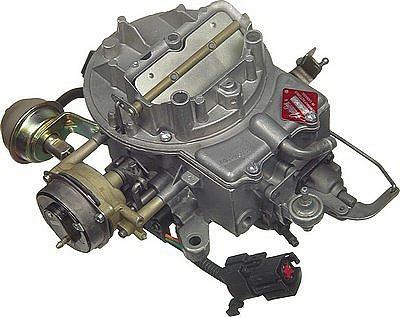
2.8L Feedback Carburetor
The “feedback” refers to a closed-loop electronic control system that monitors and adjusts the air-fuel mixture in real-time.
- Electronic Control Unit (ECU): The truck’s computer constantly receives signals from an Oxygen (O2) Sensor in the exhaust.
- Mixture Adjustment: Based on O2 sensor data, the ECU determines if the engine is running “lean” (too much air) or “rich” (too much fuel).
- Feedback Solenoid: A pulse-width modulated (PWM) solenoid on the back of the carburetor receives electrical pulses from the ECU. This solenoid opens and closes a small air bleed circuit to fine-tune the fuel mixture while the engine is running.
Key Components
- Oxygen (O2) Sensor: Measures exhaust gas to provide the “feedback” signal.
- Throttle Position Sensor (TPS): Tells the ECU how far the gas pedal is pressed.
- Electric Choke: Helps the engine start and idle when cold by restricting airflow until the heating element expands to open the choke plate.
- TFI Distributor: Works with the ECU to manage ignition timing. To set base timing, you must remove the SPOUT connector (yellow wire) to prevent the computer from advancing the timing.
Common Issues
Because this system relies on dozens of vacuum lines and aging electronic sensors, it is notorious for:
- Vacuum Leaks: Any leak in the complex web of hoses will confuse the ECU and cause a rough idle.
- “Limp Mode”: If the O2 sensor or feedback solenoid fails, the ECU often defaults to a fixed timing and fuel map, significantly reducing power and fuel economy.
Replacement Carburetor
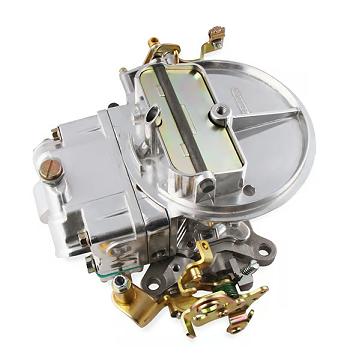
Your 2.8L will run with the feedback carb, but not well. I would replace it with a carburetor from a 1975-1978 Ford Mustang II / Pinto 2.8L V6. If your 2.8 is more performance oriented, or has headers and upgraded exhaust, you may want to use the 350CFM Holley 0-7448SA 2BBL carb. This carb comes jetted for a V8. A good jet size to start tuning a 2.8 with is #54 jets.
Removing The Old Harness
You can remove the old harness that went to the TFI module on the old distributor if you want. I would make sure that the engine and charging system is starting, running, and charging properly before doing so.
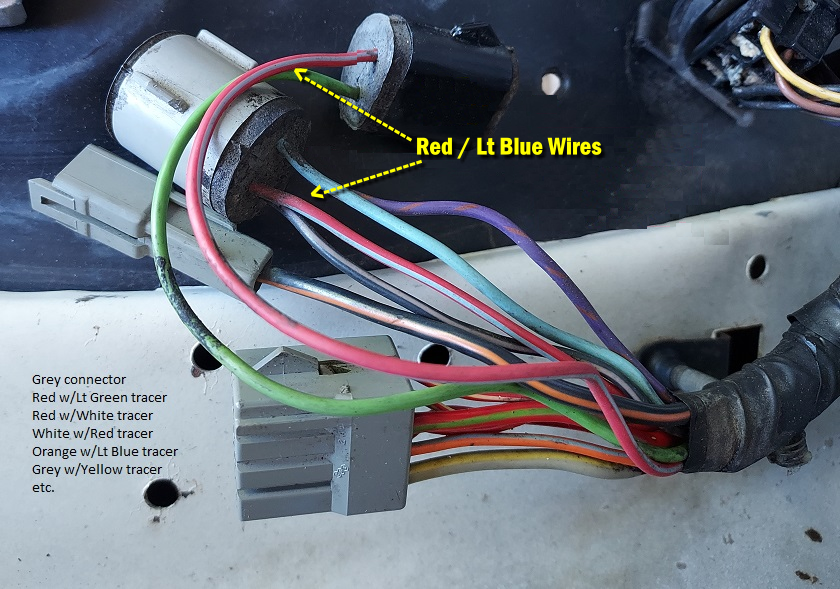
Key On Power Wire – The gray connector on the driver side inner fender will have the Red Wire with Green Stripe for the distributor and coil. The wire is hot when the key is on. Note: You may have a Brown / Pink wire instead of a Red / Green wire.
Starter Wire – On the 1985 Ford Ranger there are two plugs on the driver’s inner fender that have a Red Wire with a Light Blue Stripe. This is the starting circuit (power in key ‘start’ position) and need to be wire together. If you do an ignition conversion and the engine doesn’t turn over, the problem is most likely in the Red / Lt Blue wire.
Converting a 2.8L Points Distributor
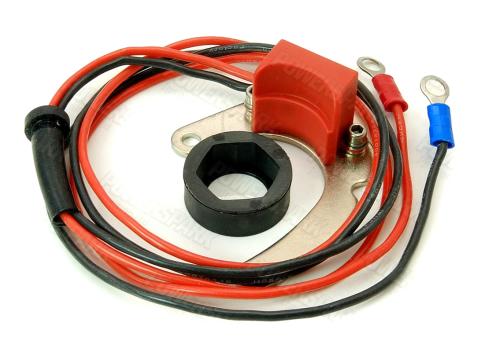
Have a points distributor for a 1974 Ford Mustang II / Pinto 2.8L V6 that you want to convert to an electronic ignition? Surprisingly, Rock Auto actually carries points distributors for these engines. Powerspark offers an Electronic Ignition Kit that will convert these points distributors to an electronic ignition. It wires up the same as their Powerspark distributor.
Powerspark Electronic Ignition Kit for Motorcraft 6Cyl
Diagrams
1983 – 1988 Ford Ranger / Bronco II Ignition Diagrams #1
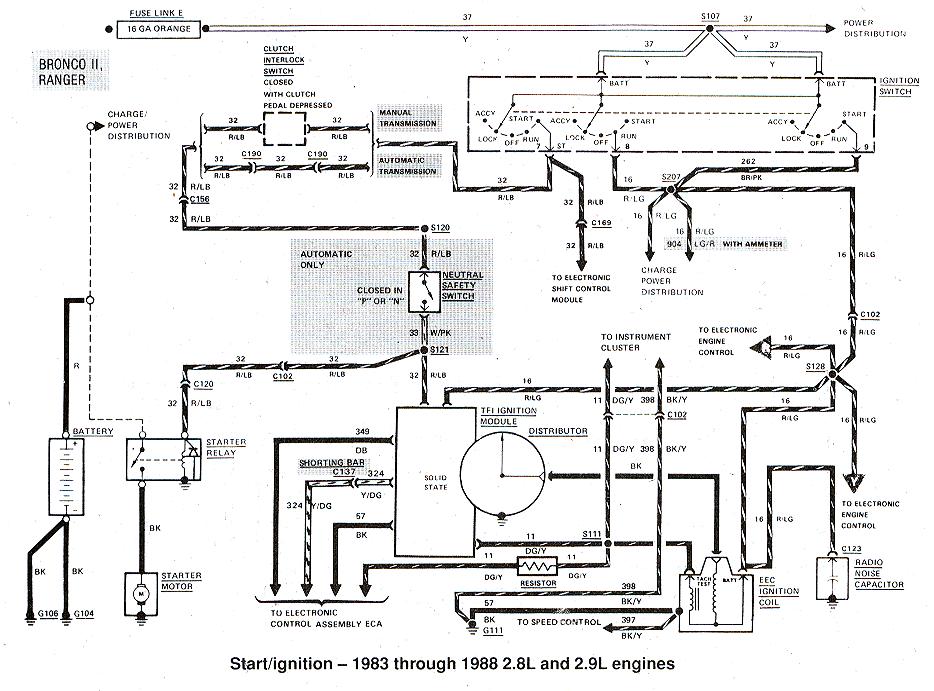
1985 Ford Ranger / Bronco II Ignition Diagram #2 (PDF)
Forum Discussion
Distributor Option | The Ranger Station
Related Article
200 Horsepower From Ford 2.8 Liter V6
Ford Ranger / Bronco II 2.8L V6 Engines
Last updated:
About The Author
Jim Oaks is the founder of TheRangerStation.com, the longest-running Ford Ranger resource online since 1999. With over 25 years of hands-on experience building and modifying Ford Rangers — including magazine-featured builds like Project Transformer — Jim has become one of the most trusted authorities in the Ford Ranger off-road and enthusiast space.
Since launching TheRangerStation.com, Jim has documented thousands of real-world Ranger builds, technical repairs, drivetrain swaps, suspension modifications, and off-road adventures contributed by owners worldwide. TheRangerStation.com has been referenced in print, video and online by enthusiasts, mechanics, and off-road builders looking for practical, and experience-based information.