
By Mike DeHosse
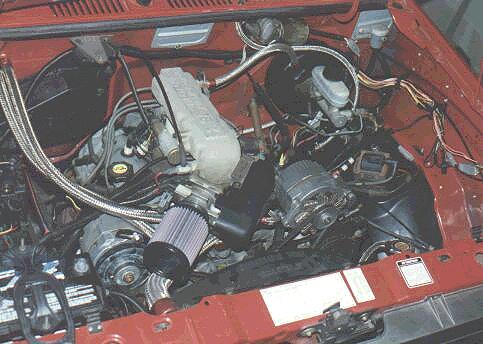
An easy way to increase your airflow with a K&N filter is by eliminating the air box completely. The photo of Mike’s 2.9-Liter shows where he has removed the airbox and intake hose and clamped a K&N filter right to the throttle body. This is what he did:
I found a parts store that sold K&N filters. I measured the outside diameter of my throttle body where the hose attached. It’s 2-3/4-inches in diameter. I told the parts guy I wanted a cone shaped K&N filter that clamped on to a 2-3/4-inch flange. The filters that would work had a can shape. I knew that shape would interfere with the radiator hose so we found a filter that had an angled mount, K&N part number RU-1460. A K&N filter can also be mounted at the airbox end of the intake hose by inserting a small tube, and then clamping the hose, tube, and K&N filter together.
When removing the factory airbox you will also remove the hot air hose coming from the exhaust manifold and a vacuum hose. The vacuum hose should be removed and plugged at the engine. You should keep these pieces to bolt back on later if you live in an area with emissions tests / inspections.
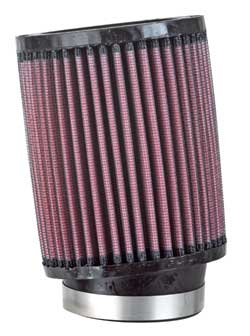
(K&N RU-1460 Filter)
About The Author

Jim Oaks is the founder of TheRangerStation.com, the longest-running Ford Ranger resource online since 1999. With over 25 years of hands-on experience building and modifying Ford Rangers — including magazine-featured builds like Project Transformer — Jim has become one of the most trusted authorities in the Ford Ranger off-road and enthusiast space.
Since launching TheRangerStation.com, Jim has documented thousands of real-world Ranger builds, technical repairs, drivetrain swaps, suspension modifications, and off-road adventures contributed by owners worldwide. TheRangerStation.com has been referenced in print, video and online by enthusiasts, mechanics, and off-road builders looking for practical, and experience-based information.