
Ford Ranger Leveling Kits & Front Lift Options (1983–2011)
This page is a comprehensive guide to leveling kits and front lift options for the Ford Ranger. It explains how to level the factory nose-down stance, compares different leveling methods, and lists proven aftermarket, factory, and DIY solutions.
The information here covers 1983–2011 Ford Ranger 4×4 models and is organized by suspension design, including coil-spring front suspensions (1983–1997) and torsion-bar front suspensions (1998–2011). Many options also apply to the Ford Bronco II and related platforms.
Whether you want to correct rake, fit larger tires, improve approach angle, or simply achieve a level stance without a full lift kit, this guide helps you understand the pros, cons, and limits of each leveling method.
Note: This modification alters front suspension geometry and may require alignment after installation.
Common Ford Ranger Leveling Methods
- Coil spring spacers and leveling coils
- Factory Ford coil spacers
- DIY spacer solutions
- Torsion bar adjustments and aftermarket torsion keys
1983-1997 Ford Ranger 4×4
Aftermarket 2-Inch Spacers:
Supreme Suspension offers a 2-inch leveling kit that included Delrin spacers that mount under your coil springs along with 5/8″ stud extenders. They also offer a kit that includes a 1.5-inch spacer block and new u-bolts for the rear.
These fit the 1983-1997 Ford Ranger, and 1984-1990 Ford Bronco II.

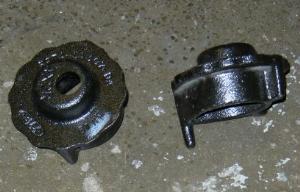
Factory Coil Spacers:
Ford has used a metal factory spacer in the F-150, and many enthusiasts have used them in their Ranger and Bronco II for lift.
These will work on 1983-1997 Ford Ranger, and 1984-1990 Ford Bronco II.
Check out: Factory Coil Spring Spacers To Level Your Ranger
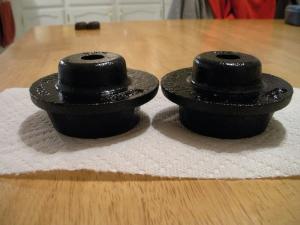
DIY Steel Washer Coil Spacers
Some Ford Ranger owners have simplified things buy stacking 1-3/8″ washers to get the desired lift to level their Ranger and then welding the washers together. I personally have dome this on a Ranger with an aftermarket lift to help level it.
These will work on 1983-1997 Ford Ranger, and 1984-1990 Ford Bronco II.
Check out: Coil Spring Spacers From Steel Washers

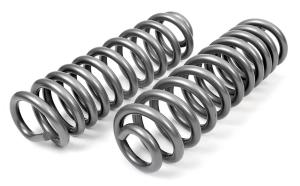
Leveling Coil Springs:
Skyjacker offers a 1-1/2″ to 2″ Inch (expect 1-1/5″) leveling coil springs for the 1983-1997 Ford Ranger and 1984-1990 Ford Bronco II.
- SKY132 (for all except 4.0L and extended cab)
- SKY132X (for 4.0L and extended cab models)
NOTE: As of 12/2025, I’m not seeing these springs on the Skyjacker website, but I’ll leave the information here, so you know they exist in case you find a set of Skyjacker coil springs marked 132 or 132X.
Rough Country offers a 1.5-inch leveling kit for the 1983-1997 Ford Ranger.
1998-2011 Ford Ranger 4×4
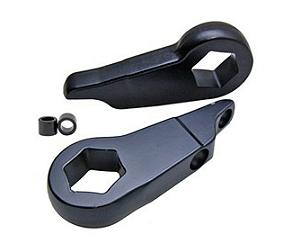
Torsion Bar Keys:
Vehicles equipped with torsion bars have a certain amount of adjustment built into the factory system. This adjustment takes place via a bolt that indexes on a torsion key attached to each torsion bar. Aftermarket keys claim to change the indexing to allow you to get lift without adding as much energy and force to the torsion bars than if you cranked the bars with the factory keys. But they may also allow you to crank higher than the stock key which could start wearing out CV’s and ball joints.
Also, some manufacturers claim that their keys are 25% stronger than the factory cast keys, and that the cast keys could break over time from the added force from cranking the torsion bars.
Aftermarket keys for the Ford Ranger are offered by:
Readylift 2.25 Inch P/N 66-2020
Rough Country 1.50 Inch P/N 50108
Truxxx 3 Inch with rear add-a-leaf P/N 101055
Related Articles – 1983-1997
1983-1997 Ford Ranger Coil Spring Guide
Coil Spring Spacers From Steel Washers
Related Articles 1998-2011
2008-2011 Ford Ranger ‘Pre-Key’ Modification
All About Torsion Key Lifts For Your ’98-’11 Ranger
Last Updated:
About The Author
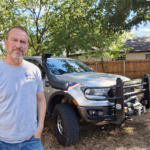
Jim Oaks is the founder of TheRangerStation.com, the longest-running Ford Ranger resource online since 1999. With over 25 years of hands-on experience building and modifying Ford Rangers — including magazine-featured builds like Project Transformer — Jim has become one of the most trusted authorities in the Ford Ranger off-road and enthusiast space.
Since launching TheRangerStation.com, Jim has documented thousands of real-world Ranger builds, technical repairs, drivetrain swaps, suspension modifications, and off-road adventures contributed by owners worldwide. TheRangerStation.com has been referenced in print, video and online by enthusiasts, mechanics, and off-road builders looking for practical, and experience-based information.