
Submitted By: Mike Foley
My $85.00 adventure in brake line extension. These instructions will make your lines good for about 16″ of front wheel travel, and as much as you can keep a driveshaft attached for in the rear. One thing to note, whenever suspension parts are modified for travel, some sort of Limiting straps need to be in place to protect the brake lines from being snapped on full droop of the suspension.
Parts needed:
- 1999 Ford F350 Factory Front brake lines for a 4×4 with Rear abs only
- 18″ rubber line from a boat trailer place for hydraulic surge brakes one that will accept a standard 1/8″ flare nut fitting in it.
- 60″ or so of 1/8″ steel brake line with standard flare fittings for both ends.
What I did:
Put the Ford F350 lines in place of the stock pieces on the front. Use a standard hard-line bender to tweak the steel portion of the line to aim straight up when installed (factory shape will hit the tire)
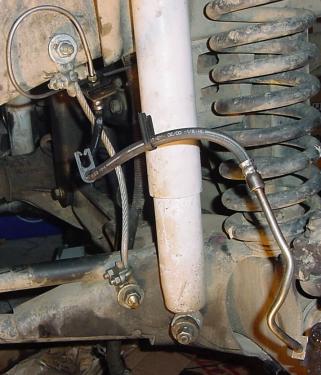
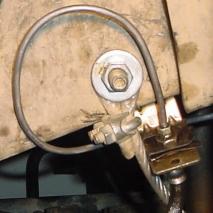
Mount the metal brackets that come with the factory lines to the bottom of the frame rail, directly behind where the coil bucket sits.
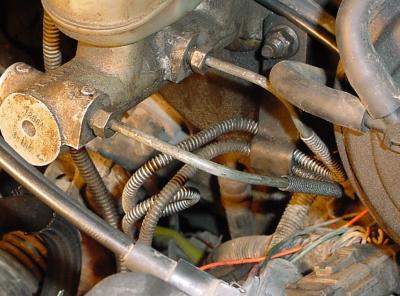
Remove the line that connects the right and left wheel cylinders and throw it away.
Remove the line that connects the left wheel to the master cylinder. Carefully rebend it to reach the end of the new rubber line.
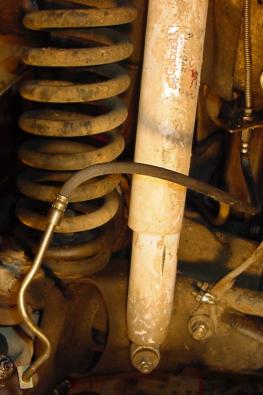
Now use bailing wire to lay out a line to connect the two front lines together.
Bend the new 1/8″ line to match your template
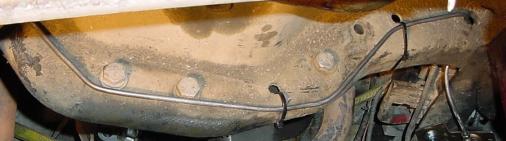
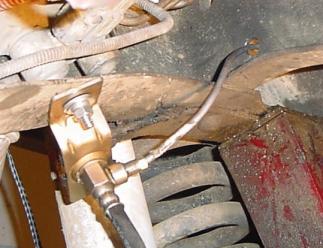
Install the new hard line between the front wheels
Secure the new line from rubbing and chafing by zip tying it in place.
Remove the rear rubber line from the hard line at the frame rail. Install the boat trailer piece between the two, securing it to the factory bracket on the frame with the factory clip.
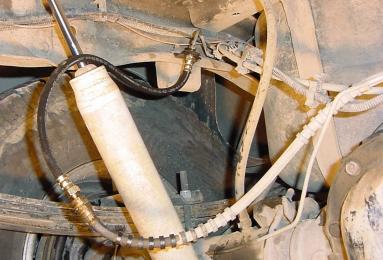
Zip tie the rubber line to the shock on that side to keep it from falling down in harm’s way (it IS that long now)
Bleed the brakes and you should be ready for 16-18″ of front wheel travel, and more than is humanly imaginable in the rear.
About The Author
Jim Oaks is the founder of TheRangerStation.com, the longest-running Ford Ranger resource online since 1999. With over 25 years of hands-on experience building and modifying Ford Rangers — including magazine-featured builds like Project Transformer — Jim has become one of the most trusted authorities in the Ford Ranger off-road and enthusiast space.
Since launching TheRangerStation.com, Jim has documented thousands of real-world Ranger builds, technical repairs, drivetrain swaps, suspension modifications, and off-road adventures contributed by owners worldwide. TheRangerStation.com has been referenced in print, video and online by enthusiasts, mechanics, and off-road builders looking for practical, and experience-based information.