
Special Tool(s) / General Equipment:
Wheel Alignment System
Vehicle:
2019 Ford Ranger
Adjustment:
NOTICE: Suspension fasteners are critical parts that affect the performance of vital components and systems. Failure of these fasteners may result in major service expense. Use the same or equivalent parts if replacement is necessary. Do not use a replacement part of lesser quality or substitute design. Tighten fasteners as specified.
1. Using alignment equipment and the manufacturers instructions, measure the front caster and camber.
For optimal alignment settings, Refer to: Caster & Camber Specifications.
If the caster and camber values are not within specification, go to the next step. Use the General Equipment: Wheel Alignment System
2. Loosen the upper arm nut.
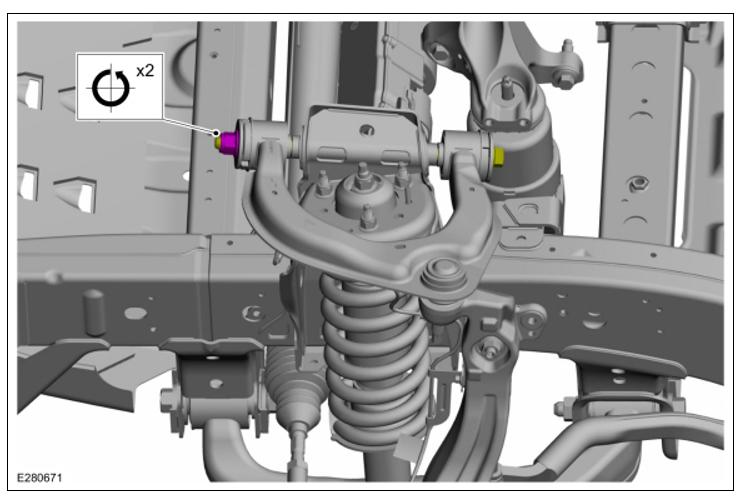
3. NOTE: Only tighten the nuts and bolts finger tight at this stage.
On both sides.
Loosen the lower arm bolt(s) and adjust the caster and camber settings according to manufacturer’s instructions.
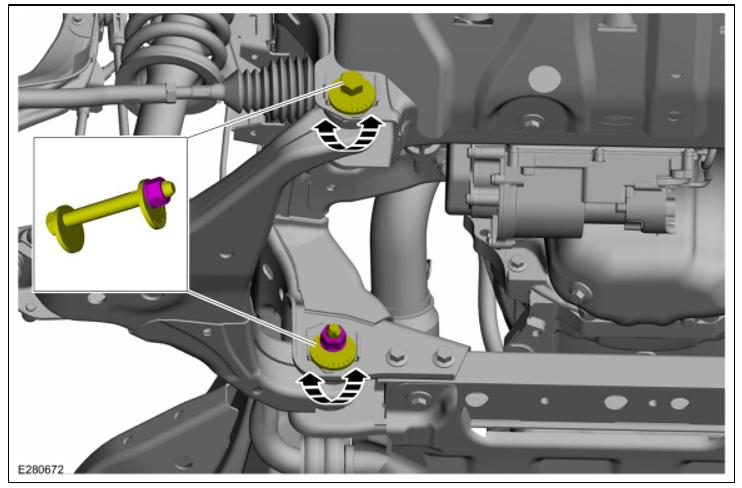
4. To adjust the caster and camber, refer to the following chart.
Adjustments that require moving the front and the rear of the lower arm should be made equally.
| Adjustment | Front of Lower Arm | Rear of Lower Arm |
| Increase caster | In | Out |
| Decrease caster | Out | In |
| Increase camber | In | In |
| Decrease camber | Out | Out |
| Increase caster and camber simultaneously In | In | — |
| Decrease caster and camber simultaneously Out | Out | — |
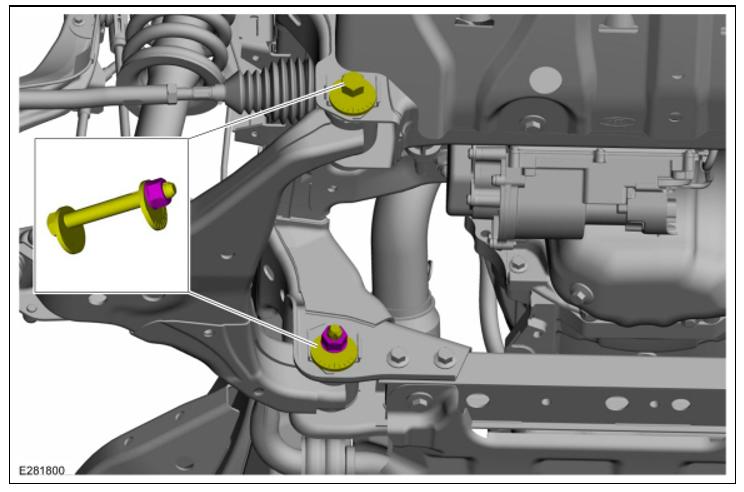
5. On both sides.
With the weight of the vehicle resting on the wheel and tire assemblies, hold the cam bolts and tighten the nuts.
Torque: 192 lb.ft (260 Nm)
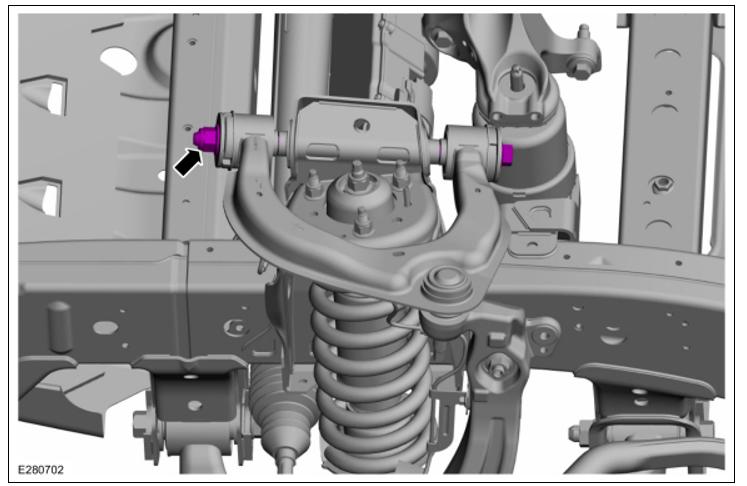
6. On both sides.
With the weight of the vehicle resting on the wheel and tire assemblies, tighten the upper arm shaft bolt and nut.
Torque: 122 lb.ft (165 Nm)
7. Check and if necessary, adjust front toe.
Refer to: Caster & Camber Specifications.
About The Author
Jim Oaks is the founder of TheRangerStation.com, the longest-running Ford Ranger resource online since 1999. With over 25 years of hands-on experience building and modifying Ford Rangers — including magazine-featured builds like Project Transformer — Jim has become one of the most trusted authorities in the Ford Ranger off-road and enthusiast space.
Since launching TheRangerStation.com, Jim has documented thousands of real-world Ranger builds, technical repairs, drivetrain swaps, suspension modifications, and off-road adventures contributed by owners worldwide. TheRangerStation.com has been referenced in print, video and online by enthusiasts, mechanics, and off-road builders looking for practical, and experience-based information.