
Buying new tires for an off-road truck can be expensive. The bigger they are, the more they cost.
There are a lot of enthusiasts that find themselves shopping for used tires. The good thing is that:
- There are off-road enthusiasts that have gone to a larger tire size, even though they had perfectly good tires
- There are off-road enthusiasts that part their rigs and sell their tires.
While there are good deals to be had, you need to know what to look for.
Manufacturers Date:
Tire manufacturers’ warranties expire at 6-Years. Vehicle manufacturers recommend replacing tires at 6 Years. Tire manufacturers and industry experts recommend replacing tires at 10 Years.
Every tire has its manufacture date molded into the sidewall.
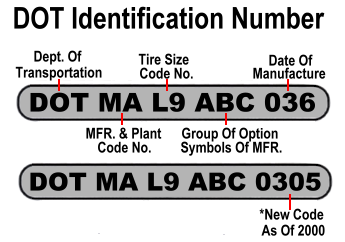
In the image above are two examples of DOT Safety Standard Codes. ‘DOT’ means the tire meets or exceeds the Department of Transportation’s safety standards. ‘MA’ is the code number assigned by the DOT to the manufacturing plant. ‘L9’ is the tire size code. ‘ABC’ is a group of symbols, optional with the manufacturer to identify the brand or other significant characteristics of the tire.
The ‘036’ on the top code, and the ‘0305’ on the bottom code, are manufacture dates. The (3) digit code is for tires made before 2000. The (4) digit code is for tires made since 2000. The ‘036’ means the tire was made in the 3rd week of 1996. The ‘0305’ means the tire was made during the 3rd week of 2005.
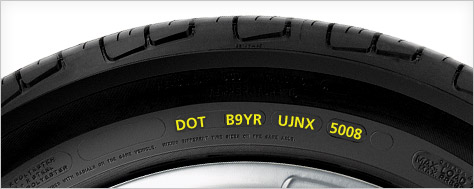
So, with that information, we can see that the tire above was made in the 50th week (December) of 2008.
Tire Rot:
Dry rot is the result of exposure to the sun and high temperatures. The exposure causes the petroleum products that binds the rubber molecules to evaporate. As the molecules break down, the rubber begins to crack. This eventually happens to all tires. That’s why tires are only warranted for so long, and why manufactures suggest replacing them after 10-years.
Low tire pressure can contribute to dry rot. Low tire inflation results in excessive heat and sidewall / tread deformation. Just visualize how a tire sidewall bulges out when the tire pressure is low. As the rubber breaks down, the sidewall will become prone to cracks. In fact, some dry rot actually shows up in the springtime after a vehicle has been sitting all winter on a flat tire.
You can help prevent dry rot by airing down the tires and storing them off the ground so that the weight of the rim (or vehicle) doesn’t deform the tire.
Inspect The Tire: Look for cracks in the sidewall and between the treads. Also look for cracks forming where the tread and sidewall meet.
Some Examples Of Dry Rot Are:
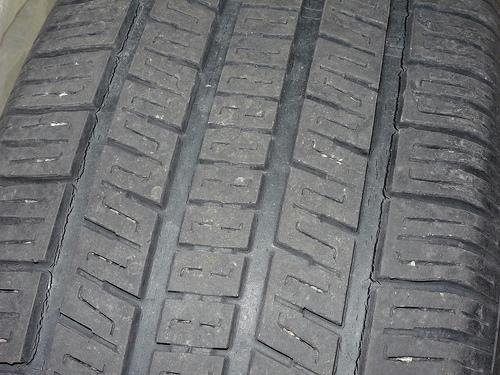
Dry rot cracks in the tread.
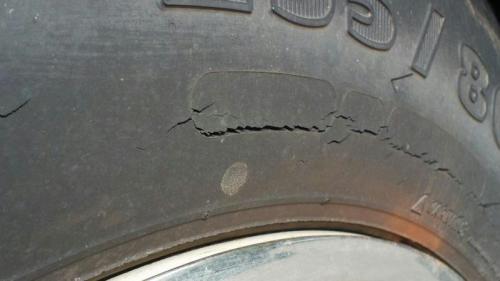
Dry rot crack in the sidewall.
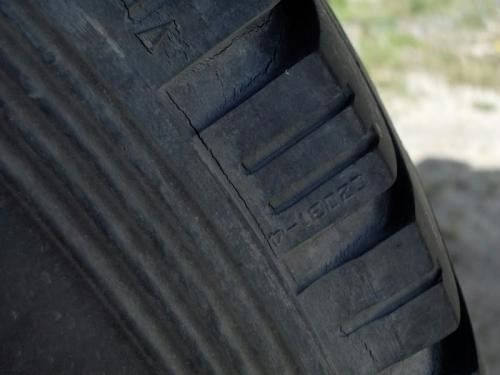
Dry rot in the tread, and where the tread meets the sidewall.
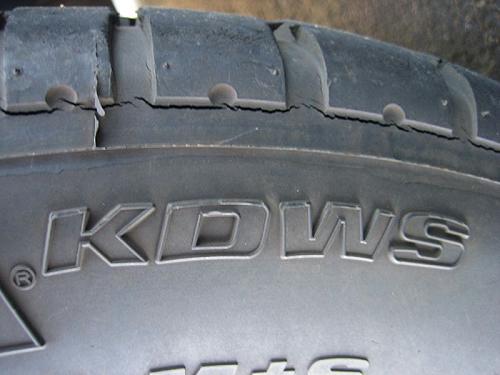
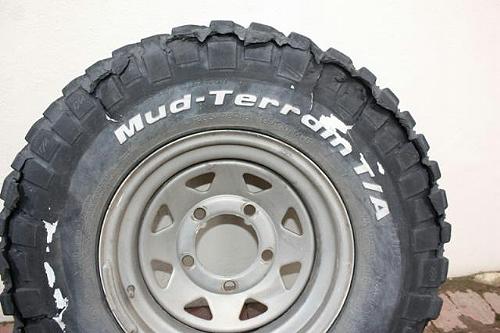
If you ignore the cracks, the whole tire can come apart.
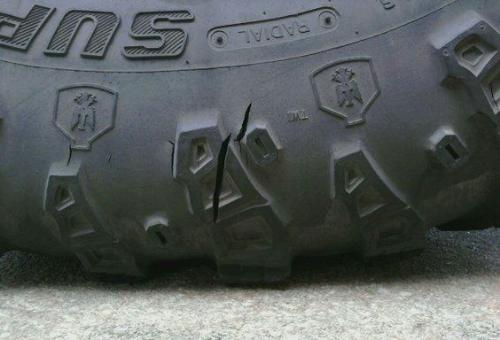
These Super Swampers are splitting from dry rot. Don’t get this confused with a cut sidewall.
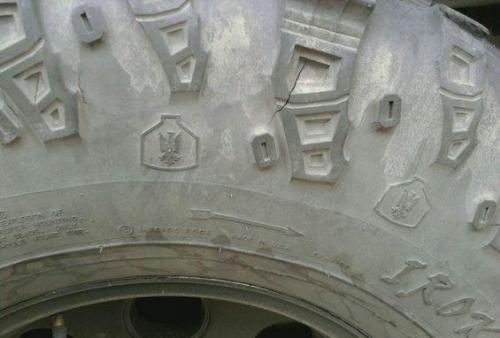
Avoid buying any tire that has cracks in it.
Cut Sidewalls:
Don’t get dry rot cracks confused with a cut sidewall:
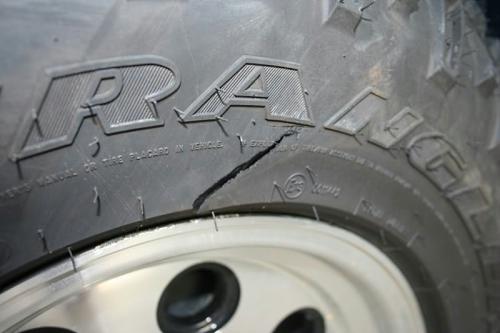
Avoid buying any tire that has cuts in the sidewall.
Tire Punctures & Plugs:
You may come across a tire that has a plug in it. Avoid any tire with a plug in the sidewall. Don’t be to alarmed by a tire with a plug in the tread, as long as it’s a single plug, and holds air. While some believe this is a temporary repair, I’ve seen tires last a long time with a plug and not leak.
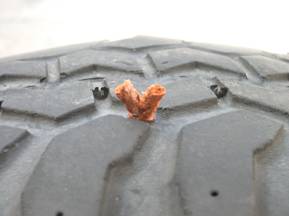
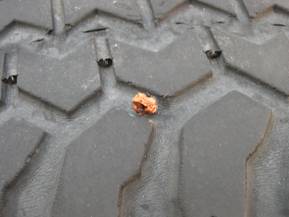
Tire plug in the tread.
Tire Wear:
If you’re only getting these tires for trail duty, tire wear may not be a big issue for you. Otherwise, you want to look at:
Tread Depth: Is there enough tread left for the tire to even be trail or street worthy? Tire manufacturers list the depth of the tread (measured in 32nds) of their tires on their website. At the bottom of this page, you’ll find a list of links to different tire manufacturers. When you know how deep the tread is on a new tire, you’ll be able to tell how worn a used tire is. Tire tread depth gauges are cheap, and worth having if you’re shopping for a used tire. Coins don’t tell you too much. Tire tread depth gauges tell you everything.
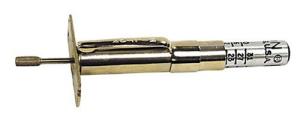
Milton S448 Tire Tread Depth Gauge

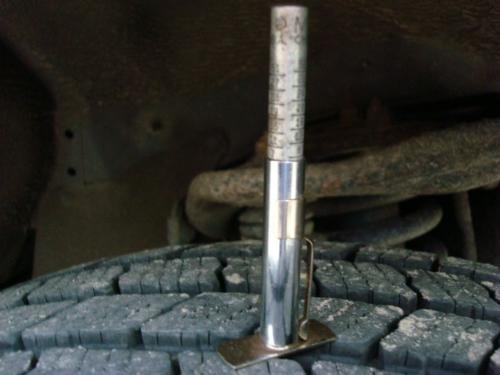
Measuring tread depth.
You’ve most likely seen the commercials about checking your tread depth with a penny. The one that says your tire is bald if you can see the top of Abe Lincoln’s head. You want at least 4/32 of tread on a street tire to ensure you have enough tread for wet roads. This means you need to see the top of Washington’s head on a quarter. The quarter test is a better test than a penny test.
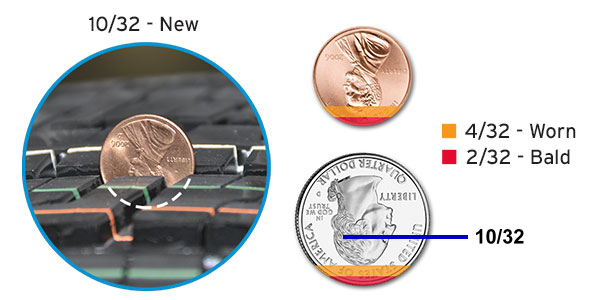
Most mud terrains have 20/32 tread when new. This means that a mud terrain with 1/2 tread should have tread up to Washington’s eye on a quarter.
In addition, tires have wear bars molded into the tire. If the tire is worn down to the wear bar, then the tire is considered to be bald, and no longer useable.


Tread wear bars
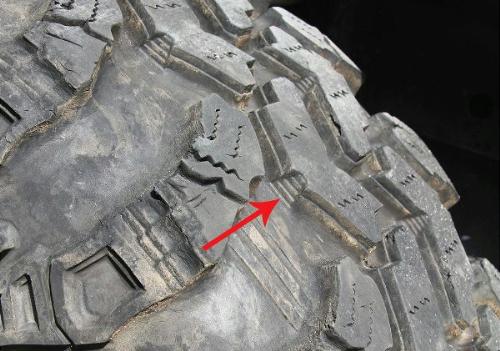
The Super Swamper Irok has the wear bars molded into the tread.
Tread Wear:
Tread Damage: Look for chunks missing from the tread.
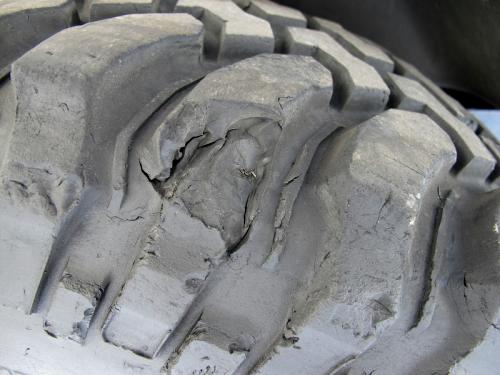
Uneven tread Wear: Check the tires for uneven tread wear. Some examples are:
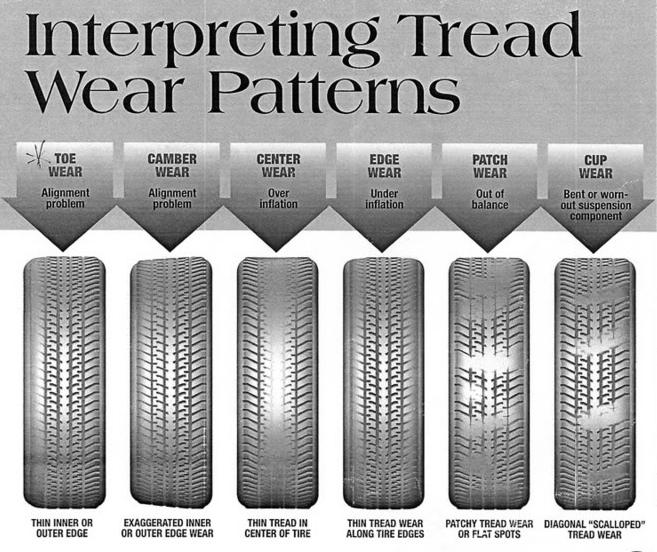
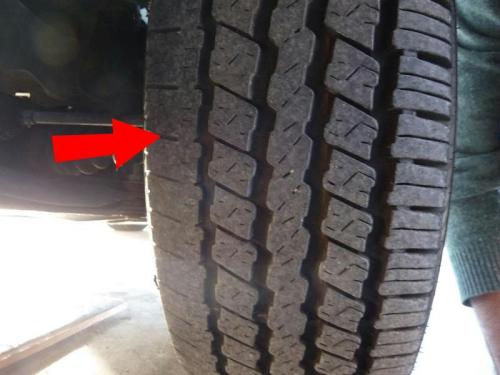
Uneven tread wear may not be quickly noticeable. Notice how the left side (inside) of this tire is worn more then the right (outside)?
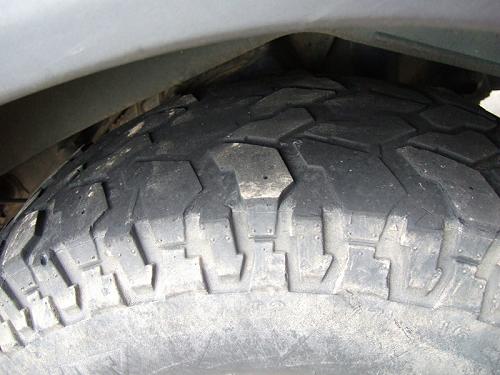
This tire is a wreck. Notice how chopped up the tread looks?
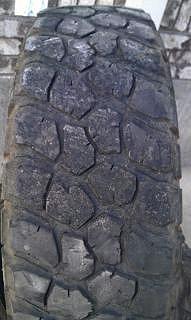
This tire is showing more wear on the right side.
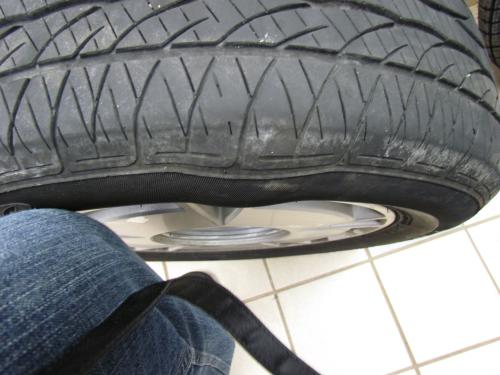
Tire Bulges:
Obviously, avoid tires with bulges. This is caused from broken cords (belts) in the tires. If the tire isn’t mounted, feel the sidewall for soft spots.
Miscellaneous Things To Check:
1) Uneven Tread Wear
2) Weak spots in the side wall (I use my index finger and poke all around the sidewall – if it’s weak, you’ll feel it).
3) If the tires are off the rim, look inside to see if there’s any patches or places where it’s been repaired.
4) Look around the inside and outside perimeter of the tire and see if it’s worn at all where the sidewall meets the tread (indicating it was run flat and rode on a for a while).
5) Check the DOT code to determine the tires age.
About The Author
Jim Oaks is the founder of TheRangerStation.com, the longest-running Ford Ranger resource online since 1999. With over 25 years of hands-on experience building and modifying Ford Rangers — including magazine-featured builds like Project Transformer — Jim has become one of the most trusted authorities in the Ford Ranger off-road and enthusiast space.
Since launching TheRangerStation.com, Jim has documented thousands of real-world Ranger builds, technical repairs, drivetrain swaps, suspension modifications, and off-road adventures contributed by owners worldwide. TheRangerStation.com has been referenced in print, video and online by enthusiasts, mechanics, and off-road builders looking for practical, and experience-based information.