

Introduction
From 1993-1997 Ford used a Dana 35 ‘Hybrid’ in the Ford Ranger that was essentially a Dana 35 TTB with a Dana 28 TTB differential. You may see it listed under parts as a Dana 28, even though the Dana 28 wasn’t offered after 1989. This article explains and discusses that axle.
Dana 35 Hybrid TTB
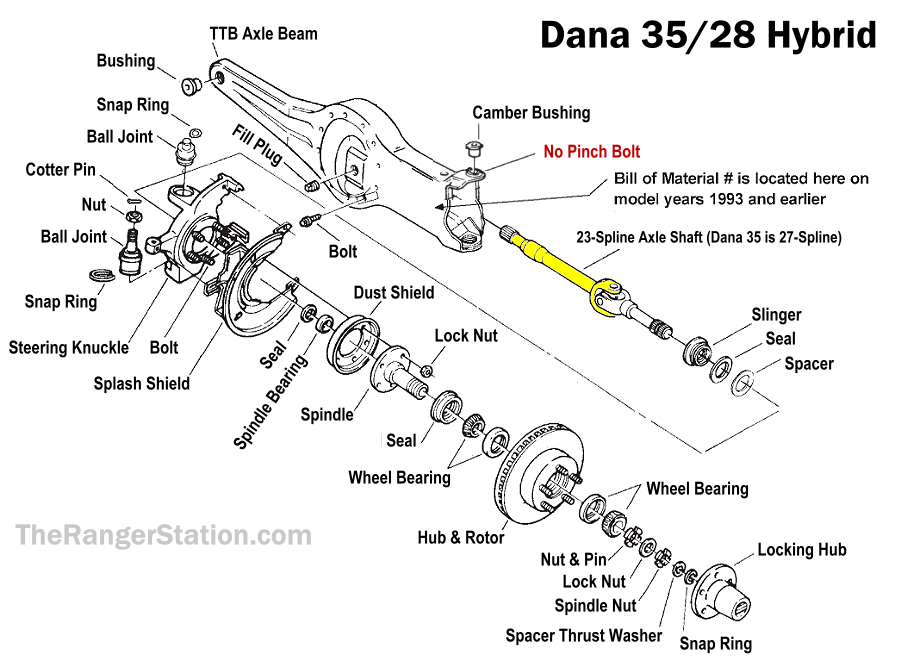
The Ford Dana 35 TTB Hybrid, used in 1993-1997 Ford Rangers, combines a Dana 35 TTB front axle beam with Dana 28 TTB differential internals. While the outer axle shafts, brakes, and hubs match a standard Dana 35 TTB, the hybrid uses smaller 6.625″ Dana 28 gears, a smooth carrier housing, and 23-spline axle shafts. It can be identified by the front fill plug inspection, BOM part numbers, and its slightly longer driveshaft.
The Dana 35/28 TTB Hybrid was used in these Ford Rangers:
- 1993-1997 Ford Ranger 3.0L Automatic
- 1993-1997 Ford Ranger 2.3L
What’s Different on a Dana 35/28 Hybrid:
- The axle shafts taper down to 23-splines versus the Dana 35 27-splines
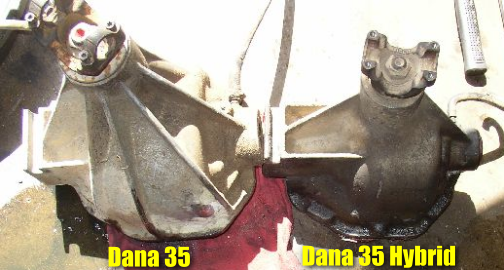
- The carrier housing has is smaller and is smooth on the bottom versus the Dana 35 case that has ribs for support
- The carrier and gears are the 6.625″ diameter Dana 28 gears and not the 7.56″ Dana 35 gears and carrier
- The Dana 35/28 Hybrid axle uses a castle nut instead of a pinch bolt to hold the camber bush in place.
What’s the same as the Dana 35:
- Everything from the outer stub axle shaft out to the locking hubs as well as the brakes is the same as the Dana 35 TTB
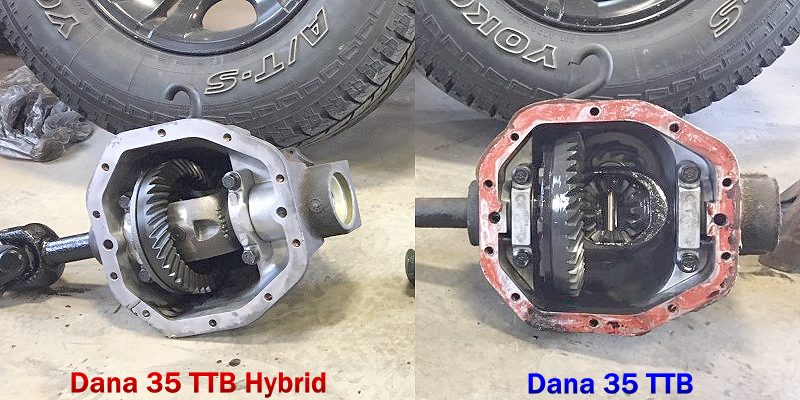
Smaller Internals:
In the photo below you can see that the differential and gear set is noticeably smaller in the Dana 35 TTB Hybrid:
Smooth Housing:
Here you can see the Dana 35 TTB has ribs on the bottom for added strength whereas the Dana 35 is smooth:
Visual Inspection Through Fill Plug Hole:
The easiest way to check to see if your Dana 35, has Dana 28 “Guts”, is to pull the fill plug out from the front. If you can see the main cap (left), you have the Dana 28 guts (Sorry!). If you can see the end of the carrier (right), you have “The Real Thing”. If you look at the photos below of the internals, you’ll see an orange dot. This marks the location of what you will see through the “Plug”.
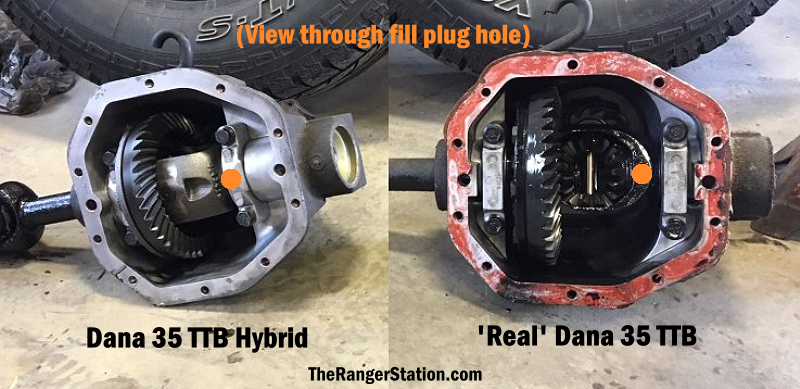
These ‘Hybrid’ axles use the Dana 35 TTB axle beam and the u-joints and outer stub shafts at the wheels are the same as a Dana 35 TTB, but carrier housing is different
BOM (Build Of Material) Numbers:
There is a manufacturers label on the back side of the (passenger) right axle beam that lists the Dana PN (BOM), Year Manufactured, and gear ratio. If it has one of the Part No listed below, it’s a Dana 35 Hybrid.
- 610418 FORD 28 FRONT 1993-94 1/2 RANGER
- 610484 FORD 28 FRONT 1995-97 1/2 RANGER ABS
- 610653 FORD 28 FRONT 1997 RANGER NON ABS
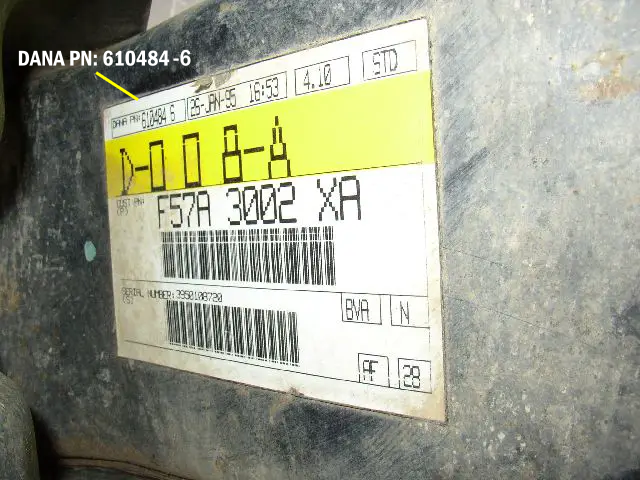
The number that followed the DANA PN (in this case 6) corresponds to the gear ratio as well. See the chart below.
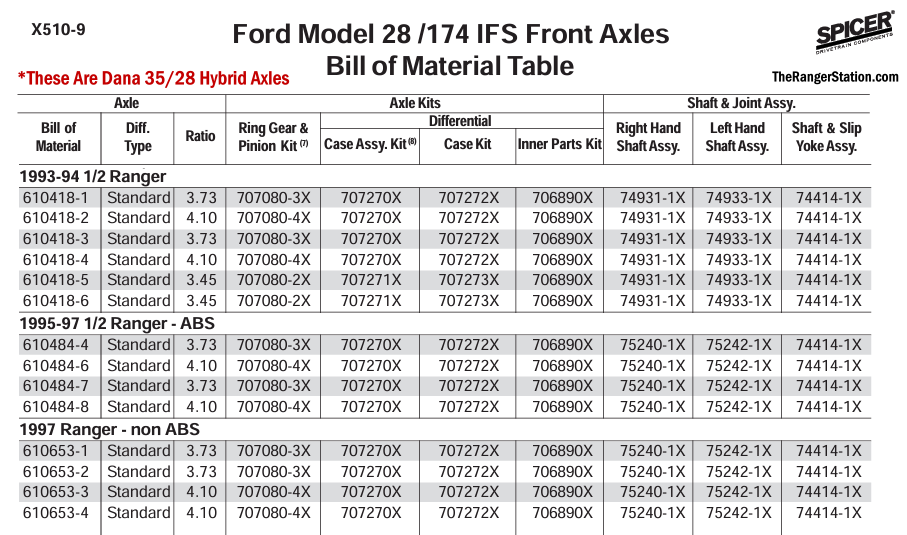
For even more information check out the complete Dana Spicer 1978-1998 Axle Guide.
Axle Shaft Differences:
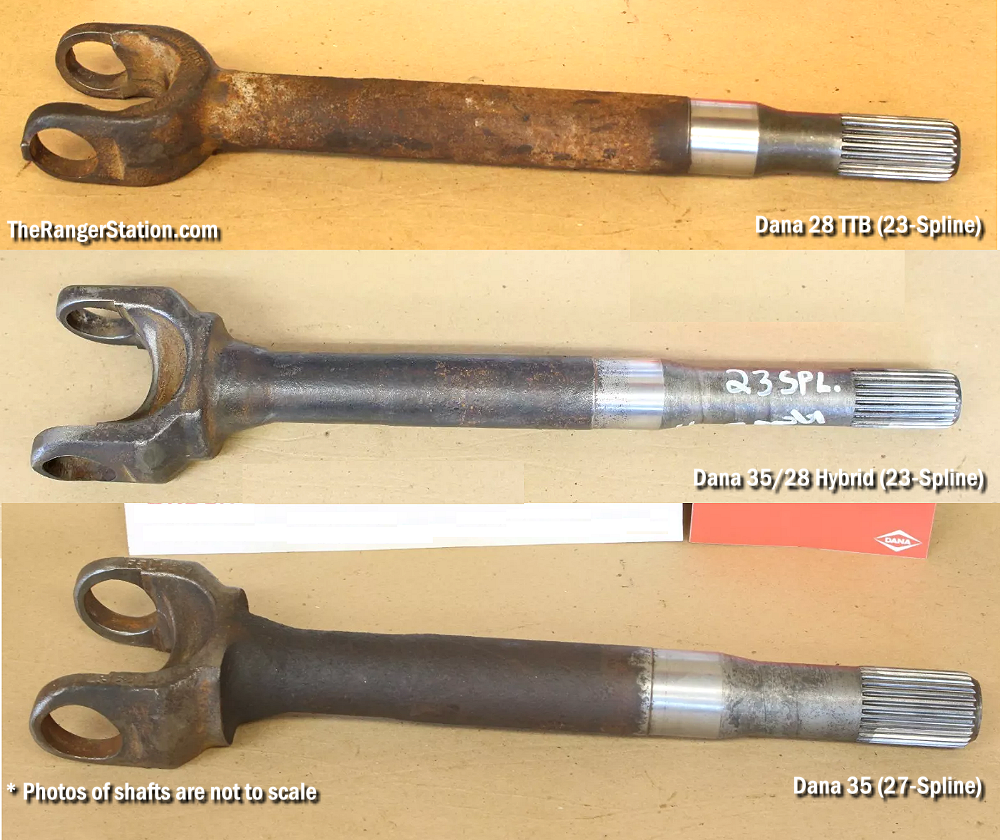
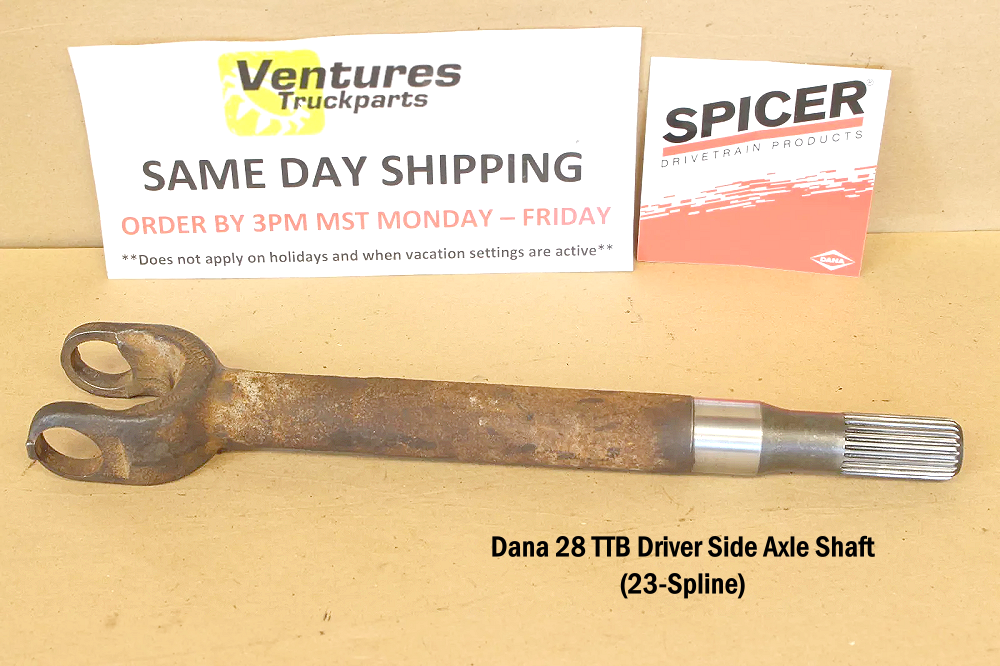
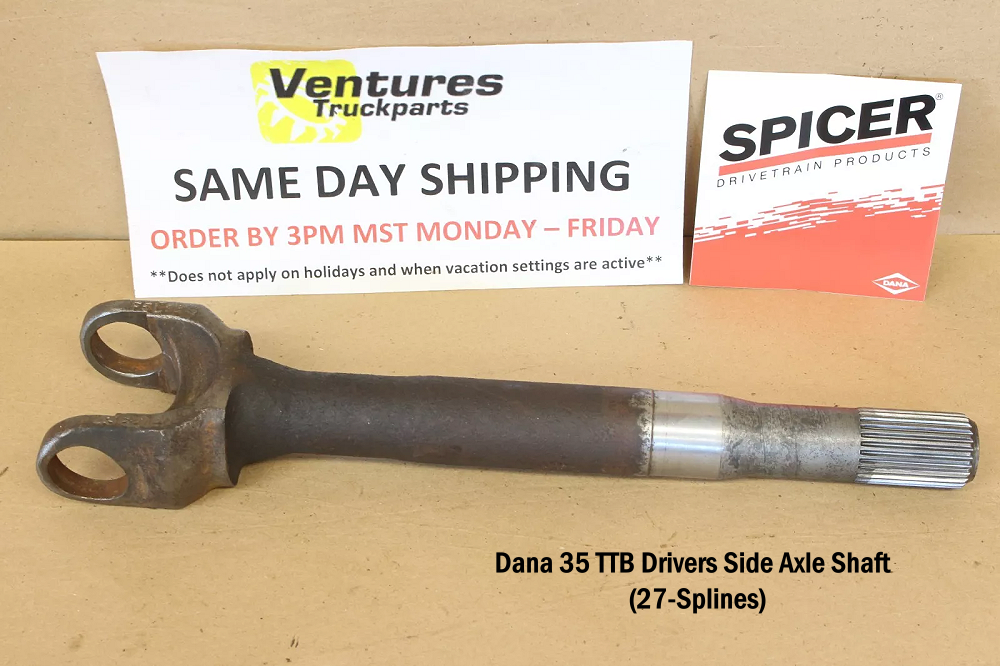
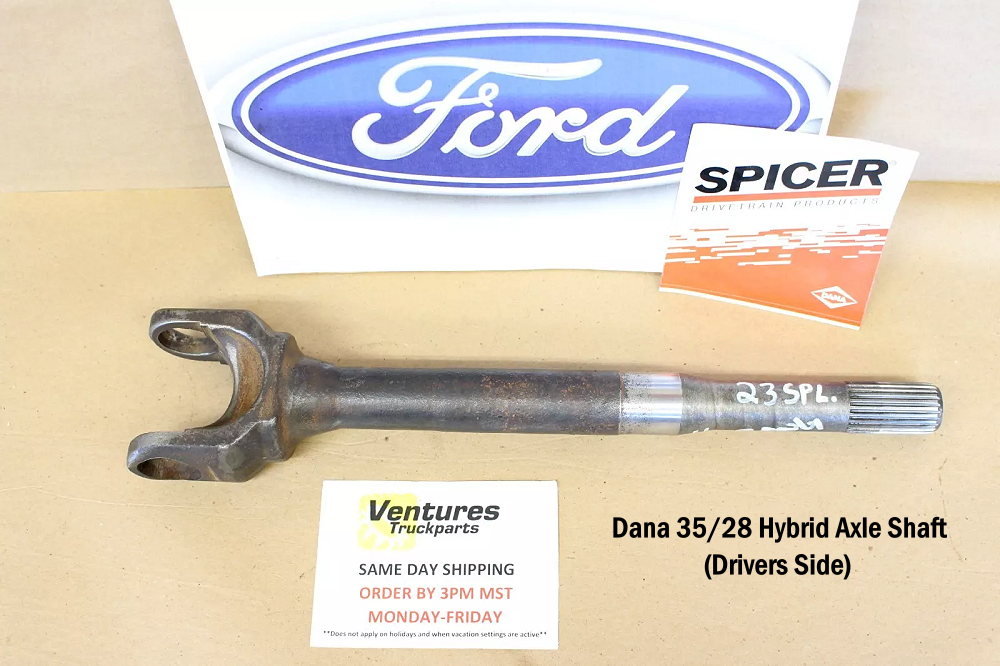
The axle shafts in the image below are not to scale to one another, but they do show the differences between the shafts. These are the shafts on the driver’s side of the differential.
Dana 28 TTB (23-Spline): You can see that this axle shaft has a smaller yoke for a smaller u-joint than the other axles.
Dana 35/28 Hybrid (23-Spline): Here you can see that this shaft has a larger yoke for a larger u-joint but tapers down at the end to 23-splines to engage with the smaller Dana 28 differential.
Dana 35 (27-Spline): This uses a larger u-joint than a Dana 28 and doesn’t taper down as small as the Dana 28 since it’s a larger 27-spline count versus the Dana 28 23-spline.
Driveshaft Difference:
Since the Dana 35 Hybrid housing is smaller and doesn’t sit as far from the axle beam as a true Dana 35 housing, the front driveshaft is 1-1/2 inches longer than a normal Ford Ranger front driveshaft.
Axle Shaft Dimensions:
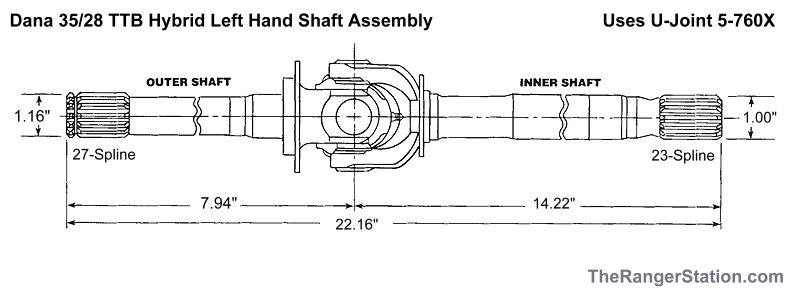
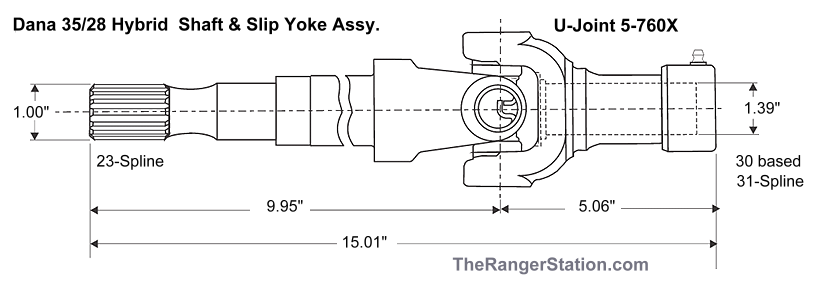
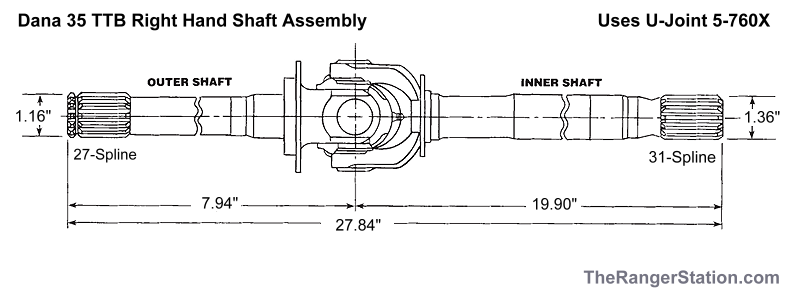
The right-hand shaft assembly is the same assembly used on a Dana 35. The Dana 35/28 Hybrid shaft & slip yoke assembly makes the conversion from the differential to the right-hand shaft assembly.
Can I Upgrade My Dana 28 With Dana 35 Hybrid Axle Shafts:
No. Although the Dana 35 23-spline hybrid shafts would fit your differential, the true Dana 35 portion of the axle assembly has different dimensions and is larger than the Dana 28 axle shafts and won’t fit. The Dana 35 axle yoke is larger than the Dana 28 axle and won’t fit through the steering knuckle.
A ‘Real’ Dana 35:
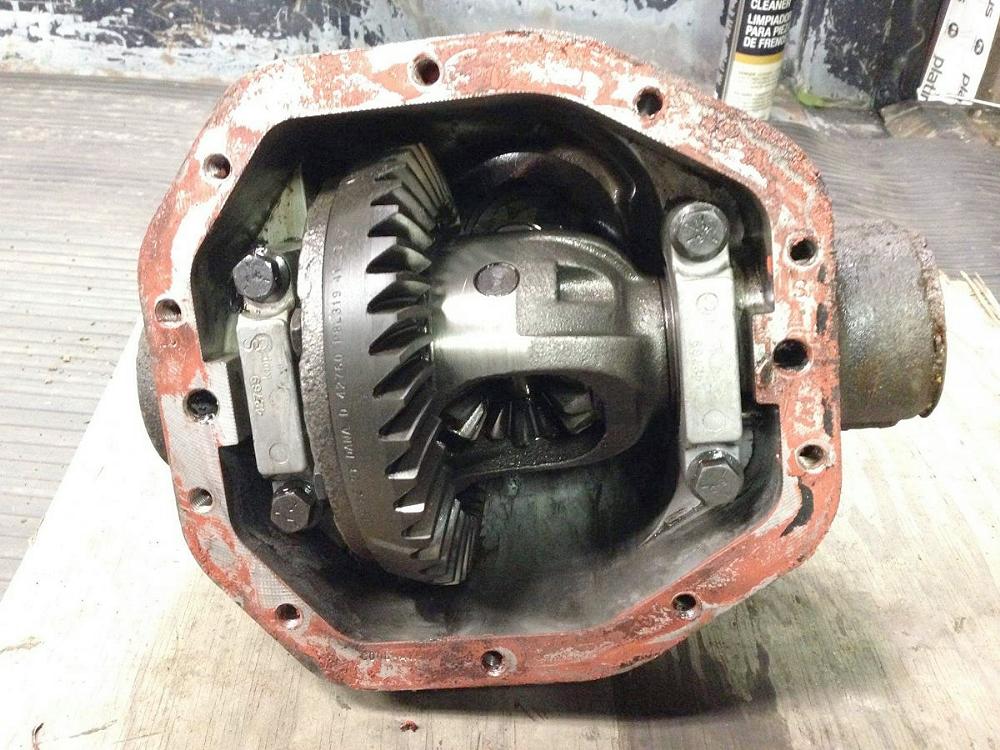
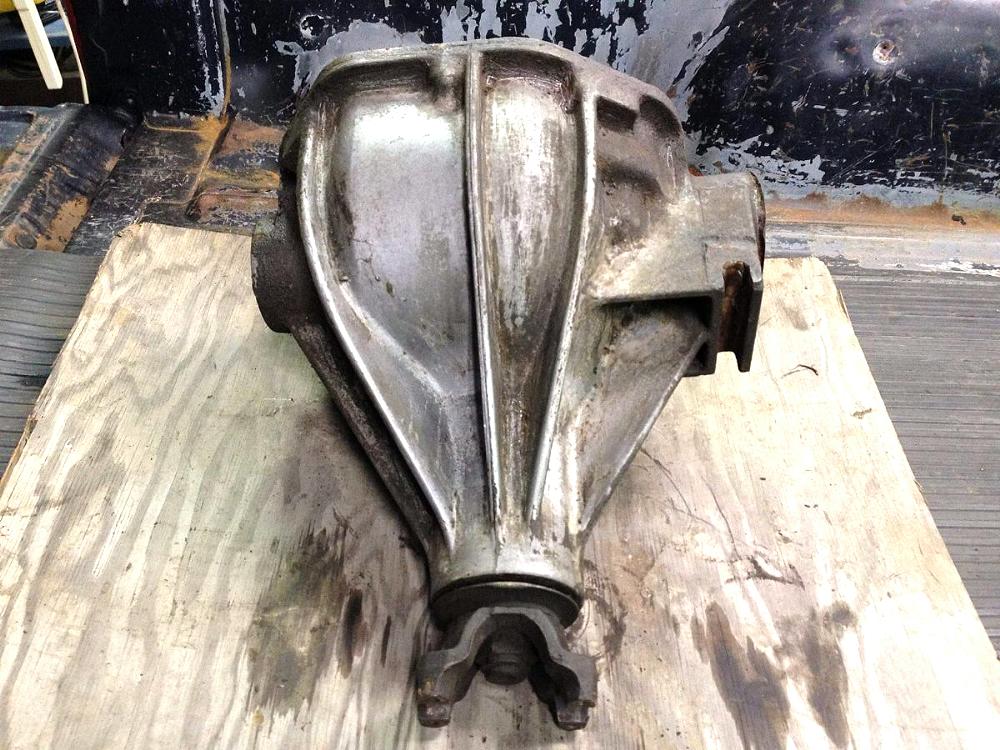
Here’s front and rear photo of an actual Dana 35 TTB differential.
Related Articles
Ford Ranger 4×4 Front Axles 1983-1997
Last Updated:
About The Author
Jim Oaks is the founder of TheRangerStation.com, the longest-running Ford Ranger resource online since 1999. With over 25 years of hands-on experience building and modifying Ford Rangers — including magazine-featured builds like Project Transformer — Jim has become one of the most trusted authorities in the Ford Ranger off-road and enthusiast space.
Since launching TheRangerStation.com, Jim has documented thousands of real-world Ranger builds, technical repairs, drivetrain swaps, suspension modifications, and off-road adventures contributed by owners worldwide. TheRangerStation.com has been referenced in print, video and online by enthusiasts, mechanics, and off-road builders looking for practical, and experience-based information.