Engine History, Specs, Maintenance, Performance & Fuel Economy
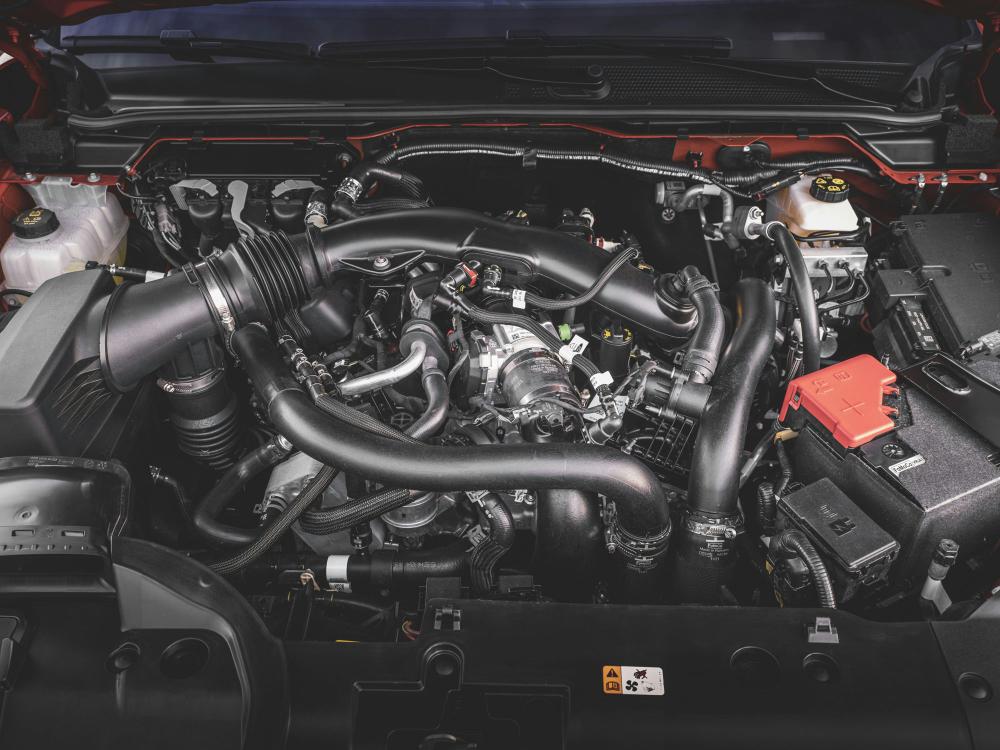
The Ford Ranger Raptor is powered by Ford’s high-output 3.0L EcoBoost V6, a twin-turbocharged gasoline engine engineered specifically for high-performance off-road use. This engine sits at the top of the modern Ranger engine lineup and delivers significantly more power and torque than any other Ranger offered in North America.
Engine History & Development
The 3.0L EcoBoost V6 belongs to Ford’s Nano engine family, a modular engine platform developed for performance, efficiency, and durability. The engine was first introduced in high-performance and luxury vehicles, where it proved capable of producing strong torque across a wide RPM range while maintaining reliability under heavy loads.
Before its use in the Ranger Raptor, the 3.0L EcoBoost was offered in vehicles such as the Ford Explorer ST and Lincoln Aviator. For Ranger Raptor duty, Ford applied a unique calibration focused on sustained high-output operation, off-road durability, and throttle response rather than fuel economy or luxury refinement.
3.0L EcoBoost Output Compared to Other Ford Vehicles
While the core engine hardware is similar across applications, output varies depending on calibration, cooling strategy, and intended use.
| Vehicle | Horsepower | Torque | Tuning Focus |
|---|---|---|---|
| Ford Ranger Raptor | 405 hp | 430 lb-ft | High-output off-road performance |
| Ford Explorer ST | 400 hp | 415 lb-ft | Street performance |
| Lincoln Aviator | 400 hp | 415 lb-ft | Luxury performance |
| Lincoln Aviator Grand Touring (PHEV) | 494 hp (combined) | 630 lb-ft (combined) | Hybrid-assisted performance |
The Ranger Raptor’s version of the 3.0L EcoBoost is one of the highest-output non-hybrid factory tunes Ford offers, optimized for durability during prolonged off-road use rather than brief bursts of acceleration.

Engine Specifications
| 3.0-liter EcoBoost® V6 (Ranger Raptor) | |
|---|---|
| Configuration | 60-degree V6, aluminum block and heads |
| Induction | Twin turbochargers |
| Valvetrain | DOHC, four valves per cylinder, Ti-VCT |
| Fuel delivery | Direct injection |
| Displacement | 183 cu in (2,956 cc) |
| Compression ratio | 10.5:1 |
| Ignition | Coil-on-plug |
| Recommended fuel | 91 octane or higher (premium recommended) |
| Transmission | 10-speed SelectShift® automatic |
| Oil capacity | 6.5 quarts 5W-30 with filter |
| Power | 405 hp |
| Torque | 430 lb-ft |
Ford Ranger Engine Power Comparison
The 3.0L EcoBoost V6 represents a substantial step up in performance compared to other engines offered in the Ford Ranger lineup.
| Engine | Horsepower | Torque | Difference vs 3.0L |
|---|---|---|---|
| 2.3L EcoBoost (2019–2024) | 270 hp | 310 lb-ft | -135 hp / -120 lb-ft |
| 2.3L EcoBoost (2025) | 270 hp | 310 lb-ft | -135 hp / -120 lb-ft |
| 2.7L EcoBoost V6 | 315 hp | 400 lb-ft | -90 hp / -30 lb-ft |
| 3.0L EcoBoost V6 (Raptor) | 405 hp | 430 lb-ft | — |
Performance in the Ranger Raptor
With 405 horsepower and 430 lb-ft of torque, the Ranger Raptor’s 3.0L EcoBoost delivers immediate throttle response and strong pull throughout the rev range. The engine is paired exclusively with a 10-speed automatic transmission and a performance-oriented four-wheel-drive system designed for aggressive off-road use.
This powertrain enables the Ranger Raptor to excel in desert running, high-speed trail driving, and technical terrain while maintaining drivability on pavement.
Ford Performance Parts – Performance Upgrade
Ford Performance Parts offers a software calibration that increases horsepower from 405 to 455 and torque from 430 to 536 lb.-ft.
Fuel Economy Expectations
Fuel economy is not the primary focus of the Ranger Raptor, but understanding realistic expectations is important for potential buyers. EPA ratings vary by configuration and driving style, especially with off-road tires and aggressive gearing.
| Engine | Typical EPA Combined MPG | Notes |
|---|---|---|
| 2.3L EcoBoost | ~22–24 mpg | Best efficiency, daily-driver friendly |
| 2.7L EcoBoost V6 | ~20–21 mpg | More torque with modest efficiency tradeoff |
| 3.0L EcoBoost V6 (Raptor) | ~17–18 mpg | Performance-focused, off-road tires and gearing |
Aggressive off-road driving, towing, and frequent use of sport or baja drive modes will reduce fuel economy further compared to highway cruising.
Maintenance Schedule & Fluid Requirements
Engine Oil
- Capacity (with filter): 6.5 quarts
- Recommended oil: SAE 5W-30
- Service interval: Follow Oil Life Monitor (up to 10,000 miles)
- Severe-duty or frequent off-road use: Change every 5,000 miles
Engine Coolant
- Recommended coolant: Motorcraft Orange Prediluted Antifreeze/Coolant
- Service interval: 100,000 miles
Spark Plugs & Filters
- Spark plug replacement: 60,000–100,000 miles depending on use
- Engine air filter: Inspect frequently in dusty conditions
- Cabin air filter: Replace approximately every 20,000 miles
Summary
The 3.0L EcoBoost V6 defines the Ranger Raptor. With class-leading horsepower, strong torque delivery, and a calibration designed for sustained off-road abuse, it stands far above the other Ranger engine options. While fuel economy takes a back seat to performance, the 3.0L EcoBoost delivers the capability and durability expected from Ford’s flagship midsize off-road truck.
About The Author

Jim Oaks is the founder of TheRangerStation.com, the longest-running Ford Ranger resource online since 1999. With over 25 years of hands-on experience building and modifying Ford Rangers — including magazine-featured builds like Project Transformer — Jim has become one of the most trusted authorities in the Ford Ranger off-road and enthusiast space.
Since launching TheRangerStation.com, Jim has documented thousands of real-world Ranger builds, technical repairs, drivetrain swaps, suspension modifications, and off-road adventures contributed by owners worldwide. TheRangerStation.com has been referenced in print, video and online by enthusiasts, mechanics, and off-road builders looking for practical, and experience-based information.