
2019-2024 Ford Ranger 2.3L EcoBoost — Engine History, Specs & Maintenance
Engine History
The 2.3L EcoBoost engine was first introduced by Ford in 2015 in the Ford Mustang as a turbocharged inline-four designed for performance with efficiency. It replaced the older 2.5L naturally aspirated engine, delivering more power and torque from a smaller displacement thanks to direct injection, twin independent variable cam timing (Ti-VCT), and a twin-scroll turbocharger.
After its Mustang debut, the engine saw use in the Ford Explorer and Transit Connect, providing strong low-end torque and smooth power delivery. In 2019, Ford adapted the 2.3L EcoBoost for the Ranger midsize pickup, tuning it for towing and utility while maintaining fuel efficiency. This made it a versatile choice for daily driving and light-to-medium-duty truck work.
Also check out our introduction to the 2.3L EcoBoost: Ford Ranger 2.3L EcoBoost Engine Introduction.
The 2.3L EcoBoost was updated for 2025. See the new version here: 2025 Ford Ranger 2.3L EcoBoost.
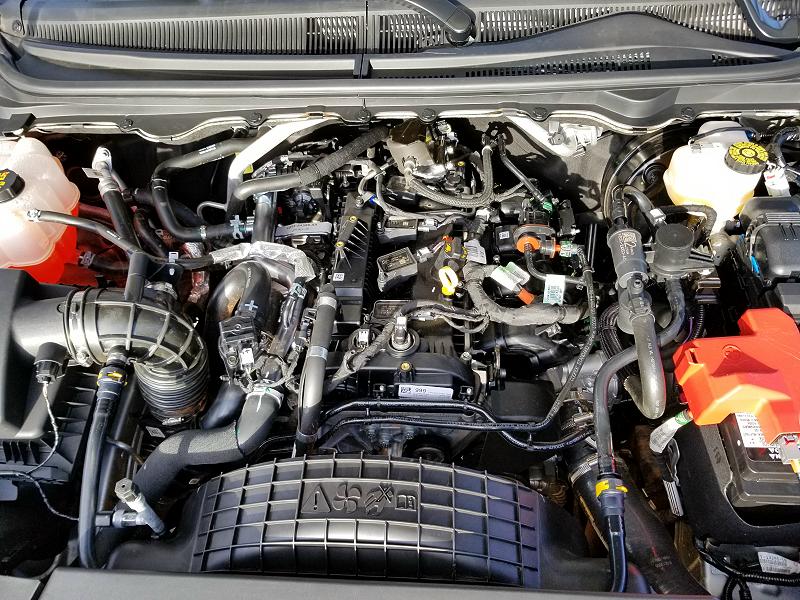
Engine Specifications
| 2.3-liter EcoBoost® I4 with Auto Start-Stop | |
|---|---|
| Configuration | Aluminum block and head |
| Intake manifold | Lightweight composite shell-welded |
| Exhaust manifold | High-flow three-port cylinder head with integrated exhaust manifold |
| Valvetrain | DOHC, four valves per cylinder, twin independent variable camshaft timing |
| Valve diameter/lift | Intake: 31 mm / 8.31 mm; Exhaust: 30 mm / 7.42 mm |
| Pistons | Lightweight high-strength cast aluminum with low-friction skirt coating and steel ring carriers |
| Connecting rods | Forged steel with full floating pins |
| Ignition | Distributor-less with coil-on-plug |
| Bore x Stroke | 3.45 x 3.7 in (87.5 x 94 mm) |
| Displacement | 140 cu in (2,300 cc) |
| Compression ratio | 10.0:1 |
| Engine control system | Powertrain control module |
| Recommended fuel | 87 octane |
| Fuel capacity | 18 gallons |
| Fuel delivery | Direct injection |
| Oil capacity | 6.2 quarts 5W-30 with filter (10,000-mile service interval) |
| Power | 270 hp |
| Torque | 310 lb-ft |
Maintenance Schedule & Fluid Requirements
Engine Oil
- Capacity (with filter): 6.2 quarts
- Recommended oil: SAE 5W-30
- Service interval: Up to 10,000 miles or 12 months (follow Oil Life Monitor)
- For severe or heavy-duty use, change every 5,000–7,500 miles
Engine Coolant
- Total capacity: 15.1 quarts
- Recommended coolant: Motorcraft Orange Prediluted Antifreeze/Coolant
- Service interval: 100,000 miles
Spark Plugs & Filters
- Spark plug replacement: 100,000 miles
- Engine air filter: Inspect and replace around every 30,000 miles
- Cabin air filter: Replace about every 20,000 miles
Performance & Real-World Notes
The 2.3L EcoBoost delivers 270 hp and 310 lb-ft of torque, providing strong low-end torque and smooth acceleration. Its turbocharged design allows for confident towing up to 7,500 lbs when properly equipped, while maintaining fuel efficiency and daily-drive comfort.
The direct-injection-only design in 2019–2024 models can accumulate carbon on intake valves over time, which the 2025 update addressed by adding port injection.
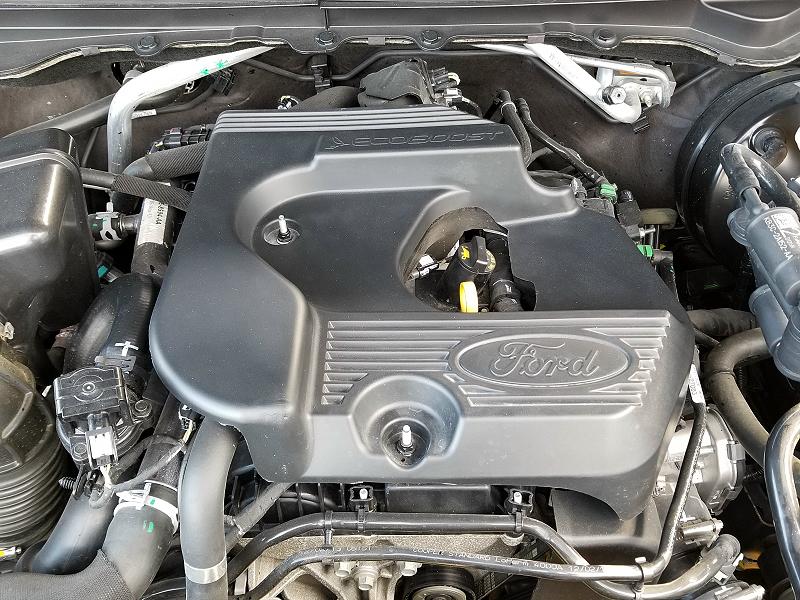
Engine Cover
The 2.3L EcoBoost in the Ford Ranger received a plastic engine cover on the 2019-2020 Lariat packages. The XL and XLT never received the engine cover.
Summary
The 2019-2024 Ford Ranger 2.3L EcoBoost is a capable, efficient, and durable engine for midsize trucks. Its roots in the Mustang and Explorer platforms demonstrate Ford’s focus on combining performance with fuel efficiency. While peak horsepower and torque remained unchanged in 2025, the newer port + direct injection design improves long-term reliability and maintenance.
Related Articles
Ford Ranger 2.3L EcoBoost Engine Introduction.
2025 Ford Ranger 2.3L EcoBoost
Last Updated:
About The Author

Jim Oaks is the founder of TheRangerStation.com, the longest-running Ford Ranger resource online since 1999. With over 25 years of hands-on experience building and modifying Ford Rangers — including magazine-featured builds like Project Transformer — Jim has become one of the most trusted authorities in the Ford Ranger off-road and enthusiast space.
Since launching TheRangerStation.com, Jim has documented thousands of real-world Ranger builds, technical repairs, drivetrain swaps, suspension modifications, and off-road adventures contributed by owners worldwide. TheRangerStation.com has been referenced in print, video and online by enthusiasts, mechanics, and off-road builders looking for practical, and experience-based information.