Need alternator help - 83 Ranger


RayInStl

10+ Year Member

⭐Supporting Member
Joined
Oct 30, 2015
Messages
337
Points
1,601
City
St. Louis, MO
Vehicle Year
1983
Transmission
Manual
My credo
Well, that didn't work. Let's try something else!
I finally have the Ranger running and driving well. The last issue to resolve is the charging system. I thought I had a bad alternator, but replacing with a spare that came out of a known-good truck has the same results. I was checking continuity from the alternator to the power regulator on the fender and I have continuity on the Field wire, but not on the Stator. My truck does have an ammeter, which seems to complicate the wiring a bit and I have to admit I'm lost. Should I have continuity on the Stator wire? If anyone has any troubleshooting ideas, I'd appreciate the help!
 
I want to say “yes”. But the correct answer is “Where are you measuring continuity to/from?”. It might be better, first of all, to make sure everything is connected and see where you do or don’t have voltage available.

The ammeter can largely be ignored. All it does is measure the voltage difference across the shunt. The shunt is a very precise, very small resistor. You will not likely see its resistance with most normal multimeters.

With everything connected, do you see full battery voltage at the stator terminal?

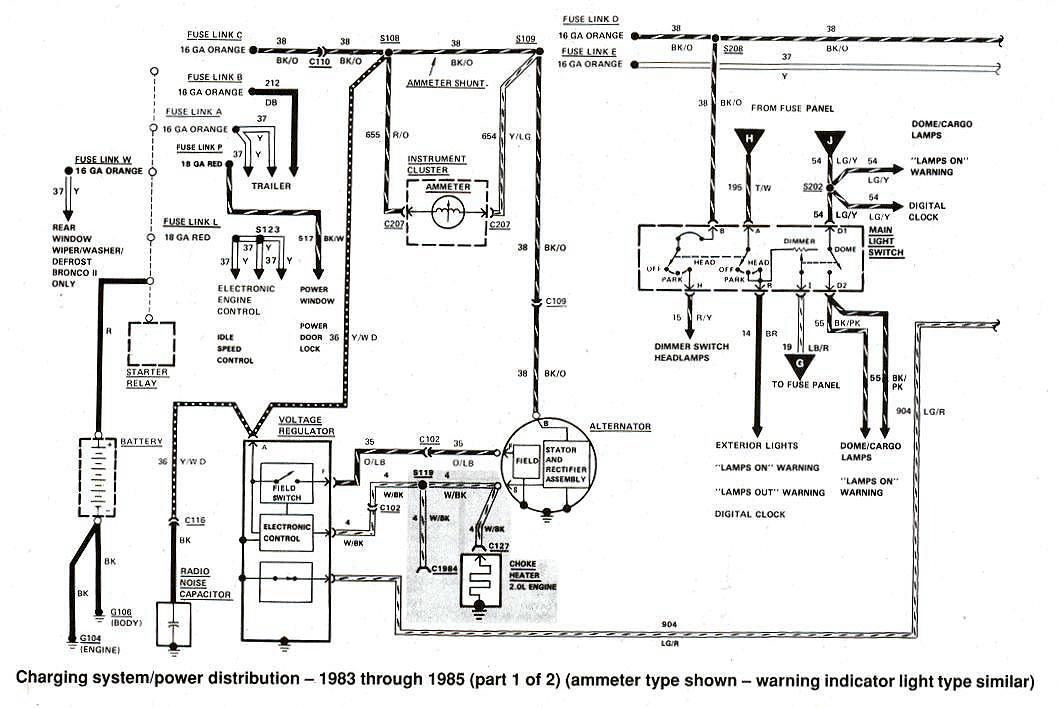
Have you seen the drawing for the system?
 
I saw a similar diagram here. While I'm somewhat electrically literate, I'm not the best. I was checking continuity between the Stator connector at the alternator and the "S" terminal of the regulator on the inner fender. If I understand correctly, I should have continuity there. If I'm barking up the wrong tree and there's a better troubleshooting method, I'm all ears! I was just doing my best with my limited knowledge. I don't know the condition of the truck's electrical systems, though I've run into a couple wire nuts, which is never a good sign. I bought it as a project. The original engine was in pieces in the bed.

I'll tell you everything I do know and what assumptions I've made:
  • The colors of the wires have faded to the point of being difficult to confirm against a diagram.
  • I verified the field wire by checking continuity from the "F" terminal of the regulator to the connector at the alternator. It's plugged in to the FLD terminal of the alternator.
  • I have the black/orange wire hooked to the BAT terminal of the alternator. I believe this is correct because I get battery voltage on this wire when it's disconnected from the alternator. Of note, this wire has a wire nut splicing it together. I'm afraid that the fusible link shown in the diagrams has done it's job and someone "fixed" it with a wire nut.
  • I have the connector with the small pigtail hooked up to the STA terminal on the back of the alternator. This was largely by process of elimination, but it made sense to me that it was correct due to the small pigtail that would go to the electric choke.
  • I added a ground wire to GRD as a Hail Mary. None of the diagrams show a ground wire, but I was grasping at straws.
Is there any reason I shouldn't try running a wire from the "S" terminal of the regulator to the "STA" terminal of the alternator?

Thanks for your help!

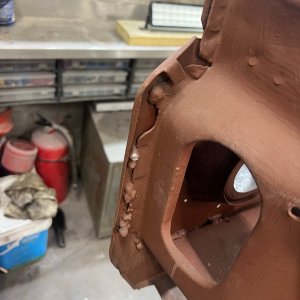
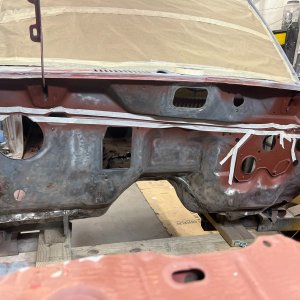
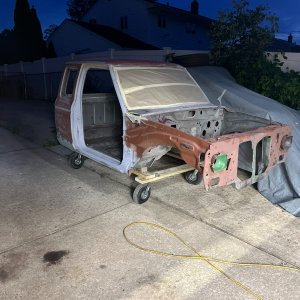
Here's photos, if they help:
Need alternator help - 83 Ranger


Need alternator help - 83 Ranger


Need alternator help - 83 Ranger


Need alternator help - 83 Ranger
 
I can’t get your diagram to open. So I’m using the one I linked to in out tech library.

First, if you are using your meter to measure continuity, disconnect your battery. Continuity and resistance readings should only be done in dead circuits because the meter uses its own battery to do the measurement. Any other power will interfere and on high voltages, could damage the meter or worse.

The black/orange wire should have battery voltage on it at the B terminal of the alternator. That voltage comes from the battery, through a fusible link attached at the starter relay on the fender.

You should have a wire connected from the field (F) terminal on the alternator going to F at the regulator. That wire energizes the field winding. The regulator controls the voltage on that wire in order to maintain the proper output voltage to charge the battery and supply loads.

The wire going from S on the alternator back to the regulator is the feedback signal. That is how the regulator knows whether to increase or decrease the field voltage to maintain the proper output voltage.

Your alternator should be grounded to the engine block and the engine block should be grounded back to the battery. Make sure that is the case. Adding a ground wire from the alternator back to battery negative won’t hurt anything.

Somewhere along the black/orange wire there should be 2 splices. One will be a wire going to the ammeter in the cab. The other should have a wire going to the ammeter AND a wire going to the A terminal of the regulator and the noise capacitor. This is the power supply that the ammeter uses to control the field strength. The noise capacitor is just a convenience to prevent whining interference in your radio.

The regulator case needs a good clean connection to ground in order to work properly. No paint. No rust.

In all things electrical, ground connections are equally important as voltage connections.
 

Sponsored Ad

TRS Events & Gatherings

Featured Rangers

Want to see your truck here? Share your photos and details in the forum.

TRS Latest Video

Official TRS Merchandise

Follow TRS On Instagram

TRS Ranger Sponsors


Product Suggestions

Back
Top