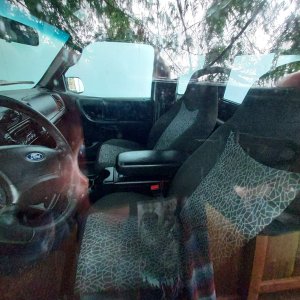
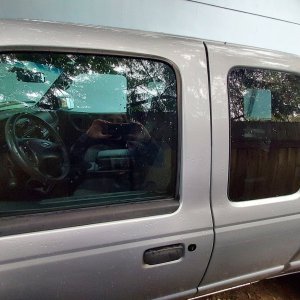
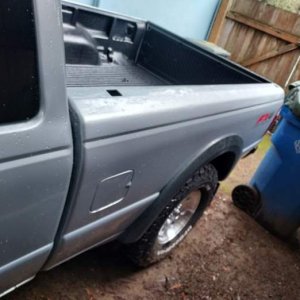
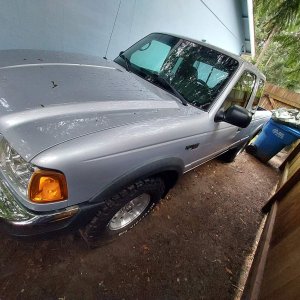
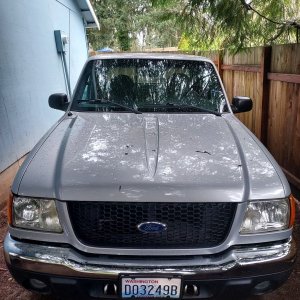
I have just completed the intake swap on my truck. I figured that since hardly anyone comes back to forums with results and tips; I will run through everything I did and ran into during the swap. I pulled a 2006 intake out of a junkyard truck to put into my 2002 Ranger. Everything was pretty straight forward for the swap. Upon pulling the old intake, I swapped the throttle body, IAC, and sensors over to the new intake as they were all new and known to be good. Upon removing the sensor on the top of the intake, the bolt broke and I could not get the bolt out to get the other one back in. The sensor kind of snaps in so I used RTV to hold it in place, it seems to be holding well and not causing issues at the moment. With the new intake, the PCV port on the back of the intake is larger and has 2 extra small ports for coolant to heat it. The 2001-2003 intakes don't have the coolant lines so these ports can just be left as is, no leaks occurred as it is its own enclosed system. The old PCV port is smaller, and the hose will not fit on the new intake. To fix this, I went to Home Depot and got 5/8 hose along with a brass 5/8 to 1/2 adapter with 3 hose clamps. I only needed about 2.5" of the 5/8 hose to go on the PCV port and to go on the 5/8 side of the adapter. MAKE SURE TO HAVE THE BOLT PORTIONS OF THE CLAMPS TO FACE TOWARDS THE INTAKE AND NOT THE FIREWALL, OTHERWISE IT WILL NOT FIT GOING BACK IN. There is also an extra mounting point for a christmas tree bracket that holds the hoses on the post-2004 intakes (not needed on pre-2004). This bracket is at the back near the bottom (not on old intake) and will need to be cut off for better clearance upon reassembly. Upon reassembly, everything is pretty much the same as the old intake. Use a hose clamp to secure the 1/2 PCV hose to the 1/2 side of the adapter in the same manner as the other clamps. As for the vacuum lines for the IMRC system, go to Advance Auto or AutoZone and get a 1/4" vacuum line and a set of assorted T fittings (make sure they are the same size on all 3 ports and not the ones with different size ports for each adapter T). Cut about 6" of the new vacuum line and plug it into the port in the middle of the intake (between cyl. 2 and 3) where the IMRC solenoid plugs in on the old intake, there should be a rubber cap that will need to be removed. Then use a T fitting to plug into the other end and plug the vacuum line that goes to the fuel rail onto one side (the line that used to go to the port on the inside of the intake on cyl. 1) then plug the solenoid line onto the other side of the T. Then plug the actuator back into the bottom port on the solenoid and make sure the electrical plugs are hooked up. This will allow the original IMRC system to basically play dummy and function without actually doing anything. Zip tie the actuator to the harness above the steering shaft so it is out of the way. Finish plugging in the rest of the lines and sensors as you would the original intake. Upon start up, the tick was gone and it idled better. No codes were thrown as the IMRC system still thinks its working. Being the 5-speed model, I only noticed a slight bog down getting off the line, this was fixed by just revving it up a little more on take-off. I also noticed much smoother shifting as the RPMS dropped quicker and didn't stick at 1500 before dropping like it did with the old intake. I also noticed a slight power increase with better throttle response overall. The sensor also survived its first run with no leaks developing. No cons were noticed other than the slight bog down and the snapped sensor bolt. I will update after more driving throughout the next couple weeks. Hit me up if you have any questions as I will actually respond.