
Upgrading A Ford 2.8L To A 4.0L Starter
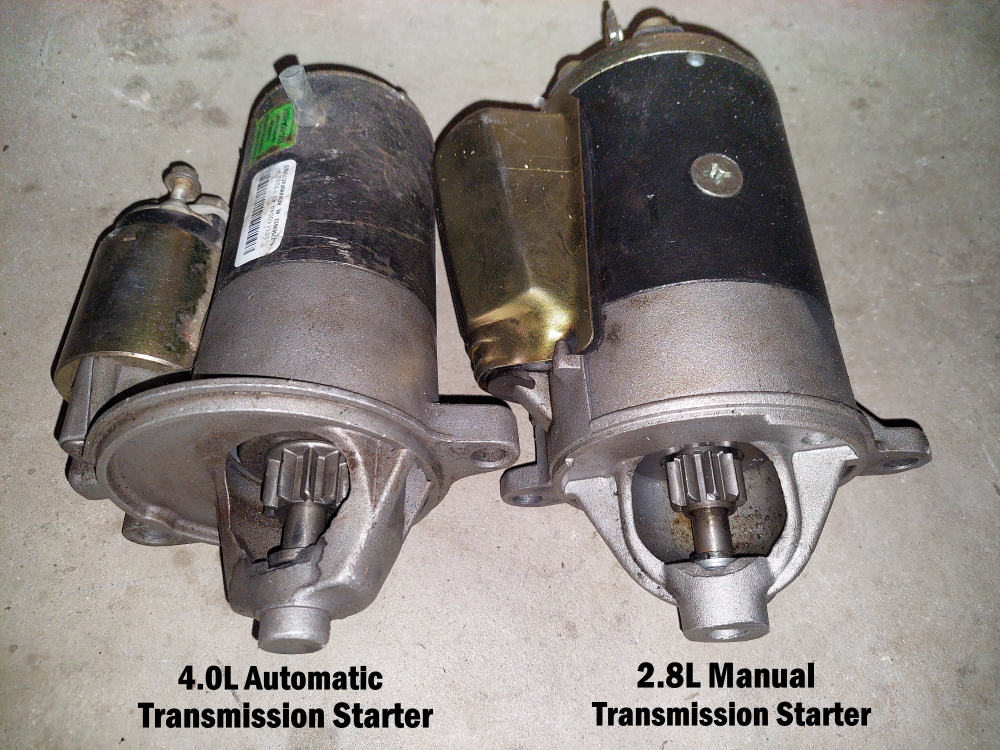
I purchased a 1984 Ford Bronco II with a 2.8L V6 and a manual transmission that had a starter that wasn’t fully engaging the flywheel and wouldn’t start the engine. These older style starters can be problematic, so I decided to replace it with a better starter from a Ford 4.0L OHV. You just have to make sure that the 4.0L starter is for an automatic and not a manual. Looking at the image below you can see that the snout and gear on the manual starter doesn’t extend out as far and won’t properly engage the 2.8’s transmission. You can see in the image above how similar the 4.0L starter and the 2.8L manual starter are.
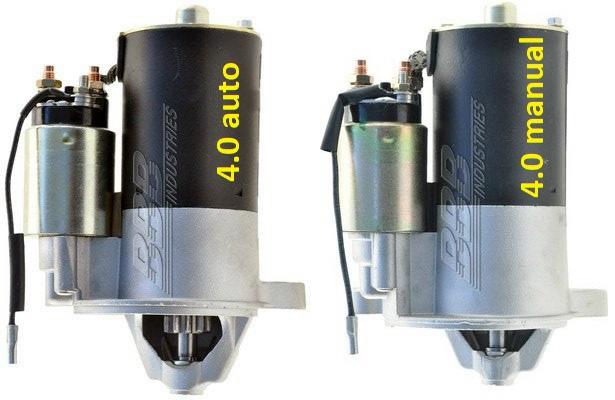
The 2.8L starter uses a single wire. When you turn the key, power is sent to the starter solenoid on the inner fender which activates the solenoid sending power to turn the starter.
The 4.0L starter has a solenoid attached to it and will require a few simple wire changes.
Wiring The 4.0 Starter
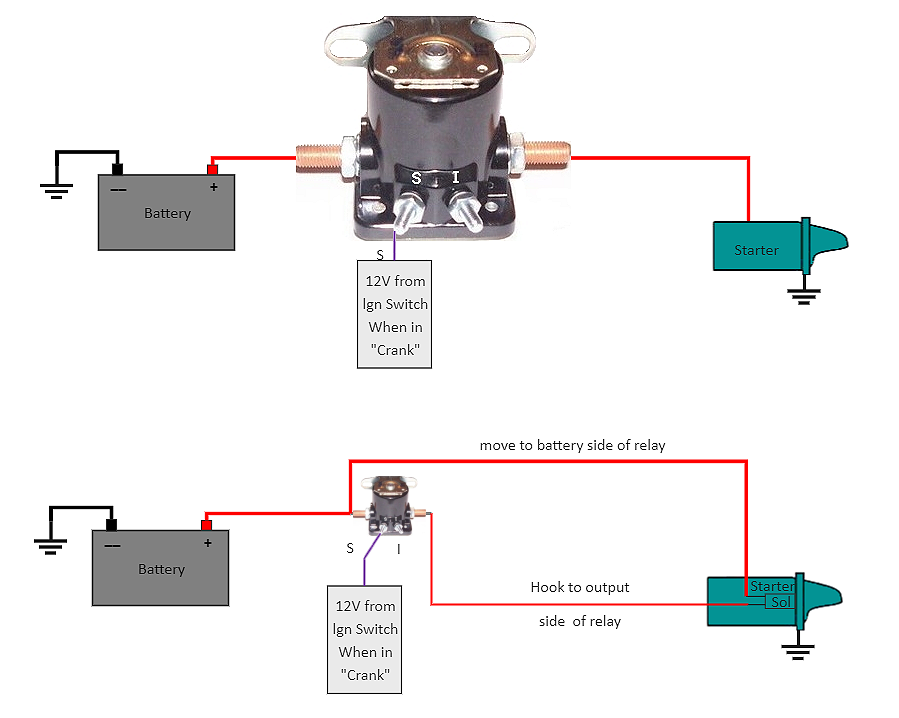
The original 2.8L setup used the fender solenoid to send full power to the starter only during cranking. The 4.0L starter requires constant battery power on its large terminal and a trigger signal on its small terminal.
Main Battery Cable (Constant Hot):
- Locate the original thick cable that ran from the fender solenoid to the old starter.
- Move it: Disconnect it from the “starter side” (output) of the fender solenoid and move it to the “battery side” (input) of the fender solenoid.
- Connect the other end of this cable to the large top post on the new 4.0L starter. This provides constant high-amperage power.
Trigger Wire (Start Signal):
- Run a new 10- or 12-gauge wire from the now-empty output post of the fender solenoid (the side the original starter cable used to be on).
- Connect the other end of this wire to the small terminal (S-terminal) on the 4.0L starter solenoid.
Grounding:
- Ensure the starter mounting surface is clean of rust or paint, as the starter grounds through the engine block.
Summary of Final Connections
| Component | Connection Point |
|---|---|
| New Starter Large Post | Constant 12V (Battery side of fender solenoid) |
| New Starter Small Post | Switched 12V (Original “starter” side of fender solenoid) |
| Fender Solenoid “S” Terminal | Leave existing wire (from ignition switch) as is |
Why The 4.0L Starter Is A Better Starter
While the stock Ford 4.0L OHV starter is not officially marketed as a “high torque” unit, it is a Permanent Magnet Gear Reduction (PMGR) starter. This design naturally provides higher cranking torque and efficiency compared to the older, larger direct-drive starters often found on earlier 2.8L/2.9L engines.
Technical Characteristics
- Design Type: The 4.0L starter uses gear reduction technology, meaning a small, high-speed motor uses internal gears to multiply torque before spinning the flywheel.
- Power Output: Standard 4.0L OHV starters are typically rated at 1.4 kW (approximately 1.8 hp).
- Comparison to 2.8L: If you are upgrading from an older 2.8L direct-drive starter, the 4.0L PMGR starter will feel like a “high torque” upgrade because it is lighter, smaller, and turns the engine over more forcefully with less battery draw.
Related Article
Ford 2.8 Starter 10-Tooth Upgrade
About The Author
Jim Oaks is the founder of TheRangerStation.com, the longest-running Ford Ranger resource online since 1999. With over 25 years of hands-on experience building and modifying Ford Rangers — including magazine-featured builds like Project Transformer — Jim has become one of the most trusted authorities in the Ford Ranger off-road and enthusiast space.
Since launching TheRangerStation.com, Jim has documented thousands of real-world Ranger builds, technical repairs, drivetrain swaps, suspension modifications, and off-road adventures contributed by owners worldwide. TheRangerStation.com has been referenced in print, video and online by enthusiasts, mechanics, and off-road builders looking for practical, and experience-based information.