
Introduction:
This is another way to eliminate the E-Clip found in the 1984-1990 Bronco II, 1991-1994 Explorer, or a 1983-1997 Ranger Dana Twin Traction Beam (TTB) front suspension.
Difficulty: 4 out of 10, some welding may be required.
Part Needed: Echo Spring, Echo Part #:69621655730
You can click this LINK to do an Echo dealer search in your area.

The spring is 2-1/4″ long with a 1.445″ OD and a 1.2395″ ID.


First off, you have to squeeze the spring over the splines of the male passenger axle shaft. This can be a pain if you don’t have a vice. You will have to sort of stretch the very bottom coil and slip it over the spline. Then you need to slowly drive the spring down over the splines of the shaft.
The spring rest against the end of the female inner axle shaft.


After that, you should do something to keep it from slipping over the groove in the shaft. I chose to run a weld around the axle. You can also use a hose clamp if you can’t weld. This will keep the spring from popping over the groove and causing it to fail.


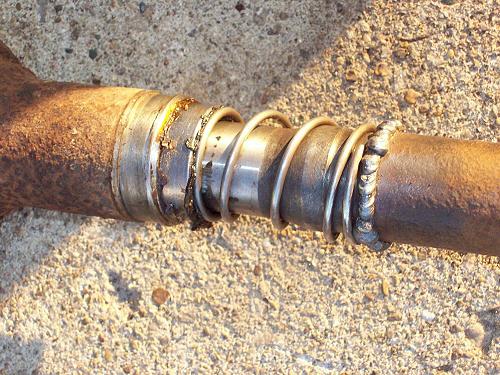
Now you can re-install the boot and use a pair of hose clamps to hold it on. Remember to grease up the axle splines before you slide the female end over the male end.


Finally, you can re-install the axle into the truck.
More Info From 4x4Junkie:
The spring needs to be 2.5-3″ long, 1-3/8″ I.D., and about 20-30 PPI stiffness.

Related Articles:
Dana 35 / 28 C-Clip Eliminator
Last Updated:
About The Author
Jim Oaks is the founder of TheRangerStation.com, the longest-running Ford Ranger resource online since 1999. With over 25 years of hands-on experience building and modifying Ford Rangers — including magazine-featured builds like Project Transformer — Jim has become one of the most trusted authorities in the Ford Ranger off-road and enthusiast space.
Since launching TheRangerStation.com, Jim has documented thousands of real-world Ranger builds, technical repairs, drivetrain swaps, suspension modifications, and off-road adventures contributed by owners worldwide. TheRangerStation.com has been referenced in print, video and online by enthusiasts, mechanics, and off-road builders looking for practical, and experience-based information.