
Should You Replace Your Ford Ranger Dana 35 TTB With a Dana 44 Axle?
The Dana 35 TTB front axle in Ford Rangers is often considered a weak point for serious off-road use. Many enthusiasts debate whether upgrading to a Dana 44 TTB or solid Dana 44 axle is worth it. This guide breaks down the differences in axle shafts, U-joints, spindles, hubs, and brake components to help you decide the best upgrade for your Ranger.
Dana 35 TTB and Dana 44 TTB Axle Shaft Dimensions
One of the main reasons people consider upgrading is to get stronger axle shafts. Let’s examine the axle shaft dimensions and differences.
Dana 35 TTB Axle Shafts
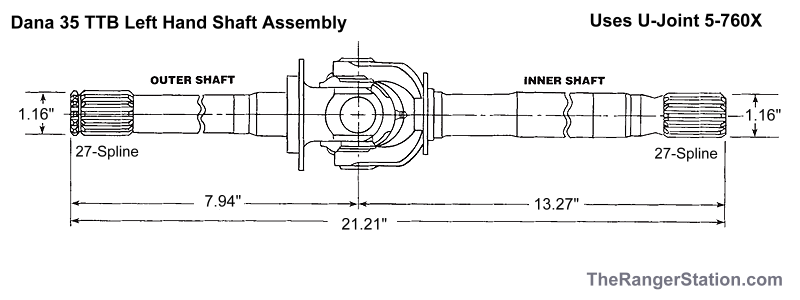
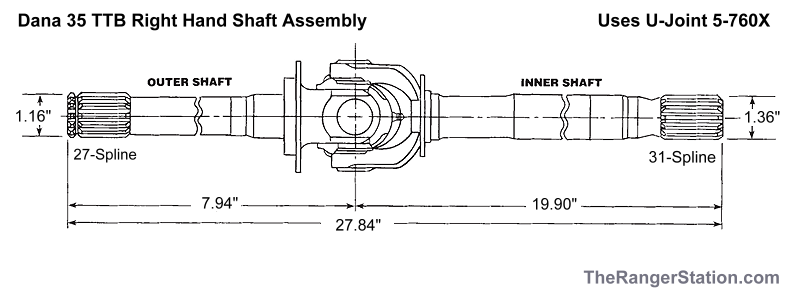
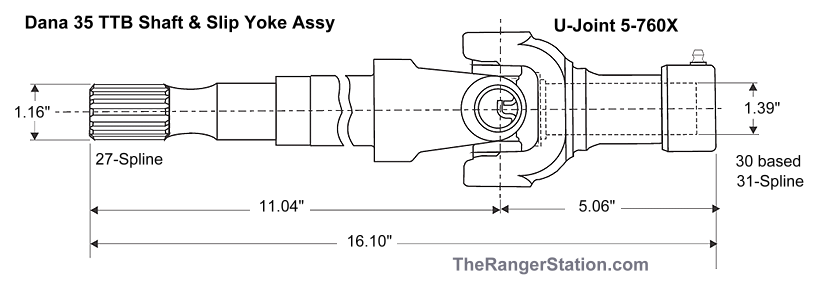
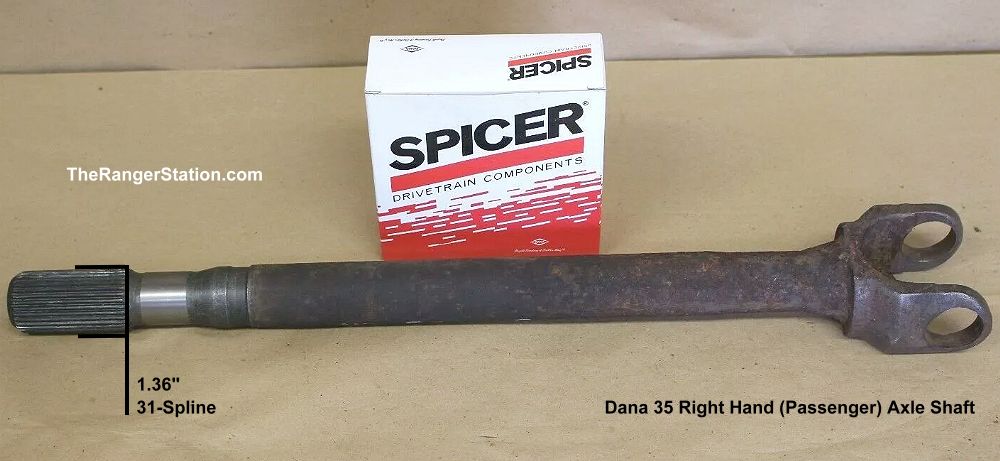
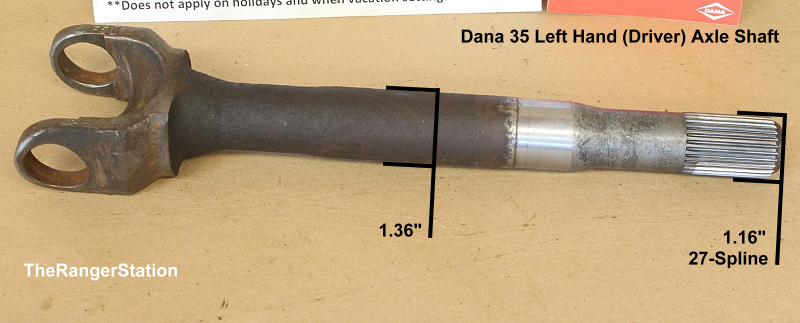
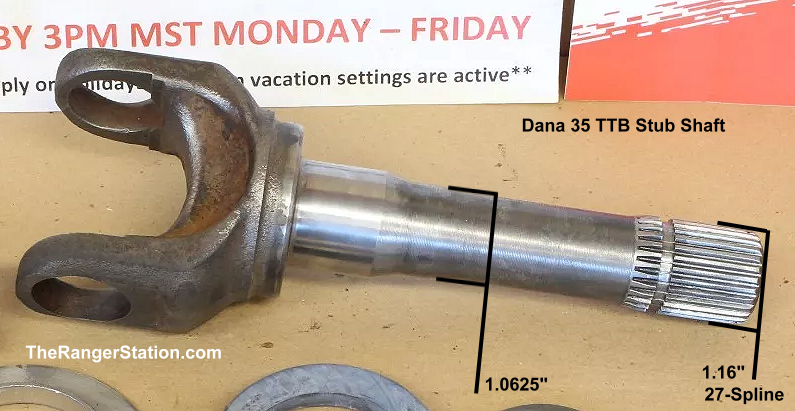
The left (driver) side axle uses a 1.36″ diameter axle shaft that tapers down to 1.16″ diameter with 27 splines entering the differential. The right (passenger) side axle uses a 1.36″ diameter shaft tapering to 1.16″ with 27 splines at the differential and a 31-spline slip yoke. The outer stub shafts are 1.16″ diameter with 27 splines.
Dana 44 TTB Axle Shafts
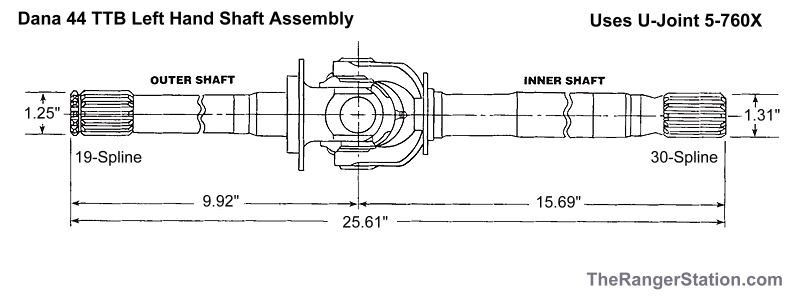
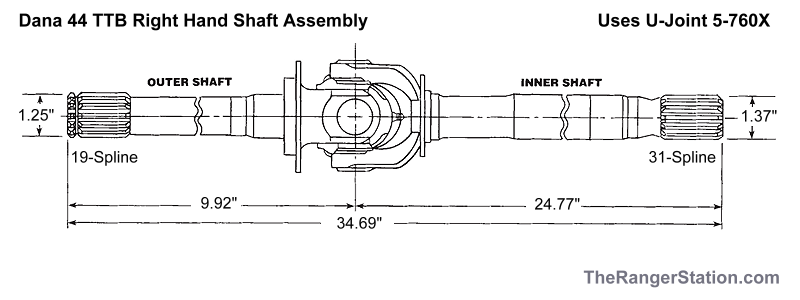
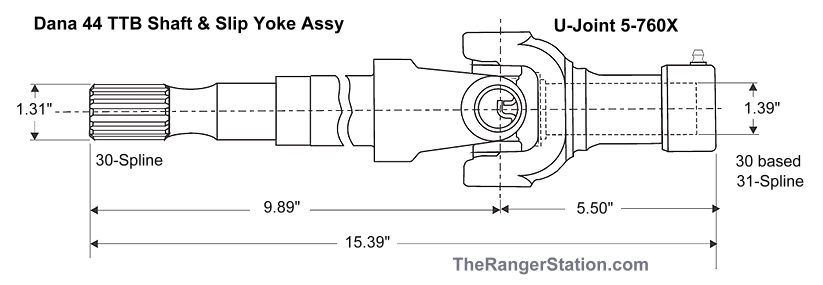
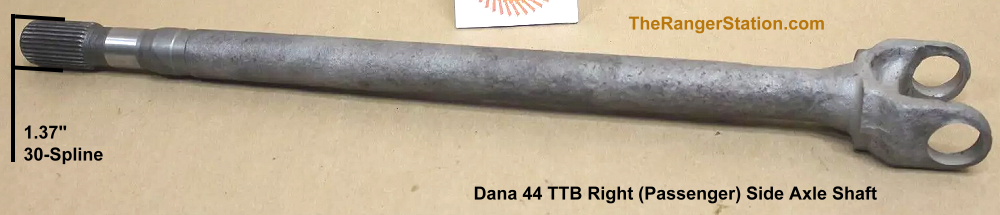
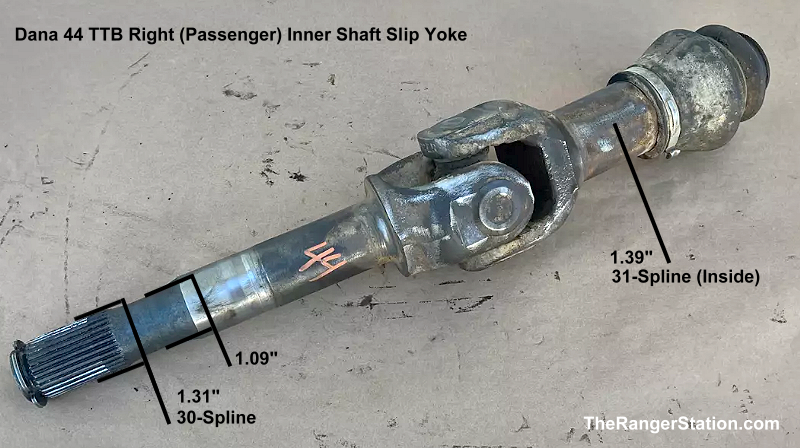
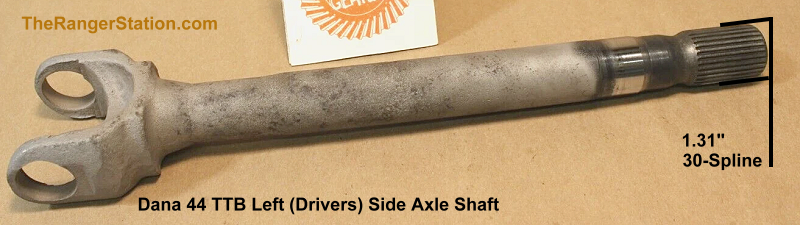
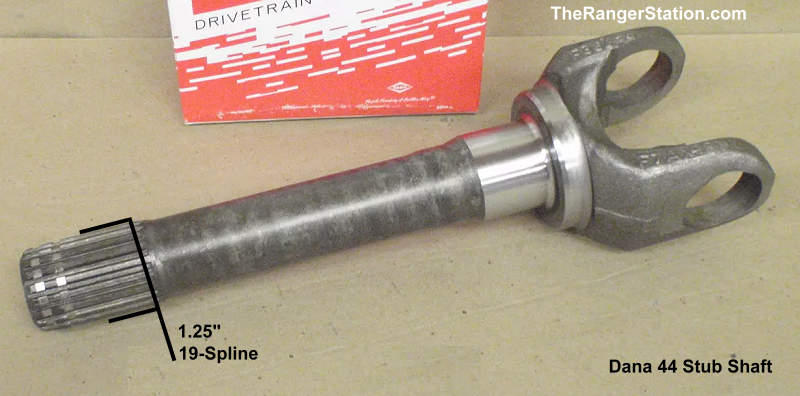
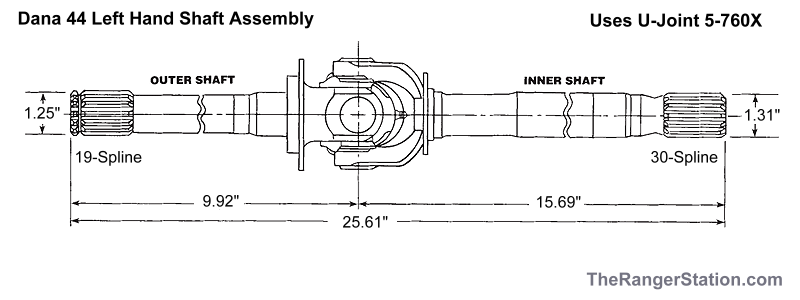
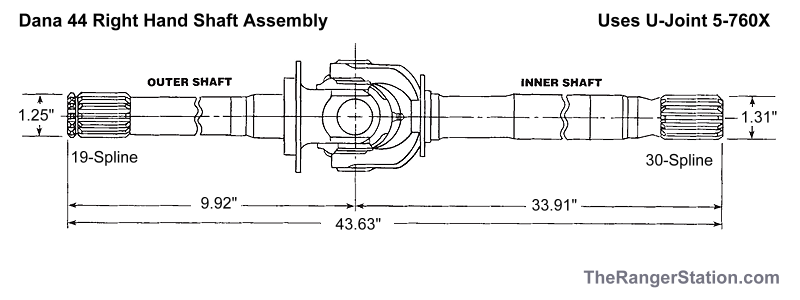
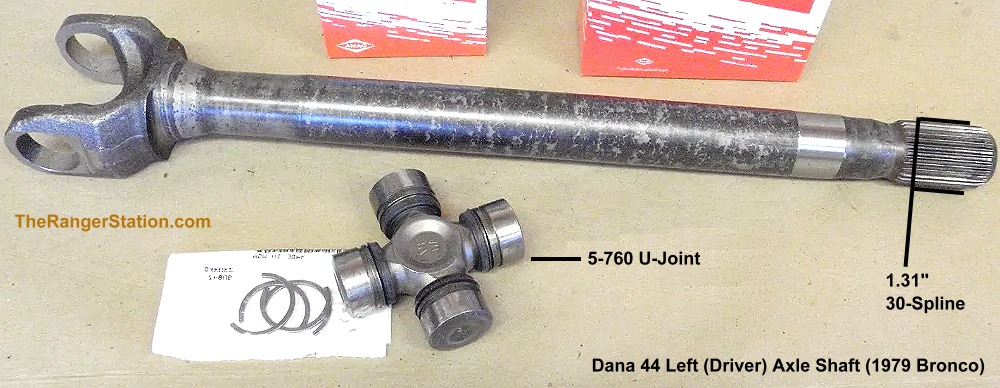
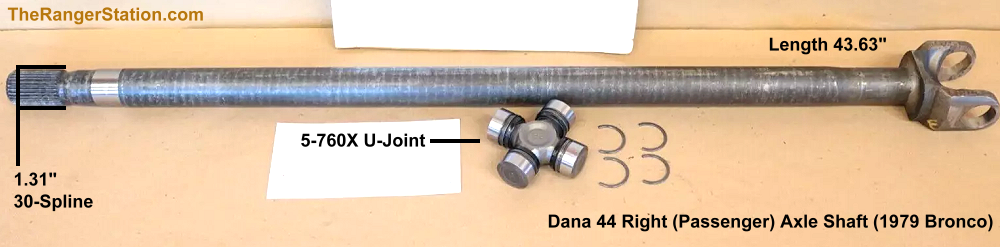
The Dana 44 TTB uses a 1.31″ diameter 30-spline axle shaft on the left (driver) side. The right (passenger) side has a 1.31″ diameter 30-spline shaft from the differential with a 31-spline slip yoke. The outer stub shafts are 1.25″ diameter with 19 splines.
Dana 44 Solid (Live) Axle Axle Shafts
The solid Dana 44 uses 1.31″ diameter 30-spline shafts on both sides. Outer stub shafts are 1.25″ diameter with 19 splines.
Axle Shaft Differences: Dana 35 TTB vs Dana 44 TTB
| Component | Dana 35 TTB | Dana 44 TTB |
|---|---|---|
| Left Axle Shaft Diameter | 1.16″ | 1.31″ |
| Right Axle Shaft Diameter | 1.36″ | 1.37″ |
| Stub Shaft Diameter | 1.16″ | 1.25″ |
| Axle Shaft Splines | 27 | 30 |
| Stub Shaft Splines | 27 | 19 |
| Slip Yoke Shaft | 1.16″ | 1.31″ |
| Slip Yoke | 1.39″ | 1.39″ |
Notes:
- The Dana 35 TTB Left Axle Shaft is 1.36″ and tapers down to 1.16″ at the splines
- The Dana 35 & Dana 44 use the same slip yoke, but different shafts into the carrier
- While the Dana 44 stub shaft and hub spacing is slightly larger, the Dana 35 TTB shafts entering the differential are actually slightly larger in diameter than the Dana 44 TTB. This subtle difference is critical for understanding upgrade benefits.
- The axle shaft on the Dana 35 is 1.36″ in diameter. The smallest point on the Dana 35 shafts is 1.16″ inches where it tapers down to go in to the carrier.
- The axle shaft on the Dana 44 is 1.31″ in diameter. The Dana 44 shafts have a neck-down on them that tapers down to 1.09″ inches.
- The only shaft on a Dana 35 that is smaller than the neck-down on the Dana 44, is the Dana 35 stub shaft, which is 1.0625″ inches.
- The Dana 35 axle shaft is 0.05″ larger than the Dana 44 which is just under 1/16″ difference.
- The Dana 44 stub shafts are larger than the stub shafts on a Dana 35, but the Dana 35 has 27-splines at the hub, and the Dana 44 only has 19-splines.
- The Dana 44 has 30-spline shafts that enter the differential and the Dana 35 TTB has 27-spline shafts that enter the differential.
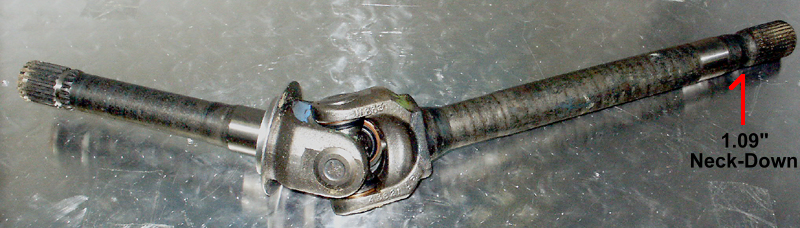
(Dana 44 shafts above and below showing the 1.09″ taper)

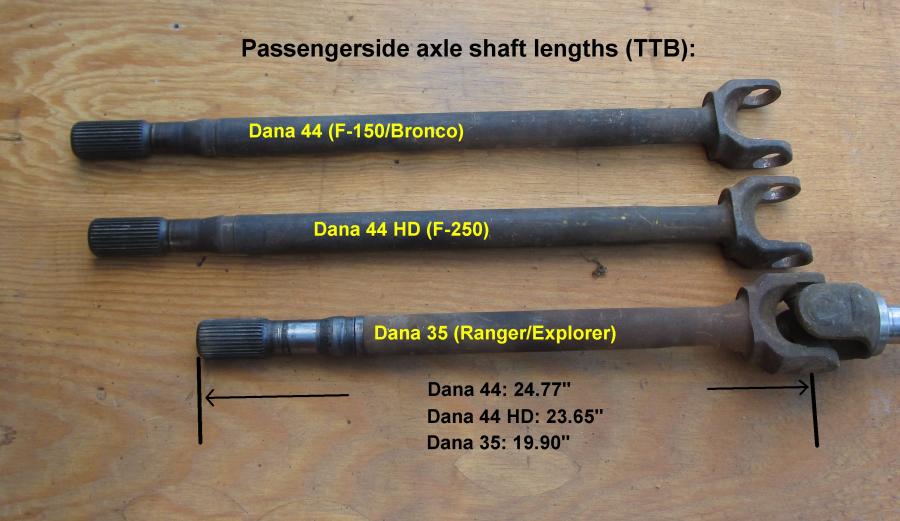
(Dana 35 TTB and Dana 44 shafts shown for comparison)
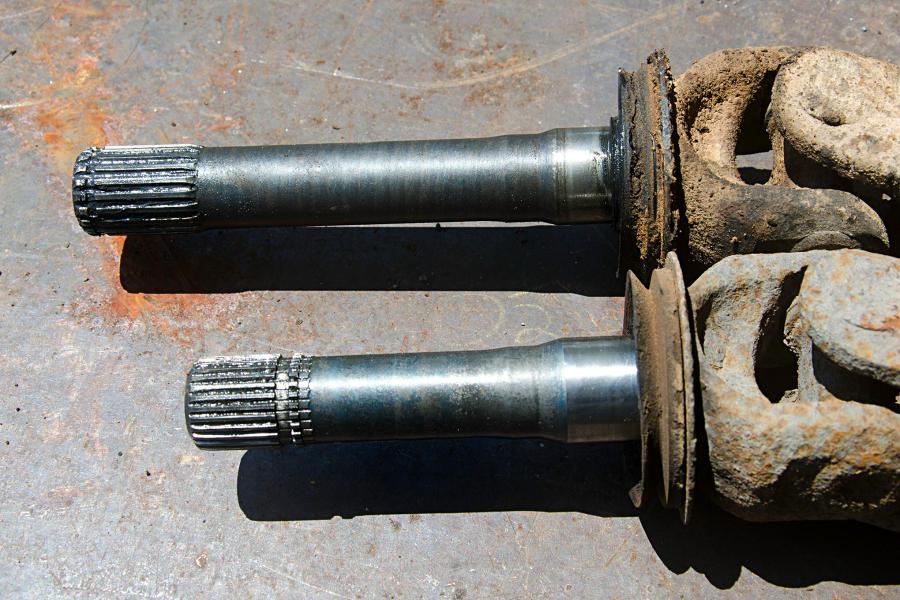
The Dana 44 stub shaft (top) is bigger in every way (except spline count) when compared to the stock Dana 35 shaft (bottom). The outer diameter of the splines is larger, as is the diameter of the stub shaft itself by nearly 1/16 inch, adding strength over the stock stub shaft.
U-Joints Comparison
The Dana 35 TTB, Dana 44 TTB, and Dana 44 solid (live) axles used 5-760 (formerly 5-297) U-joints from 1973 onwards. Early Dana 44s (pre-1973) used smaller 5-260 U-joints, which are weaker and should be avoided.
I’ve seen people swap in a Dana 44 from an early Ford Bronco to say that they’ve done a solid axle swap only to end up with smaller U-joints than a Dana 35.
Spindles
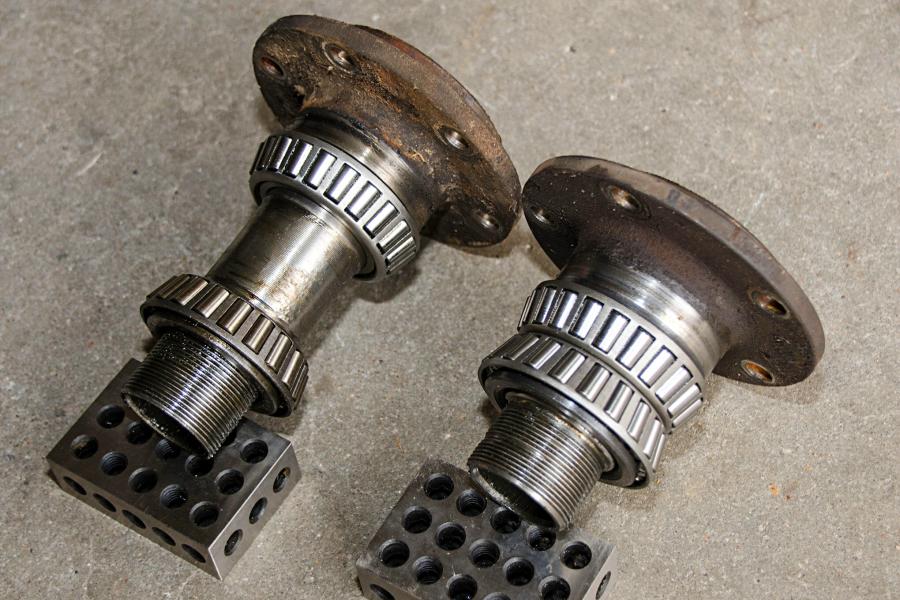
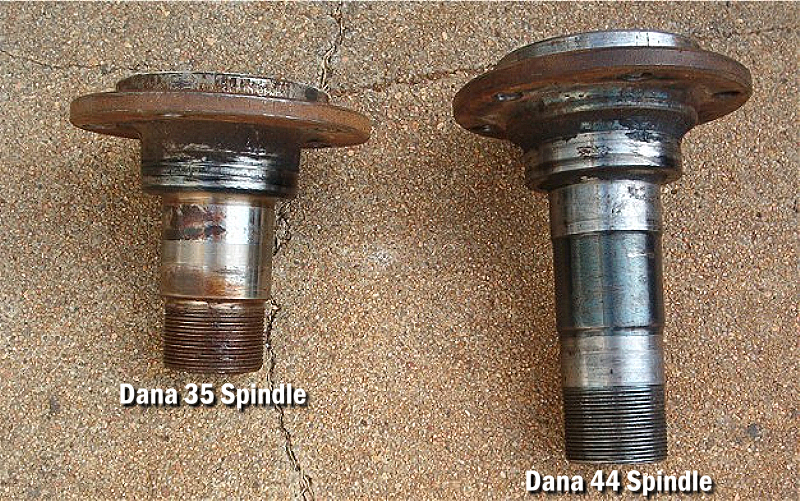
The wheel bearing spacing of the Dana 44 spindle (left) is much wider than the Dana 35 (right). The additional separation increases strength and offsets the stress of running larger tires and higher offset wheels. Note that the Dana 35 TTB and Dana 44 both use the same 706110X wheel bearing.
Spindle / Rotor / Locking Hub Assembly
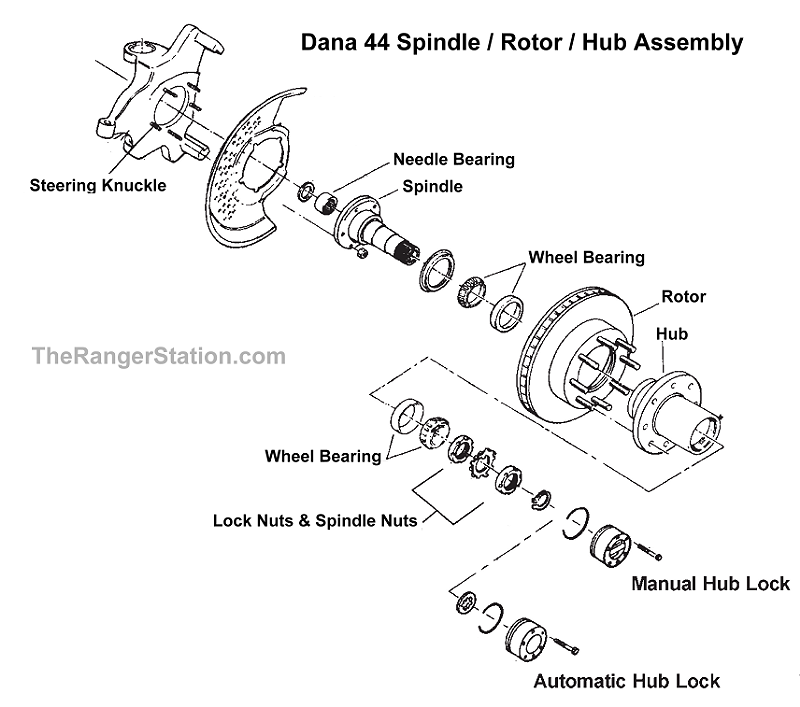
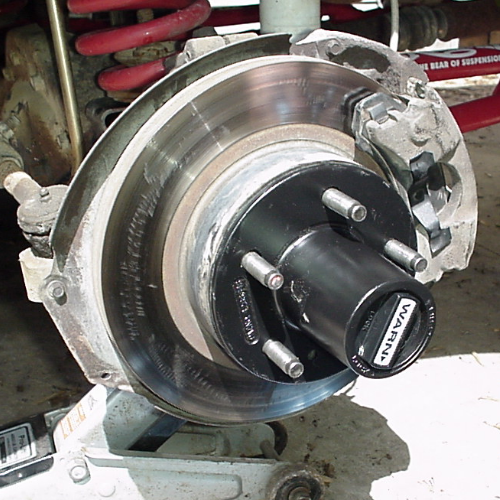
Dana 44 Spindle / Rotor / Hub Assembly
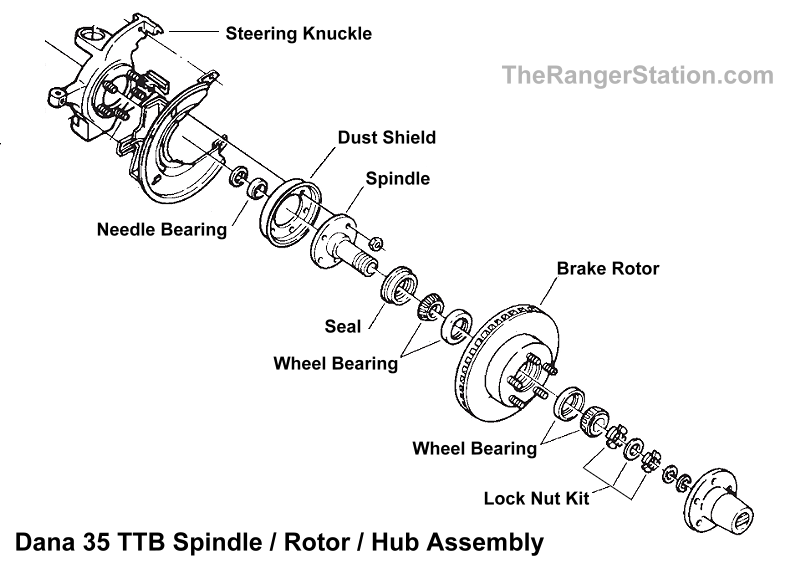
The Dana 44 uses a bearing hub that slides onto the spindle and is held in place with spindle lock nuts. The brake rotor is mounted to the rear of the bearing hub, which means the spindle lock nuts, and spindle has to be removed in order to replace the brake rotor. A hub lock attaches to the hub which engages the axle when locked and locks the axle to the hub and turns the wheel. People consider this locking hub assembly stronger than the setup used on the Dana 35 TTB.
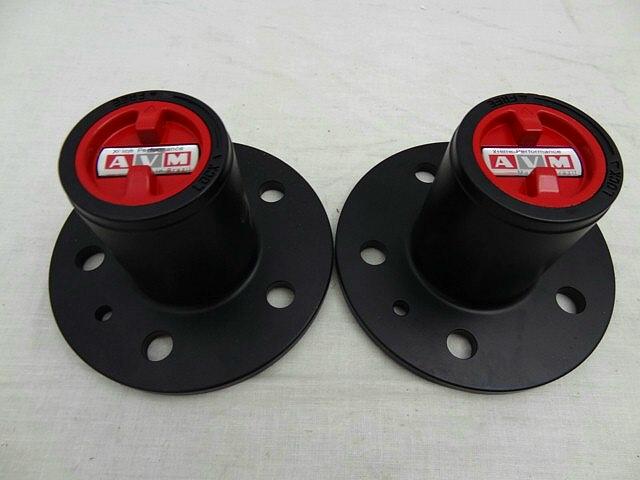
Modern heavy-duty Dana 35 hubs, like AVM 465XP, match or exceed Dana 44 hub strength for most off-road applications.
Interested in adapting Dana 44 spindles and hubs on to your Dana 35? Check out these links:
- Dana 44 Spindle & Hub Conversion On Dana 35 TTB
- Beefing Up The Ford Dana 35 TTB
- Dana 44 Knuckle Swap on Dana 35
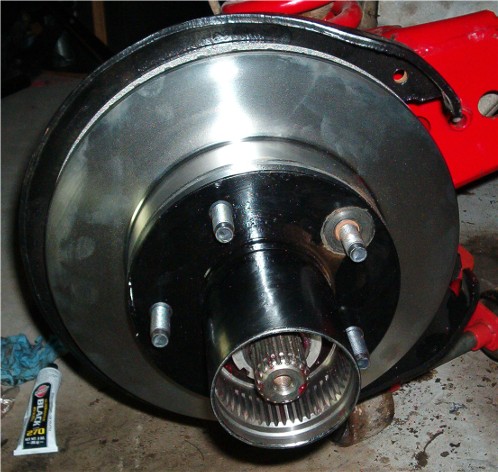
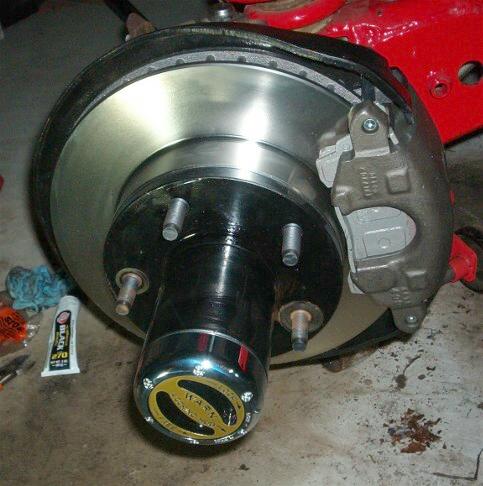
Dana 35 Spindle / Rotor / Hub Assembly
The Dana 35 uses a 1-piece locking hub that sandwiches between the wheel and the brake rotor. The locking hub can be replaced by simply removing the wheel and sliding the hub off. The brake rotor is mounted to the spindle by a spindle lock nut assembly. The original locking hubs and aftermarket hubs were made of cast alloy and were known to brake under extreme force. Off-roaders eventually found that Warn offered a 37780 hub assembly that was much beefier and stronger and could take much more abuse. Warn eventually stopped production of those hubs but AVM came along offering an even stronger 465XP Extreme Duty Locking Hub. It would seem that these newer locking hubs are just as strong as the Dana 44 hubs.
Ring Gear & Brake Comparison (4.56 Gears)
| Component | Dana 35 TTB | Dana 44 TTB |
|---|---|---|
| Ring Gear Teeth | 41 | 41 |
| Pinion Teeth | 9 | 9 |
| Ring Gear Diameter | 7.562″ | 8.500″ |
| Pinion Spline | 26 | 26 |
| Pinion Stem | 1.406″ | 1.376″ |
| Ring Gear Bolts (3/8″) | 8 | 10 |
Brake Comparison
| Component | Dana 35 TTB | Dana 44 TTB |
|---|---|---|
| Outside Diameter | 11.264″ | 11.713″ |
| Nominal Thickness | 1.024″ | 1.024″ |
| Discard Thickness | 0.965″ | 0.961″ |
| Brake Pad Length | 6.060″ | 7.120″ |
| Pad Thickness | 0.650″ | 0.610″ |
| Pad Height | 2.210″ | 2.130″ |
As you can see, the Dana 44 rotor is 0.449″ larger in diameter than the Dana 35 brake rotor. Both brake pads are similar in thickness and height, but the Dana 44 brake pad is 1.06″ longer than the Dana 35 TTB brake pad.
Conclusion
For most Ford Ranger off-roaders running tires under 36-inches, upgrading the Dana 35 TTB with heavy-duty locking hubs such as the AVM 465XP is sufficient. If all you’re looking for is stronger Dana 44 hubs and better wheel bearing spacing, than I would consider a Dana 44 spindle and locking hub swap on a Dana 35. For 36 or 37-inch tires I would suggest a full Dana 44 TTB swap or a Dana 44 Solid Axle Swap. For extreme off-road setups and tires above 37 inches, moving up to Dana 60 front axles is the safest option.
- The Dana 35 / 44 axle shafts have nearly identical diameters, but they’re torsional strength is only as strong as their smallest diameter.
- The Dana 44 will give you a longer stub shaft than the Dana 35 TTB and the longer stub shaft and hub assembly provides a wider spacing for the 706110X wheel bearings than the Dana 35 has.
- The newer all steel locking hub assemblies offered for the Dana 35 TTB are as strong as the Dana 44 locking assembly, but the stronger Dana 35 locking hub assemblies are getting harder to find.
- The Dana 44 uses a brake rotor that is 0.449″ larger in diameter and a brake pad that is 1.06″ longer which should offer better braking.
Recommended Upgrades & Conversions
- Dana 44 Spindle & Hub Conversion on Dana 35 TTB
- Beefing Up the Ford Dana 35 TTB
- Dana 44 Knuckle Swap on Dana 35
- The Mappyjack Dana 44 Spindle & Hub Conversion
- Ford Ranger Dana 44 TTB Conversion FAQ’s
- Dana 44 TTB Axle Swap
- 1983-2011 Ford Ranger Off-Road Builders Guide
Last Updated:
About The Author
Jim Oaks is the founder of TheRangerStation.com, the longest-running Ford Ranger resource online since 1999. With over 25 years of hands-on experience building and modifying Ford Rangers — including magazine-featured builds like Project Transformer — Jim has become one of the most trusted authorities in the Ford Ranger off-road and enthusiast space.
Since launching TheRangerStation.com, Jim has documented thousands of real-world Ranger builds, technical repairs, drivetrain swaps, suspension modifications, and off-road adventures contributed by owners worldwide. TheRangerStation.com has been referenced in print, video and online by enthusiasts, mechanics, and off-road builders looking for practical, and experience-based information.