
Introduction
Technology is supposed to make our life easier. I swear it just complicates it sometimes. Case in point is lighting. If I wanted a brighter bulb, I just got one that was rated at more watts. But in the world of LED lights, you can’t compared LED watts to Halogen watts. And then there’s the Kelvin rating which measures the color temperature of a light source, indicating whether it appears warm (yellowish), neutral (white), or cool (bluish). For the sake of this article, the LED bulbs are going to be either 6,000K or 6,500K (white).
Today you can replace your old, sealed beam or halogen headlights with LED headlights. It may seem as simple as replacing your 6054, 9004, 9005, 9007, or H11 bulb with the same size LED bulb, but it’s not that easy.
NOTE: This article is not meant to tell you which headlights to buy, but to give you information to help you make the right choices.
Table of Contents
- What Are Lumens
- Calculating Lumens From Watts
- LED Headlight Lumen Suggestions
- What Is Canbus Ready
- LED Replacement Headlight Bulbs
- The Lumen Lies
- 6054 LED Replacement LED Headlights
- 7-Inch Round LED Headlights
- Z Shaped Cut-Off Line
What Are Lumens
Lumens (lm) measure the total amount of visible light emitted by a light source, acting as the standard unit for brightness. Higher lumens indicate a brighter light
Halogen Bulb Lumens
Halogen 6054, 9004, 9005, 9007, and H11 bulbs typically produce between 700 lm and 1,700 lm per bulb depending on the beam type (Low or High). For an LED replacement, you should look for bulbs that produce a similar lumen output and are specifically designed to be road-legal with a proper beam pattern to prevent blinding other drivers.
| Approximate Lumens (Low Beam) | Approximate Lumens (High Beam) | |
|---|---|---|
| 6054 | ~700 lm | ~900 lm |
| 9004 | 700 lm | 1,200 lm |
| 9007 | 1,000 lm | 1,350 lm or 1,600 lm |
| 9005 | N/A (single beam bulb, typically High beam) | 1,700 lm |
| H11 | 1,200 – 1,350 lm | N/A (single beam bulb, typically low beam or fog light) |
Combined Halogen Lumens
LED bulbs are sold in pairs, so their Lumen rating is typically the combinations of both lights. When comparing LED headlights to Halogen lights, think of Halogen lights as having a combined Low Beam of 2,400-2,700 lm and a combined High Beam of 3,400 lm.
Calculating Lumens (lm) From Watts (W)
Knowing the Lumen output of a light tells you how bright it is. To convert Watts to Lumens, you multiply the wattage by the light’s luminous efficacy (the number of lumens produced per watt).
The standard calculation for light output is:
Lumens = Watts × Luminous Efficacy (lm/W)
Standard LED: ~80-100 lm/W (Example: 50W x 100 lm/W = 5,000 lm)
High-Efficiency LED: 110-150+ lm/W (Example: 50W x 150 lm/W = 7,500 lm)
Halogen Bub: 16-24 lm/W (Example: 50W x 24 lm/W = 1,200 lm)
Incandescent Bulb: ~14-15 lm/W (Example: 50W x 15 lm/W = 750 lm)
NOTE: Lumen calculator available at the bottom of the page.
LED Headlight Lumen Suggestions
When choosing an LED replacement, the total lumen count is not the only factor; the beam pattern and glare control are crucial for safety and legality.
Recommended Lumens: LED headlights are sold in pairs. You should look for LED bulbs with a lumen rating that closely matches the original halogen output range for safe street driving.
Low Beam (2,000–3,000 lm): Focused on reducing glare for other drivers while illuminating the road immediately ahead. 2,000–3,000 lm is ideal for standard city/suburban driving.
High Beam (4,000–6,000+ lm): Designed for maximum distance, 4,000–6,000 lm is common, with 6,000+ used for rural, unlit roads.
Beam Pattern: Ensure the LED replacement bulb is designed with an “optimized focal point” to project light onto the road correctly and avoid glare. Many newer LED headlights with indicate that they have a ‘Z Cut-Off Line’ (See Below) to keep the light low and not blind oncoming drivers. Some LED products specify they are “road-friendly” or “DOT compliant” if they have a proper beam pattern. Lights with a ‘Z Cut-Off Line’ may list a higher Lumen output.
Brightness vs. Legality: While higher lumens offer better visibility, exceeding 6,000–8,000+ lm can cause dangerous glare to oncoming traffic. Always check local regulations, as some high-lumen bulbs (10,000+ per bulb) may be illegal for road use.
What Is ‘Canbus Ready’
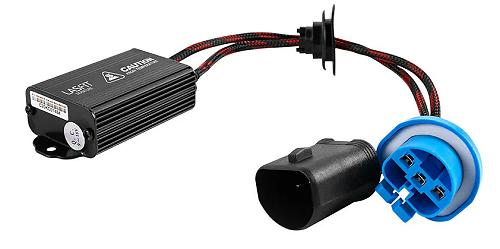
Essentially, “Canbus Ready” means an LED bulb is equipped with internal circuitry, such as resistors or decoders, that mimics the electrical footprint of a standard halogen bulb to prevent the vehicle’s computer from triggering a “bulb out” error. Because LEDs draw significantly less power than original factory bulbs, a modern car’s Controller Area Network (CAN bus) monitoring system might misinterpret this low energy use as a sign of a burnt-out bulb, resulting in dashboard warning lights or rapid flickering. By using Canbus-compatible LEDs, you trick the computer into seeing the expected power load, allowing you to upgrade your lighting without technical glitches. While these bulbs are specifically designed for European and newer models with advanced sensors, they can also be safely used in older vehicles that do not have a computer-monitored lighting system.
If you install LED Headlights that aren’t Canbus ready and you get errors, you can purchase Canbus Decoders separately for your specific light.
LED Replacement Headlight Bulbs (Low Beams & High Beams)
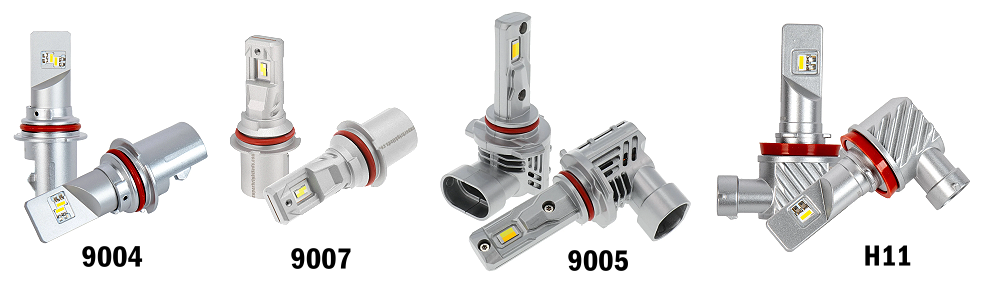
WARNING: This is where you’re going to get into trouble. It would seem that the LED headlight bub manufacturers believe that the brighter the bulb, the better. On a Low/High Beam bulb they seem to only list the combined Lumens for both bulbs on High, and don’t list the Low Beam specifications. You’ll also find that most of these bulbs are described as being 400% to 1200% brighter than stock.
A lot of them also use phrases such as ‘Powersports Light’ and ‘Off-Road Use’. That’s their way of telling you that the light isn’t legal for highway use. I have some setups where the Lumens on my Low Beams are similar to stock and won’t blind oncoming traffic, but my High Beam Lumens equal that of my off-road lights. I’m not telling you to do that. I have extra bright High Beams because I live out in the country and need to be able to spot animals in the road, but I turn them off if I spot another vehicle.
The LED Lumen Lies
I’m calling ‘Bullwinkle!’ on the Lumens that companies are listing for their LED light bulbs. I spent hours looking at various 9004, 9005, and 9007 LED headlight bulbs and the Lumen ratings were pretty outrageous! We already discussed that LED Lumens = Watts × 100 lm/W (100-150).
Here’s Some Examples:
Example #1: 40W 9004 LED Bulb Producing 46,000 lm. It’s not possible for a 40W light (or dual 40W lights) to produce 46,000 lm. You’d need 460 watts to put out 46,000 lm. Even a really highly efficient LED would still require 306 Watts. Two 153-watt High-Efficiency LED’s might do it.
Example #2: 50W 9007 LED Bulb Producing 10,000 lm. Two 50-Watt bulbs could produce 10,000 lm, but the listing claimed that the 50W and 10,000 lm is for the set, which would be the combination of both lights.
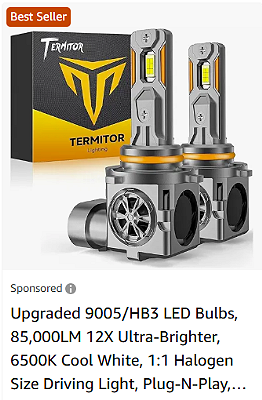
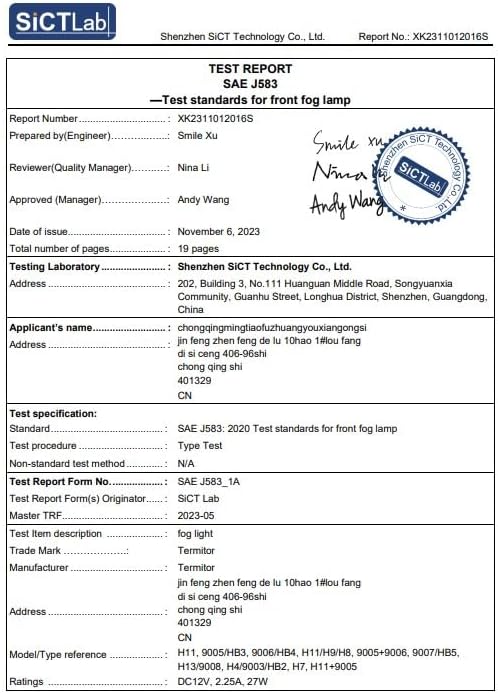
Example #3: The 9005 LED bulbs shown below claim to produce 85,000 lm! The seller doesn’t list the watts, but I assure you that these bulbs don’t put out 850 watts. The sellers listing shows a Test Report and if you look at the very bottom of the report, it states that the bulb is 27-watts. There’s no way a pair of 27W LED lights bulbs are producing 85,000 lm. However, big numbers are big sellers, and as you can see, Amazon has listed this as a ‘Best Seller’.
For Comparison:
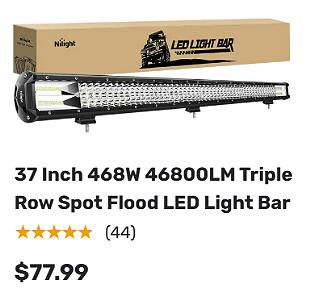
Here’s a Nilight 37-Inch 468-Watt Tripple Row LED Lightbar that puts out 46,800 lm. That actually adds up. Look at that light bar and then look at the LED bulbs that claims to produce 85,000 lm. There’s no way those light bulbs put out more Lumens than this lightbar.
Takeaway for Buyers
- Always check watts per bulb.
- Calculate realistic lumen output: Watts × 100–120 lm/W.
- Treat any claim that’s 10× higher than the math allows as marketing hype.
- Focus on beam pattern, cutoff line, and legality rather than the biggest number.
Is Anyone Advertising The Truth
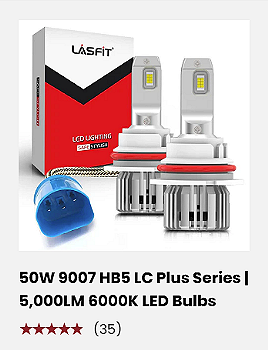
The only company that I have found that advertises the true output of their LED headlight bulbs is LASFIT. LASFIT lists their LASFIT 9007 50W LED headlight bulbs as producing 5,000 lm and their 60W LED headlight bulbs as producing 6,000 lm. I’m not saying that others don’t exist, but LASFIT was the only one I found at the time of writing this.
6054 Replacement LED Headlights
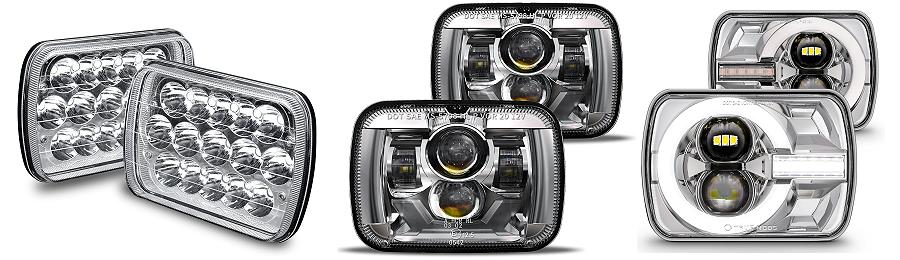
There are a variety of styles of 6054 LED headlights, and you might be tempted to choose one based on its appearance, but theses lights all have a variety of lumen ratings, and you need to look at them closely
GS Power OEM 6054 Headlights
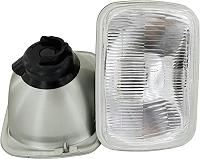
These GS Power 7×6 Headlights are stock style 6054 headlights with a glass lens, but they take an H4 bulb. This means you can give your vehicle the benefits of LED lights and still retain its classic retro look.
15-Pod LED Headlights
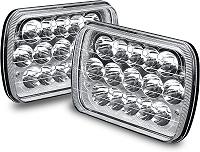
I’m calling these a ’15-Pod Headlight’ because of the 15 light pods that make up the headlight. These lights seem to
KASLIGHT H6054 = 2,800 lm Low Beam (Set) / 5,900 lm High Beam (Set). KASLIGHT states that they are ‘Legal and safe on the road. Easy to install, just plug and play. DOT SAE Approved KASLIGHT can be searched on NHTSA, other fake DOT can’t be searched.’
Partsam H6054 = 2,500 lm Low Beam (Set) / 5,600 lm High Beam (Set). Partsam describe them as ‘a high-performance safety solution, glare reduction, and EMC built-in to avoid electromagnetic interference and flicker issue.’ These lights have a DOT SAE label at the top of them.
Bronco Wannabe LED Headlights
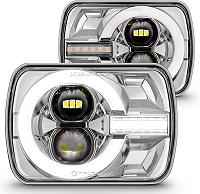
These True Mods LED Headlights that I call a ‘Bronco Wannabe LED’ produce 3,100 lm Low beam (Each) and 6,600 lm High Beam (Each). True Mods states ‘Backed by reputable DOT and SAE Approvals, the high and low LED projector beams of these 5×7 LED headlights brighten hard-to-see spots without blinding oncoming traffic.’ and ‘Plus, with DOT FMVSS-108 Approval and a sharp Z Cut-Off (See Below), your headlight beams won’t be blinding others when they shine through those clear as day lenses.’
HWSTAR 180W H6054 LED Headlights
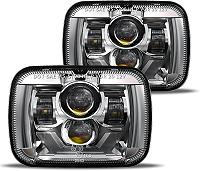
The HWSTAR 6054 LED Headlights produce 6,500 lm Low Beam (Set) and 9,500 lm High Beam (Set). They describe the lights as ‘The best “Z-shaped” cut-off line (See Below), better than any other LED headlights; Super bright and uniform light, no blind areas and dim spots; Never blind oncoming drivers; DOT SAE Approved (“DOT SAE MS-5798 HL P VOR 20 12V” can be searched on NHTSA, other fake DOT can’t be searched)’.
Auxbeam 6054 LED Headlights
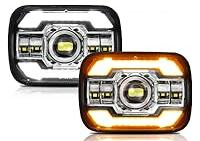
These Auxbeam 6054 Headlights come with built in turn signals and DRL. They are rated at 8,000 lm Low Beam (Set) and 12,000 lm High Beam (Set). Their H6054 LED headlights have built-in EMC anti-flicker integrated with the circuit board. They state that ‘The excellent beam pattern not only effectively prevents glare but also leaves no blind spots or dark spots, ensuring your driving vision is always clear and bright’, but they don’t tell you how they accomplish that. You can see that these lights are much brighter than the ’15-Pod LED Headlights’. The question is, do they effectively direct that light at the road and not blind on-coming traffic?
7-Inch Round LED Headlights
I’m including round LED headlights for those of you with round headlights or converting to round headlights.
See: Round Headlights On Your Bronco II
Xprite 7-Inch Round LED Headlight
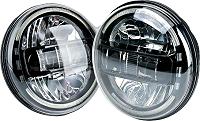
I’ve used these Xprite 7-Inch Round LED headlights in a Jeep Wrangler and for a Ford Bronco II round headlight conversion and really like them. They have a 3,000 lm Low Beam (Set) and 6,000 lm High Beam (Set) 30W/60W and are DOT-approved and IP67 waterproof for all-weather driving.
HWSTAR 7-Inch Round Led Headlights
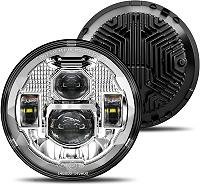
The HWSTAR 7-Inch Round LED Headlights produce 7,000 lm Low Beam (Set) and 10,000 lm High Beam (Set). HWSTAR states that ‘Perfect Beam Pattern: The best “Z-shaped” cut-off line (See Below) better than any other 7-inch led headlight , Super bright and Uniform Light, No Blind Area and dim spots, Never blind oncoming drivers, DOT SAE Approved (“DOT SAE M P HL MS-991 12V 22” could be searched on NHTSA, other fake dot can’t be searched )’
Z-Shaped Cut-Off Line
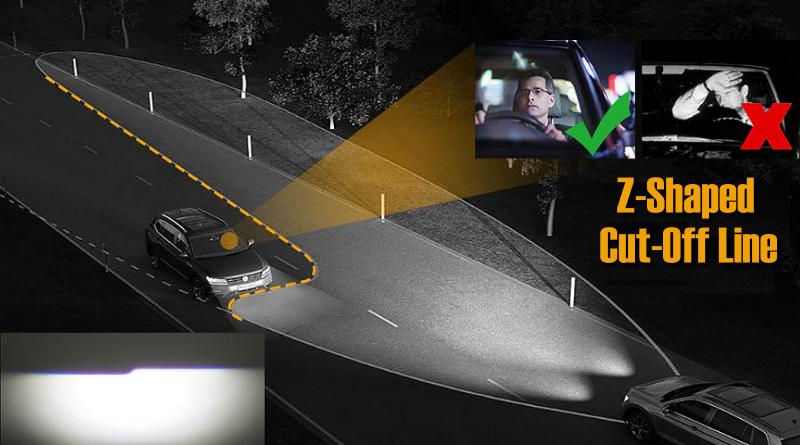
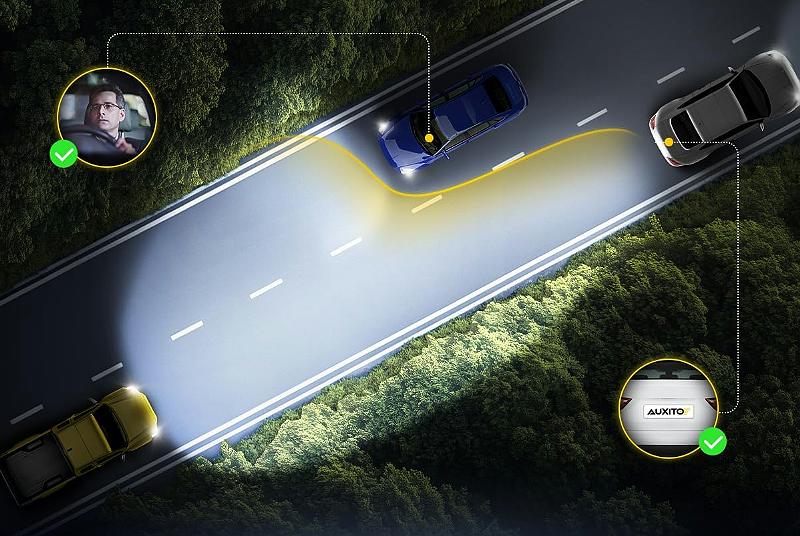
A Z cut-off line is a specific asymmetrical light pattern used in modern low-beam headlights to balance driver visibility with road safety. When projected against a flat surface, the beam appears as a sharp horizontal line with a distinct “step” or Z-shaped shift in the center. This design is engineered to keep the light low on the driver’s side to prevent blinding oncoming traffic, while allowing the beam to “step up” on the passenger side. By raising the cutoff on the shoulder side, the headlights can illuminate road signs, pedestrians, and potential hazards much further down the road without projecting glare into the eyes of other drivers.
This precise light control is typically achieved in projector-style headlights using an internal metal shield, or “shutter,” that physically blocks the upper portion of the light beam. The sharp transition at the edge of this shield often creates a thin, colorful blue or purple band known as “color flicker,” which is a desirable aesthetic trait in high-end lighting systems. While this Z-pattern is a hallmark of European ECE standards, it has become increasingly common in DOT-approved LED headlights in North America as a way to provide powerful, focused illumination that remains legally compliant.
Related Article
Upgrading 2019+ Headlights To LED
About The Author
Jim Oaks is the founder of TheRangerStation.com, the longest-running Ford Ranger resource online since 1999. With over 25 years of hands-on experience building and modifying Ford Rangers — including magazine-featured builds like Project Transformer — Jim has become one of the most trusted authorities in the Ford Ranger off-road and enthusiast space.
Since launching TheRangerStation.com, Jim has documented thousands of real-world Ranger builds, technical repairs, drivetrain swaps, suspension modifications, and off-road adventures contributed by owners worldwide. TheRangerStation.com has been referenced in print, video and online by enthusiasts, mechanics, and off-road builders looking for practical, and experience-based information.