
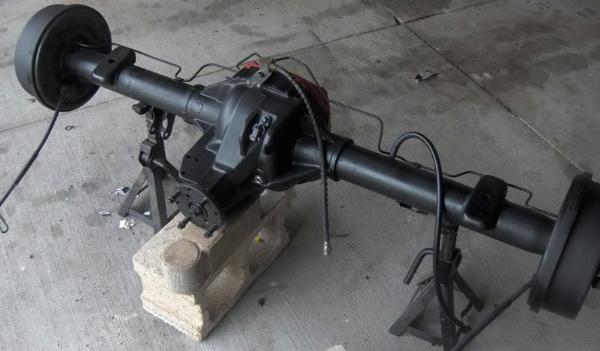
When Ford released the FX4 Ranger for 2002, its greatest feature was its 31-spline 8.8-inch rear axle. At the time, the off-road crowd was snatching up 31-spline 8.8-inch Ford Explorer rear ends and swapping them into their off-road Rangers. This wasn’t a direct bolt in swap, because the Explorer has its leaf springs mounted under the axle, and the Ranger springs are mounted above the axle. This means that new spring perches need to be welded on top of the Explorer’s 8.8-inch axle, and they have to be spaced and angled to match your application.
However, the Ford Ranger FX4 8.8-inch axle is a bolt in swap. But not all Ford Ranger FX4’s have the 31-spline rear axles.
From 2003-2007, ford offered (2) versions of the Ford Ranger FX4:
- Ford Ranger FX4 Off-Road
- Ford Ranger FX4 Level II
From 2008-2009, the Ford Ranger FX4 was simply the FX4 Off-Road.
Only the 2002 FX4, and 2003-2007 Ford Ranger FX4 Level II came with the 31-spline 8.8-inch rear axle and a Torsen limited slip. The 2003-2007 Ford Ranger FX4 Off-Road (Non Level II) came with a 28-spline 8.8-inch axle and standard limited slip. The 2008-2009 Ford Ranger FX4 offered the Torsen limited slip as an option, so they could possibly be a 31-spline with a Torsen or a 28-spline with a standard limited slip.
Why is the FX4 Level II 8.8-inch axle better than the regular Ford Ranger 8.8-inch axle?
- Larger 31-spline shafts versus the stock Ranger’s 28-spline.
- Larger out axle bearings.
- Larger 3-1/4 inch axle tubes (28-spline axles have 2-3/4 inch axle tubes.
The Ford Ranger FX4 8.8-inch axle is a bolt in swap. The problem is not all of the 8.8-inch axles in the Ford Ranger FX4’s came with the 31-spline axleshafts. So how do you know which ones do, and which ones don’t?
For more information on the Torsen limited slip, check out What Is A Torsen Limited Slip.
How To Spot A 31-Spline 8.8-Inch Axle:
Axle Tube Taper:
The 31-spline axle will have a larger tube diameter than a 28-spline axle. The 31-spline also has larger bearings. Look at the end of the axle tube. The 28-spline axles will have a noticeable taper where it necks down:
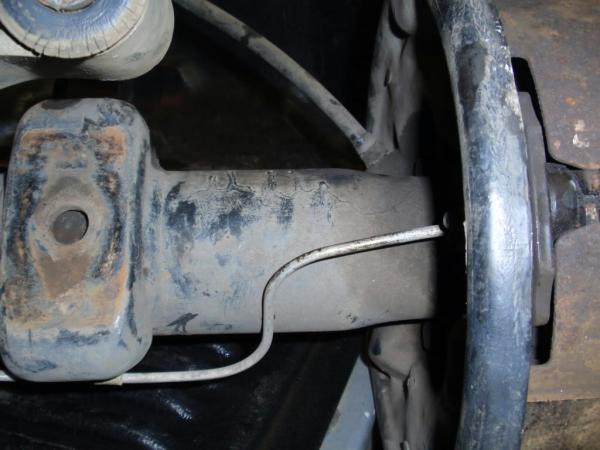
The above axle is a 28-spline 8.8-inch axle. Notice how much the tube tapers at the end.
The below axle is a 31-spline 8.8-inch axle. Notice that there’s not as much taper at the end of the axle tube.
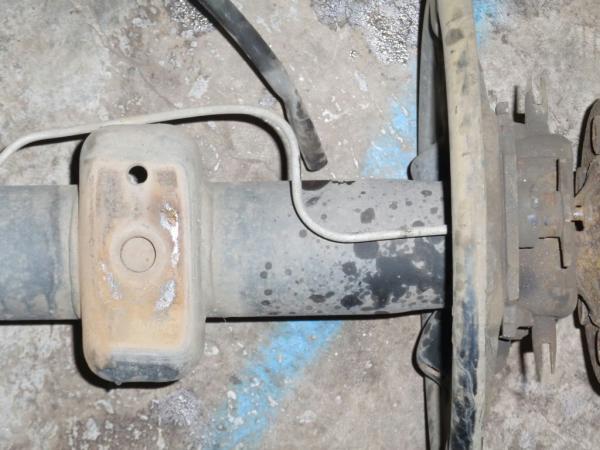
Also, the fact that the spring perch is on the top of the axle and not the bottom, signifies that it came from a Ranger and not an Explorer.
Axle Tags:
We’ve been trying to gather information on axle tags from 31-spline FX4 axles. We know that the 2002 FX4, and 2003-2007 FX4 Level II’s with the 31-spline axles with the Torsen limited slip have a synthetic oil tag held on with one of the differential cover bolts. The tag will say 7’5W140 SYNTH OIL ONLY’.
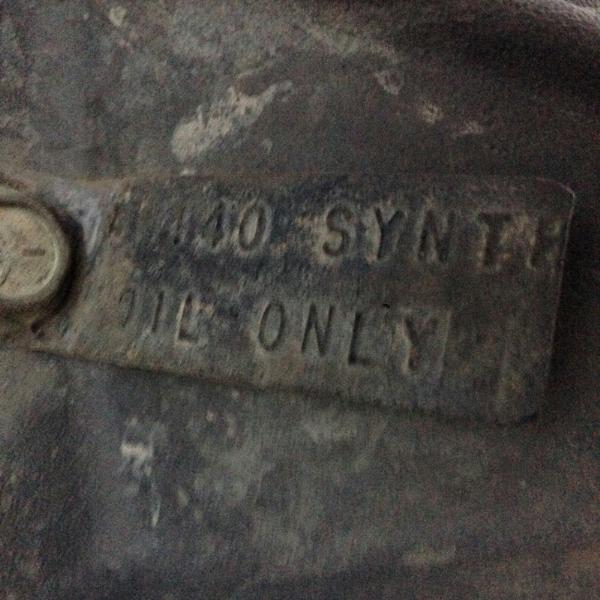
We’ve also been looking at the axle tags:
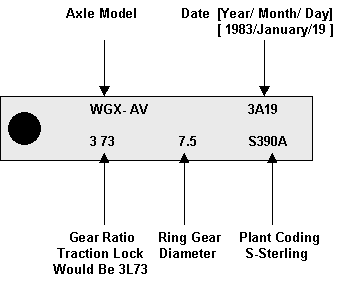
What we’re looking for is the code along the top of the tag (the bottom row should say 4L10 88)
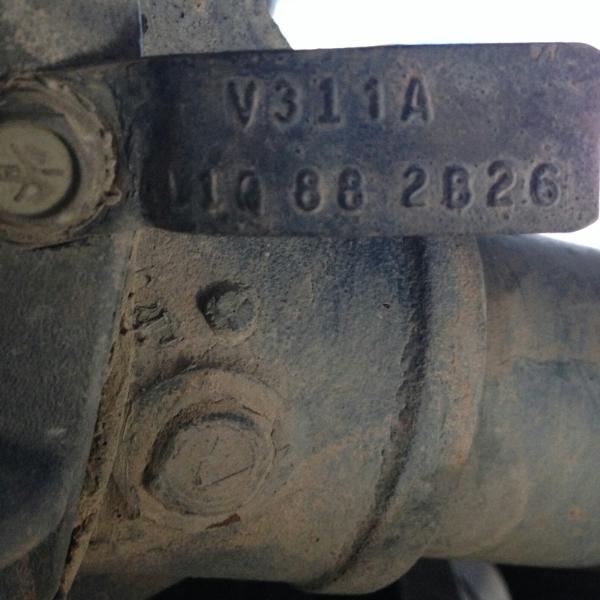
The above axle tag is from a 2002 Ford Ranger FX4. Note the V311A code at the top of the tag.
Other axle tag codes we’ve seen are:
-
N313L on a 2003 FX4 Level II
-
V305C on a 2002 FX4 (with the recalled Torsens)
-
V313L on a 2005 FX4 Level II
The 2002 FX4 8.8-Inch Axle Recall:
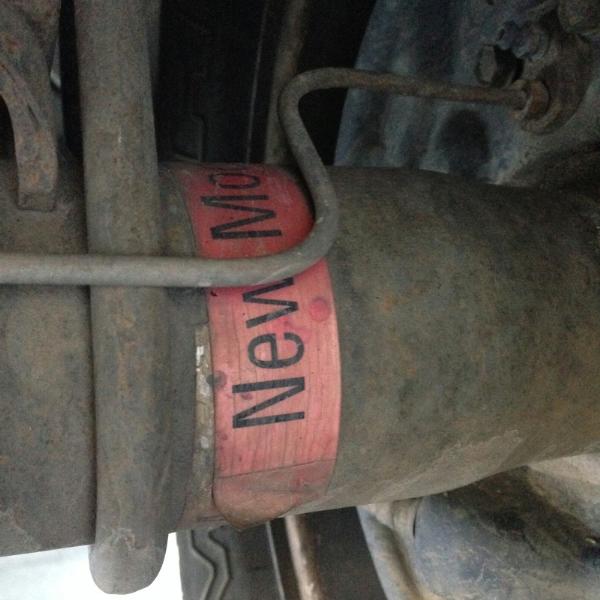
The early 2002 FX4 had a recall on the Torsen differential, but only with the 5-speed manual transmission. All FX4s, manual or automatic, assembled after January 28, 2002, came with the updated differentials.
The replacement 8.8-inch axles (under the recall) will have this band around the axle tube that says, ‘New Model’.
Thanks:
Thanks to our forum members who posted information in our forum that was used, and forum member ‘gw33gp’ who provided the axle tag photos.
Questions:
Have questions? Check out our Axle Forum or This Thread about the 31-spline FX4 axles.
About The Author

Jim Oaks is the founder of TheRangerStation.com, the longest-running Ford Ranger resource online since 1999. With over 25 years of hands-on experience building and modifying Ford Rangers — including magazine-featured builds like Project Transformer — Jim has become one of the most trusted authorities in the Ford Ranger off-road and enthusiast space.
Since launching TheRangerStation.com, Jim has documented thousands of real-world Ranger builds, technical repairs, drivetrain swaps, suspension modifications, and off-road adventures contributed by owners worldwide. TheRangerStation.com has been referenced in print, video and online by enthusiasts, mechanics, and off-road builders looking for practical, and experience-based information.