
Introduction
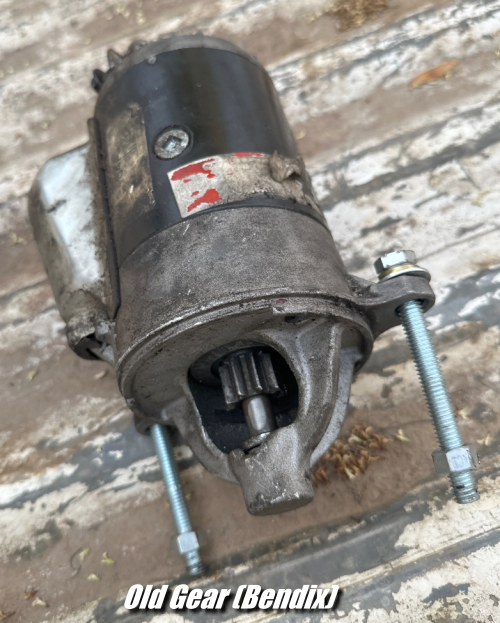
If your Ford Ranger or Bronco II with the 2.8L V6 and manual transmission has a starter that grinds, slips, or doesn’t fully engage the flywheel, the issue may not be the starter itself—but the teeth on the starter gear (Bendix).
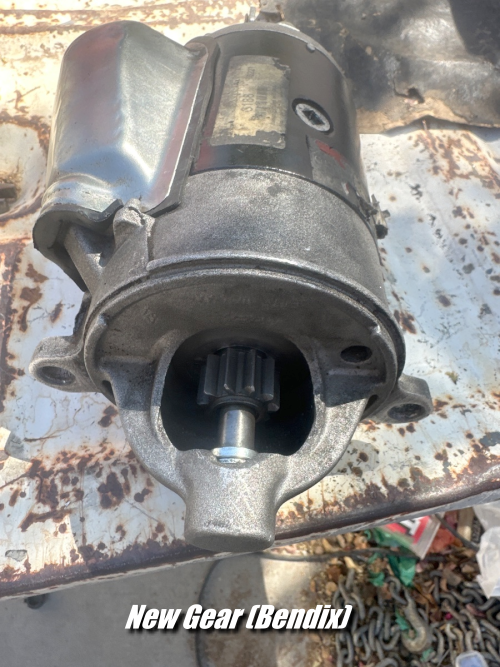
The 2.8L factory starters use a 9-tooth Bendix gear, which can struggle to properly mesh with worn or even good-condition flywheels. A proven fix is upgrading to a 10-tooth Bendix starter gear from a 1985–1989 Ford Escort 1.9L which improves engagement and eliminates grinding. This swap is a legendary fix for the common “grinding” or “free-spinning” issues these engines face as they age.
The Original Factory Starters
the 2.8L V6 Ford Ranger and Bronco II used different starters for manual and automatic transmissions. While they may look similar and share the same bolt pattern, they are not interchangeable due to the distance the gear needs to travel to reach the flywheel or flexplate.
The primary difference lies in the snout length and the gear reach (Bendix):
Automatic Starter: Features a longer snout and the gear sits further forward to reach the ring gear on the automatic flexplate.
Manual Starter: Has a shorter snout; the gear is often recessed or does not extend as far because the manual flywheel ring gear is positioned closer to the engine.
Why The “10-Tooth Fix” Works
The 2.8L manual transmissions are notorious for “grazing” the flywheel without fully engaging, causing a grinding sound or a free-spinning starter.
Increased Gear Diameter: A 10-tooth Bendix gear is slightly larger in diameter than the stock 9-tooth gear. This larger diameter closes the gap between the starter shaft and the flywheel ring gear, creating a tighter and deeper mesh that overcomes slight misalignments or worn teeth.
The “Reach” Factor: As mentioned earlier, automatic starters have a longer snout (approx. 2 3/8″ vs 2″ for manual). In the 2.8L manual application, the stock manual starter sometimes fails to push the gear far enough forward to clear the “shoulder” of the flywheel. The 4.0L automatic starter physically pushes the gear further into the bellhousing, ensuring it fully seats against the ring gear.
Tip: This is often cheaper than replacing the entire starter with a 4.0L starter (discussed later).
Parts Needed
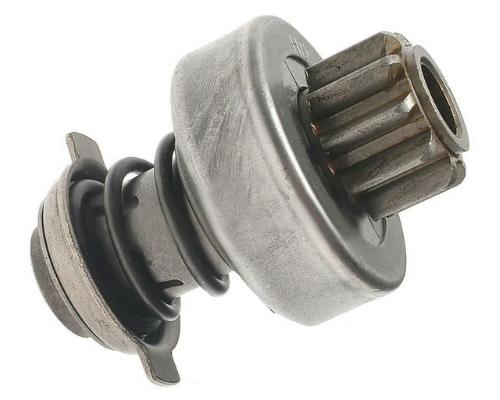
10-tooth Bendix gear (Starter Drive) for a 1985-1989 Ford Escort 1.9L
- Standard Motor Products SDN-191 (Buy Online)
- ACDelco Professional Starter Drive F2009 (Buy Online)
You should be able to use one of those part numbers to locate the Starter Drive from a parts store.
Tools Required
- 10mm socket
- 14mm socket
- Punch or pick
- Screwdriver
- Snap ring / O-ring pliers
- Needle nose pliers
- Bench vise (optional)
Replacing the Bendix Gear
1. Remove retaining screw on the solenoid cover
2. Remove the pin from the shift lever. This fork holds the starter gear (Bendix).
3. Remove the (2) 10mm screws on the back of the starter housing. Removing them will allow you to take the starter apart.
CAUTION: Be wary of a spring on the top of the housing inside the case. Also, be careful when taking off the top. It might explode on you, and you’ll need to put it back together
TIP: Keep pressure on the motor housing so the internal brushes don’t pop out. If the main “barrel” stays attached to the back cap, you’re safe.
4. Remove the C-clip from the end of the starter shaft and remove the gear.
5. Install the new drive gear and the C-clip.
6. Re-assemble the starter.
7. Make sure the gear moves freely and the fork engages properly.
HELP: If you do this swap and have any more information or photos you want to share, please CONTACT US.
Video
This video doesn’t show how to replace a 9-tooth gear with a 10-tooth gear, but it does show how to disassemble an older Ford starter. I think it may help you get an idea of what you’re getting into when you disassemble your starter.
Reinstalling The Starter
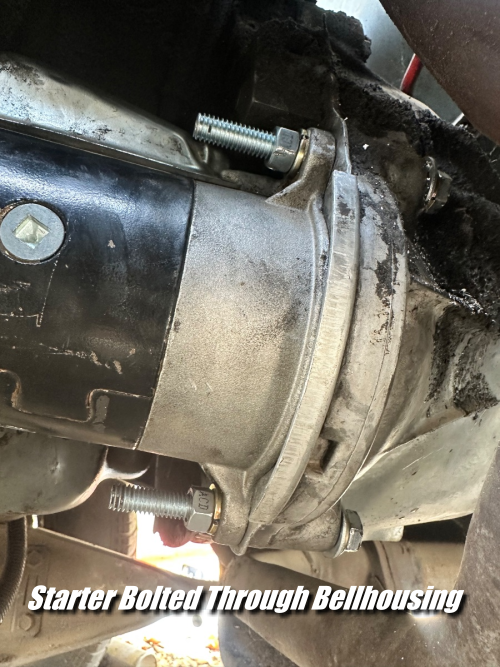
The starter is held in place by (2) M10x1.50 by 40mm bolts
Use thread locker when you reinstall the starter and make sure the bolts are tight so that the start doesn’t work its way loose and not fully engage.
NOTE: You may find that the bolts you removed are SAE instead of metric, or larger than an M10. The Ford 2.8 has had issues with the starter bolts coming loose and the threads wearing out, so someone may have installed a larger bolt. If you’re having issues with loose bolts, you can thread a bolt all the way through the bellhousing (you may need to drill it out) and use a washer, locknut and bolt on the other side to secure it.
4.0L Starter Upgrade
Some enthusiasts often skip the Bendix swap entirely and install a Ford 4.0L OHV 10-tooth starter from a 1990-1997 Ford Ranger automatic transmission. This starter is a permanent magnet gear-reduction (PMGR) starter that is 5 lbs. lighter, draws less amperage, and provides more torque. You will have to do some minor rewiring for the starter when doing this swap. For more information check out: Ford 2.8 Starter Upgrade
Photos
Related Article
About The Author
Jim Oaks is the founder of TheRangerStation.com, the longest-running Ford Ranger resource online since 1999. With over 25 years of hands-on experience building and modifying Ford Rangers — including magazine-featured builds like Project Transformer — Jim has become one of the most trusted authorities in the Ford Ranger off-road and enthusiast space.
Since launching TheRangerStation.com, Jim has documented thousands of real-world Ranger builds, technical repairs, drivetrain swaps, suspension modifications, and off-road adventures contributed by owners worldwide. TheRangerStation.com has been referenced in print, video and online by enthusiasts, mechanics, and off-road builders looking for practical, and experience-based information.