
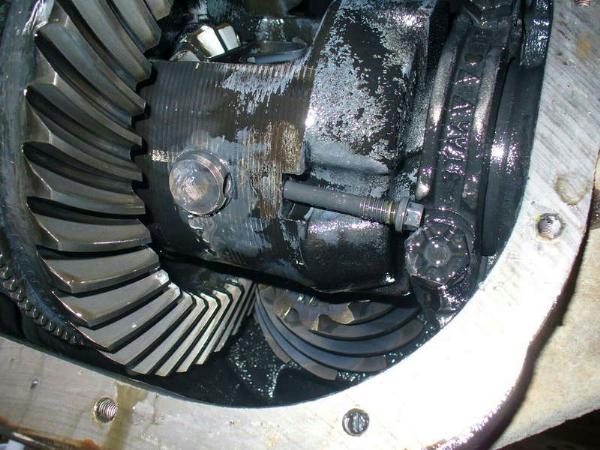
If you go to pull the rear shafts or try to do a gear ratio change on your Ford 7.5 or 8.8 inch axle, you may find that the bolt retaining your cross pin is broke or may break it trying to remove it.
If the bolt broke below the threads, then you can probably get it out with a magnet and pick. If the broken piece still had threads on it, you’ll likely need a tool to extract it.
This is actually a common problem on the Ford c-clip axles. GM shares this problem as well. The problem is common enough that companies make a kit for extracting the broken piece in the carrier.
Extractor Kits:
These kits generally contain:
- 12″ Long 1/8″ Drill Bit
- (1) Spiral Screw Extractor
- (1) Straight Flute Screw Extractor
- (2) Drill Guide Bolts
- Instruction Sheet
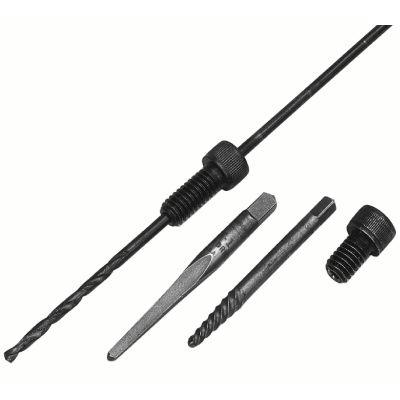
You may be able to use a left-hand drill bit or EZ Out (bolt extractor) to drill and remove the broken piece. The problem is drilling straight into the middle of the broken piece. This is where the kits alignment bolts are handy.
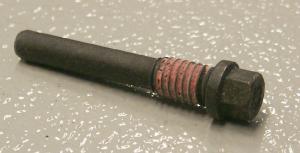
(Cross pin bolt)
These kits can be found at:
Randy World Wide – Cross Pin Bolt
Replacement Bolt:
Yukon Cross Pin Bolt YSPBLT-038 – Amazon
Yukon Cross Pin Bolt YSPBLT-038 – Summit Racing
About The Author
Jim Oaks is the founder of TheRangerStation.com, the longest-running Ford Ranger resource online since 1999. With over 25 years of hands-on experience building and modifying Ford Rangers — including magazine-featured builds like Project Transformer — Jim has become one of the most trusted authorities in the Ford Ranger off-road and enthusiast space.
Since launching TheRangerStation.com, Jim has documented thousands of real-world Ranger builds, technical repairs, drivetrain swaps, suspension modifications, and off-road adventures contributed by owners worldwide. TheRangerStation.com has been referenced in print, video and online by enthusiasts, mechanics, and off-road builders looking for practical, and experience-based information.