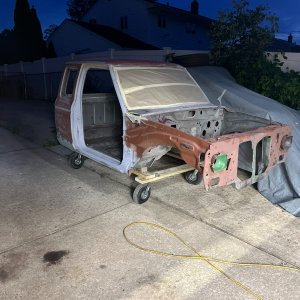
rotary engines?!


If I was after high torque and such then I would put a 302 or LS in my truck but the heaviest thing my truck hauls is a dead deer and weight in the winter. But my truck doesnt go mudding or off road and more or less wont be doing so. If I'm going to spend hudreds on mods for a motor and such, then I'll buy a performace vehicle or heavy duty truck instead of making my ranger do more then what I need it to do for a DD.

In my opinion I would put a rotary motor in my truck, but if a 302 was given to me or got one cheap enough, then it would be going between my frame rails of my truck. I have nothing against it.
 
351.

Torque, Horsepower, and reliabilty all in one package.

later,
Dustin
 
well my experience in the sand is you want torque as well as hi revving hp as well, when jumping you want enuff low end that you dont bog down and have to drop one or two gears to clear the dune. rotaries...ah yes the power potential we have here...last one i seen do well was the tri rotor in the old nissan i forget which model it was wanna say it was a 280z, possibly swapped for all i kno anyway it had 3 t3 size turbos on it producing around 840hp at 9k, great drift car. again however it was constantly being rebuilt but fun as hell to see drive around eating toyos and carving corners.
 
Man I have spent alot of time with rotaries. Ive rebuilt, blown them up and rebuilt them again. they are a great engine as long as you know how to take care of them. if you dont though, they can become a $ pit real fast. You stated that you wanted to keep weight down, you better think about glass everything, and another daily driver because they dont produce a bunch of torque. now heres the deal, if you gear right, you you wont have to worry about power loss in a dd situation, BUT its not as easy to improve the flow of the block. no cams or valves, so you have to port the block. the whole engine has to come out and apart, so its best to rebuild while its out, or have done upon rebuild. There are a million different kinds of porting, the bigger you go, the better the results and the lumpier idle it will have, just like a cam. Any thing bigger than whats called a bridge port will affect longevity severely. Street port=mild bridge port=medium peripheral port=large power gains, but affects longevity, and a monster or "j" port=extreme idle, power gains but on the stree the engine will only last between 10 and 15k miles. hopefully this helps man
 
also, if you port one fuel economy takes a nose dive, and stock they only get into the low to mid 20s
 
Weird thought,totally random, dont know where it came from. Drift a ranger in mud terrian tires on dry pavement. Wonder what that would look like screaming around a corner.
 
Last edited:
There are a million different kinds of porting, the bigger you go, the better the results and the lumpier idle it will have, just like a cam. Any thing bigger than whats called a bridge port will affect longevity severely. Street port=mild bridge port=medium peripheral port=large power gains, but affects longevity, and a monster or "j" port=extreme idle, power gains but on the stree the engine will only last between 10 and 15k miles. hopefully this helps man

street ports are simply enlarging of the stock port on the engine, they have little/no effect on reliability. They can be mild to relatively large. Their shape dictates in essence the 'cam timing, duration, and lift' of the motor.

A bridge port is considered the line between streetable and race only. Bridge ports cut a separate port outside of the standard port near where the side housing meets the rotor housings. This adds a distinctive 'blap' to the engine's note. This kind of port can reduce engine life as the port comes in contact with the apex seal which can destabilize it and cause wear on the housing/seal.

A j port is basically a bridge port. The difference is the second port is extended past the water jacket between the housings in the name of increased flow. This compromises the coolant passages/seal and requires filling the exposed seal face/passages with filler, which reduces engine life due to differing expansion rates and wear of the filler.

The 'craziest' port you can do to a rotary is the peripheral port. Essentially the stock ports are filled in with filler and polished flush with the side housing, then a new port is cut in the rotor housing with a direct path to the rotor similar to the stock exhaust port(on pre-renesis/MSP engines). A sleeve is tapped and welded in, this port results in massive flow and provides tons of high rpm performance but typical PP'd engines have to idle at 1500-2krpm. again the filler causes accelerated wear and the port can cause excessive wear at the seal/housing. Typically these motors don't see past a few dozen runs on the track or a few thousand miles.
 
Just something to think about; A ranger weighs a hell of alot mroe than something like at RX7, or 8.
Smaller cars need horsepower more than torque. Big cars need torque more than hp.

That being said, a Rotory is a high revving engine and they make alot of power for their size, but in my opinion, you would be better off with a 302 V8. A 302 makes power that is more suitable for a Ranger, even one that is being run in the sand.

That's just my 2 cents worth.

I feel I should point out a bit of misinformation here. A 2001 ranger has a standard curb weight of roughly 3,000 to 3,400 lbs, depending on trim. The Mazda RX-8 Rotary has a curb weight between 2,900 and 3,100 lbs.

Not what I would classify as weighing a "hell of a lot more."
 
Shod it with big tires, and any kind of off road sitution where torque is needed, your going to be wishing for your old Ranger engine back (even if it is a 2.3L).

In a street truck, it could work, but you gotta understand that Rangers are like a barn door, an RX7/RX8 is not.

later,
Dustin
 
Shod it with big tires, and any kind of off road sitution where torque is needed, your going to be wishing for your old Ranger engine back (even if it is a 2.3L).

In a street truck, it could work, but you gotta understand that Rangers are like a barn door, an RX7/RX8 is not.

later,
Dustin

I seriously doubt anyone considering putting a rotary into a 2001 xl w/ 5-speed is going offroad. However, from our own tech library -

http://www.therangerstation.com/tech_library/4cylinders.html

If you read those, then compare to the chart of a stock 2003 Mazda RX-8's Renesis Rotary.

Power

215 hp / 7450 rpm (JIS)
212 hp / 7450 rpm (SAE)

235 hp / 8200 rpm (JIS)
232 hp / 8500 rpm (SAE)
230 hp / 8200 rpm (DIN)

-
Torque

159 lbft / 5500 rpm (JIS / SAE)

159 lbft / 5500 rpm (JIS / SAE)
156 lbft / 5500 rpm (DIN)

Again, not a whole lot of difference. When it comes down to him wanting to do this swap, it's a matter of preference, and uniqueness. If he has the cash, the desire, and the time (and believe me, it will take a lot of all 3) it would be a very amazing thing to see a rotary swapped into a Ford ranger.
 

Sponsored Ad

TRS Events & Gatherings

Featured Rangers

Want to see your truck here? Share your photos and details in the forum.

TRS Latest Video

Official TRS Merchandise

Follow TRS On Instagram


Product Suggestions

Back
Top