Please settle this question


I took it back for the second inspection, and it failed again for pressure test. It passed all the other testing categories like before.
I didn't know they could do this......but the shop supervisor gave it a passing grade anyway.

She said I can see you made an effort to fix this. She also said it needs to be fixed when I come back in 2 years.

She suggested the vapor hose at the fuel tank vent should have a hose clamp. So I hose clamped it when I got home.

I tracked down two State Senators who work on air quality committees. I emailed both of them saying emissions testing exemptions
should be added for more makes and models including mine.
 
AZ is on some shit. Here OBDI checks for no CEL, exhaust sniffer, and they very recently started testing your gas cap. You can also waive the test if you show you spent enough money trying to fix it. Used to be $200, raised it to $1000, which is kind of high.

Maybe suggest the gas cap test / "I tried" waivers when you talk to the politicians.
 
I figured their computer system would just block a pass result based on the results data. I guess the supervisors have some discretion ?

I'm curious about something.

I've been doing 'sniff' tests at all the connections on the fuel evaporative system.

fuel tank filler neck.......no gasoline odor
fuel pump flange with metal fuel lines and electrical connector.......no gasoline odor
charcoal vapor canister vapor hoses......no gasoline odor

fuel pump tank vent valve......slight gasoline odor

I just replaced the fuel tank vent valve and sealing grommet too.
Whet would there be even a faint fuel vapor smell
 
Because the vent is more or less open to the tank and rubber is very slightly permeable to gasoline over time?
I'm more surprised you don't smell any gas at the filler neck.

I haven't read the entire thread. If you want to find an EVAP leak, smoke test it.
 
So a slight gas odor at the fuel tank vent valve is more or less normal then?

And again, the fuel tank vent valve and sealing grommet were replaced less than a month ago.

I actually did my own pressure test about 10 days ago. I used leak detection spray and variable pressure on my air compressor blow gun.
Will the leak detection spray not detect a vapor leak with foam or bubbles?
 
I won't be surprised if you don't find a solenoid or other type of electrical valve. My '89 has nothing but hard plastic and rubber tubing from the canister to the throttle body, and I am also the original owner. PCV tube is routed to the same area. Some of the years may have had check valves to keep the gas fumes in the canister until the engine was running, but these years didn't have electronic purge valves operated by the computer. One of the photos looks like it could be a vacuum operated valve. I don't have one of those either.

If you still have the emissions sticker on the core support near the hood latch you may may be able to show the emissions tech the vacuum diagram and convince them these early rangers did not have purge valves.

If you have the 1983-1992 Ranger and BII Haynes manual, check out section 6.6. Third paragraph reads as follows. "Vapor trapped in the gas tank is vented through a valve in the top of the tank. From the valve, the vapor is routed through a single line to a charcoal canister located ... near the radiator, where it's stored until the next time the engine is started. When the engine is started, the vapors are routed to the carburetor or FI system, to be burned in the engine." No mention of a purge valve.
 
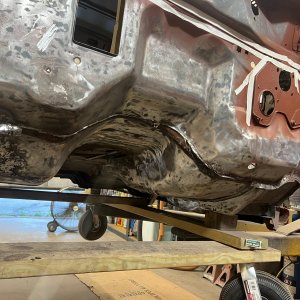
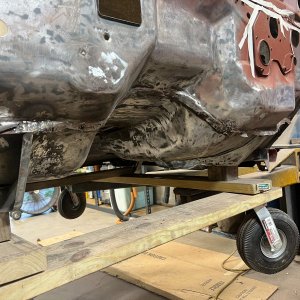
I finally found the cause of the emissions pressure test failure. There is an inlet tube on top of the gas tank for the filler neck.
The base of this tube has small cracks which I didn't see before. There is gasoline residue and fumes at this spot. They don't make the fuel tank for my truck anymore (92' Ford Ranger XLT, 2.9 V6 4WD). So I have to repair it.

This is a plastic gas tank.......correct? I see there are different ways to repair the cracks. Any recommendations from past experience?
 
Last edited:
Wow that's crazy. I think I'd be tempted to try JB Weld first. Plastic welding might be an option too... melt the cracks shut.
 
^^^
I'm pretty sure there is a fuel safe plastic epoxy on the market. I would look at established high end manufacturers like 3M or JB.
 
There are plastic fuel tank repair kits. This sounds like the perfect use of one.
 

Sponsored Ad

TRS Events & Gatherings

Featured Rangers

Want to see your truck here? Share your photos and details in the forum.

TRS Latest Video

Official TRS Merchandise

Follow TRS On Instagram

TRS Ranger Sponsors


Product Suggestions

Back
Top