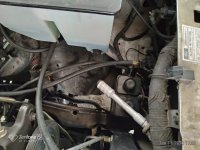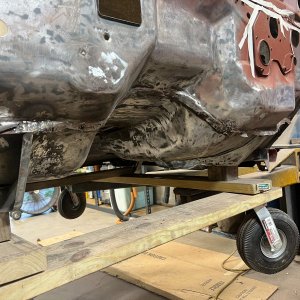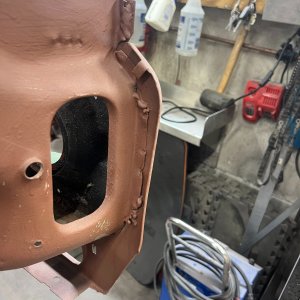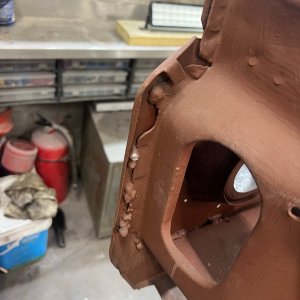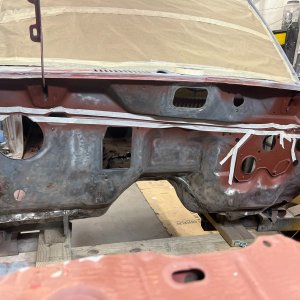
I won't be surprised if you don't find a solenoid or other type of electrical valve. My '89 has nothing but hard plastic and rubber tubing from the canister to the throttle body, and I am also the original owner. PCV tube is routed to the same area. Some of the years may have had check valves to keep the gas fumes in the canister until the engine was running, but these years didn't have electronic purge valves operated by the computer. One of the photos looks like it could be a vacuum operated valve. I don't have one of those either.
If you still have the emissions sticker on the core support near the hood latch you may may be able to show the emissions tech the vacuum diagram and convince them these early rangers did not have purge valves.
If you have the 1983-1992 Ranger and BII Haynes manual, check out section 6.6. Third paragraph reads as follows. "Vapor trapped in the gas tank is vented through a valve in the top of the tank. From the valve, the vapor is routed through a single line to a charcoal canister located ... near the radiator, where it's stored until the next time the engine is started. When the engine is started, the vapors are routed to the carburetor or FI system, to be burned in the engine." No mention of a purge valve.
If you still have the emissions sticker on the core support near the hood latch you may may be able to show the emissions tech the vacuum diagram and convince them these early rangers did not have purge valves.
If you have the 1983-1992 Ranger and BII Haynes manual, check out section 6.6. Third paragraph reads as follows. "Vapor trapped in the gas tank is vented through a valve in the top of the tank. From the valve, the vapor is routed through a single line to a charcoal canister located ... near the radiator, where it's stored until the next time the engine is started. When the engine is started, the vapors are routed to the carburetor or FI system, to be burned in the engine." No mention of a purge valve.
Last edited: