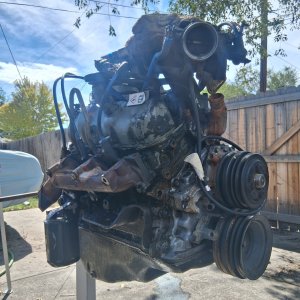
HELP 88 ford 2.3 heads with 2.9 block ?


Joined
Jul 12, 2024
Messages
8
Points
1
City
Tishomingo, MS
Vehicle Year
1988
Transmission
Manual
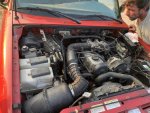
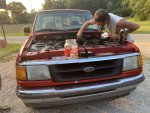
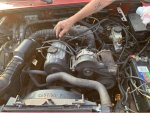
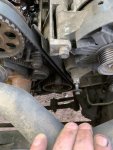
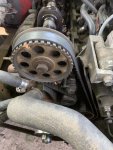
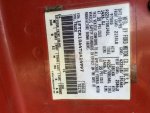
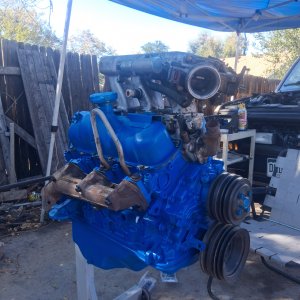
I recently bought a ford ranger has swapped motor to an 88 2.3 engine. Shade tree mechanic of mine said it has a 2.9 block. Changed the head gasket with a kit and re timed it. But still have no power behind the motor. Also still shakes when it starts. Need the vaccum diagram and wiring diagram if anyone has it?! Thinking it may be my injector wiring harness keeping me from getting power but not sure! Any help is appriciated!

 

Attachments

  • HELP 88 ford 2.3 heads with 2.9 block ?
    IMG_5202.jpeg
    238.1 KB · Views: 187
  • HELP 88 ford 2.3 heads with 2.9 block ?
    IMG_5203.jpeg
    250.7 KB · Views: 179
  • HELP 88 ford 2.3 heads with 2.9 block ?
    IMG_5204.jpeg
    230 KB · Views: 259
  • HELP 88 ford 2.3 heads with 2.9 block ?
    IMG_5205.jpeg
    293.3 KB · Views: 165
The 2.9 is a V6, you definitely have a four cylinder.

Some of what you are looking for may be in the Tech Library. The guys here are pretty good at having and sharing what you need.
 
I think your shadetree mechanic needs to step out into the sun, it's looking a little dim over there where he is... or maybe it's just him.

Looks like a fairly stock 2.3L to me, but definitely earlier since that year truck should have a dual plug head. The 2.3L were never a power house from the factory. If it was originally a V6 truck the gearing may not be friendly to that engine, and have it operating outside its powerband. If it was a 4 cylinder truck, the gearing still might not be friendly as it was geared for effeciency not power. Just a thought.
 
The intake manifold looks wrong for the year, same with valve cover, did they use the '88 block and convert to single plug from dual plug? How'd they get the crank sensor mounted to run like stock? I've done that a couple times but takes effort... What year is the Ranger it's in? There's a few quirks over the years, I'd guess it's a '93-4 based on the alternator placement but I've been wrong before... If that's the case and they switched over to the TFI distributor from the DIS system the timing just might need to be adjusted...
 
@scotts90ranger I was wondering about all that as well, but didn't know how to say it without confusing the guy.
 
The aluminum valve cover says mercury merker or maybe even a turbo coupe engine. Minus the turbo. The embossing on the manifold is suspect too
 
Ooooh aluminum valve cover!?


Want 🤗
 
You probably have a 2.5 block.
 
You probably have a 2.5 block.

Not with the distributor. The 2.5s didn't use them and the blocks didn't have provision for it.
 
The intake probably just says 2.3L EFI which was a big deal in the mid '80's... but yeah the aluminum valve cover says other stuff as they didn't use those on many other than turbo and stuff... if it has turbo pistons it might not run great at 8:1 instead of 9.2:1...
 
The intake probably just says 2.3L EFI which was a big deal in the mid '80's... but yeah the aluminum valve cover says other stuff as they didn't use those on many other than turbo and stuff... if it has turbo pistons it might not run great at 8:1 instead of 9.2:1...

All the turbos I've seen have had Turbo on the valve cover, but something I've seen on a mustang site suggested that is an 87-88 Thunderbird Turbo Coupe valve cover.

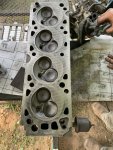
Like Scott said, if it's a turbo motor running NA, that could be why it's weak. If you can get a borescope (inspection camera) down the spark plug hole, or pull the head, it would show if you have flat top or dished pistons. With dished pistons, it's most likely a turbo motor. Flat tops it's NA motor that someone put a turbo coupe valve cover on.
 
The intake manifold looks wrong for the year, same with valve cover, did they use the '88 block and convert to single plug from dual plug? How'd they get the crank sensor mounted to run like stock? I've done that a couple times but takes effort... What year is the Ranger it's in? There's a few quirks over the years, I'd guess it's a '93-4 based on the alternator placement but I've been wrong before... If that's the case and they switched over to the TFI distributor from the DIS system the timing just might need to be adjusted...

It’s in a 96 body and idk I just bought it and they told me it needed a tune up and I changed the plug and plug wires and still ran like shit so we pulled timing and set it. It was 180 degrees off and that still didn’t help so we pulled the head and the gasket was blown so we replaced that with the whole kit And that’s where we’re at now. And it still bogs down like there’s no power especially in 1st and 2nd gear or going up hill. You can wiggle the injector harness and it cuts out real bad like those may be bad. But with everyone saying it’s how many ever motors put together I’m questioning changing anything else til ik for sure what I’m dealing with
 
All the turbos I've seen have had Turbo on the valve cover, but something I've seen on a mustang site suggested that is an 87-88 Thunderbird Turbo Coupe valve cover.

Like Scott said, if it's a turbo motor running NA, that could be why it's weak. If you can get a borescope (inspection camera) down the spark plug hole, or pull the head, it would show if you have flat top or dished pistons. With dished pistons, it's most likely a turbo motor. Flat tops it's NA motor that someone put a turbo coupe valve cover on.
 

Attachments

  • HELP 88 ford 2.3 heads with 2.9 block ?
    IMG_5187.jpeg
    195 KB · Views: 138
  • HELP 88 ford 2.3 heads with 2.9 block ?
    IMG_5182.jpeg
    129.6 KB · Views: 143
  • HELP 88 ford 2.3 heads with 2.9 block ?
    IMG_5181.jpeg
    145 KB · Views: 135
  • HELP 88 ford 2.3 heads with 2.9 block ?
    IMG_5167.jpeg
    216.3 KB · Views: 145
The intake probably just says 2.3L EFI which was a big deal in the mid '80's... but yeah the aluminum valve cover says other stuff as they didn't use those on many other than turbo and stuff... if it has turbo pistons it might not run great at 8:1 instead of 9.2:1...

Idk what the ratios mean?
 
Idk what the ratios mean?
Compression ratios. Most factory 2.3 turbo motors will have dished pistons and about an 8.0:1 compression ratio. Naturally aspirated (non forced induction) motors are going to have a flat top piston and a higher compression ratio, about 9.2:1 according to him. He's saying that if it has turbo pistons and the lower compression ratio, it might not have as much power and run as well as the higher compression ratio.

Generally speaking a higher compression is going to generate more power, but to much compression leads to detonation which is bad. Turbo motors usually start with a lower ratio, because when that additional air gets forced in its going to increase a lot.
 

Sponsored Ad

TRS Events & Gatherings

Latest posts

Featured Rangers

Want to see your truck here? Share your photos and details in the forum.

TRS Latest Video

Official TRS Merchandise

Follow TRS On Instagram

TRS Ranger Sponsors


Product Suggestions

Back
Top