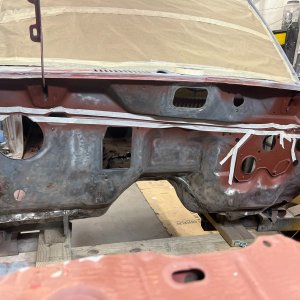
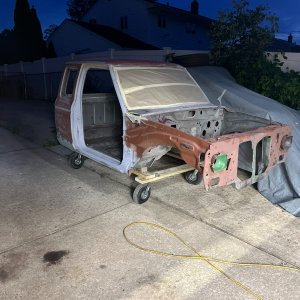
Alright, so it took me awhile to get back to this, lol.
Any taller vehicle is more likely to roll over than a car, and I'm of a firm opinion that the majority of the rollover issues are caused by user error. Yes, a Porsche 911 likely has a similar wheelbase to a B2, but the Bronco II is more prone to rollover. Simple physics, you can't drive them the same and expect the same results.
There are a number of things you can do to improve performance and reduce rollover risk. My 89 Choptop Bronco II is surprisingly stable for being a lifted rig with a small wheelbase. It's actually a lot more stable on 35x12.5-15 tires than it is on 31x10.5-15 tires. The extra width seems to make a difference. I'm also sitting on 5" of suspension lift and 2" of body lift. The more stock B2's I've had are ok on stock tires and comfortable on 235/75-15 or 30x9.5-15. I'm doing a small lift on my 88 if I can ever get back to putting it back together and running 31x10.5-15 and see how it does.
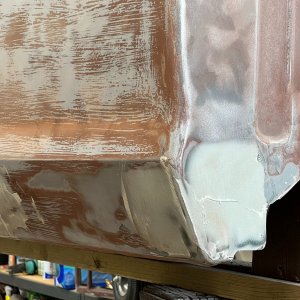
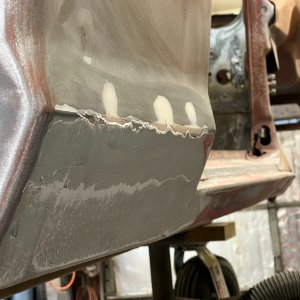
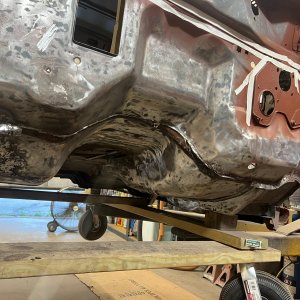
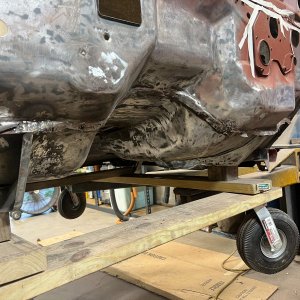
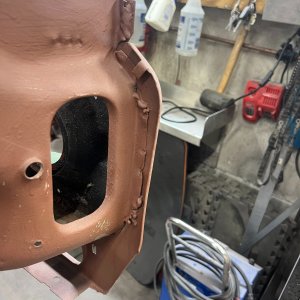
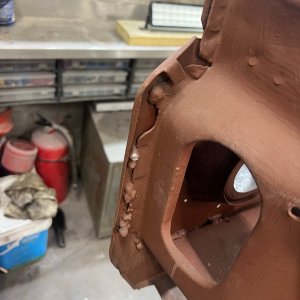
Rot points: core support, cowl/firewall (especially in the 83-88 vintage), bottom of the A-pillar, rear wheel arches and around the bottom of the rear hatch area are all most common.
Axles: stock on everything but a 1990 is a D-28 front (if 4x4) and a 7.5" rear. 90 models got a D-35 front. D-28 is notoriously weak, but the D-35 is close to a bolt-in swap (front driveshaft has to change and you may or may not be able to use the driveshaft from your D-35 donor). The rear 7.5" is not bad, it will handle stock or mildly modified just fine in most cases. The upgrade is obviously the 8.8" out of a Ranger or Explorer however the spring perches are spaced about 1/2" wider than the Ranger so welding is required to swap the rear axle no matter what you use.
Engine: the 2.9 isn't the worst thing ever produced but it doesn't like being overheated. 89/90 vintage is easy to swap to a 4.0 OHV if you can source ideally a 90-92 Ranger donor for the wiring at least. There are some upgrades available to the 2.9 as well, search around on here. The 2.8 motor does well with a Duraspark system.
Transmission: the manuals are ok but somewhat weak. The upgrade is the M5OD out of a 4.0 Ranger, stronger transmission. The early non-overdrive automatics were relatively strong, but anything with a 2.9 got the infamous A4LD automatic. Properly cared for, the A4LD is reasonable. The problem is, most people don't care for it properly. Bands should be adjusted every 20-30k, fluid and filter every 50k. I also highly recommend doing a shift kit plus some valve body work and adding a larger transmission cooler. Shift kit and valve body work reduces slippage, slippage creates heat, heat kills auto transmission. Simple.
I see a lot of these older Rangers/Bronco IIs/full size trucks that don't have a 100k spot on the odometer being advertised and sold as "low mileage" and I don't believe it. If you are not the original owner and don't personally know the original owner, unless you have a stack of proof, it's probably not low mileage. Nobody expected these rigs to become collector items so there was no reason for a lot of people to purposely keep them low mileage. I owned an 89 back around 04-07 time period that as near as I could piece together had somewhere around 240-290k. I had incomplete records and the gauge cluster had been changed before I got it so I could never get the mileage more accurate than that. I bought my 88 and Choptop before then, the 88 had just rolled over and I got a stack of records thicker than a phone book. The Choptop was under 100k when I got it. My 92 I knew the previous owner and I was able to back it up with records that it is about 174k. Most of these trucks hit 100k over 20 years ago. Most are now well over 200k.
I'm going to put together a video explaining how to check these over one of these days. Maybe if we can get some decent weather I'll try to get it done. Cliff Notes are to look for turned bolts on the fenders and doors and stuff. Factory paints over the bolts after they've been tightened, so if the paint is cracked around the bolts, they've been turned. Check around there for other damage, in this age it could just be rust repair rather than collision. Also look for paint that has a lot of dirt or sanding scratches, that will help reveal body work that's been done. Most paint shops do a lousy job. Also feel along the edges of panels, you will often find a sharp tape edge if a panel has been repainted.